Showing posts with label Christmas Jazz. Show all posts

Sunday, December 16, 2018

An American Christmas with PJ Rasmussen and the Boardwalk Jazz Band

Christmas just wouldn’t be Christmas without jazz. If you doubt it, just imagine a world without Vince Guaraldi’s a beautiful swinging score for A Charlie Brown Christmas (“Skating” is especially nice) or Nat King Cole owning Mel Torme’s “The Christmas Song.” PJ Rasmussen embraces the jazz yuletide tradition with a swinging set of Christmas carols recorded live at City Winery in lower NYC. Jazz fans get an early Christmas present when An American Christmas Featuring PJ Rasmussen and the Boardwalk Jazz Band (promo here) airs in syndication on terrestrial broadcast networks during the holiday season (including WCBS-TV in New York).

You have to give Rasmussen credit for starting with “Go Tell it on the Mountain,” instead reindeer or snowman. There is no “War on Christmas” here. Rasmussen’s arrangement gives it a hard-charging swing worthy of the vintage Basie band. Vocalist April May Webb brings out the inherent gospel flavor of the lyrics, while baritone saxophonist Andrew Hadro further cranks up the funkiness. One of the cool things about American Christmas is the it identifies each band-member during their respective solos, so everyone gets their due credit.

Rasmussen’s chart for “God Rest Ye Merry Gentlemen” has some Oliver Nelson-ish colors to it, which is high praise again. Generally, this is a rather dour carol, but Webb and the band perform it as an upbeat, up-tempo groover. Again, there are legit solos (maybe somewhat brief by club standards, but quite fully-developed for television), in this case, from Dave Pollack delivering on tenor and Richard Polatchek keeping it real on trumpet.

“Deck the Halls” is maybe even a tad too fleet, but it is nice vehicle for Rasmussen’s guitar and Joe Spinelli on drums. “What Child Is This” is probably their gutsy choice, given how many listeners might be familiar with John Coltrane’s recording of “Greensleeves,” but conductor Charlie Dougherty’s arrangement definitely takes it in a brassier, more swinging direction. It is a surprisingly fun performance (devoid of the usual folky moodiness), propelled by the impressive power and clarity of vocalist Candice Reyes’s voice.

“Jingle Bells” is probably the most straight-over-the-plate, sing-along-if-you-want-and-happen-to-know-the-later-verses rendition, but it is followed by an original. “Christmas Card Blues” is a pleasant and sometime rather clever lampoon of the year-in-review letters some people include in their Christmas cards. Rasmussen and Kate Victor perform it with just the right degree of theatricality (a little, not a lot), while Billy Test shows all kinds of taste and touch during his piano solo.

The “We Three Kings/Silent Night” medley is the softest piece of the night, but Webb and the band swing the former pretty hard. Test’s transitional solo and Webb’s bluesey “Silent Night” are about as hushed as the set gets, but they are still quite nice and Christmassy. Rasmussen and company close with a brisk, head-bobbing “Auld Lang Syne,” which is an appropriately celebratory note. It sure beats another rote run-through of “The Theme.”

Holiday music and celebrations are supposed to be fun—and that is definitely true of Rasmussen’s An American Christmas. It will not replace Guaraldi’s A Charlie Brown Christmas or Ellington’s Nutcracker Suite, but it is easily one of the best Christmas musical specials of the season, recommended for everyone in the family. For jazz fans, it is also offer an opportunity to hear all the talented young musicians who make up the Boardwalk Jazz Band. Air dates and times vary by city, but here in New York, it airs on Christmas Eve (12/24) at 12:35am, which would be a tough time slot, but it follows Midnight Mass, so maybe it will catch people in the spirit.

Saturday, November 28, 2009

An Alexis Cole Family Christmas

Christmas is a time for family, so it is appropriate jazz vocalist Alexis Cole’s new Christmas CD is definitely a family affair. Not only does it feature Cole’s pianist-composer father Mark Finkin, it was directly inspired by his much anticipated college graduation recital. Taking its title from her father’s commencement concert, Cole’s The Greatest Gift presents an eclectic program of seasonal and spiritual fare, the net proceeds from which will go to the non-profit World Bicycle Relief.

In a way, Gift also represents the extended family of St. Peter’s, the Manhattan church long identified with the jazz community that Cole has often played. Both St. Peter’s jazz musical director, bassist Ike Sturm, and his vocalist wife Misty Ann contribute to Cole’s Christmas. In addition, trombonist Alan Ferber and guitarist Jesse Lewis are no strangers to the Midtown sanctuary. (Disclosure: I know the Sturms from St. Peter’s Jazz Vespers, where I’m often part of the improvised ushering corps.) Such relationships help explain Gift’s distinctly warm, inviting vibe.

Gift actually starts with an instrumental prelude, an upbeat traditional treatment of “Joy to the World,” arranged by bassist Sturm and featuring an almost rock oriented solo from Lewis. Cole then makes a pretty soulful entrance on “Jeanette Isabella/The Call,” augmented by the St. Paul’s Children’s Choir. Indeed, there is a certain R&B-ish influence, especially pronounced on the following “God Rest Ye Merry, Gentlemen,” a duet for Cole and Finkin. There is also similar groove going on in the original closer, “Jesus is the Best Part of Christmas,” which benefits from Don Braden’s funky sax flavorings (but the staged dramatic dialogue is unnecessary).

Cole herself arranges one of the highlights of the program, reinventing “Hark the Herald Angels Sing” in a calypso-like cast. Blending the appealing sounds of Braden’s soprano, Ferber’s trombone, and Warren Chasson’s vibes, “Hark” has an infectiously joyous sound that demonstrates jazz and Christmas music can both be fun.

While Cole covers many beloved carols, like “What Child is this?” and “Silent Night,” she also includes some less obvious standards, like the spiritual “Rise Up Shepherd and Follow.” In another intriguing arrangement, Cole gives it a pronounced exotic flavor (quite in keeping with the song’s Holy Land setting) adding tabla and tambura to Braden’s soprano.

Cole has a rich, strong voice and her charts produce some consistently rewarding music throughout Gift. While she often gives the songs of the season a nice jazz twist, they will always be recognizable and accessible for jazz neophytes. Cole and friends will perform the music of Gift at her CD launch concert this coming Friday evening (12/4 at 8:00), fittingly at St. Peter’s.

Thursday, November 26, 2009

A Hot Club Christmas

Given his untimely death in 1953, there are many great jazz standards that Sinti jazz pioneer Django Reinhardt never had the chance to cover. He never had the occasion to record a set of Christmas carols either, leaving a void the Hot Club of San Francisco (HCSF) recently filled with Hot Club Cool Yule, a Christmas-themed release recorded in the swinging Roma-jazz style developed by Reinhardt during his tenure with French violinist Stéphane Grappelli in legendary Quintette du Hot Club de France.

The Hot Club Christmas starts on a distinctly hipsterish note with “Cool Yule,” a high-spirited Steve Allen ditty that was a minor hit for Louis Armstrong, performed with a cheerful playfulness fitting to the holidays. The HCSF then throw a real change-up, launching into “Don Rodolfo,” perhaps the most sophisticated version of “Rudolph the Red-Nosed Reindeer” you will hear this season, recast in a romantic Latin mold, slyly blended with the “Habañera” from Bizet’s Carmen.

The HCSF also pays homage to some of the enduringly popular Christmas albums that have become jazz classics in their own right. Vince Guaraldi’s “Skating” theme from the truly beloved A Charlie Brown Christmas special sounds surprisingly compatible with the traditional “Carol of the Bells” in the HCSF’s elegant jazz waltz medley. They also Django-ize “Sugar Rum Cherry,” Duke Ellington and Billy Strayhorn’s swinging adaptation of Tchaikovsky’s “Dance of the Sugar Plum Fairies,” with bassist Clint Baker’s muted trumpet echoing the tonal colors of the Ellington band on the fade-out.

While there are a couple vocal tracks, Yule is best when the HCSF cuts loose on instrumental swingers, like the snappy “Djingle Bells” (groan). Indeed, the Hot Clubbers exhibit a madcap sense of humor throughout the set, even burying a brief hidden track, “We Wish You a Merry Christmas,” at the end of “Auld Lang Syne” (which surely Reinhardt himself must have played at some point, given his reputation for enjoying a good party). While technically it might not be a Christmas tune, solo guitarist Paul “Pazzo” Mehling liberally quotes “O Tannenbaum” before they eventually segue into the aforementioned brief but breakneck rendition of “Wish.”

Displaying a zesty flair throughout the program, the HCSF again prove they are one of the best Hot Club inspired combos on the scene today. Yule is another good jazz stocking stuffer or office “Secret Santa” gift. Unapologetically fun, it is easily accessible to general listeners, yet also steeped in the jazz tradition. Happy Thanksgiving.

Wednesday, November 25, 2009

A Carla Bley Christmas

Carla Bley suspects her aspirations for a concert of Christmas music might have cost her at least one gig. Surely, those modernist snobs know by now they made a terrible mistake passing up a program of Christmas carols from the inventive arranger-pianist-bandleader. Indeed, despite her musical adventurousness, Bley has long had an affinity for traditional carols that eventually led to Carla’s Christmas Carols, a distinctive but respectful Christmas-themed release now available on Bley’s WATT label.

Often scrupulously straight, Bley’s charts sound as if they were intentionally written to best serve the time-honored carols themselves. Such is definitely the case with the opening “O Tannenbaum,” in which the jazz voicings are only asserted late in the arrangement. Likewise, the warm, relaxed mood of “The Christmas Song” should equally please fans of both Bley and Nat King Cole (still probably the carol’s greatest popularizer). Given this disciplined approach and the burnished sound of the Partyka Brass Quintet, Bley’s Carols will be an especially accessible jazz Christmas album for non-jazz ears. Yet, Bley’s admirers will still be happy to hear her unique musical sensibility very definitely shapes and colors the character of the session.

For instance, who else but Bley would pen an original for a Christmas program titled “Hell’s Bells.” While it swings like mad, the glorious trumpets of Tobias Weidinger and Axel Schlosser lend it a vibe akin to the especially rousing carols. Always one to surprise, Bley also gives “Jingle Bells” a New Orleans second-line treatment, ending with a bit of glockenspiel and ompah for punctuation.

Of course, Bley also prominently features her longtime partner Steve Swallow, whose decidedly melodic approach to the electric bass largely carries the tune on the simply gorgeous rendition of “O Holy Night.” Though she often dismisses her own playing as “arranger’s piano,” Bley takes several tastefully articulate solos, particularly on the elegant “God Rest Ye Merry Gentlemen, Part Two,” (which logically follows the more boppish brass interplay of “Part One”).

Bley’s Carols is a beautiful set of Christmas music that would win the leader a legion of new fans in a more perfect world. Perhaps Bley’s Carols is less likely to top critics’ year-end lists (as have most of her recent releases) because of its admittedly seasonal appeal. Yet, it is no less accomplished. In fact, it leads to greater appreciation of her versatility and sensitivity as an arranger and leader. It is highly recommended as a jazz stocking stuffer. (By the way, look for more jazz Christmas CD reviews here over Black Friday weekend.)

Friday, December 26, 2008

Christmas in New Orleans: St. Louis Cathedral & Preservation Hall

They love their Christmas music in New Orleans. During the season, you can hear it at some the Crescent City’s most hallowed spaces, including St. Louis Cathedral and the slightly less imposing Preservation Hall.

Originally completed in 1727 and rebuilt in 1794, the Cathedral-Basilica of St. Louis, King of France might be the most recognizable building in New Orleans, rising over Jackson Square on the banks of the Mississippi. It is also where hip New Orleanians go for Christmas concerts based on Monday night’s turn out for the diverse trio of Theresa Andersson, John Fohl, and David Doucet. Originally hailing from Sweden, Andersson fell in with the city’s legendary R&B scene, while maintaining a rootsy acoustic sound on the fiddle. Fohl is a regular member of one of New Orleans top local organ trios, as well as a sideman in Dr. John’s band. Doucet is a respected standard bearer of the Cajun musical tradition. Together their Christmas concerts at the Cathedral have become something of a tradition for them, even resulting in a CD of their Christmas music.

Andersson has a lovely voice, nicely featured on “Hark the Herald,” but their finest number may have been their instrumental version of “Little Drummer Boy,” displaying their dazzling technique, but not at the expense of feeling. Fitting New Orleans’ history as a port city melting pot, it was a trilingual night, with Andersson performing the German and English lyrics to “Silent Night” and Doucet performing the French carol “Il Est Ne, Le Divin Enfant,” which he learned from the nuns in Catholic school.

Though the décor is meaner, Preservation Hall is certainly sacred ground for those who love traditional New Orleans hot jazz and Dixieland. While the Hall is all about tradition, their Creole Christmas Eve shows are a relatively recent institution, only in their third year. This year, they featured the St. Peter Street Allstars under the direction of Lars Edegran, also a Swedish transplant. Edegran has been leading groups at the Hall for years, usually on piano, but he is also an accomplished banjo and guitar player. With the raspy blues shouter Big Al Carson on vocals and a top notch group of New Orleans style jazz musicians, notably including Freddie Lonzo on trombone and Shannon Powell on drums, they ragged up favorite yuletide carols with old school flair.

Up-tempo pieces like “Rudolph the Red-Nosed Reindeer” were particularly amenable to their hot style of interpretation, but Carson’s finest vocal may have come on their beautiful rendition of “It Came Upon a Midnight Clear.” Edegran and company also mixed in a couple of tunes from their usual repertoire. In fact, it must have been Christmas, because they concluded the first set with “The Saints,” which ordinarily will set you back a ten-spot if you want to hear it at Preservation Hall.

Music is a way of life in New Orleans, so it naturally figures prominently in their Christmas celebrations. St. Louis holds their special Christmas concerts throughout the month of December, featuring important local artists like Ellis Marsalis and Irvin Mayfield in addition to Anderson, Fohl, and Doucet’s annual concert. Preservation Hall is open year round, but Christmas Eve is the day to hear carols there. Of course, it is not impossible to hear Christmas music there on other days, but it might cost some change. Remember, traditional requests are two dollars, other requests are five, and “The Saints” will set you back a full ten.

Tuesday, December 11, 2007

PBS Stomps Off Holiday Jazz

Whenever PBS broadcasts jazz programming, I have to give it breaking news treatment. After all, I have been critical of the network for using Ken Burns Jazz series as a carrot during pledge drives, and then failing to deliver regular jazz programming throughout the rest of the year (terms like “bait and switch” may have been bandied about). So PBS definitely deserves credit for broadcasting Wynton Marsalis and members of the J@LC band live from their home in the House of Swing (Rose Hall at the Time Warner Center) in Red Hot Holiday Stomp, as part of the Live from Lincoln Center series.

The first half of the program was a well conceived set consisting largely of swinging versions of holiday favorites. Literally everyone loves jazz Christmas music, but a lot of folks just do not realize it. After all, jazz musician Vince Guaraldi was responsible the beloved music of the ever-popular A Charlie Brown Christmas. Here Marsalis and company run through some crowd pleasing Christmas standards like “Rudolph the Red Nosed Reindeer,” “Carol of the Bells,” “Santa Clause is Coming to Town,” and what Marsalis called “that old Christmas favorite:” “Sheik of Araby.”

If not revolutionary, there were some very entertaining solos, especially from Wessel “Warmdaddy” Anderson on alto and Wycliffe “Pinecone” Gordon on trombone—it is great to hear them back in the band. “Sweet Papa” Don Vappie, who according to Marsalis “got up out of his sick bed to come out here tonight,” probably supplied the highlight of the set with his soulful vocal on “Blue Christmas.”

The second half of the set was made up of “Music, Deep Rivers in My Soul,” a musical collaboration between Marsalis and poet Maya Angelou. S. Epatha Merkerson conveyed strength and warmth in her delivery of Angelou’s words, but the text itself seemed slight compared to the heft of Marsalis’s major works on similar themes, like Blood on the Fields, Congo Square, and In This House on This Morning. Though impressive, the energy of Jared Grimes accompanying tap dancing is probably best experienced live, and was not well served by the camera work last night. Again, the band acquitted itself well. In particular, Ali Jackson’s concluding drum solo was a perfect conclusion, showing wit and dexterity, rather than bombast.

Surprisingly, the typically witty Marsalis did not bring his A game for between-tune banter, but the only really embarrassing aspect of the broadcast was Glenn Close’s gushy “interview” with Marsalis. If you can forget that, which should not be hard to do, it was entertaining showcase of what J@LC does best. (Look for it if your local affiliate did not carry it live last night.) Even if you are not down with Marsalis and his conceptions of jazz, this is great band. It has most of what I consider their classic line-up from the late 1990’s, with fantastic musicians, like Anderson, Gordon, Joe Temperly, Victor Goines, Ron Westray, and of course Marsalis himself, making Holiday Stomp a solid, if all too infrequent, jazz feature on Public Television.

Saturday, January 06, 2007

Gordon Goodwin’s Big Phat Band

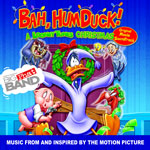
Bah, Humduck! A Looney Tunes Christmas
Gordon Goodwin’s Big Phat Band
Immergent


On Three King’s Day, we should still be able to enjoy Christmas music, and one of the more interesting new recordings of holiday music is Gordon Goodwin’s soundtrack for the Looney Tunes retelling of The Christmas Carol, Bah, Humduck!

Goodwin should be a hero to lad mag scene, for his film credits. Who else can boast of providing music for Attack of the Killer Tomatos, Snakes on a Plane, and Looney Tunes? His Big Phat Band—Coach Mangini would probably call them stout swingers—is one of the best working today. Here, Goodwin finds himself more than able to step into the Carl Stallings-Raymond Scott tradition of scoring Warner Brothers cartoons with swing, verve, and humor.

In truth, some of the selections in Bah do sound episodic, but the band is in fine form, and there strong moments to be heard, like the swinging “Deck the Halls” about 1:46 into “Main Title” and a brassy “God Rest Ye Merry Gentleman” quoted about 0:51 into “Kiss Me, It’s Christmas.” “Profits on the Rise” is also opens with a notable hard swing. There are indeed swinging passages and nice grooves throughout the soundtrack selections, making it the ultimate thin edge of the wedge, when trying to introduce kids to jazz.

There are also three added tunes “inspired by the motion picture” which really let Goodwin and band cut loose. Goodwin’s original “This is Christmas” is a lovely melody and features fine trumpet work from Doug Savant. Since it is not readily recognizable as a Christmas tune, it could end up as year round staple in your ipod. There are also two longer hip takes on Christmas Carols. “Yo Tannenbaum” has nice solos for the leader on tenor and Andy Martin on trombone, before taking it as on a flag-waving high note. “God Rest Ye Merry Gentlemen” starts out sounding traditional, but the band comes in strong around 1:15 and off they go only backing off to let Goodwin take some in the piano chair, then ending it in swinging style.

Bah, Humbug! is an excellent family-friendly disk from a band to look and listen for. Goodwin is again nominated for a Grammy this year, but for many scoring for Daffy Duck and Porky Pig eclipses any industry honors.

(Sorry I couldn’t post this at a more opportune time—as in before Christmas. My copy was buried somewhere in the office mailroom. Some retailers discount holiday CDs after Christmas, so maybe it’s a good time to pick it up.)