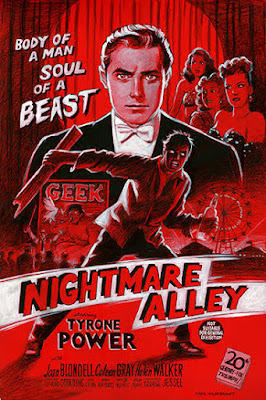
Stan
Carlisle is a carnival grifter and drifter who is morbidly fascinated by the
show’s geek attraction (a.k.a. side-show freak). He is also interested in “Madame
Zeena” Krumbein for the techniques she developed for her mentalist act and Helen,
a woman-in-jeopardy performer, because she is young and pretty. Krumbein’s
alcoholic husband Pete jealously guards their secrets, but he has an obvious
weakness to exploit.
Due
to a strange chain of events, Carlisle becomes an elite night club mentalist
using the Krumbein techniques. Yet, he naturally wants more. He might find an
accomplice who can help him in Lilith Ritter, a psychoanalyst of dubious
character and a genuine femme fatale.
Although
Nightmare Alley initially flopped hard, it was rediscovered and
rehabilitated relatively quickly. Goulding’s version remains within the realm
of film noir, but it is easy to see del Toro could capitalize on elements like Madame
Zeena’s fateful Tarot readings, Carlisle’s phony spiritualism, and the macabre
geek act to blend it into horror and dark fantasy territory. Regardless, Goulding’s
noir is especially dark (even by today’s standards) and pretty lurid for its
time.
It
also features a great performance from Power, who always did great work when 20th
Century Fox allowed him to stretch a little (like in the under-appreciated The
Sun Also Rises). He fully brings out the hard-bitten ruthlessness of
Carlisle, but he also humanizes him and even forces viewers to sympathize with
his classically tragic rise and fall.
