Showing posts with label American Masters. Show all posts

Thursday, February 19, 2026

American Masters: Sun Ra, on PBS

Forget Madonna. No artist ever reinvented themselves more thoroughly and profoundly than Herman “Sonny” Blount. The relatively successful regional big bandleader declared himself an angel from the planet Saturn—and people believed him. In the process, he became a jazz legend and arguably the most significant figure in Afro-Futurism. He definitely had multitudes, as viewers will quickly pick up from Christine Turner’s Sun Ra: Do the Impossible, which premieres tomorrow as part of the current season of PBS’s American Masters.

Sun Ra’s rendition of “Somewhere Over the Rainbow” is a shrewd choice to introduce to the musician-composer-bandleader to viewers, because it is free in an exploratory avant-garde sense, yet also barrelhouse bluesy. In fact, Sun Ra’s accessibility is the one aspect of his music Turner’s experts largely underplay. They make much of his experimentation with sonic distortion and Moog synthesizers. However, he always remained a big bandleader, who idolized Fletcher Henderson.

As Sun Ra, Blount incorporated elaborate space-age costume and concepts into his stage show, as well as ancient Egyptian imagery. In an effort to create a mythology for Black America, Sun Ra developed his own personal mythology, which he lived every day. Aptly, one of Turner’s commentators describes his life as an extended work of performance art. Yet, bassist Alex Blake also reluctantly (and with all due respect) likens the experience of being a member of Sun Ra’s communal Arkestra to being in a cult. That shows a rare critical evenhandedness that elevates
Do the Impossible above most PBS profiles.

Notably, Turner features commentary from several longtime band-members, including Blake, John Gilmore, and stalwart Marshall Allen, the 101-year-old reed player, who succeeded Sun Ra as leader of the Arkestra. Last year, at the age of 100, Allen released his first session as a solo-leader. He has also been honored as an NEA Jazz Master, which should put the Arkestra’s musical significance in proper perspective.

Monday, April 14, 2025

American Masters: Art Spiegelman Disaster is My Muse

Art Spiegelman helped force the world to remember some of its darkest history, with his Pulitzer-Prize-winning graphic novel, Maus. Essentially, he adapted his parents’ tragic real-life experiences during the Holocaust, but he anthropomorphized the Jews as mice and the National Socialists as cats. Yet, this film has a weirdly selective relationship with recent history. It ends before the October 7th terror attacks that are widely recognized as the largest mass-killing of Jews since the Holocaust. However, the filmmakers managed to find time to edit out Neil Gaiman’s appearance, which caused some consternation when the film screened at festivals, presumably due to assault allegations against the English author. Regardless, there is an inescapable feeling of prematureness to Molly Bernstein & Philip Dolin’s Art Spiegelman: Disaster is My Muse, which airs tomorrow on PBS, as part of the current season of American Masters.

The first forty-five minutes or so of
Disaster is quite strong, because it really focuses on the past, without attempting to score political points in the present. Spiegelman retraces his career, starting with an internship at Topps collector cards that led to a long-standing freelance relationship. He became one of the stars of the underground comix movement, along with his late friend, R. Crumb, whom we see attending a dinner party at Spiegelman’s.

For over a decade, Spiegelman worked on the two-volume
Maus, continually interviewing and re-interviewing his father, since his mother had died under painful circumstances during his childhood. Spiegelman is the first to admit he was shocked by the reception, including best-seller lists and the Pulitzer Prize. Arguably, the timing was just right since publication of the two volumes in 1986 and 1991, releasing between Claude Lanzmann’s Shoah (1985) and Spielberg’s Schindler’s List (1993), a period when mainstream readers really started educating themselves on the full implications of the Shoah.

The second half of
Disaster largely focuses on Spiegelman coming to terms with his unexpected success and figuring out what to do next. Arguably, his lack of focus was detrimental to Bernstein & Dolin’s profile as well. Eventually, they present him as an impassioned warrior against censorship, but such terms are somewhat disingenuous. There are no laws against reading any books in Texas or Florida (the two states primarily mentioned). Certain school boards have, ill-advisedly, decided certain titles are not appropriate for young readers. The fact that Maus was one such title is foolish irony that discredits their entire judgement—yet, the fact remains school boards make these kind of decisions everyday, in one direction or another, because space and acquisition budgets are limited.

Wednesday, February 19, 2025

American Masters: The Disappearance of Miss Scott, on PBS


Hazel Scott led a working trio that featured genuine jazz legends as sidemen: Max Roach on drums and Charles Mingus on bass. They even released a classic LP on the Debut Records label, which was founded by Mingus and Roach. In the 1930s and 1940s, she was one of the most famous jazz musicians in American, but the public largely forgot her during her expatriate period in France. Director-producer Nicole London and Scott’s admirers (as well as her son) take stock of her life and legacy in The Disappearance of Miss Scott, which airs this Friday on PBS as part of the current season of American Masters.

Scott was a true prodigy, whose notoriety grew steadily since she first performed professionally as a young child. However, her friend Billie Holiday boasted her to a new level when she arranged for Scott to replace her as the headliner at Barney Josephson’s CafĂ© Society. At the height of her fame, Scott had the clout to demand integrated audiences, even when she toured the deep south. She also attracted the eye of Congressman Adam Clayton Powell.

At the time, they were a way more glamorous political and entertainment power couple than Cheryl Hines and RFK Jr. ever were. However, they drifted apart, especially when her tour of France turned into an extended residency.

Rightfully, London’s cast of commentators make a big deal out of Scott’s weekly television show, which did indeed predate Nat King Cole’s by several years. She definitely deserved recognition as TV’s first weekly Black primetime host. However, they somewhat misleadingly make it sound like it was an act of vindictiveness when all tapes of her show were trashed. Tragically, that happened to almost every single episode of original programming that was broadcast on the defunct Dumont Television Network, also sadly including
The Gallery of Madame Liu-Tsong, starring Anna Mae Wong, which was the first dramatic series starring an Asian American woman as the lead character.

Fortunately, the talking heads better understand musical history, particularly Jason Moran, who has become a PBS go-to. Scott herself would probably enjoy watching him demonstrate stride and boogie-woogie, both of which she was more proficient in.

Wednesday, April 03, 2024

The Incomparable Mr. Buckley, on PBS


When I was a kid, all the real intellectuals were conservatives. They were scholars like Allan Bloom, economists like Milton Friedman, theologians like Richard John Neuhaus, jazz critics like Ralph de Toledano, and first and foremost, William F. Buckley Jr., who in addition to being a commentator, was also a concert harpsichordist and spy novelist. In contrast, the left was a you-grease-my-palm-I-grease-yours alliance of unions and special interests seeking handouts and payoffs. They have not changed much, but the right has—and not for the better. Arguably, Buckley was the movement’s indispensable man. Director-producer Barak Goodman chronicles Buckley’s life and career as the chief strategist and spokesman of American conservatism in The Incomparable Mr. Buckley, which airs Friday as part of the current season on American Masters.

Even as an undergraduate, Buckley a troublemaking intellectual. He entered Yale as part of the first class to overwhelmingly consist of fellow returning WWII veterans and he left with the material for his first bestseller,
God and Man at Yale. Non-left-wingers were a fractured lot, divided into religious traditionalist, libertarian capitalists, and hawkish Cold Warriors, but Buckley united them into a reasonably cohesive coalition through their opposition to Soviet expansionism and oppression.

Buckley played a critical role as Conservatism’s gatekeeper and arbiter of legitimacy. He famously excommunicated the conspiracy theory-mongering John Birch Society, while trying not to alienate their more casual followers. Goodman skips over Buckley (and his
National Review colleague Whittaker Chambers) similarly dismissing Ayn Rand and her Objectivists, probably because they were never as consequential on the national political stage. Over the last ten years, we desperately needed another William F. Buckley, but there was only one.

Goodman and the disembodied voices of his commentators give the
National Review editor his due credit for building the movement and guiding it to a spectacular victory when Buckley’s friend ally, Gov. Ronald Reagan, won the presidency and ultimately the Cold War. Yet, it is not hagiography. Incomparable takes a tough look at some of the positions Buckley staked out during the Civil Rights Era, but it provides a much fuller perspective than did Best of Enemies, Morgan Neville’s Buckley vs. Vidal doc.

Friday, December 09, 2022

American Masters: The Adventures of Saul Bellow

For those who say conservatives aren’t artistically inclined, try to explain away Saul Bellow, the Nobel Laureate and arguably the great American novelist. Seventeen years after his death, Bellow far outshines his contemporaries (seriously, who reads Norman Mailer anymore?) and remains culturally relevant. Asaf Galay chronicles Bellow’s life through his novels and marriages in The Adventures of Saul Bellow, which airs Monday as part of the current season of American Masters.

Galay suggests Bellow embraced his identity as an “American writer” and a “Chicago writer” more than his status as a “Jewish writer,” but that aspect of Bellow is surely a discernable influence on his writing too. Many of his books incorporated autobiographical elements, as well as the lives of his literary and academic colleagues. Perhaps the most notorious example was his final novel
Ravelstein, which outed the homosexuality of his life-long friend, Allan Bloom, the author of The Closing of the American Mind.

Throughout the film, we hear from Bellow’s nephew, two sons, his widow, and the ex-wife who preceded her, all of whom talk about their family dynamics in very matter-of-fact terms. They are all mature adults, which makes them refreshing to hear from in a documentary. There are also critical voices too, including novelist Charles Johnson, who admits an alternative reading might have validity when Galay challenges him.

As a result,
Adventure is one of the smartest and most judiciously balanced literary docs produced in years. It offers a comprehensive introduction to Bellow’s themes and criticisms, while also inviting new “socially conscious” perspectives on his work, particularly The Dean’s December, his inner-city novel.

Monday, July 26, 2021

Buddy Guy: The Blues Chase the Blues Away

Buddy Guy was almost the equivalent of Motown's Funk Brothers at Chess Records. He was a frequent sideman, who recorded a few 45s at the famous blues label, but the Chess Brothers never really considered him a star. A group of fanatical blues in the UK thought differently. They included Eric Clapton and Jeff Beck. Eventually, Guy became a headliner and now he is probably the dean of living bluesmen. The guitarist looks back on his life and career in Devin Amar, Matt Mitchener & Charles Todd’s Buddy Guy: The Blues Chase the Blues Away, which premieres tomorrow on PBS as part of the current season of American Masters.

Buddy Guy hailed from Lettsworth, Louisiana. It wasn’t conveniently located near anything except cotton share-farms, especially not schools. Guy started working and playing in Baton Rouge, but most of his opportunities turned out to be false starts. He also scuffled hard after moving to Chicago, until a musician by the name of Muddy Waters heard him play.

Yet, for years, the start-and-stop pattern continued for Guy (on his Strat, rather than a Les Paul). Indeed, Amar and company appropriately emphasize Guy’s persistence throughout their profile. Even when British invasion stars starting singing Guy’s praises, Chess still didn’t really understand how to best showcase him (while Marshall Chess appears in
In Their Own Words’ profile of Chuck Berry, he is absent here).

This also happens to be one of the more stylish and poetic films to appear under the
American Masters banner, because of the vintage documentary footage and folk art that illustrates Guy’s early years. It vividly evokes the tenor of Guy’s life and times, in all its hardscrabble ruggedness. The trio of filmmakers also convey a nice sense of blues history through archival interviews with legends like Lightnin’ Hopkins, Willie Dixon, and Muddy Waters.

Monday, March 29, 2021

American Masters: Doc Severinsen

The NEA better hurry the heck up and recognize 93-year-old Doc Severinsen as a NEA Jazz Master. His jazz credentials are impeccable, having played and recorded with the likes of Gerry Mulligan, Charlie Barnett, Chris Connor, Dizzy Gillespie, Tito Puente, Toshiko Akiyoshi, Milt Jackson, and Stan Getz. Of course, he is best known for leading the Tonight Show Orchestra, but perversely, that level of success and exposure always generates jealousy and skepticism in the jazz world. Doubters should hear the active Severinsen continue to hit his high notes in Kevin Bright & Jeff Consiglio’s Never Too Late: The Doc Severinsen Story, which premieres this Friday as part of the current season of American Masters on PBS.

Severinsen became famous when he was promoted from first chair of the
Tonight Show band to the leader, but he had already played on legions of studio sessions and dozens of legit jazz records. “Stump the band” developed as a regular thing during his tenure. Thanks to his outgoing personality and flamboyant wardrobe, he was as recognizable as Johnny Carson or his co-host sidekick, Ed McMahon. He and Carson could also humorously commiserate over their multiple divorces.

Severinsen also toured regularly with the
Tonight Show band. Again, jazz fans might have forgotten how talented they were. Even irregular watchers should remember Ed Shaughnessy on drums, but the ranks also included musicians like Ernie Watts (who appears in Never Too Late) and Bill Perkins. (If you insist on associating Severinsen with some of the lounge-ish sessions he played on, keep in mind fellow trumpeter Arturo Sandoval pays tribute to him throughout the doc.) It will sort of blow the minds of Gen X’ers and older, but it has nearly been thirty years since Carson (and Severinsen) left the tonight show—almost as long as their run on the late-night staple. Yet, Severinsen never stopped touring and conducting master classes.

In fact, one of the coolest aspects of Bright & Consiglio’s film is the attention they give to the commitment required to play trumpet at a professional level. We see the hours the ninetysomething Severinsen still puts in at the gym strengthening his core. Of course, that is on top of the hours he dutifully spends woodshedding.

Monday, December 28, 2020

Laura Ingalls Wilder: Prairie to Page


She taught millions of young readers respect for family and the self-reliant pioneering spirit. She wrote from the perspective of a daughter of Nineteenth Century settlers, because that is who she was. Her books most definitely do not reflect the attitudes of a Berkley Feminist-Third World Studies major, so the ALA canceled her, striking her name from their life achievement award. Wilder’s life is chronicled and the petty posthumous controversies of the professionally offended are also addressed in American Master’s Laura Ingalls Wilder: Prairie to Page, produced and directed by Mary McDonagh Murphy, which premieres tomorrow on PBS.

Frankly, Wilder should be considered a feminist icon. She endured years of subsistence farming with her beloved Almanzo, in a marriage that was considered a true non-hierarchical partnership. She sold her first book at the age of 65, with the help of her daughter, Rose Wilder Lane. Lane, the great libertarian journalist, who wrote
The Discovery of Freedom truly deserves her own American Masters profile, but it is a pleasant surprise to see her treated relatively fairly by Murphy’s battery of talking heads.

Throughout the program, Lane is given full credit for editing her mother’s
Little House novels, giving structure the narratives. During their lifetimes, both denied Lane’s involvement, in Lane’s case because the public’s generally low regard for children’s books could have damaged her own literary career, but there is ample evidence of her editorial contribution in their surviving correspondence. However, Prairie to Page perversely concentrates on each and every minor deviation of the books from the events of Wilder’s life. Honestly, this glorified fact-checking becomes tedious, especially when the real story seems to be how closely they actually hewed to her verifiable biography.

Murphy also gives Wilder’s critics more than ample time to complain about Wilder’s depictions of Native Peoples. Yet, their grievances, including the notorious smoking gun passage: “There were no people. Only Indians lived there,” which Wilder agreed to rewrite in the 1950s, sound more like sloppy writing or the exotic fascination of a young girl than anything truly sinister. Wilder critics like Linda Sue Park come across like delicate orchids, who should keep themselves hermetically sealed in a bubble, to prevent themselves from reading anything that might potentially offend their fragile self-images. Or perhaps they could just grow-up and act like mature adults, who understand not everyone sees the world precisely as they do. Honestly, the mere fact Wilder can now be considered “controversial” is in itself a telling commentary on contemporary Cancel Culture.

Nobody can deny Native Peoples faced profound hardships during this period. So did settlers, like the Ingalls. Living on the frontier with what little the 1870s had to offer was a precarious proposition for everyone. Readers come to understand this in vivid terms from Wilder’s books. For that reason, they should be due for a popular renaissance, now that we as a nation are facing challenging times. Smart readers of any age can parse books for their insights and disregard what is dated. Honestly, it is just sad that the ALA has so little faith in young readers—and it is frustrating that Murphy gives so much time to the cancel chorus.

Sunday, June 14, 2020

American Masters: Mae West

Tom Cruise, Eddie Murphy, Robert Evans, and Sherry Lansing all owe Mae West a debt of gratitude, because she single-handedly saved Paramount Pictures from insolvency. In addition to starring in studio-saving hits like She Done Him Wrong, she wrote the screenplays and exerted more control over every aspect of their production than any other star of her era, regardless of gender or genre. As a result, she became an icon and a cliché in her own time. The classic sex symbol of golden age Hollywood gets the respectful TV profile treatment in Mae West: Dirty Blonde, directed by Julia Marchesi & Sally Rosenthal, which premieres Tuesday as part of the current season of American Masters.

It was vaudeville and Broadway where West first made her name. In West’s case, “making her name” also entailed serving eight days of not-very-hard prison time on an obscenity charge for her play Sex. Given her notoriety, signing West was a Hail Mary pass for the sinking Paramount studio, but she delivered. Unfortunately, her success also helped usher in the schoolmarm-ish Production Code (a.k.a. the “Hays Code”) that put a stop to much of the risquĂ© fun.

West only has thirteen screen credits to her name, but she remains one of the most recognizable and imitated stars of her era. Frankly, many of her in/famous double-entendres still sound naughty. If anything, she is probably long overdue for an in-depth documentary for popular audiences.

Dirty Blonde mostly fits that bill. However, it is often unintentionally funny when its on-camera talking heads twist themselves into pretzels trying to position West as an early feminist paragon. In truth, West was a capitalist, God bless her. She figured out sex sells, especially when it is pitched by a confidently saucy persona.

Alas, most of West’s co-stars from the 1930s and 1940s are no longer with us and those who appeared in her two notorious 1970s films, Myra Breckenridge and Sextette, might understandably wish to forget them. However, the one exception is a legend in his own right, West’s co-star in the latter, Ringo Starr.

Tuesday, February 09, 2016

American Master B.B. King

Even for squares, B.B. King’s name is synonymous with the blues. He was once one of the so-called “Three Kings,” along with Freddie King and Albert King (no relations), but eventually just became “the King,” as crowned by Eric Clapton with their Riding with the King album. His name also graces the B.B. King Blues Club & Grill in Times Square, where they sometime even book blues musicians. The life and music of Indianola’s favorite son are celebrated in Jon Brewer’s B.B. King: the Life of Riley (trailer here), which airs this Friday on PBS, as part of the current season of American Masters.

B.B. stood for “Blues Boy” or “Beale Street Boy” and it stuck for Riley B. King. King was already working in the cotton fields as a young lad, but he had the unusual good fortune of working for the fair and decent Flake Cartledge, who employed an African American manager for his plantation. He also happened to buy King his first guitar. King started out playing in a gospel harmony ensemble, but the blues were his destiny.

King’s distant relative Bukka White taught him a few licks and a good deal survival skills for the music business. For a while he built his name recognition and earned some bread as a DJ on the trailblazing African American radio station, WDIA, but when “3 O’Clock Blues” hit, King became a full time road warrior.

In the broadcast edit, Brewer covers must of his career highlights, including collaborations with the Rolling Stones, U2, and Clapton. He revisits the famous London Live sessions as well as the making of King’s greatest hit, “The Thrill is Gone.” Although Brewer wrapped shooting shortly before King’s death, the legendary was still sharp and reflective during his final interview segments. It is also a kick to hear King’s classic sidemen banter and reminisce about the old days, both good and bad.

If some of the transitions in Life of Riley seem a bit abrupt, viewers should understand over an hour was snipped from the film’s theatrical cut for its American Masters broadcast. You can see the full version at Fandor. Although editing B.B. King is always problematic, there are very good reasons for at least one chop. The original film begins with Bill Cosby making an extraordinarily unfortunate analogy in light of what we now know. It is hard to object to losing that, but it also makes it harder to object to other cuts. It is actually a shame, because the broadcast version lacks some really nice sequences in which King pays tribute to Cartledge and his first grade school teacher Luther Henson of the Elkhorn School.

There is still plenty of music in Life of Riley, which is really what King was all about. There are also plenty of anecdotes from legit colleagues and admirers, like Buddy Guy, Dr. John, Edgar Winter, Leon Russell, Aaron Neville, and George Benson (however, you will have to go to Fandor or the DVD to hear the eternally cool Bernard “Pretty” Purdie).

There is a lot of good stuff in the full version, but the broadcast edition is a decent Reader’s Digest treatment. It should definitely leave viewers wanting more, which is probably a good. Recommended in whatever cut best fits your schedule, the fifty-some minute edit of B.B. King: Life of Riley airs this Friday (2/12) on most PBS outlets nationwide.

Saturday, November 29, 2014

Bing Crosby: The Road to a Critical Re-Evaluation

Jazz fans have mixed feelings about Bing Crosby. He first came to prominence as part of the Paul Whiteman organization—a fact that pretty much explains our ambivalence right there. However, he was also an admirer of Louis Armstrong, who helped secure some of the icon’s highest profile motion picture appearances. Regardless how the jazz community felt about the crooner, he had fifty million loyal listeners at the height of his popularity. Crosby’s music and film career, as well as his posthumous controversies get a critical re-examination in Robert Trachtenberg’s Bing Crosby: Rediscovered (promo here), which airs this Tuesday as part of the current season of PBS's American Masters.

Harry Lillis Crosby was a law school drop-out at loose ends when he hooked up with Al Rinker, the brother of Mildred Bailey, to form a five-piece dance band awkwardly known as the Musicaladers. Eventually, the attracted the notice of Paul Whiteman, but the bandleader-impresario had a difficult time figuring out how to showcase them. When they finally hit, they hit big. Suddenly, Crosby was learning how to drink like a serious musician from experts such as Bix Beiderbecke. So much for marriage number one, but Crosby’s star would only continue to rise.

Those fifty million loyal listeners arguably made Crosby the biggest radio star of all time. With more number one singles than anyone from Memphis or Liverpool, a case could also be made his was the greatest recording star as well, but it is tricky to compare the pre and post LP eras. Admittedly not quite as huge on the big screen, Crosby still had plenty of success with the Road movies and his Oscar for Going My Way. However, six years after his death, Crosby’s son Gary published a family memoir very much in the tradition of Christina Crawford’s Mommie Dearest. Although not as harrowing, similar damage was done to Crosby’s reputation.

To its credit, Trachtenberg’s profile addresses the book and its charges of abusive physical discipline and emotionally aloof parenting head-on. To a large extent, Crosby’s daughter Mary serves as the family point person on the issue, even claiming her half-brother later expressed remorse during a private lunch together.

So maybe Crosby was a crummy dad, but even if the tell-all is mostly true, it pales in comparison to Bill Cosby’s image implosion currently underway. Frankly, we are now more willing to separate a performer’s private life and personal failings from their public personas. Plus, his sons kind of come off sounding like mess-ups, making it harder to absolutely condemn him. On the hand, Mary Crosby (she shot J.R.) is quite a persuasive presence on-screen.

Using jazz critic Gary Giddins’ recent biography as a roadmap, Crosby: Rediscovered is at its best putting the singer’s music in context, comparing and contrasting his style of vocal interpretation with jazz performance conventions. Strangely though, his brother Bob is only mentioned in passing, despite his legit success as a Dixieland-ish bandleader. Even if you still do not want to like Bing Crosby, Trachtenberg presents his life in an entertaining fashion, dropping plenty of cool names, like Armstrong and Peggy Lee. Recommended for fans of 1940s film and popular music, Bing Crosby: Rediscovered premieres on most PBS outlets this Tuesday (12/2), but many stations also plan to replay it on the 26th, because Holiday Inn, White Christmas and the “Little Drummer Boy” duet with David Bowie are all duly discussed in detail.

Monday, December 23, 2013

American Master, Marvin Hamlisch

Marvin Hamlisch was a passionate supporter of the New York Yankees and the Great American Songbook, so you know he was a man of discerning taste.  He also composed the music for a show that had a nice run on Broadway. It was called A Chorus Line.  Roughly eighteen months after his passing, Hamlisch gets the American Masters treatment with Dori Bernstein’s Marvin Hamlisch: What He Did for Love (promo here), which premieres on most PBS stations nationwide this Friday.

Although Hamlisich was born to working class immigrant family, he achieved remarkable success at an early age.  He was just that good.  He also had the tireless support of his beloved mother.  Julliard recognized his talents, offering the prodigy a scholarship, but Hamlisch never became the classical recital pianist they envisioned.

Obviously, A Chorus Line will be the centerpiece of any survey of Hamlisch’s career.  There is no avoiding it.  However, James D. Stern & Adam Del Deo’s documentary Every Little Step remains the definitive documentary word on the record breaking show and the highly regarded 2006 revival. For anyone who has seen it (which presumably includes a good number of Hamlisch fans), WHDFL plays a well meaning but familiar second fiddle.

Nevertheless, Bernstein finds rich material throughout the rest of Hamlisch’s oeuvre.  It is easy to forget how huge “Through the Eyes of Love,” his romantic theme to Ice Castles was at the time, because the film itself has not aged well.  Likewise, Carly Simon offers some memorable reminiscences on recording Hamlisch’s Bond theme, “Nobody Does It Better.” The catchy archival performance clip from They’re Playing Our Song might also raise the stock of Hamlisch’s second biggest Broadway hit.

As a Tony Award winning Broadway producer, whose previous screen credits include the entertaining behind-the-scenes documentary ShowBusiness, Bernstein clearly understands the world of musical theater.  She also scored interview time with a small army of Hamlisch’s friends and collaborators, including Joe Torre, Quincy Jones, Steven Soderbergh, Donna McKechnie, and Woody Allen (via phone, but still impressive). 

Bernstein assembles a comprehensive portrait of a patriotic, down-to-earth artist with a tireless work ethic.  It is a good profile that unfairly suffers in comparison to great thematically related doc.  Recommended for fans of Broadway and American popular song, Marvin Hamlisch: What He Did for Love airs this Friday (12/27) as part of the current season of PBS’s American Masters.

Sunday, November 03, 2013

American Masters: Jimi Hendrix

It is one of American music’s most tantalizing what’s if’s.  Shortly before his death, Jimi Hendrix and Miles Davis were seriously pursuing some form of musical collaboration. Sadly, it would not come to pass and therefore never factors in a new profile produced for PBS.  Dead at the tragically youthful age of twenty-seven, Hendrix’s career as a headliner only spanned four short years, but Bob Smeaton lovingly documents his every musical milestone in Jimi Hendrix: Hear My Train a Comin’ (promo here), which airs this Tuesday as part of the current season of American Masters.

Hendrix fans only need to know Smeaton turned up some previously unseen footage of the guitar legend absolutely tearing it up at the 1968 Miami Pop Festival to sign on for this Train.  For everyone else, Smeaton (the director of the Beatles Anthology network documentary mini-series and several installments of the Classic Albums series) gives Hendrix the proper American Masters treatment.  Hendrix was a veteran of the Army 101st Airborne and the chitlin’ circuit.  A broken ankle led to an honorable discharge and years of sideman work with performers like Little Richard.  Most tried to contain him, but the Isley Brothers understood what they had and turned him loose.  They were the exceptions, but eventually Chas Chandler, the former Animals bassist looking to get into the management business, also heard what others just couldn’t get.

Train decently explores the contradiction between the personally conservative Hendrix, the veteran and shy son devoted to his working class father, and Hendrix the flamboyant showman, who shrewdly appealed to emerging hippie market.  Smeaton deliberately downplays the sex and drugs, focusing instead on the personal and the musical, including his formative blues influences.  Of course, the Monterey and Woodstock episodes loom large, understandably given the exposure that resulted from both. However, the sequences chronicling his expatriate period are considerably more engaging, particularly since they feature Sir Paul McCartney and Chandler as the primary talking heads.

Hendrix’s musical legacy is undeniably massive.  However, unless one takes a deep dive into his hugely influential recordings, his all too brief life represents a biographical challenge.  As a result, the nearly two-hour Train is a tad repetitive at times.  Yes, Hendrix did not like talking about himself—we so get that.  Frankly, there are probably ten or fifteen minutes of padding that could have easily been stripped away.  Nevertheless, Smeaton delivers a good dose of what fans will want.  Never sensationalistic and rarely overly hagiographic, American Masters’ Jimi Hendrix: Hear My Train a Comin’ airs this Tuesday (11/5) on most PBS stations nationwide.

Friday, May 17, 2013

Mel Brooks, American Master


He has only helmed eleven feature films, but he defines the art of tasteless comedy.  Mel Brooks more or less invented the movie spoof genre, before the Wayanses thoroughly discredited it.  Now the Emmy, Grammy, Oscar, and Tony Award winner gets the American Masters treatment in Robert Trachtenberg’s Mel Brooks: Make a Noise (promo here), which airs this Monday on PBS stations nationwide.

As the 2,000 Year Old Man, Brooks has quite a career to look back on.  His first big break came on television as a writer for Sid Caesar’s Your Show of Shows, the classic sketch comedy showcase that would later serve as a model for the nostalgic Peter O’Toole dramedy My Favorite Year, which Brooks’ company produced.  He subsequently made a name for himself with the aforementioned comedy act he developed with Carl Reiner, but a handful of classic movies would establish Brooks as a brand name.

Logically, Trachtenberg devotes considerable time to The Producers, Blazing Saddles, and Young Frankenstein, adding reminiscences from Brooks regulars like Gene Wilder and Cloris Leachman. He also includes some fitting archival footage of Marty Feldman, Madeline Kahn, and of course Anne Bancroft.  Clearly, they shared one of the few true show business romances.  Yet, to his credit, Brooks sounds quite gracious when discussing his first wife.

Brooks must be an exceedingly difficult interview subject, but Trachtenberg’s persistence is impressive.  From time to time, he also surprises Brooks with the insight of his questions, as when he asks the writer-director when he first became aware of Hitler (who plays such an unusual role in Brooks films like The Producers).

There are not a lot of surprises in Noise, nor does Trachtenberg delve shockingly deeply into Brooks’ psyche.  Nonetheless, he nicely captures the comedy giant’s dichotomies.  Viewers see a smart, thoughtful man with a talent for fart jokes.  We understand he is a private individual by temperament, but has a healthy disregard for his own public image.  Overall, it is a highly watchable profile that should entertain Brooks’ many fans when it airs this coming Monday (5/20) as part of the current season of American Masters on PBS.

Sunday, March 10, 2013

Philip Roth at 80


Philip Roth is often described as self-absorbed and sex-obsessed by his critics, including an odd ex-wife here and there.  We will not be hearing from them.  Instead, Roth and his friends and champions take stock of his literary output in William Karel & Livia Manera’s Philip Roth: Unmasked, which begins a free one week engagement this Wednesday at Film Forum (made possible by the Ostrovsky Family Fund), in advance of its March 29th broadcast on PBS’s American Masters.

Perhaps no author is as celebrated or notorious than Roth for using his personal life as grist for his fiction. It certainly impressed Jonathan Franzen.  Not exactly one of the usual suspects amongst media talking heads, his participation in Unmasked is notable in itself.  Yet, Roth often tries to distance himself from his characters (particular Portnoy), essentially arguing he is still “masked” to some extent.

Roth has won just about every literary award there is, except the one that comes from Stockholm.  As his eighth decade approach (in fact, Roth turns eighty on the 19th, the final day of Unmasked free run at Film Forum), the final elusive honor looms ever larger.  However, no awkward topics like this are addressed Karel & Manera’s profile, unless Roth broaches them.  For instance, he discusses his breakdown, but rather obliquely.

Without question, Unmasked’s silence on ex-wife Claire Bloom is most conspicuous.  Given the extent of the media coverage afforded British actress’s in/famous tell-all memoir of their relationship, Leaving a Doll’s House, simply ignoring her is a bit problematic.  It leaves viewers with the impression of a “her or me” ultimatum, whether or not that was the case.

While Unmasked is rather scattershot as biography, it offers a strong, albeit sympathetic Cliff Notes treatment of Roth’s oeuvre.  In truth, Roth is a reasonably engaging interview subject, who speaks with affection for his working class family and the Newark of his youth.  Intriguingly, he also sounds a note of restraint regarding the perceived content of The Plot Against America, suggesting it is all well and good if the novel resonated with people, but it really was not intended as an allegory of the second Bush administration.

Those hoping to hear the author discuss his work will find Unmasked quite satisfying, like a 92nd St. Y lecture with a field trip to Newark.  However, those not already firmly in the Roth choir will constantly notice the tightly controlled presentation.  Essentially for the novelist’s admirers, Philip Roth: Unmasked still has the virtue of screening for free, starting this Wednesday (3/13) at Film Forum, with a 3/29 American Masters airdate following shortly thereafter for the rest of the country.

Saturday, May 12, 2012

King Carson


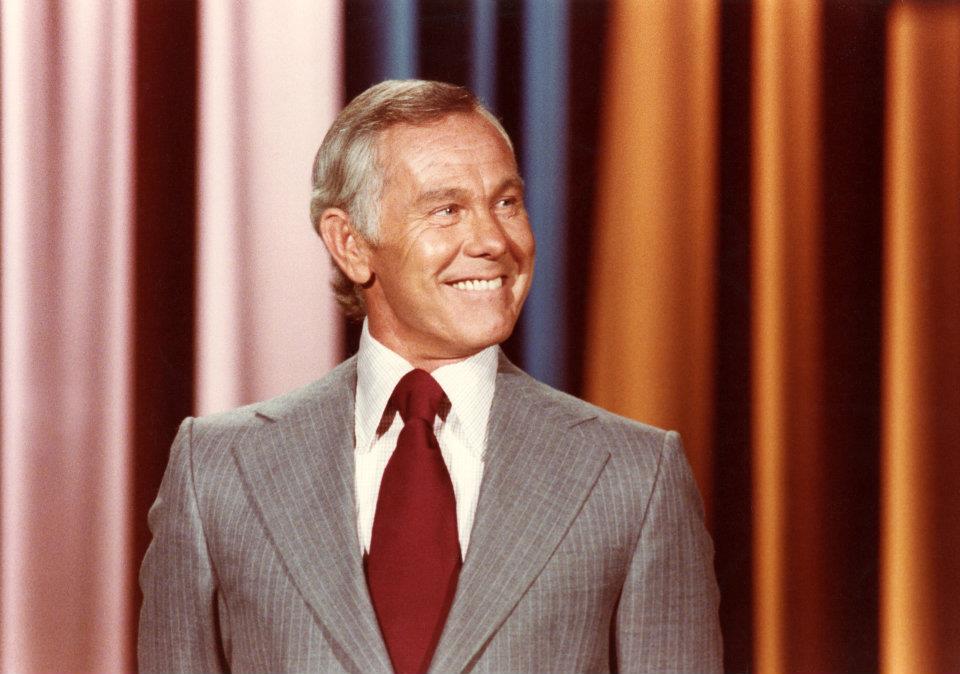
Remember when people on television were expected to have a little class?  It’s been a while, since about May 21st, 1992.  On that night, Johnny Carson retired as the host of The Tonight Show, after 4,531 episodes and 23,000 guests.  Granted access to the Carson archives, Peter Jones profiles the definitive American talk show host in Johnny Carson: King of Late Night (promo here), which airs on PBS’s American Masters this Monday.

A product of the Midwest, Carson never talked down to his audience or forgot where he came from.  Taking more than a bit of a pop-psychology approach, Jones attributes great significance to Carson’s need to impress his aloof mother and the attention he received as a teen-aged magician.  Carson got into television more or less on spec, making little money in what was then a new and relatively unseen medium.  Needless to say, television caught on and eventually so did Carson, though his early career trajectory was decidedly erratic.  In fact, when Carson was offered The Tonight Show after Jack Paar’s departure, many industry analysts were incredulous.

For children of the 1980’s, King of Late Night is a dramatic reminder how much media has changed in our lifetimes.  There was a time we vaguely remember when Carson’s show was invariably the number one topic of conversation the next day.  His monologue was considered a bellwether gauge of the national mood on current controversies in a way that has no analog today.  Unlike his successors, Carson maintained a scrupulous political balance on his show, gaining a reputation for tweaking both sides with equal playfulness.  He also regularly booked classical and jazz artists programming his show for the widest possible spectrum of the country.  Nobody does that anymore.

Jones addresses Carson’s wider cultural significance, but also opens a window into the very private public figure’s personal life.  At times, King feels slightly more tabloidy than was probably intended, but given his three famous divorces and a documented weakness for drink, it is impossible to ignore the dark side behind his carefully crafted persona.  Still, Carson employed some rather deft jujitsu with the frequent divorce jokes that shrewdly cast him as the beleaguered victim.  Indeed, Carson was a master of rhetoric, capable of milking masochistic humor from jokes that ignobly died.

Perhaps King is strongest documenting Carson’s role as a comedy king-maker, featuring extensive recollections from comedians and eventual Tonight Show guest hosts, such as David Letterman, Jay Leno, Joan Rivers, Gary Shandling, Dick Cavett, and Bob Newhart.  Wife number two also speaks quite affectionately about the man she claims to have pushed into accepting the Tonight Show gig.  Jones also well illustrates Carson’s career with rare archival footage.  However, the one scene everyone wants to see—the supposedly apocryphal night he asked Zsa Zsa Gabor to lift her cat—is never mentioned, not even to debunk it.

Many viewers will be surprised how good it is to see Carson on television again.  Brisk but authoritative, King of Carson is an entertaining television biography.  Fulfilling your recommended weekly nostalgia fix, it airs this Monday (5/14) on most PBS outlets as part of the current season of American Masters.

(Photo: Carson Entertainment Group)

Saturday, March 31, 2012

American Master/Rebel: Margaret Mitchell

Except for perhaps Harper Lee, Margaret Mitchell was America’s greatest literary one-hit wonder, but what a blockbuster hit it was. American Masters profiles both Pulitzer Prize winning novelists this Monday, with the broadcast premiere of Mary McDonagh Murphy’s Hey Boo, seen in New York theaters last May, Georgia Public Broadcasting’s Margaret Mitchell: American Rebel, airing nationally this coming Monday on most PBS outlets.

Margaret Mitchell wrote Gone with the Wind. End of story? Actually, writer-executive producer Pamela Roberts nicely traces the roots of the famous Civil War novel to the stories turn-of-the-century baby Mitchell heard from the Confederate veterans of her youth. However, for many viewers, the considerable financial support Mitchell gave to traditionally African American Morehouse College will be Rebel’s greatest revelation. It also counterbalances the expected criticisms of Mitchell’s problematic depiction of mistress-house slave relationships.

Still, there is no getting around the significance of Gone with the Wind. Had Mitchell not written the novel, it is doubtful anyone would produce a documentary about a one-time Atlanta Journal correspondent, regardless how trailblazing her relatively short tenure was at the time. That is what viewers will want to hear about anyway. Fortunately, Roberts has some pretty good publishing stories and duly covers the celebrated film, while keeping the focus squarely on Mitchell throughout.

According to Rebel, Mitchell’s lifelong maid constantly answered phones calls from fans who wanted to know if her protagonists ever got back together. She brusquely replied neither she nor her employer could say. Indeed, O’Hara’s resolve to face the world alone, even with the slap in the face ending, is rather the whole point. That is why the estate’s authorized sequels are such a travesty.

Clocking in at just under an hour, Rebel effectively makes Mitchell’s case as a significant cultural figure without overstaying its welcome, which is quite considerate of it, in a Southern kind of way. Informative and easily digestible, Rebel is pleasant enough viewing when it broadcasts this Monday (4/2) as part of the current season of American Masters on PBS.

(Photo: Atlanta History Center)

Friday, February 24, 2012

The Cool Master: Cab Calloway

With the Gershwins’ Porgy and Bess back on Broadway, it is a fine time to pay homage to the original Sportin’ Life. It was a role modeled on and originated by the timelessly hip jazz vocalist and bandleader Cab Calloway. Though far from exhaustive, Gail Levin hits a lot of his career highlights in the breezy and informative Cab Calloway: Sketches (trailer here), which airs on PBS’s American Masters this coming Monday.

Naturally, there is a lot of “Minnie the Moocher” in Sketches. It is the Calloway song everybody knows, even if they do not know they know it. Here’s a hint: “Hi de hi de hi de ho.” Sound familiar? Legions of fans were first introduced to it in the Blues Brothers movie. Understandably, Sketches spends a great deal of time on this late career renaissance for bandleader, featuring the reminiscences of director John Landis and Blues Brothers band members Steve Cropper, Lou Marini and Donald “Duck” Dunne, who still give Calloway props for coolness.

Levin also assembles the usual suspects of jazz talking heads to place Calloway in a musical-historical context. However, some of the most insightful commentary comes from his grandson Chris “Calloway” Brooks, the leader of the Calloway ghost band. While his stage persona is a bit shticky, Brooks really breaks down the inner workings of Calloway’s band and music in a way that should inspire fresh appreciation for the bandleader among those who previously had trouble getting past the zoot suits.

Sketches touches on the Cotton Club years, The Hepster’s Dictionary, and his appearance with Lena Horne in Stormy Weather. Of course, there is plenty it misses, like his run on Broadway in Hello Dolly opposite Pearl Bailey or the spitball controversy involving his soon to be former sideman Dizzy Gillespie that inspired Jean Bach’s award- winning documentary short (which it actually saves as an outtake for the American Masters website), but as a bite-sized sampler, it is an easily digestible introduction to the American Hepster Master. After all, when was the last time you saw Calloway on free TV, besides maybe a rebroadcast of The Blues Brothers?

At just under an hour, Sketches is brief, but entertaining and affectionate. Arguably, if it leaves viewers wanting more, it has achieved its purpose. A nicely put together jazz tribute, Sketches is recommended for general audiences when it runs on PBS this Monday (2/27), as part of the current season of American Masters.

(Photos: Artline Films / J.-F. Pitet)

Friday, December 16, 2011

Designing Modernism: The Eames

Charles and Ray Eames have been hailed as two of the most influential designers of the Twentieth Century. They have legions of hipster admirers, but their best known work was produced for corporate clients. Indeed, they were delighted to have the business. The power couple of modern design are profiled in Jason Cohn & Bill Jersey’s Charles & Ray Eames: the Architect and the Painter (trailer here), which airs this coming Monday on PBS’s American Masters.

Charles Eames was an architect who was never officially licensed to practice. His wife (not brother) Ray Eames was a painter who studied with Hans Hofmann. They are best known for the molded Eames chairs, which became a staple of chic suburban dĂ©cor in the 1950’s. Royalties from the Herman Miller furniture company would underwrite many of the Eames’ more experimental work. However, some of their most ambitious projects were corporate work-for-hire, including the IBM Pavilion at the 1964 World’s Fair.

Perhaps one of the biggest revelations of A&P is the role the Eameses played in Cold War history. At the behest of the U.S. Information Agency, the Eames studio produced a film for the previous 1959 World’s Fair, famous for the so-called kitchen debate, to introduce Soviet citizens to their typical American counterparts. Employing seven individual screens simultaneously, it can now be considered a precursor to the I-max experience. Though relatively few people have ever seen the film, it was a big hit at the Fair.

As a documentary, A&P is a real breath of fresh because it takes their remarkably creative corporate work so seriously. While Eames chairs will always have admirers, it is satisfying to see the architectural and design work of projects like the Pavilion and the IBM-sponsored Mathematica exhibition for the California Museum of Science of and Industry get their just due.

Cohn & Jersey handle the complicated circumstances of the Eameses’ private lives fairly adroitly, explaining enough so they cannot be accused of whitewashing their subjects, but never sensationalizing the details. They also shrewdly navigate issues of attribution, suggesting some of their studio employees might have appreciated more recognition, while also clearly implying the more outgoing Charles was quite forthright about the shier Ray’s role as a creative collaborator, but the clueless ADD media just was not listening.

Frankly, the filmmakers only made one mistake, going for James Franco’s big name as the narrator. Unfortunately, his voice is rather dry and characterless, completely lacking the rich resonance of a Liev Schreiber or a Keith David. The man just can’t “host.”

Boasting some striking graphics and scores of intriguing vintage images, A&P is much more visually dynamic than the standard issue documentary portrait of the artist. Audiences have clearly responded to it, considering its theatrical run continues in New York at the IFC Center. However, viewers can see it for free in the comfort of their own home when it premieres on PBS this coming Monday night (12/19). Entertaining and informative, it is a worthy addition to the American Masters roster.

(Photo: © 2011 Eames Office, LLC)

Friday, November 18, 2011

Woody Allen: A Documentary

If being neurotic is an art form than Woody Allen is Michelangelo. Film is definitely his canvas. Recently, Allen followed up one of his worst received films with his biggest hit ever (thanks to an assist from inflation). Emmy winning filmmaker Robert Weide was able to capture the idiosyncratic auteur at work on both for his in-depth two-part profile Woody Allen: A Documentary (promo here), which premieres this coming Sunday and Monday nights on PBS’s American Masters.

Frankly, anyone who knows anything about Woody Allen will be shocked he granted Weide such intimate access and consented to so many on-camera interviews. He is no publicity hound. Despite twenty-one Oscar nominations and three wins, Allen has never attended the Academy Awards, preferring his regular Monday night playing New Orleans-style jazz clarinet at the Café Carlyle. You have to respect his priorities.

Perhaps Allen is finally starting to seriously consider posterity. He opens up to a surprising extent about certain things, such as his early family life. However, this is not exactly Everything You Ever Wanted to Know About Woody Allen but were Afraid to Ask. Weide duly broaches the subject of his notorious split from Mia Farrow, but he does so rather gingerly. Indeed, he never presses Allen on the propriety of carrying on a sexual relationship with the daughter of his de-facto (if not technically legal) wife. Nor does Weide ask Allen what the heck he was thinking casting Kenneth Branagh in Celebrity.

Despite overlooking that artistic nadir, Weide’s Documentary is strongest when addressing Allen’s voluminous filmography. While the compulsive work ethic and insistence on total artistic control are well established, Weide challenges the notion Allen has always been a sheltered art-house flower, clearly establishing Annie Hall and Manhattan were about as mainstream successful as films get.

Allen also offers a number of insights into the creation and execution of his major works. To nobody’s surprise, Mia Farrow does not appear in the documentary. However, Diane Keaton is a major voice in the film. Some of the best commentary though, comes from Mariel Hemingway. Weide also shrewdly includes a nice taste of its lush Gershwin soundtrack as well as several other standards heard in various Allen films, like “Sing, Sing, Sing” throughout the two installments. Indeed, Manhattan will probably be the film that spikes the most at Netflix after the documentary airs (if they are still around on Tuesday).

Considering Allen’s remarkable career rebound with Midnight in Paris, it is somewhat surprising Weide’s Documentary did not have an earlier life on the New York film festival circuit. Smartly assembled, it compares favorably with Martin Scorsese’s George Harrison: Living in the Material World. It covers Allen’s films, music, and stand-up quite credibly, even adding some brief nudity from Ingmar Bergman’s Monika as a bonus. Even if it keeps some of his warts under wraps, Weide’s Documentary is often fascinating (though it can never top the mother of all awkward family homecomings in Barbara Kopple’s Wild Man Blues), definitely recommended for movie lovers and Allen fans when parts one and two air on PBS this Sunday (11/20) and Monday (11/21).

(Photos: courtesy of Brian Hamill/©MGM)