You can still find out-of-service pay phones left installed in the walls of
old school diners, decrepit bus stations, and past-their-prime school buildings
that seem to offer the promise of ghostly communication they cannot possibly
fulfill. This serial killer assumes the disconnected phone in his basement
dungeon is just like that, but his latest abductee will receive supernatural calls
on it from previous victims in Scott Derrickson’s Blumhouse-produced The
Black Phone, which opens tomorrow nationwide, after screening at this year’s
Tribeca Film Festival.
He
is called the Grabber for obvious reasons. He uses balloons and magic tricks to
lure kids off the street, but even after grabbing them, he never lets them see
his face unmasked. Unfortunately, Finney Shaw will be his next victim, following
his friend Robin Arellano and his friendly softball rival, Bruce Yamada. Arellano
was more formidable taking on bullies at school, but Shaw is the first to draw
the Grabber’s blood during the abduction.
Thanks
to the ghostly calls he receives on the supposedly kaput phone in the Grabber’s
sound-proofed basement, Shaw also avoids all the mistakes his past victims
made. They also offer advice regarding potential avenues for escape, but he
will have to work quickly. So far, Shaw’s kidnapping has been so unsatisfying
for the Grabber, he is starting to lose patience with his latest victim. Of
course, the clueless cops are looking for him, but so is his younger sister
Gwen. She has a bit of the shine, but she can’t necessarily summon it whenever
she wants. Instead, it comes irregularly in dreams.
Based
on the Joe Hill short story, Black Phone features an abusive father,
similar to the many examples found in the works of his own dad, Stephen King.
Critics of the psychoanalytic school can make of that what they will, if they
dare. At least Derrickson and C. Robert Cargill’s adapted screenplay explains
the Shaw siblings’ father acts they way he does, because their late mother was
driven crazy by her clairvoyant gift/curse.
Regardless,
Black Phone is insidiously effective (if you will) because the young
cast is so compelling. Yes, the always reliable Ethan Hawke is all kinds of
creepy as the Grabber, but the sinister masks are also a big part of his screen
presence. However, Mason Thames really holds the audience’s attention and
sympathy as the somewhat nebbish Shaw. When he is not on-screen, Madeleine
McGraw steals numerous scenes and scores the film’s only laughs as his sister
Gwen. You do not often see such an endearing and cooperative young
brother-sister relationship in films—but it is done really well in Black
Phone.
Biden tells us Zelenskyy refused to believe him when he warned the Ukrainian
President of Putin’s full-scale invasion, but that seems unlikely. After all,
the Ukrainian military volunteers interviewed for this documentary back in 2014
and 2015 all predicted it, sooner rather than later. Some of them have very
personal experiences with Russia’s attempts to undermine their nation, as they
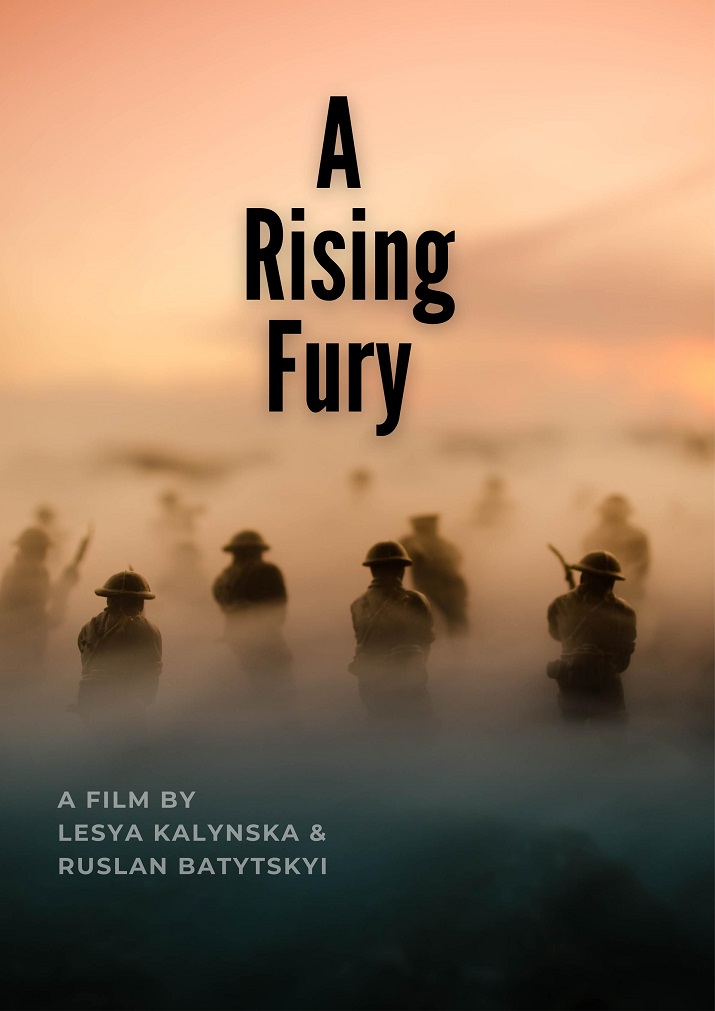
explain in Lesya Kalynska & Ruslan Batytskyi’s documentary, A Rising Fury,
which screens as an “At Home” selection of this year’s Tribeca Film Festival.
Pavlo Pavliv and Svitlana Karabut are trying to
maintain a relationship, but the war in the Donbass region makes it difficult.
His activism started while maintaining the protective barricades at Maidan, but
his military training began earlier, when an older man named Igor, call-sign: “Berkut
(Hawk),” took him under his wing and recruited him for his Airsoft team.
Eventually, Pavliv and Karabut deduce Igor is
actually an undercover Russian operative deliberately targeting marginalized
young Ukrainian men, to turn them against their country. It is chilling example
of organized subversion that ought to make all viewers take note, especially
considering how successful Igor was.
In fact, it is probably the most newsworthy element
of the film, because even though Kalynska & Batytskyi’s coverage of Maidan
and Donbass includes some dramatic footage, it is not radically unlike other
Ukrainian documentaries. However, when taken together with its insights into
Russia’s long-game psy-ops, as represented by Igor, it is quite valuable
indeed.
If
you were around in the early 1980s, you might remember how John McEnroe
and Tatum O’Neal were like J-Lo and A-Rod, but with exponentially more
paparazzi interest. Their marriage didn’t last, but he always maintained a
relationship with tennis. The notoriously outspoken athlete is profiled in
Barney Douglas’s documentary McEnroe, which screens during the 2022 Tribeca Film Festival.
Yep,
McEnroe used to argue calls on the court from time to time. He addresses his
famous outbursts quite frankly in the doc. He is not proud of them, but he explains
the issues he was experiencing at the time. He also rarely let them influence
the next point.
Watching
McEnroe reminds us just how long he has been in the public eye. Children
of the 1980s who only vaguely remember the media circus surrounding his
marriage to O’Neal will find Douglas’s coverage eye-opening. Fortunately, he
also handles the tennis stuff well too. Even if you followed his career at the
time, or if you’ve seen Janus Metz’s thoroughly entertaining Borg vs.McEnroe, you will probably get caught up in the drama of McEnroe’s Wimbledon
battles with Bjorn Borg.
In
a bit of a score, McEnroe’s great rival-turned-friend appears on camera to
discuss their comradeship, despite largely retiring from the tennis world and
public life. O’Neal is absent, but the rest of his family discusses McEnroe,
with pretty much the same candor he brings to the film. (We even see his
current wife, Patty Smythe performing on American Bandstand, which is
another blast from the 1980’s past.)
Nobody could match the moves of Fayard and Harold Nicholas. This short documentary
[inadvertently] proves it. Although their prime Hollywood musical numbers were
often cut out to appease the segregationist South, they eventually received
Kennedy Center Honors and a star on the Hollywood Walk of Fame. They appeared
in the clip montage movies That’s Entertainment and That’s Dancing,
but strangely, neither selected their most iconic performance. Contemporary
dancers look back in awe at their leaping steps in Michael Shevloff & Paul
Crowder’s Nicholas Brothers: Stormy Weather, which screens during the
2022 Tribeca Film Festival.
Stormy
Weather was
a star vehicle for Lena Horne, so there would be no call for cutting out the
Nicholas Brothers’ big number. Fittingly, they uncorked one of their greatest
filmed performances, culminating with the brother leaping over each other,
landing into splits, as they worked their way down a grand, Busby Berkeley-ish
staircase. Backed by the Cab Calloway Orchestra, they nailed it in one take,
with no rehearsals.
Dancers
like Savion Glover give unnecessary explanations as to why their performance is
so impressive. Frankly, you can totally get it just from watching them.
However, the short film builds up to the contemporary dancers, Les Twins,
choreographing and performing their own tribute to the Nicholas Brothers’ Stormy
Weather performance—which will absolutely not be a recreation, an important
distinction.
Roy Hargrove was considered one of the “Young Lions” because he was anointed
by Wynton Marsalis, but he was one of the first big jazz headliners to
collaborate with hip hopers, at a time when Marsalis was especially critical of
their aesthetic. Hargrove always stayed true to his own musical conceptions,
like all true jazz artists, but he died too soon, again like far too many jazz
greats. Eliane Henri followed the musician during his final international tour,
documenting what would be his last days in Hargrove, which screens as
part of Tribeca at Home.
Clearly,
we see Hargrove is a bit tired from the road during the opening scene.
Eventually, we also learn his health was also ailing. The musician had been on
dialysis for years. His doctors wanted him to get a kidney transplant, but he
was reluctant, for financial and professional reasons, to take the time off. These
scenes in which Hargrove talks about his health problems are eerily powerful,
like the posthumous anti-smoking PSA Yul Brynner recorded when he was dying of
cancer.
Of
course, Hargrove’s music is also virtuosic, especially the beautiful way he
could caress a ballad. However, none of Hargrove’s originals can be heard
throughout the documentary, because his manager, Larry Clothier (who remains in
charge of his music company), would not approve their release. That leads to
one of the great issues with Henri’s doc.
Henri
makes it very clear she and Clothier often clashed during the making of the
film. The way she put together the film, it certainly looks like Hargrove sided
with her in most matters. Arguably, this reflects the concerns that preoccupied
the musician in his final days, but it ends up injecting her into the film. It
is a more than a minor subplot—it is a major part of the doc.
Is
this really the best way to introduce Hargrove to viewers who might be checking
out Hargrove because of the involvement of his friends Questlove and Erykah
Badu? Admittedly, this is a tricky terrain to navigate, but perhaps removing
all traces of his manager might have been a better option.
Even though it scattered New Orleans musicians, Katrina never the silenced
the music. Jazz Fest continued on-schedule and the Frenchmen and Bourbon Street
clubs were undamaged and reopened for business. However, Covid closed
everything and canceled all the gigs, including Jazz Fest. At least documentary
filmmakers appreciated what we were missing, because there has been a recent boomlet
of NOLA music docs released in theaters or screening at festivals. This one is
a welcomed addition. Ben Chace profiles four stylistically different—but not
too disparate—veteran New Orleans musicians in Music Pictures: New Orleans,
which screens during this year’s Tribeca Film Festival.
Part
one focuses on Irma Thomas, “The Soul Queen,” a highly fitting and logical
place to start. Unlike Martin Shore’s Take Me to the River New Orleans, which
felt compelled to team Thomas up with a younger artist, Ledisi, Chace finds her
sufficiently interesting on her own, because she is. However, he also gives a
bit of time to her sidemen, particularly drummer Johnny Vidacovich, whom Thomas
is happy to share the spotlight with. Hearing them put together a smoldering and
swinging “My Love Is” is a treat.
Likewise, hearing Thomas casually land an a cappella “Our Day Will Come” and
then carefully caress it while recording a lush studio arrangement will give
you good chills. Honestly, watching Music Pictures will make NOLA music
fans realize she is even cooler than they understood.
Benny
Jones Sr. is now the leader of the Treme Brass Band (who were regularly seen in
HBO’s Treme), but he was also a founder of The Dirty Dozen Brass Band,
who really deserve a documentary of their own, for re-popularizing a funkifying
the NOLA brass band tradition. NOLA brass bands have an infectious rhythmic
drive and as a bass and snare drummer, Jones is one of the best putting the
beat on the street. Of course, the entire band makes their groove swing, but
vocalist/alto-player John “Prince” Gilbert gets the time to tell some of the
band’s reminiscences, like when they opened for the Grateful Dead, in Oakland,
on New Year’s Eve.
Little
Freddie King probably lived the blues as much as anyone, if not more so. Yet,
he survived to find fame in Europe and play regular gigs in New Orleans. He probably
has the film’s most colorful anecdotes, but the important thing is he can still
play—and he is a heck of a snappy dresser. It is definitely King’s segment, but
his drummer-manager “Wacko” Wade Wright gets credit for handling all the
business, as well as a lot of King’s personal, medical logistics.
Appropriately,
Music Pictures concludes with New Orleans’ first family of modern jazz,
the Marsalises, whom Shore dubiously ignored. It was a wise choice, considering
Ellis Marsalis, the NOLA jazz patriarch, passed away due to Covid complications
in 2020. Chace focuses on Marsalis’s first and only album length collaboration
with his son Jason (brother of Wynton and Branford) on vibes (whereas on their
previous recordings together, Jason had played drums).
We need to get horror film directors some sort of group subscription to
Discovery+, because they need to start developing healthier relationships with
food. You would think there would be plenty of healthy eating in this film, because
Simi’s Aunt Claudia is a nutritionist, but the ominous countdown to Easter dinner
clearly implies something awful will be happening in screenwriter-director Peter
Hengl’s Family Dinner, which screens during this year’s Tribeca Film Festival.
Tired
of getting bullied over her weight, Simi invited herself to Aunt Claudia’s rural
Austrian farm over Easter break, in hopes she could get some personal
weight-loss mentoring. The thing is, Claudia (an aunt by a marriage-now-divorced)
is not as welcoming as Simi hoped—but her new husband Stefan is weirdly
hospitable. Her cousin Filipp is probably downright hostile, but he isn’t
getting along so well with his mother and Stefan either.
Despite
some initial misgivings, Aunt Claudia agrees to help Simi, but her rigorous
program borders on the draconian. It seems physically unhealthy and the mind
games grow increasingly sinister. On the other hand, Stefan finds Simi more
useful than Filipp during a hunting trip, so she has that positive
reinforcement going for her.
There
is a lot of slow-boiling in Family Dinner, but it is pretty clear what
is it all heading towards. Not to be spoilery, but if you really think about the
title, it is a dead giveaway. Unfortunately, Hengl expects the climax will be
so shocking, it will make up for the slowness of the build and the lack of
significant plot points.
Early 1991 was an opportune time to be a film student in the Baltics, because
history was exploding daily. It was also a dangerous time for the same reason.
Jazis generally supports Latvian independence from their Soviet occupiers, but
he has yet to mature to the point he can fully appreciate the gravity of the
moment in Viesturs Kairiss’s January, which screens during this year’s
Tribeca Film Festival.
Jazis
wants to be the next Tarkovsky, which would ordinarily alarm most parents, but
his anti-Communist mother is fine with it, along as he gets a draft deferral
from his film school. The last thing she wants is to have her son in the Soviet
army, potentially in harm’s way, while putting down democratic opposition
movements. His father also basically agrees, even though he is a Party member. Unfortunately,
Jazis’s drive and talent level will complicate matters.
For
a while, his affair with Anna, a pretty fellow film student awakens some
passion in him. However, when she falls under the influence of a famous
filmmaker, Jazis spirals into depression and apathy. Yet, maybe the Soviet
military’s attempts to stifle Baltic activism for independence might awaken him
from his lethargy.
Kairiss
skillfully uses a textured lo-fi style (including Super8), integrated with genuine
historical archival footage, to recreate the tenor of the early 1990s in the
Baltics quite vividly and evocatively. You really get a sense of the tension
and potential violence that was literally hinging in the air. In one telling
moments, Jazis asks an elderly woman if she was scared to deliver the food she
baked for demonstrators. “No, I’ve been waiting 50 years for this,” she tells
him.
January
is
highly effective time capsule and mood piece, but Jazis is so moody and sulky,
we hardly get a sense of any character there within him. Arguably, many of the
minor figures, like Jazis’s parents, resonate more than he and his film school-mates.