Friday, May 18, 2012

IFC Midnights: Entrance


Suzy is carless in LA.  That is about as depressing as it gets.  Frankly, she might as well let her psycho-stalker kill her, if she really has one.  Regardless, there is something seriously amiss with her life in Dallas Hallam & Patrick Horvath’s Entrance (spoilery trailer here), which opens a week of late night screenings at the IFC Center tonight and is now available via IFC Midnight’s VOD platforms.

Suzy has a nice pad and her roommate Karen’s friends have accepted her readily enough.  Yet, she has yet to make any deep human connections in LA and her barista job is profoundly unfulfilling.  There is something wrong with this picture, but we cannot determine if it is because of Suzy or someone around her.

Initially, Entrance sets off every mumblecore alarm bell, depicting Suzy’s workaday life in mind-numbingly repetitive detail.  However, there are occasional what-the-heck-was-that moments that should not be ignored.  Hallam & Horvath are steadily inching towards something and it is rather shocking precisely because of the time we have invested in the scrupulously ordinary characters.

Actually, there is nothing commonplace about Suziey Block’s performance as Suzy (with the more conventional spelling).  Quite attractive in a real world way, she withstands the co-directors’ harsh close-ups, vividly portraying a woman on the verge of an ambiguous breakdown.  While the deliberately grubby DIY style might put off some viewers, most will find themselves caring about the increasingly alienated protagonist, despite her frequently problematic nature.

Hallam & Horvath shrewdly use the LA setting, but not necessarily with love.  Instead, it represents an isolating, compartmentalized environment.  The city also attracts a lot of sketchy types.  There is indeed a reason why Entrance is being released as a Midnight special, but explaining why would give the game away.

Co-written by the co-directors with most of their principle cast, Entrance represents an unusually patient genre outing, taking considerable (perhaps even excruciating) time and effort to set up the third act that pulls the rug out from everyone’s feet.  Though not another found footage film (thankfully), it feels substantially more real, which ultimately makes it far more disturbing.  A slow build that eventually pays off, Entrance is recommended for genre fans who appreciate something a bit outside the norm.  Now available on VOD, it also screens for a week of midnights (or thereabouts) starting tonight (5/18) at the IFC Center in New York.

What’s Still Wrong with Virginia


Screenwriter turned director Dustin Lance Black deserves some credit.  It is difficult to admit your indie labor of love just isn’t happening, but Black forthrightly faced up to the uniformly negative reception for What’s Wrong with Virginia at Toronto and headed back to the editing bay.  Unfortunately, the problems are just too deeply rooted in the film now simply titled Virginia (trailer here), which nevertheless belatedly opens in New York today.

Emmett’s mother Virginia is sleeping with Sheriff Tipton, the holier than thou Mormon state senate candidate in a judgmental southern town.  At least, she was until she became too great a political liability.  Emmett deeply resents Tipton for tarnishing his mother’s reputation with their brazen carrying-on.  Tipton wants no part of Emmett either and he expressly forbids the sullen youth from seeing his daughter Jessie.  After all, he has been paying calls on Virginia for quite some time, if you follow.  Emmett fully understands this fact, but he doesn’t care.  As he pursues Jessie, his mother slowly begins to breakdown mentally.  She convinces herself she is pregnant (causing no end of embarrassment for Tipton) and contemplates some rash criminal acts.  Still, she is cool enough to give Emmett’s courtship of Jessie her blessings.

Evidently, in the previous cut much of this was presented as farcical comedy.  Black certainly succeeded in draining all the ostensive humor out of the film, which sounds like it is just as well.  While the dreary tone might be more consistent, huge problems remain.  The gauzy, nostalgic cinematography (and to a certain extent the costumes) give the film a 1950’s-early 1960’s vibe, but the cars and set trappings are clearly of a later vintage.  It is also hard to figure out where this could all take place.  From what the audience is told, this is a small town in the Deep South, politically and socially dominated by Mormons, within easy driving distance of Atlantic City.  Okay, find that on the map for us.

This is not just a matter of splitting pedantic hairs.  Penned by Black, the ex-Mormon Big Love scribe, Virginia’s screenplay is far too concerned with schooling people the director disagrees with, such as his former co-religionists, southerners, and Republicans (presumably), than telling a coherent story.  Nor is there much character development here, but rather a reliance on stereotypes.  Tipton is a conservative Mormon, therefore he is a hypocrite.  Virginia is a “free spirit,” so she must be saintly. 

Indeed, Tipton’s kinky laundry is predictably and repeatedly aired in public, lest we miss the point.  What can be said of a narrative that hinges on the realization Sheriff Tipton allowed a reality TV show to film him walking from a crime scene to the town’s fallen woman next door for a bit of action on the side?  The purpose of this review is hardly to give cheaters tips to prevent detection, but duh.

Jennifer Connelly is quite compelling as Virginia, but she portrays the title character as such a lost little girl in a state of perpetually arrested development, it adds layer of creepiness to the lurid sexual content.  Conversely, Ed Harris is nothing more than a caricature as Tipton.

It is really heavy to think this is the new and improved Virginia.  Those poor misfortunate souls in Toronto must have taken quite a hit for the team.  It is still pretty bad.  Not recommended for anyone, Virginia opens today (5/18) in New York at the AMC Empire.

Thursday, May 17, 2012

Niall Ferguson’s Civilization: The West, the Rest, and the Future


The Ottoman Empire’s decree banning printed type in 1483 was obviously a noteworthy historical event.  According to economic historian Niall Ferguson, it a particularly telling incident, emblematic of the increasingly sharp distinctions between the West and the rest of the world.  Ferguson lucidly explains six key attributes or so-called “killer apps” contributing to the West’s ascendency for the last five hundred years or so and pointedly asks if they are now beginning to shift to the East in the two-part sweeping survey Civilization:The West and the Rest (promo here), adapted from his bestselling book of the same name, which airs the next two Tuesday nights on most PBS outlets nationwide.

One of Ferguson’s touchstone figures is a “Resterner” rather than a Westerner.  During the reign of Emperor Yongle, the technologically advanced China was a relatively pleasant place to live, especially compared to the dismal conditions of Europe.  However, his successors would turn China’s focus inward, ceding the global stage to upstart Westerners.  The West was well suited to capitalize because of those six killer apps: competition (first between grubby European city-states for prestige and than in the more traditional capitalistic sense), science, democracy (particularly when coupled with widespread property ownership), modern medicine, democracy, and the work ethic.

While many of these might sound rather obvious, Ferguson puts each into a fresh perspective.  Science would indeed seem like a glaring no-brainer, but not to the Ottomans.  Just as the Catholic Church was relaxing its attitudes towards scientific inquiry, the Muslim religious authorities were taking an even harder line, including but not limited to the prohibition against type in favor of calligraphy.

Even when analyzing American history, the British historian offers some intriguing insights.  Though public schools largely give short shrift to the founding of the Carolina Colony and the Fundamental Constitutions written by John Locke, Ferguson contends they represented an unprecedented opportunity for social mobility.  In less than a decade, a despised member of the English underclass could bind himself into indentured servitude, receiving free and clear title to his own land holdings at the end of his term.  As a property owning man, thereby entitled to vote, he became a fully vested member of the economic and political establishment.

While Ferguson largely avoids normative judgments, he makes time to critique what he dubs America’s “original sin,” slavery, and its bastard child, segregation.  Yet, in keeping with his previous scholarship, Ferguson is more forgiving of European colonialism, especially with regards to the spread of modern medicine (in this case a kindly app) throughout Africa.

Of course, the central questions concerning Ferguson are whether the West still believes in its killer apps and if Resterners have developed better upgrades.  This really comes to the fore during his discussion of the work ethic—the Protestant Work Ethic to be more precise.  Here the Chinese are demonstrably outperforming the West, even America, by any standard of productivity.  The real revelation though is the linkage Ferguson posits with the upsurge in Protestant religious observance in Mainland China.  Ferguson’s observation: “today there may actually be more practicing Christians in China than in Europe” is a heavy statement rife with implications few are seriously grappling with.  In no uncertain terms, China is identified as the Restern power to watch.  Yet, Ferguson never fully addresses the enormous disparities between the go-go coastal cities and the desperately poor rural villages, where consumerism and even modern medicine have yet to fully arrive.

Granted, Ferguson’s approach is somewhat anecdotal, but those stories are truly fascinating, more often than not.  Naturally, compressing five hundred years into four hours will lead to odd allocations of focus.  As a case in point, German sociologist Max Weber has at least twenty times more screen time than Lenin, Stalin, Hitler, and Bismarck combined.  On the other hand, his scholarship withstands history’s scrutiny better than their ideologies.

Simultaneously erudite and telegenic, Ferguson is an almost chatty host, who could be accused of glossing over decades and even centuries with the wave of a hand.  Yet, he is dashed convincing, pulling viewers through his arguments, step by logical step.  It all might sound dry, but it is surprisingly entertaining.  Frankly, viewers will be rather sorry to see Civilization end, so to speak.  Immensely timely and intellectually engaging, Ferguson’s Civilization is very highly recommended television.  It begins this coming Tuesday (5/22) and concludes the following week (5/29) on most PBS stations.

(Photos:  Dewald Aukema, © Chimerica)

Hysteria: Does Blue Cross Cover That?


It was a moment in history worthy of the Niall Ferguson treatment.  However, instead of explaining how the invention of the vibrator served as the coup de grace for the Ottoman Empire, gender politics and naughty humor are the agenda items for Tanya Wexler’s slightly risqué historical comedy Hysteria (trailer here), which opens tomorrow in New York.

Though his wealthy guardians, the St. John-Smythes, would support him, the appallingly middle class Dr. Mortimer Granville has that famous protestant work ethic.  He is also up-to-date with the latest advances in medical science, which brings him into conflict with most of London’s frighteningly backward hospital directors.  Fortunately, he secures a position with Dr. Robert Dalrymple, the city’s foremost specialist in “hysteria,” a sort of catch-all diagnosis for women’s nervous tension, but mostly applied to straight-up horniness.  Dr. Dalrymple has built a thriving practice manually stimulating women to what he calls a “paroxysm.”  Yes, that is exactly what it sounds like, as the film makes abundantly clear.

Dalrymple also has two daughters, the prim and proper Emily, whom Granville is supposed to be interested in, and Charlotte, the rabble-rousing progressive settlement house proprietor he is increasingly attracted to, against his better judgment.  Granville seems to finally have his life mapped out for him, until he is undone by a hand cramp, but together with the St. John-Smythes’ dissolute son Edmund, he invents a little mechanical device of destiny.

Hysteria milks its eye-brow raising material for snickers well enough, but the tut-tutting at Victorian hypocrisies quickly becomes tiresome.  Frankly, the film’s best chemistry is the bromance between Hugh Dancy’s Granville and Rupert Everett’s St. John-Smythe, whom we are clearly led to suspect will only be satisfying women through his tinkering.  Conversely, the film is often undermined by big-name miscasting, particularly that of Maggie Gyllenhaal as the sister leading Granville astray.  Can we believe she is annoying? Yes.  Intelligent?  Sort of, but it’s a stretch.   Alluring?  Not really.  Yet, the milquetoast Felicity Jones is hardly more attractive as the bland Emily.

The only real surprise in Hysteria is the extent to which Wexler is willing to show the various “paroxysm.”  Have no fear, our views are always safely obstructed by volumes of petticoats, largely making the film a tease for some potential audiences.  Those wishing to see a slightly ribald edition of PBS’s Masterpiece that wears its feminism on its sleeve will find Hysteria perfectly fits the bill, but everyone else will consider it mostly pleasant, but lightweight and predictable.  For Anglophiles, it opens tomorrow (5/18) in New York at the Lincoln Plaza and Landmark Sunshine Theaters.  As a final note, if you go, stay for the closing credits, featuring cool stills of vintage “Granville’s Hammers.”

Wednesday, May 16, 2012

The French SVU: Polisse


The officers of the French Child Protection Unit (CPU) take a lot of heat for investigating low income immigrant families, but they have to go where the crimes are.  However, they understandably chafe when top brass runs interference for a well-heeled suspect.  It will be one of many challenges facing a reasonably diverse CPU squad in Maïwenn’s Polisse (trailer here), which opens this Friday at the IFC Center.

The CPU cops are like a family.  They work hard and play hard together as a unit.  They truly get on quite well, except when they don’t.  Typically, the tensions that arise are between partners.  Familiarity does that.  Recently, they have welcomed an outsider into their midst: Melissa, a photographer documenting their work as part of an Interior Ministry PR offensive.  They get along with her too, especially the mostly separated Fred, the department’s bleeding heart hothead.

Based on real Parisian cases, Polisse (a deliberately childlike misspelling) is largely episodic, introducing many of investigations, but never following any all the way through, Law & Order style.  Some are decidedly politically incorrect, such as the case of the Muslim father who believes his religion supersedes any secular laws regarding child welfare or the wholesale removal of Romany children from their caravan.  In contrast, the pursuit of the powerfully connected de la Faublaise and Fred’s desperate attempt to find shelter for an immigrant mother and her child are far safer cinematic terrain.

Polisse boasts several powerful scenes, as when a Muslim officer loses her cool with said co-religionist father.  Yet, it is just as often wildly off-pitch, most glaringly so when several of the CPU officers find themselves snickering at an uneducated minor, who essentially submitted for the sake of a smart phone.  The scenes of Fred and Melissa’s warm and fuzzy cross-cultural romance are also total energy drains.  However, it ends with a bracing but not inappropriate conclusion, giving the audience a nice kick on the way out.

When on job, Joeystarr (a.k.a. Joey Starr, the French rapper and the director’s significant other) is ferociously intense as Fred.  Oddly though, his on-screen chemistry with Maïwenn’s Melissa is decidedly flat.  There are several very distinctive supporting turns, particularly from Karin Viard, Marina Foïs, and Naidra Ayadi.  Still, the large cast is arguably too large, with several coppers making little impression beyond being the pregnant one or such like.

Without question, Polisse has more to offer than scores of films.  Nonetheless, it is not infrequently messy and under-developed.  At least it is bold and ambitious, which counts for a lot.  Recommended for Francophiles who will recognize the ensemble deep with top name French talent, Polisse opens this Friday (5/18) in New York at the IFC Center.

Channeling Marilyn: Nobody Else But You


Generally speaking, it is a bad idea to emulate self-destructive movie stars.  However, the sexpot of Mouthe, the coldest town in France, does not have a lot of role models to follow.  Unfortunately, she meets the same fate as her idol Marilyn Monroe in Gérald Hustache-Mathieu’s slyly inventive Nobody Else But You (a.k.a. Poupoupidou, trailer here), which is now screening in New York.

David Rousseau is a series mystery author with a severe case of grinder-outer’s block. In Mouthe on a time-wasting errand (the sort of excuse editors refer to as “waxing the cat”), Rousseau is intrigued by a tragic local death.  The body of weathergirl and aspiring actress Candice Lecoeur was found in the no man’s land between the French and Swiss borders.  As a result, her death will not be properly investigated, unless he does it himself.

As he reconstructs Lecoeur’s life, largely by reading her diaries, Rousseau begins to fall for the woman who honestly believed she was the reincarnation of Norma Jean.  Likewise, Lecoeur develops affectionate feelings for the hack writer turned sleuth.  Yes, she serves as the real time spectral narrator of the film, just one of the many potential pitfalls Hustache-Mathieu nimbly skirts.

NEBY obviously suggests comparisons with Otto Preminger’s Laura, but Lecoeur really is dead.  Even so, it really is a love story between Rousseau and Lecoeur, distinguished by if-only regrets rather than romantic courtship.  Yet somehow Hustache-Mathieu manages to keep the tone relatively light and buoyant, which is a neat trick indeed.  He also fully develops the Marilyn Monroe connection in a spirit similar to Kenneth Branagh’s Dead Again and clearly demarcates each of the many flashback sequences.

Looking like Michael Fassbender’s dissolute older brother, Jean-Paul Rouve is scruffily charismatic as Rousseau, but he has an undeniably intelligent screen presence.  Appropriately not exactly a drop-dead beauty, Sophie Quinton still exudes unbridled sex appeal as Lecoeur, while conveying all her inner insecurities.  Rarely together on-screen, they still develop their not-relationship quite convincingly.

A great noir thriller with a fair sprinkling of laughs and a hint of paranormal romance, NEBY is a wholly original and completely satisfying film.  Unusually cleverly written yet totally engaging and accessible, it is highly recommended for general (if somewhat adult) audiences.  It is now playing in New York at the Cinema Village and opens in Los Angeles at the Landmark Nuart on June 8th.

Tuesday, May 15, 2012

Never Stand Still at Jacob’s Pillow


Jacob’s Pillow could be thought of as a Tanglewood for dance.  Nestled in the Berkshires, it hosts some of the world’s top troupes for workshops, master classes, and site-specific commissions.  Many of the regular visiting artists discus the institution’s significance and perform to appreciative audiences in Ron Honsa’s Never Stand Still: Dancing at Jacob’s Pillow (trailer here), which opens this Friday in New York.

In the dance world, the choreographers and dancers who have developed new work at Jacob’s Pillow are about as big as it gets.  The audience is told as much by an authority like Bill T. Jones, who serves as the film’s narrator.  We also hear from luminaries, such as Merce Cunningham, Paul Taylor, and former Balanchine prima ballerina Suzanne Farrell, now leading a company specializing in mounting her mentor’s lesser known work.  However, some of the freshest commentary (and performances) comes from MacArthur genius, dancer, and clown: Bill Irwin.

Never Stand Still is a pretty straight forward performance documentary, punctuated with appreciations for the institution founded Ted Shawn at the Hawthornesque New England farm.  That does not provide much drama or controversy to analyze, but for dance connoisseurs, it delivers the goods.  Farrell’s company is indeed present preparing a new work, but arguably the most striking (and appealingly rhythmic) performance is Gamaka, an extended solo piece by Shantala Shivalingappa. 

A master of Indian Kuchipudi dance, Shivalingappa was also a featured dancer with Pina Bausch’s company.  The film’s producers are no doubt hoping some of Pina’s specialty box office gold rubs off on it.   While nowhere near as visually arresting as Wim Wender’s remarkably crafted film, Never Stand Still's standard 2D serves the choreography well enough.  Yet, like Wenders, Honsa also has the good sense to largely step out of the way of the impressive performances.

Those passionate about dance should be delighted with Never Stand Still, while those less steeped in the art should find it a pleasant and accessible horizon expander.  Eventually, it should fit nicely under the auspices of either Great Performances or American Masters on PBS, but it deserves a respectful theatrical audience in the mean time.  Recommended for refined viewers, it opens this Friday (5/18) in New York at the Quad Cinema.

Quill: The Life of a Guide Dog


As cute as he is, Quill is a dog with a role in life.  By virtue of his intelligence and empathetic intuition, the golden retriever will become a guide dog for the blind.  His eventful dog’s life is lovingly depicted in Yoichi Sai’s Quill: the Life of a Guide Dog (trailer here), which opens this Friday in New York.

Out of a litter of five pups, Quill is the shrewdest.  His owner wanted them all to become guide dogs, but only Quill makes the grade.  As a result, he will experience his first parting, leaving his puppy home to live with the Isamu and Mitsuko Nii, a couple who care for prospective guide dogs until they reach the age training commences.  Considering how the Niis dote on him, Satoru Tawada’s training kennel requires quite an adjustment, but again Quill adapts.

Tawada has Quill in mind for Watanabe, the irascible chairman of a local nonprofit support organization, but the middle-aged man is resistant.  Of course, Quill wins him over, but Watanabe’s health problems will complicate their time together.

Sai once served as an assistant director to Nagisa Ôshima on In the Realm of the Senses, a film about as dissimilar to Quill as one can possibly imagine.   Not afraid of a little manipulative sentiment, Shoichi Maruyama and Yoshihiro Nakamura’s screenplay hits all the dog-lover bases good and hard.  However, Quill’s adorableness at all ages is an undeniable ace in the hole.  By the time the aged Quill comes full circle back to the Niis, even the brawniest of men will find themselves getting choked up.

No question, the canine cast is truly endearing, with the film’s trainer Tadami Miya maximizing their cinematic charm.  The human ensemble is also rather pleasing, including Teruyuki Kagawa (recognizable from far darker Japanese imports, like Tokyo Sonata and the 20th Century Boys trilogy) and Shinobu Terajima (unforgettable in Wakamatsu’s disturbing Caterpillar), who are genuinely touching as the Niis.

Featuring a sensitive soundtrack by the Kuricorder Quartet, Quill has a gentle, humane vibe not unlike the work of Kore-eda.  Though Sai’s film has been kicking around the festival circuit since 2004, its belated American release coincides with the dramatic increase in the social and commercial organization of U.S. dog lovers.  Frankly, post-Marley and Me, it has enormous crossover potential.  Recommended for canine fanciers and Japanese cinephiles, Quill opens this Friday (5/18) in New York at the Cinema Village.

Monday, May 14, 2012

Zvyagintsev’s Elena


Elena could have been an old world Russian babushka.  She even still wears the traditional head scarves.  Yet, she has married into the world of oligarchic privilege.  It is a pleasant if loveless marriage, but fundamental disagreements with her wealthy husband will take a dark turn in Andrey Zvyagintsev’s Elena (trailer here), which begins a special two week engagement at New York’s Film Forum this Wednesday.

The working class Elena met the sophisticated Vladimir while working as a nurse during his convalescence two years ago.  They have little in common except their dismal records as parents.  His grown daughter Katerina is an entitled party girl emblematic of New Russia’s excesses.  Elena’s slobby unemployed son Sergey is only fit for queuing in lines and getting drunk.  That might have been perfectly fine during the Soviet era, but it does not cut the mustard any more.  While Vladimir readily underwrites Katerina’s high-flying lifestyle, he begrudges any support Elena offers her deadbeat family.

If anything, Elena’s thuggish grandson Sasha is even less accomplished than his father.  In order to forestall his military service, Sergey will have to bribe Sasha’s way into college, but Vladimir is not having any of it.  After collapsing in the gym, issues of inheritance come to the fore, provoking Elena to action for the sake of her proletariat family.

Such “action” is a relative term in Zvyagintsev’s deliberately paced film.  He is much more interested contrasting the dramatic class distinctions of contemporary Russian than engaging in Double Indemnity style suspense.  Frankly, viewers need to pay attention throughout Elena, because it is easy to miss the crossing of the Rubicon.

In contrast, it is impossible to not notice the differences between the two Russias.  One is a world of glass and steel luxury (perfectly underscored by sparing excerpts from Philip Glass’s 1995 Symphony No. 3), whereas the other is a grubby suburb of Brutalistic socialist era architecture dominated by noxious looking nuclear containment domes.  There is also a pronounced psychological difference as well.  Vladimir harshly dismisses Sergey as a lazy drunken slacker, but he is not exactly wrong.

Indeed, a mother’s love may oftentimes be blind (it might have been clever to have opened Elena yesterday, but it is hard to imagine any son taking mom to see it) and Elena is arguably indulgent to a fault.  However, it is her relationship with Vladimir that is most intriguing.  Nadezhda Markina palpably conveys a complicated lifetime of struggle as the title protagonist, while developing some ambiguous yet very real chemistry with actor-director Andrey Smirnov’s Vladimir.  The precise nature of their union remains hard to pigeonhole, with several scenes supporting disparate interpretations.

Elena certainly shines a spotlight on the inequalities of Putin’s Russian, still a playground for compliant oligarchs.  Yet, as a film it is really a showcase for Markina’s remarkable, unadorned performance.  Though the tempo is undeniably leisurely, there is a real point to it all, as it heads towards a very specific destination.  Recommended for viewers with adult attention spans, Elena opens this Wednesday (5/16) at Film Forum.

Follow Me—The Yoni Netanyahu Story: A Poetic Man of Action


Among Israel’s fallen heroes, Jonathan “Yoni” Netanyahu is revered to extent probably second only to the tragically gallant Hannah Senesh.  However, Netanyahu’s ultimate sacrifice came leading one of the most successful military operations in the history of the state of Israel.  The life of the commander of the Raid on Entebbe is celebrated in Jonathan Gruber & Ari Daniel Pinchot’s Follow Me: The YoniNetanyahu Story (trailer here), which opens this Friday in New York.

Yoni Netanyahu was born to lead.  An ardent Israeli patriot, he always had the look of a man of action.  Netanyahu was the oldest of three brothers, indeed including Benjamin “Bibi” Netanyahu, the Israeli current Israeli Prime Minister (whom Obama and Sarkozy consider so gauche for being, you know, so Israeli).  The family was always quite close, frequently writing back and forth while the eldest brother of destiny studied in America.

Thanks to a wealth of surviving letters, Netanyahu’s voice comes through loud and clear in Follow.  In fact, the film is most successful conveying a sense of what it was like to come of age and start a new life as a young man at a time when Israel was under constant threat of attack from her belligerent neighbors. Somewhat surprisingly, the film steadily builds towards the moment of truth in Uganda, but the actual boots-on-the-ground military operation is handled rather perfunctorily.  (Perhaps the filmmakers assumed most interested audiences would already be well versed in the details of the operation that was memorably dramatized several times in the 1970’s, including Menahem Golan’s Operation Thunderbolt and Irvin Kershner’s Raid on Entebbe).

In addition to Netanyahu’s brother Benjamin, two former Prime Ministers—Shimon Peres and Ehud Barak—also sat for on-camera interviews, which speaks volumes about Netanyahu’s significance to his countrymen.  Yet without question, some of the most insightful and moving reminiscences come from his comrades-in-arms.

Unless viewers truly have hatred in their hearts, there are episodes in Follow that will absolutely choke them up.  Years later, Netanyahu’s family and loved ones still clearly feel his loss acutely.  Some moments are quite beautiful, including Benjamin Netanyahu’s memories of his brother’s desert wedding, which he explains perfectly represented him as a rugged son of Israel.  Others of remembrances are deeply tragic.  Altogether, they add up to an eventful but all too short life.

While Follow is very informative, it is a documentary with unusual emotional heft.  Stirringly documenting the humanity and dedication of the IDF soldiers and officers (particularly but not exclusively Netanyahu), it is a film American students (arguably even more than their Israeli counterparts) truly ought to see.  A thoughtful and moving elegy to a poetic man of action, Follow Me: the Yoni Netanyahu Story opens this Friday (5/18) in New York, uptown at the Elinor Bunin Munroe Film Center and downtown at the Quad Cinema.

Sunday, May 13, 2012

Korean Movie Night: King and the Clown


The play’s still the thing for King Yeon-san, the worst tyrant of the Chosun era.  However, it will be the consciences of his enemies in court that will be pricked by the productions staged by two very different thespian-minstrels in Lee Jun-ik’s King and the Clown (trailer here), which screens this Tuesday as part of the Korean Cultural Service’s fortnightly free Korean Movie Night in New York.

Newly arrived in Seoul, female impersonator Gong-gil and his ambiguous protector Jang-seng hit upon a popular gimmick when they start mocking the dissolute monarch in their skits.  Of course, this attracts the wrong sort of attention from zealous court ministers.  To forestall a flogging, Jang-seng agrees to a dangerous proposition—make the King laugh with their controversial routine or face execution.

Though not exactly prone to self-deprecating humor, Jang-seng and Gong-gil somehow manage to turn that frown upside down.  Frankly, it was largely the feminine Gong-gil.  Nevertheless, the King quarters the entire troupe in the palace.  Getting tips from the wise councilor Cheo-sun, their next command performances skewer thinly veiled court officials for their corruption and disloyalty.  Since the King uses the resulting discomfort as proof of a panged conscience and grounds for execution, these shows are decidedly unpopular with the titled bureaucracy.  The King quite enjoys them though and he is also becoming quite taken with Gong-gil.  This does not sit well with his Machiavellian consort Jang Nok-su, or with the increasingly disillusioned Jang-seng.

While K&C might imply a heck of a lot, it never shows even the slightest bit of handholding between Gong-gil and the King.  Yet, its chaste homosexual themes were more than enough for the notoriously homophobic Chinese Communist government to ban the film.  The depiction of a corrupt tyrant hastening his downfall through the capricious abuse of power probably did not help either.  Frankly, the China no-go is always a positive indicator a given film is definitely worth seeing.

Indeed, K&C is an entertaining costume drama, with plenty of intrigue and a fair amount of action (but no hanky-panky).  As Jang-seng, Kam Woo-seong is a totally manly, completely credible action hero and a monster brooder.  Lee Jun-ki’s Gong-gil seems to be stuck in a state of arrested development, emotionally and intellectually, but he certainly looks the part.  Jeong Jin-yeong seethes like mad, but he is also quite compelling expressing the roots of the King’s madness.  However, it is Kang Seong-yeon who really delivers the guilty pleasures as the lovely and deliciously devious royal consort.

K&C is plenty of fun, particularly when you can see it for free.  Despite the heavy subtext, sexuality hardly plays a role in the film.  It is all about power and jealousy (in the broadest sense), which is always a combustible mix.  Recommended for fans of Korean historicals, it screens this Tuesday (5/15) at the Tribeca Cinemas.  Connoisseurs of Korean cinema should also make note of the following selection for Korean Movie Night, the slightly naughtier but still enjoyable Forbidden Quest, a must for all publishing drones when it screens (for free) two weeks later (6/5).  Happy Mother's Day.

Saturday, May 12, 2012

King Carson


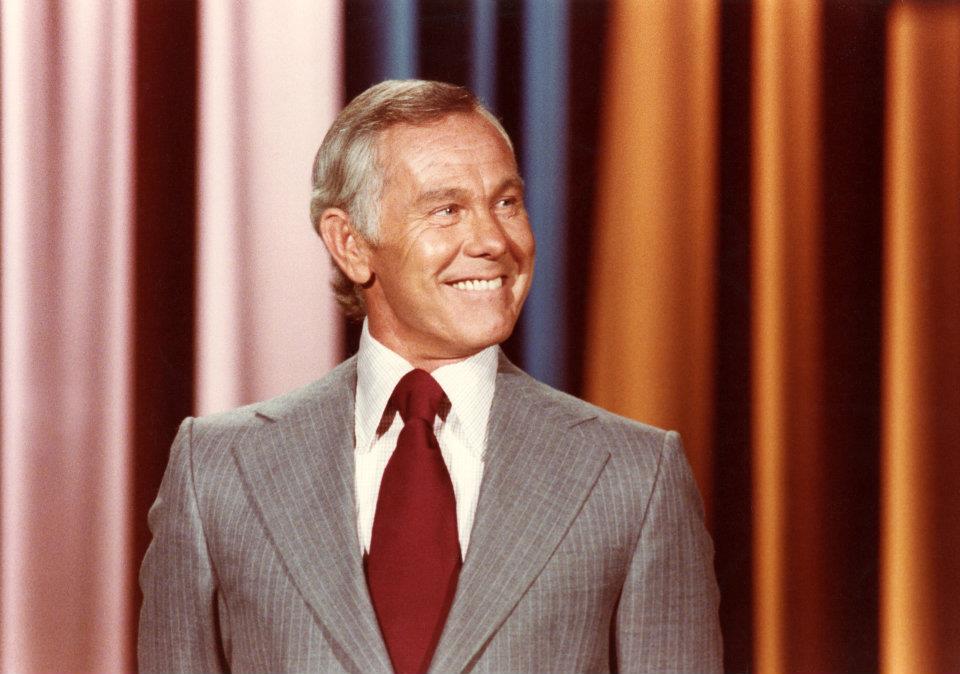
Remember when people on television were expected to have a little class?  It’s been a while, since about May 21st, 1992.  On that night, Johnny Carson retired as the host of The Tonight Show, after 4,531 episodes and 23,000 guests.  Granted access to the Carson archives, Peter Jones profiles the definitive American talk show host in Johnny Carson: King of Late Night (promo here), which airs on PBS’s American Masters this Monday.

A product of the Midwest, Carson never talked down to his audience or forgot where he came from.  Taking more than a bit of a pop-psychology approach, Jones attributes great significance to Carson’s need to impress his aloof mother and the attention he received as a teen-aged magician.  Carson got into television more or less on spec, making little money in what was then a new and relatively unseen medium.  Needless to say, television caught on and eventually so did Carson, though his early career trajectory was decidedly erratic.  In fact, when Carson was offered The Tonight Show after Jack Paar’s departure, many industry analysts were incredulous.

For children of the 1980’s, King of Late Night is a dramatic reminder how much media has changed in our lifetimes.  There was a time we vaguely remember when Carson’s show was invariably the number one topic of conversation the next day.  His monologue was considered a bellwether gauge of the national mood on current controversies in a way that has no analog today.  Unlike his successors, Carson maintained a scrupulous political balance on his show, gaining a reputation for tweaking both sides with equal playfulness.  He also regularly booked classical and jazz artists programming his show for the widest possible spectrum of the country.  Nobody does that anymore.

Jones addresses Carson’s wider cultural significance, but also opens a window into the very private public figure’s personal life.  At times, King feels slightly more tabloidy than was probably intended, but given his three famous divorces and a documented weakness for drink, it is impossible to ignore the dark side behind his carefully crafted persona.  Still, Carson employed some rather deft jujitsu with the frequent divorce jokes that shrewdly cast him as the beleaguered victim.  Indeed, Carson was a master of rhetoric, capable of milking masochistic humor from jokes that ignobly died.

Perhaps King is strongest documenting Carson’s role as a comedy king-maker, featuring extensive recollections from comedians and eventual Tonight Show guest hosts, such as David Letterman, Jay Leno, Joan Rivers, Gary Shandling, Dick Cavett, and Bob Newhart.  Wife number two also speaks quite affectionately about the man she claims to have pushed into accepting the Tonight Show gig.  Jones also well illustrates Carson’s career with rare archival footage.  However, the one scene everyone wants to see—the supposedly apocryphal night he asked Zsa Zsa Gabor to lift her cat—is never mentioned, not even to debunk it.

Many viewers will be surprised how good it is to see Carson on television again.  Brisk but authoritative, King of Carson is an entertaining television biography.  Fulfilling your recommended weekly nostalgia fix, it airs this Monday (5/14) on most PBS outlets as part of the current season of American Masters.

(Photo: Carson Entertainment Group)

Friday, May 11, 2012

Burtonized Dark Shadows


Fans of The Adams Family get psyched.  Tim Burton has revived your favorite franchise.  He is calling it Dark Shadows now, but the goofy vibe remains the same.  Die-hard devotees of the ostensive source material, Dan Curtis’s cult television show, might not be overwhelmed by the results though.  Burton and his regular repertory players certainly do their thing in the latest reboot of Dark Shadows (trailer here), openly widely today.

Barnabas Collins was the privileged son of an English fishing magnate, who built the coastal Maine town of Collinsport largely through his industry.  Despite his fascination with the occult, the arrogant Collins spurns the love of Angelique Bouchard, a domestic servant who also happens to be a powerful witch.  In retrospect, this was a mistake.  Seething in fury, Bouchard bewitches Collins and his true love, compelling her to throw herself from the impossibly Burtonesque cliffs and turning him into an undead vampire. 

Whipping the village rabble into a frenzy, Bouchard entraps Collins in a coffin, secretly burying him, so he can feel the anguish of his loss and unquenched thirst for all eternity.  Then one fateful 1972 night, workmen discover Collins’ burial site.  A spot of blood-letting and a liberal supply of fish-out-of-water gags soon follow.

It turns out the Collins family fortunes have suffered during the centuries Collins was away.  Of course, the prodigal patriarch sets about righting matters, through the help of his supernatural powers.  As per the rules of Tim Burton films, Sir Christopher Lee duly appears in a cameo as a salty dog sea captain falling victim to Collins’ mesmerism.  Yes, that is one Burton tradition well worth maintaining.

Granted, Shadows looks great.  Burton is clearly in his element when exploring spooky old houses and the 1970’s era wardrobe and soundtrack adds the right kind of kitsch.  If only the script had benefited from the same attention to detail lavished on the banister in Collingwood, the Collins family manor.  Instead, the story is really just a clothesline on which to hang Adams Family-style jokes, while Collins and Bouchard act like the Tracy and Hepburn from Hell.

As Collins, Johnny Depp basically does his shtick.  In spite of viewer resistance, he gets laughs (particularly with his old school swearing invoking all manner of hellfire invective), but this is very definitely a one-note performance.  At least Eva Green seems to get it.  She is gleefully wicked as Bouchard.  The fact that she looks like she was poured into her wardrobe does not hurt either.  Michelle Pfeiffer also looks great as Elizabeth Collins Stoddard, the living head of the Collins household.  Still, aside from Depp and Green getting their supernatural groove on, the talented ensemble does not have much to do.

While the original cast members, including the recently deceased Jonathan Frid, briefly appear as party guests, the film’s truly inspired cameo features Alice Cooper as himself.  Bizarrely, Burton tries to offer olive branches to the traditional fan-base by shotgunning about a half dozen of the revelations from the original show into the final climax.  However, it would have worked much better had he sprinkled more of that plot throughout the film. 

To some degree, Bruno Delbonnel’s dark and stormy cinematography combined Burton’s typically eccentrically baroque sets and costumes help compensate for a thin screenplay and repetitive jokes.  Overall, it is just a mildly diverting summer confection filled with empty cinematic calories.  For Burton fans, it opens today (5/11) in theaters across the country, including the Chelsea Clearview here in New York.

Postmodern Canada: You Are Here


When is a room not a room?  When it is a Chinese translation machine, of course.  However, it has no conscious awareness of what it is translating, because it is just a room.  Let the epistemological-ontological-linguistic games begin in Daniel Cockburn’s unabashedly cerebral genre-straddling narrative You Are Here (trailer here), which opens today at the ReRun Gastropub Theater in Brooklyn.

A New Agey Lecturer immediately puts us on notice not to passively accept the images put before us.  Then Cockburn introduces us to Alan.  More than a man of the masses, Alan is the masses.  More accurately, his is the collective conscience of a crowd.  Some of Alan’s members are tracking operatives, who guide field agents around the city for no apparent purpose.  Their paths will cross the Archivist, a woman compelled to collect and catalog mysterious documents, VHS cassettes, and reel-to-reel tapes that seem to seek her out.  She will be our protagonist.  This might not be immediately evident, but the press notes assure us it is so.

But wait, there’s more, including the Experimenter, who creates a prototype of John Searle’s “Chinese room,” a hypothetical construct purporting to illustrate the limits of artificial intelligence.  Putting himself into the “machine,” the inventor responds to passages of Chinese (which he does not understand) by utilizing step-by-step reference books, replicating the computer’s translation process in the physical space of the cell, without any understanding on his part.  Eventually though, this system break down.  However, the Inventor perfectly realizes his scheme, forever altering mankind’s perspective on the world with prosthetic eyes.

You Are Here really is a narrative feature, but you would be hard-pressed to prove it to some viewers.  Episodic by nature, Cockburn’s film is fragmentary, hop-scotching all over the place.  Indeed, Cockburn’s background in experimental-installation and short filmmaking is readily apparently in his narrative approach.  However, there is a there there in You Are Here.  Unlike say James Franco’s Francophrenia, Cockburn respects his audience, presuming a high level of sophistication that will appreciate his philosophical gamesmanship.

Stylistically and intellectually, YAH’s most successful arcs follow the Experimenter and the Inventor.  In fact, their modular feature sections could easily be lifted out of the film and presented as rewarding self-contained shorts in their own right.  While the other braided strands are less focused, Tracy Wright dramatically humanizes the film as the Archivist.  In one of her final screen roles before tragically succumbing to cancer, she resolutely eschews quirk, conveying the profound frustration of one seeking meaning in a randomized universe.

YAH bills itself as a meta-detective story, but that rather overstates the mystery elements.  If Alain Robbe-Grillet rewrote The Matrix, jettisoning the kung fu and narrative cohesion, it might look something like this.  Though not every arc fully plays out, its ambition and inventiveness are impressive.  Recommended for those well versed in analytic philosophy and post-structuralism or simply inclined towards cinematic puzzles, You Are Here opens today (5/11) at the ReRun Gastropub in Brooklyn.  Graciously recognizing the film requires a bit of unpacking, ReRun will not charge for repeat screenings.

Thursday, May 10, 2012

Art Wars: Portrait of Wally


Rapacious looters, the National Socialists and their collaborating allies scooped up “spoils” almost indiscriminately.  For years, the work of Egon Schiele was considered hardly worth the trouble of plundering.  Times change.  Last year a Schiele cityscape was auctioned for a sum just north of forty million dollars.  Yet, it was a Viennese gallery owner’s emotional attachment to a portrait of the artist’s mistress that fueled her family’s drive to reclaim it.  Their precedent setting legal battle is documented in Andrew Shea’s Portrait of Wally (trailer here), which opens this Friday in New York.

In the case of Schiele, the term “degenerate artist” was not so utterly unfounded.  In fact, he and his mistress Walburga “Wally” Neuzil carried on rather scandalously until he precipitously dropped her.  A portrait of Schiele’s now celebrated model and muse held a special place in the private holdings of his gallerist, Lea Bondi.  Unfortunately, when a well-connected Nazi civilian confiscated her business, he also laid claim to her personal collection, literally pulling paintings off the walls of her home. 

The Bondis successfully immigrated while they still had the chance, but reclaiming their unjustly appropriated property after the war proved to be a Kafkaesque exercise in futility.  Then one day, the late Bondi’s heirs noticed her beloved painting had been loaned to the MoMA as part of a historic Schiele retrospective.  It would become even more historic when the Manhattan DA sided with the Bondis, effectively halting the return of Neuzil’s portrait.  Thus began an epic twelve year legal battle.

There are many fascinating in’s and out’s to this specific case, but it is really part of a far greater story.  To get a fuller sense of the scope and significance of the National Socialist looting campaign, the definitive documentary Rape of Europa should be required viewing.  In contrast, Portrait is less concerned with historical context, instead passing judgment on those it identifies as the villains in this complicated morality tale, most definitely including the venerable MoMA. 

Yes, anyone of good conscience will sympathize with the Bondis and the fact that nobody seriously challenged the facts constituting their claim to ownership is significant.  On the other hand though, it is understandable why the MoMA was a bit reluctant to tell their colleagues at the Leopold Museum they would not be returning the jewel of their collection after all. 

Claims by the MoMA and every other museum in the City, including the Jewish Museum, that this would have a chilling effect on art lending to American institutions were scoffed at in the film and during a special post-screening during this year’s Tribeca Film Festival.  However, it was rather off-handedly admitted that Russian museums no longer loan art to their American counterparts after having lost a similar case.  Granted, Russia is not exactly a beacon of enlightened public policy.  In no way does this mean the Museums were right and the Bondis’ advocates were wrong.  The overall picture is just more complex than Shea and co-writer David D’Arcy choose to paint it.

There is a widespread fascination with intrigue in the world of fine art, even amongst those who rarely set foot in a museum or gallery.  Portrait delivers plenty.  It lucidly explains the twists and turns of the legal case, but its propensity for contemporary partisan finger-pointing dilutes its gravitas.  Consistently interesting nonetheless, Portrait of Wally opens tomorrow (5/11) in New York at the Quad Cinema.

Wednesday, May 09, 2012

Horror in the Philippines: The Road


It is a familiar horror movie convention—one wrong turn can lead to a grisly death, so get yourself some GPS and join triple A.  Alas, the misdirected teens who wander onto this stretch of pavement will become permanently lost in Yam Laranas’ Filipino horror film The Road (trailer here), which opens this Friday in New York.

This has been going on for a while.  In 1998, two sisters vanished without a trace on the road to nowhere.  Ten years later, their grieving mother approaches a decorated rookie officer specializing in making everyone else look bad, convincing him to re-investigate the case.  Yet, it quickly becomes apparent the circumstances of their disappearance parallel an active high priority investigation involving two cousins and their slacker guy friend.

As if two time frames were not sufficient, Laranas then flashes even further back, showing the audience how the tragic childhood of the thus far unseen psychopath destroyed his innocence and set in motion a chain reaction of bad karma.  It turns out his father’s hyper-Christianity was a contributing factor.  To be fair, dear old dad is really not a bad guy at heart, but the future killer’s shrewish mother enthusiastically adopted his strict rules governing the boy, simply out of meanness.

Laranas actually sets the creepy scene quite well, hinting at the supernatural, but never quite delivering on it.  Still, he palpably evokes the ominous dread of grudge-like remnants haunting the proceedings.  His big twist also comes as something of a surprise, if only because it creates huge logical problems for the film in retrospect.

More fundamentally, it is just not a lot of fun to see the Roadie tormenting the young girls who fall into his web.  These are not E.C. Comics characters that more or less have it coming.  Frankly, horror movies like The Road would be much more entertaining if Laranas and his colleagues would pick on people more their size.

As the cop with chain-of-command issues, TJ Trinidad is intense screen presence who sells the third act bedlam rather well.  Unfortunately, the onerously slow pace becomes downright mind-numbing over time.  Serving as his own cinematographer, Lanaras gives the film an interesting look and the dramatic work of his ensemble cast is considerably better than the genre standard, but that is about as far as The Road goes.  A joyless and exhausting film, The Road is not recommended for horror movie fans.  For those intrigued nonetheless, it opens this Friday (5/11) in New York at the AMC Empire.  It also has its Hollywood premiere tonight, with a special post-screening party hosted by boxing champ and Filipino congressman Manny Pacquiao, so if you go, pretend you liked it.

Tuesday, May 08, 2012

Reading Proust in Chile: Bonsai


Modernist literature can be trouble.  It will ultimately undermine Julio and Emilia’s relationship, even though Marcel Proust brought them together in the first place.  Unfortunately, he suspects she was the one when looking back on their brief affair in Cristián Jiménez’s Bonsái (trailer here), which opens this Friday in New York at the IFC Center.

We are told right up front, one of the former lovers will die and the other will continue living a lonely existence.  As the film opens, Julio and Emilia have been apart eight years.  Sleepwalking through life, Julio interviews for a temp job typing a famous novelist’s longhand manuscript, but prices himself out of the gig.  However, when his neighbor and reluctant girlfriend Blanca shows an interest in the project, Julio starts faking it, passing off his writing as that of the celebrated Gazmuri.  He only learned the bare bones premise, which bears a certain resemblance to his ill-fated relationship with Emilia.

When they met as students of literature, Julio pretends to have read his Proust to impress her.  Reading out loud soon becomes a courtship ritual for them, but a passage from Macedonio Fernández lodges a subconscious impulse that will sabotage their short but intense romance.  While Bonsái seems to establish the objective reality of these flashback scenes, it still plants the seeds of doubt.  Indeed, déjà vu runs rampant as Julio thinly fictionalizes their star-crossed love (or so we assume).

Rather faithfully based on Alejandro Zambra’s novella, Bonsái’s Proust references are clearly not haphazard, consciously alerting viewers to the importance and fallibility of memory in Julio’s reveries.  The past (whether real or imagined scarcely matters) clearly hangs heavily over his present.

Jiménez’s approach is more graceful than gimmicky, preferring subtly to clunky post-modern gamesmanship.  However, the deliberate vacuity of Diego Noguera’s Julio and the self-absorption of his two lovers leave a bit of an emotional void at the heart of the picture.  Still, Hugo Medina, seen briefly as the crucial Gazmuri, brings a welcome zestfulness to the cerebral proceedings.

Rather than a love story, Bonsái is a meditative elegy for love lost.  Despite the problematic characters, there is something universal about their human failings.  A finely crafted director’s film, Bonsái would be a terrible date movie, but it is recommended for those who appreciate sophisticated narratives and Latin American cinema.  It opens this Friday (5/11) in New York at the IFC Center.