Whenever a film invites us to share a group of friends’ last summer together, it is
a near certainty we will see the final summer ever for one of them. Roma Kamogawa
will definitely have his Big Chill moments, but he does not carry any ex-hippy-boomer
baggage, so it is easier to identify with and feel for him in Atsuko Ishizuka’s
anime feature Goodbye, Don Glees!, which screens nationwide over the
coming days.
Kamogawa’s
boyhood friend Toto Mitarai will sort of explain why he named their club of two
the “Don Glees,” but it doesn’t really make sense, so don’t worry about it.
They had to stick together through middle school, but Mitarai’s domineering
father sent him to Tokyo for high school. Now that he is back after freshman
year, Mitarai clearly considers Kamogawa a bit of a towny, which makes him embarrassing.
He is also more than a little put off by Kamogawa’s new friend.
Shizuku
“Drop” Sakuma is somewhat younger than they are, but Kamogawa enjoys his energy
and earnestness (whereas Mitarai, not so much). Unfortunately, their private
store-bought fireworks ritual goes somewhat awry, especially when their snobby
peers point to it, scapegoating them for a freak forest fire. To prove their
innocence, the trio sets off on a quest to find an errant drone they hope
recorded exculpatory footage.
Nobody
does teen angst better than anime filmmakers. This is another good example. Admittedly,
Roma and Toto are a bit dense when it comes to picking up on Drop’s fatalistic
carpe diem asides, but Ishizuka definitely understands the emotional mindset of
young teens. In fact, her story takes on surprising depth and complexity, especially
when it reaches the third act (or maybe it is actually a really long epilogue).
Regardless, she ties everything together beautifully and even hints at the
mildly fantastical.
A pre-teen girl like Yael should never feel compelled to follow current
events so closely. However, she understands how news reports could drastically
impact her, as the daughter of a Jewish mother growing up in late 1930s/early
1940s France. She and her little sister are only half-Jewish, but she suspects that
will be more than enough to count for the new regime, just as it has been for
her father’s estranged parents. It is a sad burden for a child to carry in
writer-artist Sara del Giudice’s graphic novel Behind the Curtain, which
is now on-sale in digital formats.
Initially,
Yael and Emilie grew up in a very social household filled with guests and
select family members. Unfortunately, the parties tapered off as their beloved
mother’s health deteriorated. With her death, they saw their family on their
maternal side much less often, especially after her father remarried Ophelie,
whom Yael considered a pretty blonde ditz. She also suspects she half-spied her
father with her new stepmother, in a somewhat compromising position, while her
mother was still alive.
However,
Ophelie is not a threat to the girls. In fact, she will be quite concerned for
their safety when France surrenders to Germany. As a veteran, who was married to
their Jewish mother, their father is also in some danger. Frankly, everyone recognizes
the potential peril, but they respond cautiously—too cautiously.
Unlike
similar narratives, Behind the Curtain almost entirely focuses on the
years leading up to the notorious round-ups. Throughout most of the graphic
novel, Yael and her sister lead mostly normal lives, but her increasing awareness
of the rising tide of anti-Semitism makes it all bittersweet and eventually
quite ominous.
Wars are like the old Knicks-Pacers games, in that they aren’t over until they
are truly, officially over. Jack Wallace understands that only too well. Even
though everyone knows WWII is down to its final days, he is still recruited for
a potential-suicide mission in Giles Alderson’s Wolves of War, which releases
tomorrow on VOD.
Wallace
is the only parent his little girl has left, but he worries his success as a
commando might have profoundly changed him as a person. Regardless, there is no
guarantee he will survive this mission to see her again. Under the command of
Captain Norwood, Wallace and his hodge-podge squad must parachute into no man’s
land Bavaria, to rescue expat Professor Hopper from the National Socialist “Werewolves,”
the fanatical remnants of the SS engaging in scorched earth guerilla warfare.
Supposedly,
Hopper and his daughter Hannah were trapped in Germany when the war broke out,
but he was never a regime sympathizer. Obviously, he is not a political science
genius. As it happens, he is a physicist, who has developed a rival atomic bomb.
If Wallace’s team can secure the professor and his notes, they can call in an
airlift. Otherwise, it will become a carpet-bombing airstrike.
In
some ways, Wolves of War is a throwback to old fashioned WWII films, but
Wallace’s existential angst definitely feels contemporary. However, its stiff-upper-lip
Britishness is appealing. The action is respectably gritty, but it lacks a big
set-piece crescendo.
During the early to mid-1980s, if you didn’t want to the local nightly news,
you probably had to watch MASH instead (or maybe Taxi).
Therefore, even if you did not love the show, you still might have some
nostalgia for it. That makes it perfect for Reelz latest nostalgia package. Producer-director-cowriter-narrator
Bruce Osborne revisits the show with surviving cast-members (who didn’t have something
better to do) in MASH: When Television Changed Forever, which premieres
tomorrow on Reelz.
To
Osborne and Reelz’s credit, the show acknowledges it all began with a novel
written by Dr. Richard Hornberger, a former Korean War surgeon writing under
the pen-name Richard Hooker. However, Dr. Hornberger’s later MASH novels
reflected a much more conservative political perspective than the film or TV
series. We also hear briefly from Elliott Gould, discussing the Robert Altman
film.
A
handful of TV critics maybe overstate matters a little when they give MASH credit
for pioneering multiple storylines within one half-hour sitcom episode.
However, they have a point when they single out episodes that break new ground,
by breaking format, like “The Interview,” conceived as a black-and-white TV
documentary, profiling the MASH unit.
Mike
Farrell, Jamie Farr, Jeff Maxwell (who often recurred as Pvt. Igor Straminsky),
and the late Burt Metcalfe (the series’ final showrunner, to whom the special
is dedicated) are all present and accounted for, which is probably enough for
most hardcore fans. However, nobody mentions the brilliance of Johnny Mandel’s
theme, wisely retained from the film. As soon as you hear it, it changes your
mood, priming you for the show’s blend of humor and tragedy (check out Grady
Tate’s rendition here).
Of
course, without MASH, there would be no After-MASH, but nobody
mentions the short-lived spinoff. Indeed, it is all positive, so nobody
addresses the controversy surrounding the character Capt. Oliver “Spearchucker”
Jones, even though he was played in the series by Timothy Brown, one of only
four holdovers from the film. Brown’s exit from the show was also somewhat
controversial, at the time, being the only black recurring cast-member.
The Bo-Kaap is a neighborhood in Capetown, but it sure gives of NOLA vibes,
thanks to the high concentration of pre-1850 architecture and the competitive
marching jazz bands. Maintaining the jazz traditions takes hard work and it
also costs money. Unfortunately, the bank is poised to foreclose on the Goema
club, so they can flip it to a mobbed-up developer. To save his late father’s
neighborhood institution, Jerome and his friends go where the money is in John
Barker’s caper comedy, The Umbrella Men, which premiered internationally
at the 2022 Toronto International Film Festival.
Jerome
did not want to run the Goema or its affiliated marching band, the Umbrella
Men, but everyone expects him to step up after his father’s funeral. Instead,
he just wants to greet his old pal Mortimer when he is finally released from
prison and then return to his life in Joburg. However, the way his father’s old
gangster rival Tariq venally covets the property just rubs him the wrong way.
Unfortunately, the local Bo-Kaap neighborhood bank is calling in all his father’s
debts, so he decides to steal directly from them to pay-off their liens.
The
heist caper that unfolds is pretty cleverly conceived in its own right,
incorporating Capetown’s old tunnel system and the noonday gun fired every
afternoon at twelve-sharp. Yet, it is the music, composed by Kyle Shepherd and
performed by trumpeter Darren English, Buddy Wells on reeds, and the Loukmaan
Adams Band that really gives the film its appealing character. Eventually,
Jerome rediscovers his musical soul on both banjo and trumpet, while planning a
complicated Rififi-style operation.
Lovers
of New Orleans culture will really get warm fuzzies when the plot culminates
during the annual Kaapse Klopse carnival, which commemorates the one day off
granted to slaves during the colonial era. (It brings to mind Sundays at Congo
Square, except it was 52 times more severe.) Regardless, the music is joyous
and swinging. There is maybe a slight highlife-ish flavor to it, which makes it
fun and distinctive.
Apichatpong "Joe" Weerasethakul’s films can drain the energy out of viewers, so
maybe it was fitting for him to make a vampire film. He presents this “story”
in his usual dreamy style, but he still serves up a few bloody entrails in the
hour-long Mekong Hotel, which screens as part of the Metrograph’s series
Midlengths, consisting of short features or long shorts, around the
sixty-minute mark.
Tong
and Phon meet repeatedly on the balcony of their hotel overlooking the Mekong
River. They feel like they have met before and maybe they have. Frankly, it might
seem to be an inappropriate time for romance, because of the expected flooding
and the waves of displaced people who will soon rush into the city as a result.
Also, Phon is sharing a room with her mother, who happens to be a vampire, who
feeds on men in the hotel. However, she did not eat the guts of Tong’s poor
dog. That was another Thai “Pob” ghost.
It
all unfolds to the sounds of Chai Bhatana’s acoustic guitar melodies, which Weerasethakul
requests from his old friend during the prologue. Presumably, that is why the
film is sometimes described as a “docu-hybrid.” Regardless, Bhatana’s music
(largely inspired by Spanish classical guitar) bring a lot to the film. In
fact, for some of us, they just might be the film.
Weerasethakul
employs his familiar long-held, static shots, but the narrative is especially
sketchy this time around—not surprisingly, since it was essentially cobbled
together from notes for a project that never came to fruition. Waste not, want
not. Regardless, despite the supernatural elements, this is not a film for
horror fans. Indeed, it could be the most peaceful, lulling film about ghosts
and vampires stalking victims during a catastrophic flood that you will ever
see.
For the Jefferson Administration, his alleged suicide was very similar to
the Vincent Foster incident, but Meriwether Lewis (of Lewis & Clark) was also
a national hero and a high-ranking office-holder, as well as a presidential
confidant. His decision to kill himself was certainly rather sudden, giving rise
to doubts that evolved into conspiracy theories. The contradictory accounts
provided by the witness who found his body only fanned the flames of skepticism
and suspicion. Director-screenwriter Clark Richey presents Rashomon-style
several conflicting versions of what might have happened that fateful night in Mysterious
Circumstance: The Death of Meriwether Lewis, which opens today in Los
Angeles.
According
to Priscilla Grinder, who maintained the remote travelers’ “inn,” Grinder’s
Stand, with her husband Robert, Gov. Lewis acted erratically when he arrived,
and became even twitchier during dinner. Then late that night, he stumbled out
to the front yard, where he shot himself—twice. Or maybe not. She changed her
story several times over the years, but that is the one she tells his friend
Alexander Wilson, when he comes to investigate on Jefferson’s behalf.
Over
the years, Major John Neely, the Chickasaw agent, who was traveling with Lewis,
has become one of historians’ prime suspects. His claimed he was off chasing
their runaway pack horses while Lewis was at Grinder’s Stand, which definitely
sounds fishy. Richey certainly presents him as a potential co-conspirator,
along with the rest of Lewis’s traveling party and the conveniently absent
Robert Grinder.
The
very real premise of Mysterious Circumstance is intriguing, but the
performances are a little rough in patches. However, Billy Slaughter has some
effective moments of world-weary resignation as Wilson and Sonny Marinelli is
appropriately fierce and flinty as old Grinder. As it happens, the film’s
top-billed star, John Schneider (from the original Dukes of Hazzard) gets
relatively little screentime as the scheming Neely.
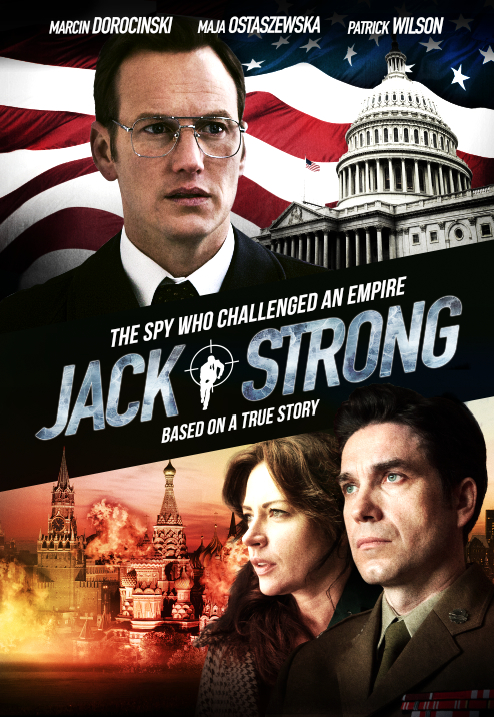
Ironically, CIA Officer David Forden, who contributed so much to American national security, was born on September 11th. To remember him and Col. Ryszard Kuklinski of the Polish People's Army, who passed game-changing intel to Forden to avert planned Soviet military aggression, you can find my review of the excellent Polish film Jack Strong, now up at THE EPOCH TIMES here.
The original 1980 Richard Gere film was the first of the super-slick
blockbusters Jerry Bruckheimer has produced, but it still delved into a gritty criminal
underworld hidden from polite society, the way Paul Schrader often did in his
best films. For the sequel-ish series, Bruckheimer is still on-board as an
executive producer, but Schrader was cut out of the process. At least he gets
credit for creating the characters. Even if Richard Gere were not a Tibetan
Buddhist and an outspoken critic of the CCP’s human rights abuses (very much to
his credit), he would still be a little too old to play Julian Kaye, the
high-class hustler. Despite all the fudging and retconning, creator David
Hollander manages to channel the vibe of Schrader’s film pretty well in American
Gigolo, which premieres tomorrow on Showtime.
It
still starts with Giorgio Moroder & Debbie Harry’s “Call Me,” because it
would be crazy not to. You maybe thought Lauren Hutton’s conscience finally
spurred her to alibi Richard Gere at the end of the source film, but apparently
it didn’t really happen that way. Instead, Det. Sunday discovered Kaye asleep
next to the dead body of a client and convinced him to confess, the way they
always did in NYPD Blue. Fifteen years later (in the mid-2000s) a
terminally ill hitman makes a deathbed confession, which DNA-testing confirms.
Suddenly,
Kaye is free and exonerated. So, who set him up? Frankly, Sunday seems more
interested in that question than he is. Kaye kept in shape while serving his
time, but he is not eager to go back to work for his old procurer, the
notorious madam known as “The Queen.” As we learn in flashbacks, he had good
reasons to resent her, even before his “troubles.” On the other hand, he would
kind of like to see his “special client” Michelle Stratton (previously played
by Hutton), but life with her rich and controlling husband has been hard for
her.
There
is a lot of flashy excess in American Gigolo, which is sort of the point
(presumably, much of Kaye’s wardrobe is still Armani). The distinguished-looking
Gere is probably too distinguished to play Kaye in his late thirties-ish, but
Jon Bernthal is a spookily close likeness for him. Incidentally, there are a
few Buddhist references in the first three episodes provided for review, which
would be cool if they were intended as a hat-tip to Gere (seriously, without
him, this series probably wouldn’t exist).
Bernthal
is a little tougher and steelier than Gere was in the film, but that rather
makes sense, since his Kaye has just done fifteen years of relatively hard
time. In a gender-flip hardly worth noting, Rosie O’Donnell takes over from
Hector Elizondo as Det. Sunday. In fact, she is one of the best aspects of the
show, eschewing her regular shtick, in favor of dry sarcasm and world-weary
cynicism.
Katie O'Connell's wedding with Hugo Delaney was one-half Three Weddings and
a Funeral and one-half Game of Thrones’ “Red Wedding” episode. The
groom and his family will be killed, but she manages to run away and keep on running.
The cops are convinced she murdered everyone, but her naïve on-again-off-again
lover believes she must be innocent in Daran Johnson & Oliver Lyttelton’s Wedding
Season, which premieres tomorrow on Hulu.
For
some reason, O’Connell kept assuring Stefan Bridges she was determined to marry
the rich and obnoxious Delaney, despite their weird chemistry. Nevertheless,
their paths kept crossing at weddings. It was usually just a matter of lucky
proximity, because they do not exactly share similar social circles. Unfortunately,
Bridges really called attention to himself at O’Connell’s wedding, inviting her
to make a Graduate-style escape, which she brutally declined. Even though
he left before the massacre, the cops naturally suspect him, so O’Connell
considerately breaks him out of the station.
As
we learn in flashbacks, the Delaneys were a seriously mobbed-up family. Whoever
killed them is now chasing the fugitive couple—and they mean business. However,
Bridges has lingering trust issues, for good reason. While O’Connell and
Bridges try to evade the police, the escalating body-count makes them look more
guilty.
Wedding
Season is
a pretty amusing combination of romantic comedy and ruthless criminal
vendettas. Frankly, Gavin Drea plays Bridges with such bumbling shtick, he
really starts to try viewer patience. However, Rosa Salazar more than
compensates as the fierce, charming, and borderline psychotic O’Connell. You
really can believe she would do almost anything, which she will. Watching her
pull him through the 39 Steps-like chases sequences and near escapes is
quite entertaining.
According to the U.S. Postal Service creed: “neither snow nor rain nor heat nor
gloom of night stays these couriers from the swift completion of their
appointed rounds.” However, a domestic terror campaign shut down the mail
processing facility in Brentwood, Maryland. That aspect of the chaotic sequence
of events is what most concern’s Dan Krauss’s documentary, The Anthrax Attacks,
which premieres Thursday on Netflix.
The
nation was already unnerved by the September 11th terror attacks when
the first Anthrax spores struck their target. It was a confused time, but the FBI
mobilized significant resources to capture the perpetrator. However, their
investigation was somewhat compromised, because they were being advised by the
man they were hunting, USAMRIID researcher, Dr. Bruce Ivins. At least he is the
presumed Anthrax weaponizer.
In
many ways, the epic investigation was unprecedented, so much of the criticism
Krauss airs seems like cheap Monday morning quarterbacking. Yes, the FBI Director
and Attorney General kept constant tabs on the investigation. Otherwise, they
easily could have been lambasted for negligent disinterest, given the
extraordinary circumstances.
Likewise,
the amount of time it took fully test and disinfect the Brentwood facility is
presented as an unconscionable scandal, but the Feds were in a damned-if-they-did-damned-if-they-didn’t
situation. Life was much more dependent on the U.S. Mail in 2001, especially
for things like Social Security checks, utility payments, and small business
invoicing. Honestly, it is as easy to imagine poor grannies complaining
on-camera how they nearly starved, because they couldn’t get their social security.
Plus, there was that institutional “neither snow nor rain” ethos that mail
delivery must remain on schedule.
Ironically, nobody mentions String Theory in this series, even though it follows a
group of scientists studying the origins of the universe, who become obsessed
with a mysterious length of cord. Somehow, it just appeared, but it appears to stretch
unendingly through the forest surrounding their research institute in
co-creators Dominique Rocher (director of The Night Eats the World)
& Eric Forestier’s three-part French series The Rope, which
premieres Thursday on Topic.
Bernhardt
Mueller is the director of a remote astronomical observatory. Its equipment is
old, but still powerful and the sudden vogue of theories he and his wife Agnes
hypothesized are poised to give the institute a new lease on life. Weirdly, a
week before their critical “data harvesting” Serge Morel, the facility manager
literally stumbles across a length of rope in the forest. Ulrik, Agnes Mueller’s
colleague and secret lover, manages to bang up his leg trying to follow it, so
he will not be available the next morning for Bernard’s rope-following hike. He
will be the lucky one.
Days
later, Mueller’s party remains unaccounted for. Of course, he and Morel managed
to recruit the most angsty group possible, including terminally ill research
director Sophie Rauk, Leila, an anxiety-ridden data scientist and her
increasingly frustrated husband Joseph, and visiting scholar Dani Johannes,
whose work explores the relationship between science and her lost religious
faith. Out of all of them, Morel is the only you would want to be lost in the
wild with. Yet, the rope seems to exert an obsessive hold over some of them,
driving them forward, despite the risks and the dead bodies they start to
encounter.
The
premise of The Rope is a bit like other suddenly-in-Hell-or-Purgatory
films, like the endless stairs in Black Ops, but it also shows the
perspective of those not stuck in the fantastical Sisyphean situation. In fact,
it is even more compelling watching Agnes and Ulrik trying to fathom the depths
of the universe than Morel’s crew compulsively following the rope. Still, the
contrast between the mysteries of science and the mysteries of the cosmically
inexplicable distinctively bifurcates and dramatically distinguishes The
Rope from its predecessors.
The Golem of legend is an avenger, but its unthinking actions often entail
unintended consequences for those who summon it. As a result, it frequently
punishes hubris. The desperate Jewish population of occupied Prague has no
hubris left to rebuke, but the wakened Golem remains an unpredictable wild card
in Francesco Artibani’s graphic novel He Who Fights with Monsters,
illustrated by Werther Dell’Edera, which is now on-sale wherever comics are
sold.
Now
that the Soviets have “liberated” Prague, the old puppeteer can tell his story
through his puppets to an interested officer. Three years ago, Jewish Dr. Radek
Molnar did his best to tend to his patients, thanks to forged papers. However,
he was not a proper arm-carrying member of the resistance, like his lover
Zuzka. Yet, perhaps that is why the elderly professor they sheltered is so
convinced Molnar is sufficiently righteous to re-animate the Golem. He even
knows where the original clay and ancient texts are hidden in the city’s
surviving synagogue.
This
would indeed be an opportune time to raise the Golem. The occupying Germans are
still taking brutal reprisals for the assassination of Heydrich. Transports are
due to ship thousands of prisoners to the concentration camps. There is plenty
for the Golem to avenge. Yet, the passage of time and the previous deaths on
its hands have made the Golem unexpectedly mournful regarding the dire state of
humanity.
It
turns out, the Golem is one of two highly intriguing characters in Artibani’s
fable-like war-horror story. The other is the puppeteer, a former informer. Instead
of illustrating Nietzsche’s warning regarding monster-fighting, he is an
acutely tragic example of what happens when you make a deal with the devil.
The French Space administrations office for UFO investigations, known
as GEPAN, developed such a flaky reputation, it rebranded several times, changing its acronym to SEPRA and
then to GEIPAN. Didier Mathure was maybe part of the problem. The closed-minded
director of CNES assigned him to be the interim head, in order to clear its cases
and shut it down. However, Mathure ill-advisedly develops Fox Mulder-like
tendencies in creators Clemence Dargent & Martin Douaire’s UFOs (a.k.a.
OVNIs), which premieres tomorrow on MHz.
Mathure
was an elite scientist at CNES until the rocket he dedicated the better part of
his career to exploded after take-off. As penance, the slimy agency director
transfers Mathure to GEPAN, with the clear expectation he will close it down,
stifling all talk of UFOs in the process. However, the perverse combination of
Mathure’s spectacularly bad PR skills and his naïve misapplications of
scientific method have the opposite effect. Interest in UFOs boom, along with
reports.
Mathure
does not necessarily believe one way or the other, but veteran French Air Force
officer Valerie Delbrosse does. In fact, she encourages (blackmails) Mathure to
make his findings public. However, that would hurt his ex-wife Elise Conti’s
prospects of securing a high-level appointment at the European space agency.
Still, he is starting to admit there might be something to a handful of select
cases his predecessor started investigating, before disappearing on a sudden
leave of absence.
UFOs
plays
a lot of its X-Files-style business for laughs, particularly an
alien-abducted flamingo and the bawdy postcards Mathure’s missing predecessor sends
the staff, which they assume are clues. However, the underlying conspiracy
narrative is still sufficiently interesting that it would probably still hold
up if the tone were more serious. The late 1970s milieu adds a lot of funky
texture (the references to the under-appreciated The Invaders are especially
on-point), but the series sometimes fudges a little. Technically, Albert
Barille’s Once Upon a Time…Space aired after Giscard’s presidency, but
whatever.
Regardless,
Melvil Poupaud, radically playing against type, is the engine that drive the
show’s comedy. He is a lot like Fraser Crane—often painful to watch, but
somehow, we keep rooting for him. He also has terrific chemistry with Geraldine
Pailhas, who is highly entertaining when cutting him down to size. On the other
hand, the shtickiness of Vera Clouseau (as the hippy dippy GEPAN receptionist-case
interviewer) and Quentin Dolmaire (as the Trekker computer specialist) gets a
little tiresome.
Perhaps the shower scene in Hitchcock’s Psycho was the first single
horror movie scene to inspire an entire documentary analyzing its cultural
legacy: Alexandre O. Philippe’s 78/52. There was still a lot more genius
to the Hitchcock classic, but horror films are often defined by particular
scenes, often those that are notable controversial or transgressive. Shudder
counts them down listical-style in The 101 Scariest Horror Movie Moments of
All Time, which premieres Wednesday on the streamer.
Right
off the bat, the opening episode raises questions about methodology. Is this
really about the 101 “scariest moments” or is that just another way of saying
the scariest movies. Could some films appear multiple times in the series, for
different scenes? Not in the first episode. However, the curation is
surprisingly thoughtful, showing an awareness of the entire history of horror
films.
The
first episode touches a lot of old school fan bases, including a classic
Universal monster movie (The Wolf Man), a Hammer horror film, Val
Lewton’s original Cat People, Mario Bava’s Black Sabbath, Kiyoshi
Kurosawa’s Pulse, and Hitchcock’s The Birds. It is a bit of a
head-scratcher to see Bryan Bertino’s The Strangers make the cut, but
Tobe Hooper’s Salem’s Lot was a worthy call, especially since it is
often unfairly overlooked as a TV-movie.
Stalkers aren't just for the rich and famous, like in Play Misty for Me or
The Bodyguard. In this case a recently paroled woman is stalking
working-class Neil and Barbara Curry. It certainly isn’t for their money. It is
personal. Yet, the real tragedy is that the original score, composed and
performed by blues and jazz singer Alberta Hunter is not more widely available.
The cast is pretty notable too in director-screenwriter Alan Rudolph’s 1978
drama Remember My Name, which screens at the Roxy Cinema this week.
Emily
is fresh out of prison and looking to cause trouble in general, but
particularly for Barbara Curry. It starts with some vandalism, but escalates
rapidly. She also lurks outside her husband’s construction site, but his response
is a little different. In fact, when confronted by his wife, Curry sounds
rather evasive and even a bit ashamed. Definitely something transpired between
them, which will somewhat shift audience sympathies as Rudolph teases it out.
Meanwhile,
the television news keeps telling its viewers they should care more about an
earthquake that rocked Budapest, as Hunter’s bluesy tunes (recorded in a
special session produced by John Hammond) swing the soundtrack. It is perhaps
fitting that Robert Altman produced Remember My Name, because Rudolph’s
approach is often quite Altman-esque. That is another reason why it is so odd
this film is so rarely programmed.
It
is a bit ironic to see Anthony Perkins cast as a married construction worker,
but he perfectly expresses Curry’s guilty squirreliness. As usual, he
definitely projects a sense something is not entirely right with him, albeit not
to the degree of his iconic roles. He happened to be playing opposite his real-life
wife Berry Berenson, who was murdered on September 11th, aboard
American Airline Flight 11. She really is terrific as Barbara, so it is odd she
only had a handful of further roles.
On
the other hand, Remember My Name is fully stocked with supporting
players who would later make names for themselves, including Jeff Goldblum and
Alfre Woodard, as Emily’s boss and work-rival at the Woolworth-like retailer.
Plus, Tim Thomerson (“Jack Deth”) briefly appears as Neil Curry’s co-worker.
Nevertheless,
if this film were better remembered, Emily would probably be known as the role
of Geraldine Chaplin’s career. You can definitely see how she might have
influenced Glenn Close in Fatal Attraction or Jennifer Jason Leigh in Single
White Female. Yet, Chaplin brings a vulnerability to her character that
sets Emily apart from just about every other movie-stalker.
Of
course, for those of us with good taste in music, the biggest star of Remember
is Hunter’s music. Thematically, her songs are totally the blues, but they are
all arranged in a swinging up-tempo jazz style, recorded with legendary jazz
musicians, like Doc Cheatham on trumpet, Vic Dickenson on trombone, Budd
Johnson on tenor, and Connie Kay on drums.
The South African countryside is beautiful and the mutton curry sounds delish, but the amateur sleuthing is maybe a little too cozy in Acorn's new cozy mystery series RECIPES FOR LOVE AND MURDER. Epoch Times review up here.
Mervyn LeRoy's The Bad Seed was like the “A24 Elevated Horror” of 1956. Based
on Maxwell Anderson’s stage adaptation of William March’s novel, LeRoy’s Oscar-nominated film
has inspired thousands of knock-offs, but it never spawned a proper series—only
a pair of made-for-TV remakes. However, Lifetime finally takes a stab at
franchising the killer moppet with a sequel to its 2015 original movie. Emma
Grossman has grown into a seemingly healthy teenager, but she is still a
stone-cold psychopath in The Bad Seed Returns, directed by Louise
Archambault, which premieres Monday on the network.
Grossman
is obviously a high-functioning sociopath, because she has managed to
ingratiate herself with the cliquey girls of her high school dance team. You
wouldn’t want to run against her for team captain though. Accidents still seem
to befall people who stand in her way.
Fortunately,
Grossman still seems to like have her Aunt Angela around, but she is not so crazy
about her Uncle Robert and their infant son. Having posed as the victim of a
crazy father in the prior film, Grossman has milked the resulting sympathy for
all its worth. She still has Dr. March (played by the Patty McCormack, the original
“Bad Seed” in the 1956 classic) snowed in their video sessions (or she just summons
her as a mental sounding board). However, Kat Sandberg is not fooled by her.
Grossman doesn’t recognize her initially, but they used to go to the same school—back
when all those bad things happened.
This
Bad Seed sequel is not a classic by any stretch, but it is still
probably one of Lifetime’s better originals of recent vintage. Archambault, who
has several festival-selected films to her credit, creates some competent
cat-and-mouse tension, while the script (co-written by lead thesp Mckenna Grace,
Ross Burge and Barbara Marshall) rather subversively inserts the “Bad Seed”
into a 9120-ish setting. The chaos that results is certainly diverting.
It also helps that neither of her foster parents are completely stupid, since
they both start to suspect something while substantial time is left in the film.
Daniel Snyder went from one Ponzi scheme to another. The first was the traditional
financial kind. The second involved eternal souls. To avoid ruin and save his
daughter, Snyder made a deal with the devil, but the terms are decidedly unequal
and predatory. However, there might be hope outside the Christian faith in Will
Klipstine’s The Harbinger, which releases today in theaters and
on-demand.
Snyder’s
daughter Rosalie is a bit of a problem child. In fact, she maybe isn’t even
Rosalie any more. Regardless, she is part of the reason the Snyders must
relocate so frequently. Apparently, he has some sinister obligations he must
fulfill in their new town, but he is reluctant to get down to it. Instead, he
approaches Floating Hawk, a Native American spiritualist for counseling. Inexplicably,
she prohibits Rosalie from stepping foot on reservation property, but she is
willing to parcel out some cryptic advice to Snyder.
There
is a whole lot of crazy stuff in Harbinger, including Faustian bargains,
Native American spiritualism, and honest-to-gosh, the ghosts of 1920s
gangsters. Believe it or not, the ways they all relate is kind of clever. There
are many surprises in the film that are tricky to write-around, in order to
avoid spoilers. However, it is maybe okay to give Klipstine and co-screenwriter
Amy Mills credit for the notion different laws apply to lands associated by
Native religions and those governed by Christianity—and it just so happens the
border between them runs straight through the Snyder’s new town.
Sometimes,
The Harbinger is so over-the-top, it only seems to be missing Nic Cage,
but Klipstine does his best to Cage-rage in his place. There are times when the
film is completely off-the-rails, including several appearances from Satan.
Nevertheless, it repeatedly earns points for originality. Klipstine really goes
broke throughout the film, which is cool, especially when his ideas land (a
good 60% to 70% of the time).
The Soviets had a strange corpse fetish. To this day, you can still gawk at
Lenin’s embalmed body in Red Square. Alas, poor Gorby probably won’t be getting
that treatment. Stalin had something very ghoulishly different in mind for
Hitler’s corpse. However, secretly ferrying it from Berlin to Moscow will be
quite a tricky assignment for Brana Vasilyeva and her comrades in director-screenwriter
Ben Parker’s Burial, which opens tomorrow in New York.
For
a skinhead punk, rumors of Hitler’s body possibly surviving someplace were too
tantalizing to ignore, even in 1991. However, when he breaks into elderly Vasilyeva’s
London townhouse, she is the one who has the drop on him. When he comes to,
handcuffed to the radiator, she decides to tell him the full story, because she
knows it isn’t what he wants to hear.
Only
Vasilyeva and her commander knew the exact nature of their mission. They are
supposed to sneak Hitler’s body into the USSR clandestinely, but that means they
will have to fight their way through the self-styled “Werewolves,” remnants of
the National Socialist occupiers engaging into scorched-earth guerilla warfare.
Unfortunately, when Vasilyeva’s commanding officer is killed in combat, the
next senior officer is the cretinous Captain Ilyasov, who is more interested in
rape and plunder than completing a mission he was not briefed on.
It
is because of Soviet soldiers like him that the Poles are so hostile to the
advancing Russians. Lukasz is a perfect case in point. As an ethnic German Pole,
he suffered at the hands of both the Germans and the Soviets. However, Vasilyev
manages to win his trust, but it does not extend very far beyond her and her
trusted subordinate officer Tor Oleynik (so dubbed in honor of the Norse god,
because of what he did to some Germans with a hammer).
Watching
Burial, you have to feel sympathy for the Polish people. Time and again,
Vasilyeva and Oleynik are confronted with the brutality of their own fellow
Soviets and the resulting bitterness festering in the civilians, whose help
they need. Parker never sugar-coats the brutality of either regime, openly
suggesting something close to equivalency between them. Although this is a war
film, it gets pretty intense and even spooky, given the way the “Werewolves”
take their nickname to heart (and their weaponized use of hallucinogenic
drugs).
Charlotte
Vega makes a suitably quiet but steely action lead as Vasilyeva, but she is
still no match for Harriet Walter, playing her hardnosed, butt-kicking senior
citizen analog. (Reportedly, Dame Diana Rigg was originally cast in the role before
her death, leaving some big shoes to fill, but Walter acquits herself
impressively.)