Monday, July 17, 2006

Polls Are Open, Vote for Paquito


Arguably the greatest award in jazz is now the NEA Jazz Master title. However, in the years prior to NEA Chair Dana Gioia reinvigorating the Jazz Master program, the jazz magazine reader’s polls were much more coveted than traditional recording industry accolades, like Grammy’s. Of the reader’s poll, Downbeat magazine’s is probably the more famous, but the Jazz Times poll has cachet as well. Both can help reluctant labels to put a little more muscle in their marketing, and in general they carry prestige in the jazz world.

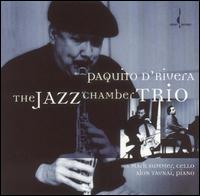
You should, as with any ballot, vote your conscious, but I would offer a suggestion: vote for Paquito D’Rivera for clarinet and jazz musician of the year. D’Rivera is an excellent musician, who defected from Cuba in 1980 to pursue musical free expression in America. D’Rivera is popular with his fellow musicians, as evidenced this year by his performances at the NEA Jazz Masters jam session, and with Toots Thielemans and friends during the harmonica player’s Carnegie Hall tribute concert.

D’Rivera’s preferred reed is the clarinet, and he usually makes the readers polls in that category, but below Don Byron. A legitimately talented clarinetist, Byron has been a perennial winner, but when his work broaches politics, it is with tunes like “Shelby Steele Would Be Mowing Your Lawn” and “The Importance of Being SHARPTON” on Music for Six Musicians.

It’s time to get behind D’Rivera, a musician’s musician and a plain-spoken critic of Castro’s criminal reign of terror in his native Cuba. D’Rivera’s My Sax Life (review coming soon) is an entertaining and insightful musical memoir, which dramatically portrays the reality of post-revolution Cuba.

Voting for D’Rivera is not a simply a partisan act. He is a truly worthy artist, already the recipient of the NEA Jazz Master title. Votes for D’Rivera for clarinet and jazz musician would hardly scandalize the jazz press, despite their overwhelming left-wing biases. D’Rivera is that good. (Even Hall of Fame votes for NEA Jazz Master D’Rivera would not be inappropriate, although I’ll give my Hall nod to Illinois Jacquet, the Texas Tenor who was a big part of Lionel Hampton’s breakout hit “Flying Home.”) While you’re at it, you can also vote with confidence for Arturo Sandoval on trumpet, D’Rivera’s fellow Cuban defector and frequent musical associate, whose life was dramatized by Andy Garcia in an HBO bio-picture.

Currently, there does not appear to be an online voting feature on Downbeat’s website, but there are business reply card ballots in the latest (August 2006) issue of the printed magazine. Only official ballots are accepted. They must be post-marked by August 29th and the results will be announced in December. Jazz Times usually has on-line voting, and I’ll post info on their poll when it is announced.

D’Rivera and Sandoval defected for freedom and artistic expression. As listeners, we have benefited from their decision to make their home in America. To show some appreciation, do what Cubans can’t do: exercise your right to vote. In this case, vote for D’Rivera and Sandoval.

(Thanks to Babalu Blog for supporting the campaign.)
(Thanks to Gateway Pundit too, I sense a winning coalition coming together.)

Sunday, July 16, 2006

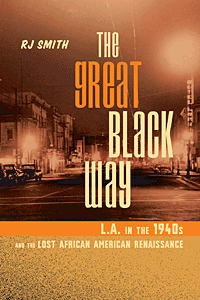
Smith’s Great Black Way


The Great Black Way: L.A. in the 1940s and the Lost African American Renaissance
By RJ Smith
PublicAffairs Books
1-58648-295-5

Probably second only to New York’s 52nd Street, Central Avenue in Los Angeles was one the most preeminent thoroughfares in jazz history. Home to clubs, independent record labels, musicians, and their patrons and listeners, Central Avenue was the center of African-American life in the 1930’s and 1940’s. RJ Smith gives readers a breezy cultural and political history of the Avenue and the people who called it home in The Great Black Way.

Although geographically a western city, Smith makes the point that Los Angeles was pursuing a very southern strategy of segregation, often through the collusion of the local government, businesses, and unions. This was particularly the case with the booming shipbuilding industry, which was in dire need of labor meet the demands of the war effort. Unfortunately, personnel decisions were largely in the hands of the white International Boilermakers, Iron Shipbuilders and Helpers, which created segregated auxiliaries for African American workers. According to Smith:

“Flimsy contrivances, the Negro auxiliaries were subordinate to the white locals in matters regarding union policies and expenditures from the treasury. They provided black members with worse benefits than whites received, allowed for no grievance procedures, and gave blacks no representation at national conventions. Dues, however, were the same as those taken from whites’ paychecks.” (p. 96)

Such collusive policies created intense pressures, but from that pressure also came artistic expression. Chester Himes, for instance, could call out both the official power structure and the Communist agitators looking to exploit it. Smith writes: “his second novel, 1947’s Lonely Crusade wasn’t selling—and it wasn’t pleasing the critics, either. Lonely Crusade follows a black activist in an aircraft factory butting heads with communists and industrialists. Himes gleefully caricatured his Marxist associates, and when the book came out it was his targets turn to attack.” (p. 106)

Himes wasn’t the only creative artist to call the Central Avenue area home. The sounds of jazz and R&B flowed out of clubs, bars, and restaurants. Sometimes talent was a victim to circumstance, as was the case of Leo Watson, an influential jazz vocalist who was undone by mental illness and alcoholism. Smith relates an incident when: “the editors of Esquire magazine tried hunting him down; they wanted to give him an award for being one of the greatest jazz singers on earth. It took them three months of searching before they found him, loading trucks in a war plant.” (p. 176)

Central Avenue is more remembered for the jam sessions it hosted, than for any particular style of jazz played. The jam sessions immortalized by Dexter Gordon and Wardell Gray in “The Chase” become an extended metaphor for Smith, symbolizing the improvised nature of life on the Avenue. Yet even the jazz session faced opposition, as the musicians union registered its injunctions:

“Naturally enough, the musicians union objected. Players were giving it away free, and the union wasn’t getting its cut. They fined those who jammed, yet their efforts showed all the more how different these sessions were from work and how special places like Jack’s Basket Room were at 3 a.m.” (p.260)

Eventually the union would relent, and the jam session became an accepted part of Avenue life. They were both great opportunities, and great potential pitfalls. Young musicians could make their names at a session, or take a stiff dose of public humiliation. Now most musicians and aficionados often lament the lack of opportunities for Avenue-style jam sessions, recognizing the loss of something special.

Smith makes it clear that 1940’s Central Avenue was far from paradise. It did produce under-appreciated civil rights campaigners, great jazz artists like Buddy Collette and Slim Gaillard, the Exotica of Korla Pandit, the R&B of Big Jay McNeely and Joe Liggins, and the crime fiction of Chester Himes, all of whom Smith examines in detail. It makes for an entertaining and informative history of a particular time and place in American history.

Friday, July 14, 2006

Visions of Koreas

Some very different images of the two Koreas can be found on-line. For the positive, some western jazz musicians have found successful opportunities for artistic collaboration in South Korea recently, according to the Korea Times. American Ronn Branton now lives in Korea with his Korean wife, pursuing fusions of Jazz and traditional Korean classical music. American vocalist Tim Strong is also currently living in the South with his wife, the New Zealand Ambassador, another in a long line of jazz ambassadors, going back to Armstrong and Brubeck.

Conversely, the Black Ship (via Korea Liberator) shows some grim images of life in the North, from a book published in Japan by Charles Jenkins. Jenkins had deserted the American army while serving in South Korea for fear of serving in Viet Nam. Unfortunately, he made the mistake of seeking refuge in the North, where he was exploited as a propaganda tool. He was eventually allowed to relocate to Japan, where he published this memoir. Black Ship provides some helpful caption translations, like: “Just married. Whenever taking a picture, we always struggled to find a spot where there wouldn’t be any barbed wire in the background.” Obviously Jenkins is a controversial figure, but it looks like his book has value as a document of life in North Korea. These translations show how cool the internet can be for disseminating information.

Thursday, July 13, 2006

Def Jazz or Deaf to Jazz?


Jazz has always responded to new developments in popular music, so it is hardly surprising that some jazz artists would explore fusions with hip-hop. Yet, despite the number of attempts made, there has yet to be the jazz-hip-hop Bitches Brew that captures the attention of fans of both genres, pointing the way for scores of imitators.

Greg Osby’s late 1980’s-early 1990’s groups reportedly performed some blistering jazz-hip-hop explorations that were never adequately documented, although Black Book has some very strong moments. Many thought Us3’s Hand on the Torch might be that break-out CD, but their follow-up flopped. Instead of becoming the next Bitches Brew, their big hit “Cantaloop (Flip Fantasia)” went on to be a Madison Avenue cliché, heard in scores of commercials and the Get Shorty soundtrack.

El-P’s High Water might be the most artistically successful fusion attempt to date. While the darkly intense set of original instrumental compositions does feature some breaks and beats, composer-producer El-P refrained from rapping, most likely alienating most of his fan base from the worthy project. Overall, many jazz-hip-hop fusion attempts lack a cohesive sound, consisting of rap passages, alternating with instrumental interludes, with no unifying feeling.

Recently, GRP collected a diverse group of musicians to cover tunes from the Def Jam catalog on Def Jazz, but again the results are mixed. Probably the most successful track is the opener, “All I Need,” featuring real-deal jazz musicians like trumpeter Roy Hargrove and Hammond B-3 cooker Joe DeFrancesco. The organist also contributes to a strong closer, “Give It Up.” “Bring the Pain” featuring Hubert Laws is at least interesting, in that it successfully recalls the feel of his flute & vocal CTI work of the 1970’s. Not surprisingly, Oran “Juice” Jones revisiting “The Rain” is the guaranteed skip track on the set.

Overall Def Jazz is uneven, often demonstrating why it is on Universal Music’s designated smooth jazz imprint, GRP. Many smooth-oriented players are featured, sometimes generating more smoke than usual, but never any real fire. As usual the results are mixed. Somehow no artist has yet perfected the alchemy.

In Listen-Up Quincy Jones compared the improvisational ability of rappers to that of jazz musicians. However, integrating the two schools has proved difficult in practice. Some fear such fusion, concerned that the excesses of hip-hop could seep into jazz. One understands their worries, but I suspect jazz artists of today are too well disciplined and have too much integrity to fall into such traps.

Wednesday, July 12, 2006

New Tax Bill from Old Labour

That Chancellor Gordon Brown is reverting to Labor’s previous “tax the rich” form is no surprise, but his choice of targets is odd. As Locus Magazine reports in the July edition (content not on-line), British writers are alarmed by news that: “the British Treasury announced plans to collect taxes on the percentage of earnings paid to agents, which are regularly written off as business expenses.” They quote a source in the Chancellor’s office saying: “The Revenue believes that the law only allows actors, singers, musicians, and dancers to claim that agents are a necessary business expense.”

According to the BBC, Inland Revenue has already lost the first legal challenge in a court battle with Richard Madeley and Judy Finnigan (a British version of Regis Philbin and Happy Kelly), who successfully argued their shtick was sufficiently “theatrical” in nature. However, according to the Beeb: “Newsnight’s Jeremy Paxson, John Humphreys on Mastermind, newsreaders and weather forecasters do not meet the criteria.”

Sounds like good times ahead for the Conservatives. Forget about Blair buddying up with Bush. There’s nothing like a visit from Inland Revenue to alienate Labor’s traditional allies in the media and literary circles.

Tuesday, July 11, 2006

Majer’s Velvet Lounge


The Velvet Lounge: On Late Chicago Jazz
By Gerald Majer
Columbia University Press
0-231-13682-X

Often in films jazz as used a signifier of a character’s sensitive outsider status. The audience knows Tom Hanks character in The Terminal and virtual every character played by Woody Allen stand apart from the crowd, because they play or listen to jazz. In those films, the jazz characters are usually sufficiently interesting to hold viewers attention. While Gerald Majer’s autobiographical essays in The Velvet Lounge use jazz in a similar fashion, the incidents from his life are often pedestrian and told in an over-wrought style, likely to frustrate most readers.

Each essay collected in Lounge begins as a meditation on a musician, but morphs into an episode from Majer’s life. Majer can turn some nice phrases, but he brings little insight to the music in general. There are some nice descriptions of attending Sun Ra concerts in “Proxima Ra,” showing Majer’s tendency to veer into prose poem terrain with passages like:

“And as the show ended and the Arkestra wound through the audience still playing—it was never over, they kept circling again though you thought they were done, and even when they’d left you could still hear the horns and the voices going on somewhere offstage, outside on the stairs, out ahead of you a minute on Rush Street, mixing with the crowd and the taxis and the noise of cruising late-night traffic—a touch, there on my shoulder. Ra’s hand.” (p. 58)

Yet, most of “Proxima Ra” is dedicated to Majer’s ruminations on his trips to the public library to research a school science project, the Wilson Cloud Chamber. It is these interludes that show Majer’s weakness for overblown cosmological ponderings like:

“Cosmic rays: I leaned over the photograph protectively as if guarding a portrait of a face—maybe a face that I feared, maybe a face that I loved, maybe my own face. I stared and stared, feeling again after a while a mixing of perception, the eye giving up its straining after image, the mind startled and then drifting, the skin as though listening, the body becoming a whorled and hollowed space like an ear.” (p. 52)

After all that, Majer leaves us hanging, never telling us how the Wilson Cloud Chamber panned out. Oddly enough, it is the Sun Ra shows that seem more grounded in reality.

To his credit, Majer is open to adventurous forms of jazz. The book takes it title from the name of the club run by tenor sax player and Chicago free jazz stalwart Fred Anderson. Since the book was written, Anderson’s club has closed, but he reportedly intends to reopen in another location. Indeed, the essay for which Anderson is the touchstone musician is probably the most successful. As it has far too often been the case, Anderson’s first club was the victim of local government regulation. As Majer relates:

“The Bird House lasted less than a year. Legally, it was a matter of zoning, a rule about off-street parking for businesses providing live entertainment. It was a transparently biased decision on the city’s part.” (p. 119)

Majer should get credit for writing with tremendous honesty about his life, but his overblown descriptions of mundane events undermine their appeal. For a jazz themed coming of age memoir, I would recommend Thomas Sancton’s Song for My Fathers instead.

Monday, July 10, 2006

Getting Stingy on 43rd Street

Some eyebrows in the publishing world are raised on word in Editor and Publisher that almost none of the contributors whose work will be reprinted an upcoming NYT reference book will be paid or even notified of their inclusion in the cinder-block tome. Could the Sulzberger family firm be feeling the “pinch” of cancelled subscriptions? Is it belt-tightening or just plain tackiness?

Friday, July 07, 2006

Bearden’s Memphis Blues


Memphis Blues: Birthplace of a Tradition
By William Bearden
Arcadia
0-7385-4237-7


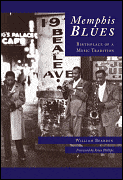
Thanks, to W.C. Handy, Memphis will always have a special claim on the blues, thanks to his classics, like “Memphis Blues” and Beale Street Blues.” As William Bearden’s photo-essay book, Memphis Blues documents, the Beale Street area would be a vital center for the blues until the urban renewal schemes of the 1970’s destroyed the neighborhood, much like what also happened to San Francisco’s once vital Filmore District.

Bearden collects some great pictures and images to briefly outline the story of Memphis’ blues scene, giving thumbnail sketches of some fascinating cultural history, like WDIA, “the first radio station in America to be programmed solely by African Americans.” (p. 36) Some of his captions distill much into few words, like his take on Muddy Waters, writing: “his hard-edged sound was defined further by his attitudes toward authority, money, and women.” Sounds like the blues, alright.

On the jazz side, Phineas Newborn, Jr. is wisely featured (including a nice solo shot on p. 52). However, Memphis can boast of many other jazzmen well grounded in the blues, like Newborn’s associates who played with him on Young Men From Memphis: Down Home Reunion on the United Artists Label. These included musicians like Booker Little, George Coleman, and Louis Smith. Understandably, Bearden’s focus is on legit bluesmen, but there is considerable space given to blues-rock crossover figures like The Band’s Levon Helm, ZZ Top’s Billy Gibbons and the band Moloch.

Ultimately, Memphis Blues shows the widespread influence of the music the city produced, in an attractive volume of black and white photographs. What men like W.C. Handy, Howlin’ Wolf, and Furry Lewis did in Memphis would have a historic effect on young English listeners, who would re-import the blues back into America as bands like the Rolling Stones and the Blues Breakers. Memphis Blues economically (perhaps too briefly for hard-core blues enthusiasts) illustrates that story.

Thursday, July 06, 2006

Stanley Crouch Considering Genius


Considering Genius: Writings on Jazz
By Stanley Crouch
Basic Books/Civitas
0-465-001517-4


Given Stanley Crouch’s take-no-prisoners reputation, reviewing his latest book is a little intimidating, but his newest collection of essays offers readers plenty to sink their teeth into. Considering Genius: Writings on Jazz features Crouch’s passion, wit, and scholarship, providing entertaining insights into many of the great figures of jazz history. Crouch is not about to write Considering Mediocrity, after all.

Crouch may well be one of the most stylistically influential jazz writers. He often writes elaborately lofty passages, and then hits the reader over the head with something heavy. Often this brings an affectionate smile, as when discussing Louis Armstrong late in his career, Crouch writes: “as long as a lion has teeth and claws, it isn’t safe to stick an arm in his cage.” (p. 77) Other times it can make one wince, as when critiquing the music recorded for Clint Eastwood’s Bird, Crouch bluntly states: “the drummer, John Guerin, does not swing.” (p. 69) Period, end of paragraph.

Crouch takes jazz seriously, and he does not have the time or inclination to mince words. Throughout the jazz writings collected here, Crouch defends the seemingly irrefutable proposition that jazz was a unique creation of African-Americans, and must be considered in that context. However Crouch refuses to reduce jazz to an expression of victim-hood, arguing: “it is a dangerous simplification to hear jazz primarily as a music protesting the social conditions of Afro-Americans,” later arguing “If social problems in and of themselves were the only things that provoke the creation of great art, a century as bloody as ours would have inspired far more original and profound aesthetic achievements than it has.” (p. 179) For those who insist on interpreting jazz as a music of victimization, if you take away the suffering, you would also take away the art, and Crouch will have none of that.

Crouch disregards sacred cows when it comes to writing about music and race, which led to his being spectacularly fired as a columnist for Jazz Times. When Crouch took critics to task for championing the white “downtown” experimental trumpeter Dave Douglas over more swing oriented African-American players, it created a hue and cry heard far outside the jazz press. In fact, Douglas got off easy in the provocatively titled column “Putting the White Man in Charge” when the normally sharp-penned Crouch allowed Douglas “is far from being a bad musician, but he knows he should keep as much distance as possible between himself and trumpet players like Walace Roney, Terence Blanchard, and Nicholas Payton.” (p. 233-234)

Crouch proceeded to praise white players like Joe Lovano, and in a later column, Brad Mehldau and Bill Charlap, but to his detractors, Crouch was the Bull Connor of “Crow Jim,” the alleged discrimination against white players in jazz. Rather than be delighted to have printed something that actually generated discussion, Jazz Times purged Crouch, the most recognizable jazz critic, perhaps ever, thanks to his on-screen commentary on Ken Burns’ Jazz and Jack Johnson documentaries.

It was actually a controversy more about style, than race, but it was sufficient to end Crouch’s column. Many of Crouch’s rhetorical battles are fought over the boundaries of jazz, which he often sets as encompassing: “the blues, four/four swing (fast/medium/slow), the ballad, and the AfroHispanic or “Latin” rhythm” (p. 221) Often left out are fusion and the so-called avant-garde, although both Ornette Coleman and Sun Ra are profiled in complimentary terms.

Crouch writes with a passion for jazz, because he believes it is important. “Blues to Be Constitutional” makes an extended comparison between jazz and the U.S. Constitution, arguing:

“Just as American democracy, however periodically flawed in intent and realization, is a political, cultural, economic, and social rejection of the automated limitations of class and caste, jazz is an art in which improvisation declares an aesthetic rejection of the preconceptions that stifle individual and collective invention.” (p. 176)

Rather than simply rewrite record label press releases, Crouch defends a vision of jazz based in swing and the blues, and not beholden to notions of innovation for innovation’s own sake. Although I would suggest Crouch is missing out on some of the artists he dismisses, (like Don Byron, at least on his more swinging CDs like Bug Music and Ivey-Divey), he has a legitimate point of view based on an intimate knowledge of the music. Unlike many jazz books, Considering Genius will probably have wide readership outside the immediate music circles, due to Crouch’s PBS celebrity and syndicated Daily News column. What they will find is passionate writing befitting a great music, and the American nation which produced it.

Wednesday, July 05, 2006

Still Keeping the Beat

Check out Mick Burns website here. I recommended Keeping the Beat on the Street, his book on New Orleans brass bands a few weeks ago. Burns is also a musician and you can hear some of his playing on a great clip from the BBC promoting a benefit for New Orleans musicians.

Whether it is musicians helping musicians or British and American forces serving together in Iraq, it is gratifying to see the Atlantic alliance is still strong. That’s probably why many Americans like myself, were pulling for England in the World Cup after America’s quick exit. We’re both out of the Cup now, but musicians like Burns and organizations like the Jazz Foundation are keeping the music beating.

Still Can’t Buy Class

When Marine Staff Sgt. Raymond Plouhar was killed in Iraq it made national headlines, not for being a story of service and sacrifice, but because Plouhar had been unflatteringly portrayed in his role of military recruiter in Michael Moore’s Fahrenheit 9/11. One week later, Michael Moore still doesn’t consider this news interesting enough to merit mention on his website.

A search of the propagandist’s website for “Plouhar” will only return a transcript of his appearance in Fahrenheit, accompanied by “anti-recruitment” editorial material from a far-left “peace” group. Of course, the premise of that particular part of the film was that predatory military recruiters were convincing young Americans to do something they were unwilling to do. Sgt. Plouhar’s service in Iraq exposes this as the lie it is.

One would think Moore could summon the decency to make note of Plouhar’s service, but that would further undercut his already discredited propaganda effort. Like Paris Hilton, Michael Moore proves again, that no matter how rich you might become, you just can’t buy class.

Monday, July 03, 2006

Celebrating Independence Day


Fireworks and barbeque may be traditional means of celebrating the Fourth of July, but it is also an opportunity for more reflective observations. I always listen to Louis Armstrong over Independence Day weekend.

Thought to have been born on July 4, 1900, Armstrong is now known to have come into the world on the less auspicious date of August 4, 1901. It is telling how appropriate and fitting 7/4/00 seemed to be for the man from New Orleans. Armstrong codified the notion of the jazz solo as an expression of individual creativity, and invented scat singing as a vehicle for vocalists to enjoy the same freedom. Born in St. James Alley, the middle of abject poverty and mean living in New Orleans, Armstrong would become Ambassador Satch, the most recognized and popular American around the globe.

106 years after Armstrong’s apocryphal birth-date, America faces a new set of challenges in the War Against the Terror of Islamic-Fascism. Many American military personnel are serving on the front-lines of this battle, some of the most heroic are profiled in Home of the Brave, by the late Sec. Caspar Weinberger and Wynton Hall. I’m ordinarily reluctant to flak here for a book published by my house, but this one is a bit of an exception. I’ll simply point to this recent post from Gateway Pundit, for further details.

This Independence Day, remember the courage and sacrifice that keeps America strong, and enjoy the sounds of freedom produced by Armstrong in that uniquely American art-form, now called jazz.

Closed Rings

The $24 million musical adaptation of The Lord of the Rings staged in Toronto was the great hope for Canadian theater and tourism, but Michael Riedel reports in his NYPost column, the show will soon close. Riedel writes:

“‘The Lord of the Rings’ will lose nearly all of that $24 million, $3 million of which came from the province of Ontario, which hoped the show would boost Toronto tourism.

(Note to Canadian taxpayers: NEVER PUT YOUR OWN MONEY IN THE SHOW.)”

No doubt. Leave that to the professionals, like Rosie “Taboo” O’Donnell. I would have thought Lord of the Rings would have been reasonably critic-proof, given the legions of Tolkien fans, but evidently not. Regardless, the government of Ontario should have known better than to try to play the angel role in the high stakes commercial theater game.

Sunday, July 02, 2006

Forbes-Roberts’ One Long Tune


One Long Tune: The Life and Music of Lenny Breau
By Ron Forbes-Roberts
University of North Texas Press
1-57441-210-8


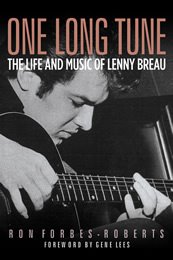
The early chapters of most biographies are a struggle to read, regardless of the prose style of the biographer, because only the most passionate enthusiasts will be interested in the youthful years of the subject. However, Forbes-Roberts had an advantage in Lenny Breau, a jazz guitarist who was playing so early, at such a highly accomplished level, that the story of his artistic development begins well before Breau graduates from high school. It is a musical journey Forbes-Roberts documents quite well in One Long Tune: the Life and Music of Lenny Breau.

Born to professional country singers who toured New England and Canada as Hal Lone Pine and Betty Cody, Breau’s earliest professional experience was as part of their country & western review. Although celebrated as jazz soloist who adapted the innovations of pianist Bill Evans from the piano to the guitar, country sounds who always be a part of Breau’s palette. Indeed, the arguably most important association of Breau’s life, and the greatest influence on his stylistic development was country legend Chet Atkins. Forbes-Roberts writes:

“The stable, straight-laced, and generous older man would become the empathetic, accepting father to Lenny Breau the Hal Lone Pine had not been. Motivated by a deep affection and respect for Lenny, Atkins did all he could to guide Lenny professionally and personally.” (p. 119)

One of the many virtues of Forbes-Roberts’ biography is that he clearly and persuasively explains the innovative techniques Breau, and Atkins before him, brought to the guitar. In doing so, he dispels any lingering preconceived notions of jazz and country artists as primitive, unschooled, and simply intuitive musicians. Breau and Atkins were advanced musicians, who gave tremendous thought to their art, and honed their playing through dedicated practice.

Atkins would produce Breau’s first two albums for RCA. Despite the promise they showed, Breau’s career was often undermined by his personal demons, particularly his drug and alcohol addiction. Breau continued to pursue music with a religious fervor, but his chaotic marriage to his abusive second wife, Jewell, further acerbated problems.

Tragically, on August 12, 1984, Breau was found strangled in the roof-top pool of his low-rent L.A. apartment building. To his credit again, Forbes-Roberts doesn’t pull any punches writing about Breau’s murder and LAPD detectives Bird and Aldahl’s suspicion of Jewel Breau:

“Her well-documented history of spousal abuse and flaws in her testimony (which remain confidential in the unclosed case) convinced Bird and Aldahl of her guilt and they requested that she submit to a polygraph test. Jewel agreed initially, but balked at the last moment and refused to have further contact with the police except through her lawyer. Bird told this author that her refusal to be tested confirmed his belief that she was complicit in her husband’s murder.” (p. 271)

Jewel Breau, now remarried as Jewel Flowers, refused to be interviewed by Forbes-Roberts. She was never charged because “the detectives decided that the Los Angeles District Attorney’s office would not have a strong enough case to bring her to trial.”

One Long Tune is a great music biography. Fellow guitarist Forbes-Roberts writes about Breau’s technical facility in such great detail, some readers may find themselves skimming these passages. However, rather than tossing around over-used terms like “genius,” Forbes-Roberts makes a well-reasoned, credible case for Breau greatness. Over all, the book is highly readable. If nothing else, it will broaden the appreciation for the music of Lenny Breau, but one can also hope it will lead someone to take another look at his murder investigation.

Friday, June 30, 2006

Again, Not Censorship. Editorial Judgment.

When the Dean of Library Services at the University of the Incarnate Word cancelled the library’s subscription to the NY Times, in protest of the scandal sheet’s decision to reveal the details of secret government financial tracking of terrorists to al-Qaeda, a staff librarian predictably started sniffing “censorship.” The San Antonio Express-News reports:

Staff member Jennifer Romo said she and her coworkers were shocked when they received Morgan's email.

"The censorship is just unspeakable," Romo said.

Again, the NY Times has no right to demand a subscription from UIW. It may very well be an excellent facility, but I’m sure the UIW cannot subscribe to every major American newspaper. Editorial decisions have to be made. If the dean feels the Times recklessness now tips the scale in favor of the Washington Times for example, that would be a reasonable editorial judgment he is paid to make. Throwing around charges of censorship in such a case, cheapens the term. Real censorship is happening Cuba, where Castro throws librarians in jail for daring to shelve material critical of his regime. Nat Hentoff has taken the American Library Association to task for not denouncing this true outrage. Librarians should know better.

Thursday, June 29, 2006

And the Winners Are . . .

Last week the Jazz Journalists Association held their award ceremony at B.B. King’s. Most of the music awards I can’t take issue with. I would have voted for Robert Glasper over Dafnis Prieto for the Up & Coming Musician of the Year Award, but I’m not outraged by their selection. Lifetime Achievement for Roy Haynes, Musician of the Year for Sonny Rollins, and Composer of the Year for Andrew Hill are all solid choices in my judgment.

One eyebrow raiser was the Award for Lifetime Achievement in Jazz Journalism going to Howard Mandel, who as it just so happens, is also president of the Jazz Journalists Association. Hmm.

Mandel also has written on behalf of Tarik Shah, the jazz bassist facing charges for conspiring to aid al-Qaeda. Considering we do not know the extent of the government’s case, it seems premature to assume his innocence. In fact, Mandel seems to presuppose overzealousness on the part of the government.

Maybe the JJA needs some fresh blood in its membership to give them some perspective. I wonder if they accept bloggers as members.

Wednesday, June 28, 2006

One Man’s Character, Another’s Lack There Of

The AP is reporting Marine Staff Sgt. Raymond Plouhar, who appeared in Michael Moore’s Fahrenheit 9/11 while serving as a recruiter, was killed in Iraq. According to his father “his son didn't realize that it was for a movie critical of the war.” Sgt. Plouhar did have a clear idea of why he was in and Iraq and why he was a marine. According to his father it was his desire to help people:

"This just makes me devoted even more to his belief that people need help in Iraq, and he felt that he was helping."

He said his son was teased a lot as a young kid and protected people as he grew up.

"He liked to protect the underdog," the father said. "All of his buddies from school called saying, `He was my friend when nobody else would be.'"

As of 2:20 P.M. E.S.T. there is no mention of Plouhar’s death or his dedication to service on the website of the man who exploited his trust, Michael Moore. Not even a simple expression of condolence to his family. That is telling.

The State of the Jazz Press

On April 19th I first wrote about Andy Garcia’s film The Lost City, its fantastic soundtrack of Cuban music, and its honest portrayal of Castro’s brutal regime. Now in the July/August issue Jazz Times (not yet available online) finally catches up with the film with a featurette “Lost Havana” by Rebeca Mauleon. Focusing primarily on the film’s music, Mauleon writes: “It is clear from the opening scene in Andy Garcia’s film The Lost City that Cuban music is the protagonist.”

Hardly mentioned at all are the political implications of the film and its music, with just an oblique criticism that “City may be flawed in its attempts to weave fiction with politics and history.” Reportedly, The Lost City had been banned by several Latin American countries, where freedom is now in retreat. Nor were the controversial negative reviews in the NY Times and other traditional media outlets, which clearly betrayed the critics’ biases in regards to the Cuban dictator. (It is worth noting Ebert & Roeper gave it two thumbs up.)

Unfortunately, this is par for the course. The jazz press now seems to avoid controversy, where once it thrived on it. When it does mention political issues, it usually does so in a rather knee-jerk way that assumes all readers and listeners are “good” liberals. Jazz Times is actually the best of the jazz magazines currently, having published some potentially controversial articles. Overall though, there seems to be a reluctance to publish anything that isn’t either press release material or warmed over liberalism in the jazz magazines, for fear of alienating the existing audience. Projecting a unified and insular vision of the music does no service to jazz. A little controversy can be economically healthy, and multiple points of view would help the jazz press expand its audience.

Tuesday, June 27, 2006

Your Newsstand, Your Values

As a member of the publishing industry, I hold the First Amendment in very high regard. However, it is important to remember, that they only protect your write to speak and write freely. They do not grant immunity from possible consequences. That is a point many irresponsible members of the media would like to obscure in their attempt to avoid the consequences for their own dubious actions.

These issues have obviously come to a head after the New York Times decided in effect to pander to their terrorist readership by exposing secret operations designed to protect American (and particularly New York City) lives. Supreme Court rulings may bar the government from halting publications beforehand, but not prosecution after the fact, for revealing classified information. Whether Keller et al will take the proverbial frog march remains to be seen, but I expect calls for a nationwide boycott will gain steam. (Of course, I’ve been boycotting them for years now.)

The recent experience of Michael Yon and Shock magazine is instructive. As blog readers are now well aware, HFM launched Shock magazine (sort of a Life magazine for Beavis and Butthead) with Yon’s striking photo of an American soldier cradling an Iraqi child in his arm. The problem was they neglected to get his consent to use his photo for their magazine, permission he would not have granted for a story with an anti-military spin.

When HFM showed bad faith after their settlement talks Yon urged his readers to contact distributors and retailers, urging them to yank Shock from their shelf. When Yon’s campaign started showing success, HFM CEO Jack Kliger accused him of . . . you guessed it: censorship.

This is disgustingly disingenuous. No government storm-troopers are pulling Shock off the shelves. Yon and his readers have a First Amendment right to call for a boycott of Shock. HFM has no Constitutional right to publish stolen images, nor does it have a Constitutional right to distribution at any particularly outlet. Retailers and wholesalers are not obligated to sell Shock or the NY Times, if they believe it does not reflect the values of their customers.

Which brings us back to the NY Times. The chances of a successful boycott here in the City are somewhere between slim and none, but the rest of America may be a different story. Booksellers won’t likely be receptive to NYT boycott calls. However, major mass merchandisers like Wal-Mart and Target are very sensitive to the opinions of their “guests.” If they get complaints asking to pull the Times and Times-branded books from there shelves, it will get top-level consideration.

Likewise, the major independent magazine and book distributors are very sensitive about stocking controversial items. These “ID's” stock mass merchandisers, airport stands, and local newsstands in their broad geographic areas. Often they are given broad discretion over what they put into accounts, provided it does not cause controversy. In the Northeast this is primarily Hudson News. In the Southeast and Northwest it is The News Group. Anderson News services the Rocky Mountain and Border State region, and Levy Home Entertainment services the Midwest and Great Lakes, by and large.

Powerline shows a graphic of the NYT’s declining stock price that you don’t need an MBA to understand. If the Times company starts to lose revenue from national sales and the sales of branded books, it will send a message.

Yon has page of contact info for his Shock protest. It’s a good starting point. If you’re outraged about what Shock and the NYT have done, let your local retailers and wholesalers know about it. That’s your First Amendment right.

Monday, June 26, 2006

Whiteis' Chicago Blues


Chicago Blues: Portraits and Stories
By David Whiteis
University of Illinois Press
0-252-0739-6


For many “Sweet Home Chicago” is the ultimate blues anthem to the Windy City. Many only know it from the Blue Brothers repertoire, but the hipper recognize it as a Robert Johnson classic. For many of the musicians profiled in Whiteis’ Chicago Blues, it is part of the “set list from Hell,” the old chestnuts “considered obligatory on Chicago’s touristy North Side circuit.” (p. 182) Despite its clichéd status, it exemplifies the strong role the Blues have played in the cultural lives of Chicagoans.

In Chicago Blues, Whiteis describes the post-war Chicago Blues as a living, evolving form of musical expression. Many of the artists profiled, like Sharon Lewis, are influenced by the Blues tradition, but are exploring a more contemporary, soul and r&b influences in the so-called “soul-blues” style.

Another frequent Blues dichotomy is that of the sacred and the profane. Whiteis profiles Denise LaSalle for instance, who “had been inserting a gospel interlude into her blues shows for some time, which was already a bold move, given the coarse nature of what usually preceded and followed it.” (p. 111) Artie White started his musical career in 1956 as a gospel singer, not defecting professionally to the Blues until 1966. Yet he told Whiteis in an interview that the church is still a strong calling for him:

“I’ve been called to preach. I am a Christian man. Thing about that, I wouldn’t put God behind. If I wanna preach, I’m gon’ quit the music. If it’s strong enough for me to go, and I see he want me to go, I’ll quit the music.” (p. 228)

Whiteis profiles some of the giants of Chicago Blues, like Junior Wells and Sunnyland Slim, but he gives more attention to musicians working today, who have a strong local following, but may not be known widely outside Chicago. Unfortunately, many of the local venues have closed.

It is in his description of one such venue, the Maxwell Street Market that Whiteis loses perspective. Once an open-air weekend market, thronged with street performers playing the Blues for tips, the City of Chicago and the University of Illinois came to an arrangement in which the Maxwell Street Market’s “entire neighborhood would be seized under the right of eminent domain and used to expand its campus.” (p. 76) Whiteis bemoans the loss of the Maxwell Street Market as “a corporate-driven urban vision being visited on America in the age of high-tech economic conversion and deindustrialization. It’s Ralph Nader’s ‘planned obsolescence’ all over again, but this time the entities being deemed obsolete are people.” (p. 82) As the work of the city government and the Illinois State College system, corporate America played no role in the demise of Maxwell Street. In an ironic twist of fate, Whiteis’ profiles of Chicago’s Blues musicians and venues would ultimately be published by the University of Illinois Press.

As Whiteis’ Chicago Blues amply demonstrates, there is indeed a vital blues scene in Chicago. It is a city where live music is still an essential part of a good night out. While the Maxwell Street Market is history, many new venues still keep the Blues alive. His book would be valuable reading for Blues aficionados looking to connect with the current Chicago scene.

Friday, June 23, 2006

The New Europe


Prague is one of my favorite cities to visit. I have friends there, and it is home to some great jazz clubs like USP and Agharta, where musicians can now swing freely after their fall of Communist tyranny. They have been trying to get me to visit Hungary with them, and after seeing photos from Bush’s speech, in Budapest, I know I’ve got to try to get out there.

Hungary, like the Czech Republic actually values liberty, after having suffered under Communism. The New European states actually want close relations with America, and have been helpful in Operation Iraqi Freedom. Having suffered under Communist oppression, they now look to spread freedom in Iraq and in the island gulag of Cuba.

Bush gave a rousing speech outlining the Hungarian dedication to liberty that was buried by the knee-jerk leftist antique media. The NYTimes is too busy undermining national security and generally running the Sulzberger family firm into the ground to notice a historic moment when it happens. It’s available here. The President concluded by paying tribute to our allies, the Hungarian people:

“Earlier today Laura and I laid a bouquet of flowers at the 1956 Memorial Monument across the river. It was our privilege to do so. It was a moving moment for us. Hokok Square is named for the father of Hungarian democracy, and honors more than a century-and-a-half of Hungarian sacrifice in freedom's cause.

A bust of this great leader stands in the U.S. Capitol. It affirms that those who fight for liberty are heroes not only in their own land, but of all free nations. All who love liberty are linked together across the generations, and across the world.

Your great poet Peteofi said this:

"Here is the time, now or never! Shall we be slaves or free? This is the question, answer! By the God of the Hungarians we swear, We swear to be slaves no more!"

These words were addressed to the Hungarian people, yet they speak to all people, in all times. This is the spirit that we honor today. I appreciate the opportunity to come to this great country and to celebrate the Hungarian example -- the courage, the sacrifice, the perseverance that has led to this democracy.

On behalf of all Americans: Köszönöm. May God bless you all.”

Thursday, June 22, 2006

Jazz Tracking


For those who enjoyed Andy Garcia’s The Lost City, there is good news. The soundtrack is now scheduled to drop on August 15th, from Univision Music Group. Music plays an integral role in the film. It is the soul of the Cuban people, and to dominate them, Castro must crush that spirit. The track listing is not yet available, but it should collect original music composed by Garcia, as well as classic tracks from a wide variety of Cuban music heard in the film. If you haven't seen it yet, don't despair. Magnolia will unspool it in more cities in the coming weeks.

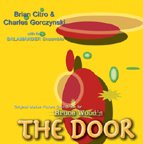
Indeed, several films recently have been using instrumental jazz in their soundtracks to excellent effect. Bruce Woods’ The Door features an excellent soundtrack composed and improvised by Brian Citro and Charles Gorczynski, available at retailers with a strong commitment to independent music, or online here. Also, Three Days of Rain has a soundtrack CD out that also stands up well apart from the film. As it has to, since the film evidently played briefly at the Quad in New York (and who knows where else) late last year as part of a very limited run, with no DVD release announced, as of this time. The music at least is great. Bob Belden’s score brings to mind the lush orchestrations Gil Evans penned for Miles Davis. With guest soloists like Jason Moran and Joe Lovano, Three Days shows how effective instrumental jazz can be as soundtrack music.

Jazz has long had an uneasy relationship with film. However, jazz instrumentalists are particularly effective at expressing emotional ideas and conveying stories without words. Such collaboration can greatly strengthen the emotional impact of a film. The Lost City is a perfect example, where jazz expresses the human need for freedom, even in the face of the brutality and oppression of Fidel and Che.

Wednesday, June 21, 2006

Alessandro Bazan: Jazz Paintings


Alessandro Bazan Jazz Paintings
Charta
88-8158-547-2


Many fine artists’ work has graced the covers of jazz albums. Andy Warhol for instance, created covers for Kenny Burrell’s Blue Lights and Johnny Griffin’s The Congregation. Other artists, like Romare Bearden and Jackson Pollock have taken direct inspiration from jazz. Italian Alessandro Bazan also finds his inspiration from American jazz, as his new collection Jazz Paintings demonstrates, even while being identified as a leader of a new generation of Palermo based artists.

Bazan explains: “When I begin a new work, the first thing I do is put on a record and it is almost always a jazz record.” (p. 26) It is a music Bazan says he always identified with because “my generation (those born in 1966) didn’t have their own music, something that could give them a sense of belonging. I couldn’t get with Duran Duran and when I was about fifteen I began to listen to jazz music.” (p.17)

Bazan’s work often depicts nightclub scenes, like Blues for Torin (2005), pictured as the wrap-around cover, and reproduced without type within. Other paintings, like Orange Blues (2002) depict jazz combos against almost surreal backdrops. Frequent subjects include Jaco Pastorius and Charles Mingus, as well as Chet Baker and John Coltrane, both pictured in Impossible Quartet (2005).

As the companion book for a Bazan exhibition presented in conjunction with the Umbria Jazz Festival, Jazz Paintings should bring the artist to the attention of the wider jazz community. It is a beautiful book with many color reproductions of his paintings, as well as some black and white drawings accompanying the brief introductory material.

Bazan’s work with its strong colors and clear jazz aesthetic should earn him a place in jazz enthusiasts’ art pantheon along with Bearden and Francis Wolff. That an Italian painter can draw such inspiration from this music, once again demonstrates the vitality and universality of America’s true original music, jazz.

Flora Prints


Jim Flora was another jazz-associated visual artist. Irwin Chusid, “public editor” of Luskin’s Krugman Truth Squad is an author of a book collecting some of Flora’s work, some selections are posted here and here. I think you have to respect a writer equally comfortable with free market political commentary and jazz cultural history.

Flora’s work certainly has a great deal of charm, however I think his cult-standing is hurt by the fact that his art graced the covers of LPs for majors labels Columbia and RCA. On the other hand, David Stone Martin is known for his Verve covers and Francis Wolff’s photos helped make Blue Note a collector favorite. Unlike the majors, Blue Note and Verve specialized in jazz, and developed a consistent look through their cover designs.

Tuesday, June 20, 2006

Concert Hall Salutes Jazz Club

For twenty years the Village Vanguard Jazz Orchestra held court at the storied jazz club every Monday night. Tonight they played Carnegie Hall instead, as part of the JVC Jazz Festival’s salute to the Village Vanguard and Loraine Gordon, in the words of leader John Mosca: “in violation of their contract by playing above sidewalk level.”

Lorraine Gordon, the widow of founder Max Gordon, took over the reins of the Vanguard in 1989. Beloved by musicians, particularly those like The Bad Plus playing last night, Lorraine Gordon also has a reputation for running a tight ship.

Both Gordons exemplify the adventurous spirit of jazz entrepreneurs. Having prime west village space and a liquor license, the Vanguard presents jazz instead of trendy cocktails and DJ’s. German émigrés and jazz fans Alfred Lion and Francis Wolff started Blue Note Records to document the music they loved. Blue Note became the signature label of modern jazz, producing some of the most beloved LPs in jazz history. Lion and Wolff never got rich for their efforts, but they befriended many of the musicians they recorded. Other label founder-producers like Lester Koenig at Contemporary and Nat Hentoff at Candid recorded music they deemed important, regardless of commercial concerns.

Impresario and producer Norman Granz put his money where his mouth was as producer of Jazz at the Philharmonic. Granz insisted on integrated audiences at his shows. He would refund disgruntled audience members, but would not reseat them to placate their prejudices. He also insisted his integrated troupe stay together at the same hotels, often integrating them through the strength of his economic argument. In many cases JATP would have several floors, or even the entire hotel reserved through their performances—quite a financial hit to turn away Granz and company.

One of the great things about capitalism is that nobody can tell an entrepreneur not to waste their money on a crazy enterprise, if their mind is dead set on doing so. Jazz has certainly been fortunate that the Gordons, Granz, Lion, and Wolff have been free to pursue speculate ventures on behalf of the music.

The concert itself featured great music. Opening the evening with some traditional flair was Dr. Michael White’s Original Liberty Jazz Band, who usually swing the Vanguard every New Year’s Eve. Roy Hargrove led an excellent quintet, including veteran jazz artists Bobby Hutcherson and Ronnie Matthews. The Bad Plus closed their set with a unique rendition of Bacharach’s “This Guy’s in Love with You” dedicated to Gordon, and fittingly the Vanguard Orchestra closed with a rousing set, featuring guest soloist Joe Lovano.

Next Monday the Vanguard Jazz Orchestra will be back in their regular digs, below sidewalk level. Of course, any night of the year in New York you can count on hearing some great music at the Vanguard.

Monday, June 19, 2006

Help Needed: Coalition Builders

Vision Fest, the East Village festival of avant-garde jazz, had a panel discussion on New Orleans Sat. prior to the evening concert. Many of the comments, though well received East of Ave. A, would be considered divisive and counter-productive throughout most of America.

One panelist predicted America is poised for large scale rioting on one hand versus a Fascist-state crack down on the other. He blamed the “Bush Oil Cartel” for pulling there management facilities out of New Orleans in the 1970’s despite his later admission that Napoleonic regulations at that time made it difficult to do business across Parish lines. Corporations were attacked, as was our involvement in Operation Iraqi Freedom.

Much was said that was divisive and would push away would-be allies from Red State America. Instead of building coalitions, there was talk of large-scale demonstrations, the spectacle of which would make average constituents around the country more skeptical of the efficacy of spending to rebuild New Orleans. Most Americans are compassionate, but do not want to see their tax money go to organizations marching around with “Bush is Hitler” signs. Many panelists and people attending genuinely want to help the people of New Orleans rebuild. However, I have become convinced there are many on the left who want to keep New Orleans in a state of perpetual martyrdom.

After 9-11, the response was productive and unifying: we were not Republicans or Democrats, but Americans. That was productive. After Katrina, there was a mad dash on the part of the extreme left and their water-carriers in the media to assign blame. Horror stories peddled by the media, like that of snipers firing at medical helicopters, arguably cost lives by grounding needed emergency flights. That was not productive, and it’s the musicians and citizens of the Crescent City, who will suffer for such excesses.

Sunday, June 18, 2006

Grandt’s Kinds of Blue


Kinds of Blue: the Jazz Aesthetic in African American Narrative
By Jurgen E. Grandt
Ohio State University Press
0-8142-5132-3


Jazz artists have often been compared to literary figures, usually for their storytelling talents, while some acquire mythic status for their larger than life exploits. In Kinds of Blue, Grandt conversely argues that literary artists like Anne Petry and Toni Morrison exhibit jazz qualities in their own field of art.

Grandt starts his analysis with an actual jazz musician and memoirist, Sidney Bechet, who “links not only music and storytelling, but also history and memory, the past and the present.” (p. 3) In his autobiography Treat It Gentle, Bechet creates a fictional grandfather Omar, a freed slave who meets his tragic fate as a result of pursuing his love for Marie, Bechet’s grandmother, herself a slave still held in bondage. Bechet’s Omar becomes a touchstone for Grandt throughout the book, who while a fictional construct, expresses truth through jazz technique, arguing:

“As a jazz musician, Sidney Bechet improvises over the fixed melody and chord progression of a song; that is, he superimposes a new melody (fiction) on an already existing melody (fact) . . . Bechet improvises the fictitious tale of Omar over the historical fact of chattel slavery in America.” (p.8-9)

Grandt handles issues of race largely with scholarly reserve. While trying to avoid the provocative, he is forced to deal honestly with the extremism of Amiri Baraka’s “many transformations—from Bohemian Beatnik to Black Nationalist to crude Marxist-Leninist.” (p. 67) Baraka, who gained notoriety for the poem “Somebody Blew Up America,” with its infamous anti-Semitic libel that Jews were warned to by Israel to avoid the World Trade Center on September 11th, is analyzed for his revolutionary story “Answers in Progress.” Grandt provides historical perspective on Baraka’s chaotic life, including the break-up his marriage, getting a young dancer named Bumi pregnant, and then moving on to another lover. According to Grandt:

“He even attempted to persuade the two women of the righteousness of a polygamous marriage, justified, so he claimed, by the tenets of Maulana Karenga’s Kawaida ersatz-religion that he had espoused. Conveniently for Baraka, already the disinterested father of three children, Bumi fell suddenly ill and died in the hospital. Even though this freed him to marry Robinson, who adopted the name Amina, later that same year, their relationship, too, would prove to be calamitous at times, mostly due to Baraka’s virulent sexism.” (p. 75)

While that might be brutally honest context, it is not inappropriate, in that it certainly makes Grandt’s case that much of the story, particularly the domestic bliss of the narrator, is wish-fulfillment on the part of Baraka. The one part of the book that shows some confusion is his comparison of novels by Toni Morrison and Hans Janowitz, both named Jazz. Grandt argues that in ways both reflect jazz elements in the structure of their language. It seems that Grandt goes back and forth as to whether Janowitz’s Jazz can really be considered a jazz novel, ultimately (I think) deciding no, because it lacked the historical perspective to truly grasp the music. However, it was a heck of a good try for a German in 1927.

Ultimately, this shows some of the pitfalls in the act of classification. British jazzman Johnny Dankworth would probably assume, if nothing else, his memoir Jazz in Revolution is a jazz narrative. However, as the product of a white European, who relates the events of his jazz career with unembellished honesty (as far as I know), but in straight forward language, would probably not be so-classified by Grandt.

Despite its title, Kinds of Blue makes only incidental references to Miles Davis, and no mention of his Kind of Blue album. Grandt does make effective and informed comparisons of literary works and recorded jazz sessions, Toni Morrison's Jazz and “The Chase” by Dexter Gordon and Wardell Gray, for instance. Those unaccustomed to recent academic writing however, may have difficulty with the frequent use of binary opposites and other such terms. Grandt is well versed in jazz, but Kinds of Blue is really written for an audience steeped more in critical theory, than the music itself. General readers interested in the relationship between jazz and literature would probably find David Yaffe’s Fascinating Rhythm more accessible.

Friday, June 16, 2006

Screening the Door


The Door
Directed by Bruce Wood
Soundtrack by Brian Citro & Charles Gorczynski
www.dreamfastcinema.com

Writing about Bruce Wood’s film The Door presents a challenge in avoiding spoilers. An independent film in the tradition of M. Night Shyamalan’s films, The Door explores the boundaries of dream and reality, but even that brief description could be a spoiler. To synopsize briefly, free spirit Ori introduces his heartbroken friend Kent Cole to three of his acquaintances. As each becomes involved with Cole, they begin to realize he is not what he seems, and the consequences are disastrous.

The Door’s surreal mood is abetted by an effective jazz soundtrack by Brian Citro and Charles Gorczynski. Many tunes are effective when heard apart from the film, particularly striking being the “Circle” tracks. Indeed, I would recommend the soundtrack on its own merits. As evidence, The Door won best soundtrack at the Lake County Film Festival, which I’ve never heard of, but must count for something. Having taught a “jazz and film” at SCPS, I’m always happy see more jazz scores, and one hopes The Door will prove to be an effective showcase for it’s composers.

I’m assuming The Door was shot on digital video, and it is actually quite effective. Wood consistently conveys a sense of mystery throughout the film, even though many viewers will tweak to what is going on when they think about the commonality binding the three friends together. Some of the cast are not exactly professional grade, but nobody is bad enough to sabotage the mood of the film. Indeed, Bill Ferris as Cole and Ryan Martin as Ori hit the right notes as the friends with radically different temperaments, in strong performances.

There is gay content, which in a way it acts a decoy when characters discuss their “true nature.” Regardless, it shouldn’t scare timid viewers away from an interesting film and soundtrack. Both are quite intelligent and entertaining. See the trailer here.

Thursday, June 15, 2006

His Career Certainly Caused the Blues

Charley Patton. Robert Johnson. John Lee Hooker. Steven Seagall . . . ?

I don’t think so. Of course, he’s certainly caused a lot of blues with his movies, particularly with On Dangerous Ground.

Wednesday, June 14, 2006

St. Bono?

El Chapultepec is a great little no-cover jazz venue in Denver’s Lo-Do neighborhood, where many of the city’s best jazz musicians like Ellyn Rucker, often play. It is deservedly profiled in the June 2006 issue of Denver’s glossy 5280 magazine (“Remebering the Pec” not available on-line). However it includes an odd little celebrity story, referred to as the “Legend of Bono.” Mike Kessler writes:

As the story goes, the U2 frontman and a pal attempted to bring two underage girls into the club, sometime during the ‘Pec’s glory years, before Bono took on Africa’s problems. The girls couldn’t provide ID, which prompted Bono and his buddy to cop an attitude and play the rock star-card. Finally, owner Jerry Krantz was summoned to the door. Says KUVO’s Lando: “Jerry told Bono and his friend, ‘You and your pal can come in. But the girls, well, sorry—but U2s will have to go.’”

Bono’s self-righteousness is getting tired, and so is the media’s fawning coverage of him. Next time he lectures American policy makers, remember this episode. If the legend is true, while not Jerry Lee Lewis territory, bringing under-age girls to a bar shows questionable judgment. Could the media temper the absolute moral authority they have tried to invest in him? Let’s hold off on the Sainthood, he’s still just a rock-singer who was evidently capable of stupid rock-star stuff. His choosing the ‘Pec as his after-hours hang did show good taste though.

Tuesday, June 13, 2006

Burns’ Keeping the Beat on the Street


Keeping the Beat on the Street: the New Orleans Brass Band Renaissance
By Mick Burns
Louisiana State University Press
0-8071-3048-6


Brass bands, jazz funerals, second line dancers. These are the enduring images of the city of New Orleans. In the recently published Keeping the Beat on the Street Mick Burns has assembled interviews he conducted before Katrina, to chronicle the continuing development of the NOLA brass band scene. Burns has captured the important voices of this tradition, in his worthy book.

Much of the resurgence of interest in the brass band scene can be attributed to traditional jazzman and educator Danny Barker, who founded the Fairview Baptist Church Brass Band. Many of the future leaders of the brass band scene came up through the Fairview band. However, the local musicians’ union forced him to scale back his involvement with the predominantly non-union youth band. As Leroy Jones remembered:

“Danny had to stop being associated with us because of the flak from the union. A false rumor was generated by some musicians who were jealous of what was going on, and it made it difficult for Danny.” (p. 24-25)

It was a tradition that faced adversity from other quarters. As local broadcaster Jerry Brock told Burns:

“In the 1960’s, the NAACP tried to stop the second lines. It wasn’t that they had bad intentions; it’s just that they felt it was a bit of a throwback, and it was time to move on. Harold Dejan and Danny Barker stood up to them and said, “This is valuable. This is a part of the history of our people.” (p. 102)

By incorporating elements of funk and so-called “street music,” a new generation represented by the breakthrough Dirty Dozen Brass Band and the Rebirth Brass Band, revived interest in parading, and brought their music to audiences around the world.

Keeping the Beat is particularly valuable, because it helps dispel the notion that recent years have seen no fresh musical developments in New Orleans. There is a preconception that only museum-piece style traditional jazz is performed for unappreciative tourists. However, there was clearly a vibrant brass band scene that had a strong local following. As Brice Miller told Burns: “When I say traditional, some people think we’re trying to hold on to something that’s gone, but that’s not it. We’re bringing our own identity to it.” (p. 180)

Of course, Katrina now represents an even greater challenge for the bands. The Jazz Foundation has been tireless in their efforts to help scores of New Orleans musicians, many of whom have been leaders in the brass band scene, rebuild their lives and careers. To support their efforts, go here.

Monday, June 12, 2006

Ultra What?

Song for My Father's, Thomas Sancton’s New Orleans memoir, is well written, and often quite poignant. There was however, one throwaway line I wanted to address separately from the overall very positive review below. As Sancton was being initiated into the world of traditional jazz, he met other jazz pilgrims from Europe, drawn to the Crescent City. Sancton briefly wrote of one:

“Tom Bethell, an Oxford graduate, was a poor trumpet player, but proved to be a better writer, turning out an excellent biography of George Lewis before he moved to Washington and became an ultraconservative political columnist.” (p. 107)

I’ll take Sancton’s word regarding Bethell’s trumpet talent, but the term “ultraconservative” is questionable. For years I read his American Spectator column, and found it smartly written and well within the tradition of American Conservative thought. It might look “ultra” to someone who worked for Time magazine for 22 years, as Sancton has, but its mainstream center-right to most Americans.

There have been countless studies of how often the antique media labels conservatives as “ultra” or “arch” conservatives, and how little they use such adjectives for liberals. Vanity Fair’s Graydon Carter, who blurbed Song of My Fathers, might well be called an ultra or extremist liberal, for casting his lot with the Bush Derangement crowd, but don’t look for such terms in the old media.

Happily, the old media’s leftwing biases matter less and less. It is a new world. In the past, if democrat NY State Comptroller Alan Hevesi would make a comment he would later describe as “beyond dumb” calling for the President to be shot between the eyes, he could count on the media ignoring the story. Same for Francine “You-Don’t-Need-Papers-for-Voting” Busby. Now, the truth will out through the blogosphere. However, a casual line here and there betraying a political bias should not deter readers from enjoying Sancton's elegy for the New Orleans he knew in his youth.

Friday, June 09, 2006

Sancton’s Song for My Fathers


Song for My Fathers
By Thomas Sancton
Other Press
1-59051-243-X

There has always been an apostolic element to jazz history. Louis Armstrong apprenticed with King Oliver. John Coltrane honed his art as a sideman with Miles Davis. In his memoir Song for My Fathers: a New Orleans Story in Black and White, journalist and sometime clarinetist Thomas Sancton recounts the experience of learning to play traditional New Orleans jazz as a teenager from some of the giants who played at Preservation Hall, foremost of whom was George Lewis.

Sancton writes of many fathers, his often difficult biological father, Thomas Sr., and the musicians of Preservation Hall, the metaphorical fathers who taught him about the music they pioneered. The legendary clarinetist George Lewis was his hero and first music teacher, whose lessons were often more about intangibles than theory. At one point, Lewis told Sancton about one of his signature songs, “Burgundy Street Blues:”

“I guess one reason I made it,” he said, “is because every time I went on the stage in one of them big halls I prayed—like I always do everywhere—that God would stick with me and help me play my very best for these folks who’d been so good to me.” (p. 88)

Other New Orleans giants would teach Sancton more practical musical instruction. Punch Miller gave early instructions on improvisation in his Saturday afternoon jam sessions, and George Guesnon opened the white teenager’s eyes to New Orleans race relations in general, and particularly the complex relations between Creoles and African Americans.

As New Orleans funerals offered ample employment for musicians, Sancton often marched with Harold Dejan’s Olympia Brass Band. Dejan explained:

“This is the only town in the world where funerals make people happy . . . that’s the way it’s supposed to be—it’s like the Bible say, ‘Cry when you born, rejoice when you die.’ That’s why we pick up the tempo comin’ out the graveyard. That New Orleans music make everybody happy, man” (p. 107-108)

Indeed, funeral marches are a constant presence in Song for My Fathers, eerily reminding us many of these New Orleans musicians would have little time left on Earth, and that a terrible fate would befall their city in 2005. In the wake of the storm, the city that had always found joy in loss, was suddenly bereft of the healing power of its music.

Sancton is an excellent writer, and his affectionate portrayal of “the mens” is absorbing. His accounts of his family, particularly his complex relationship with his father are also surprisingly compelling, sometimes even bordering on Southern Gothic. Written before Katrina, Sancton added a preface about his return to his parents’ storm ravaged home, adding an additional chapter of frustration to his family history.

Throughout Song it is impossible to forget the fate waiting for New Orleans. Fortunately, Preservation Hall, a true musical shrine that hosted legends like George Lewis, was spared by Katrina. Let us hope there will be another generation of New Orleans musicians to play there and continue the tradition that inspired Sancton.

Note: Sancton has a book signing at Preservation Hall on June 24th.

Thursday, June 08, 2006

Previte and the Chic of Terror


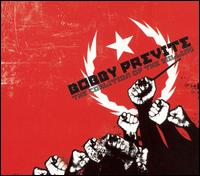
Jazz may stand accused as being elitist music, but it is sometimes better not to be too closely tethered to every popular trend. A case in point has been the Commie Chic we have seen emblazoned on t-shirts and caps recently, often in the form of hammer & sickles, or portraits of Cuban terrorist Che Guevara. Now Bobby Previte’s new CD cover art, with its raised fists and white star against a crimson background, shows at least the influence of the Commie Chic aesthetic.

Coalition of the Willing, namesake of Previte’s current band, and the Operation Iraqi Freedom coalition partners, certainly looks like a politically charged statement, with tunes like “The Ministry of Truth,” “Airstrip One,” “The Ministry of Love,” and “Oceania” (Winston Smith’s homeland in 1984). Previte’s website and most online reviews however, eschew mention of the Iraq war, and politics in general. Some funky audio samples are available on his myspace page here. For some perspective, press materials say he is currently working on “an evening length piece dealing with the Separation of Church and State, for early music choir and band.”

Being realistic, Bush and the Iraq war are not going to be much more popular in the jazz community than they are in the wider creative community, but jazz artists should be shrewder about Che and his reign of terror. With 180 executions definitively attributed to Che Guevara from 1957-1959, and with the blood over 4,000 on his hands as the director of the new regime’s firing squad kangaroo courts, Che is an icon of terror and death. Previte’s fellow jazz artist, the great Paquito D’Rivera wrote an open letter to Carlos Santana taking the guitarist to task for wearing Che garb and a cross on the Oscar telecast. D’Rivera wrote (quoted by Vargas Llosa):

“One of those Cubans [at La Cabaña] was my cousin Bebo, who was imprisoned there precisely for being a Christian. He recounts to me with infinite bitterness how he could hear from his cell in the early hours of dawn the executions, without trial or process of law, of the many who died shouting, ‘Long live Christ the King!”

There is nothing romantic about the killing and terrorism of Che and other Communist monsters. I imagine D’Rivera and his countryman Arturo Sandoval would be happy to explain it to Previte.

Wednesday, June 07, 2006

Castro Picks Up Rangel’s Tab

In yet another instance proving New York has the worst Congressional delegation in America, Rep. Charlie Rangel is now facing ethical questions over a trip to Cuba. The Center for Public Integrity reports Rangel accepted reimbursement from the Cuban government for himself, his wife and son to tour the island gulag in April 2002, even though House rules only allow for one comped relative on such trips. Rangel has stroked a check to Cuban government to cover his son Steve. Rangel also filed an amended travel report with the House, because his original disclosure forms only listed an environmental organization, the Sian Ka'an Conservation Foundation, as the sole sponsor of the tour.

Of course the New York media can’t work up much enthusiasm for covering ethical lapses of a powerful Democrat. The Times buries the story of Rangel’s trip halfway through a story on junkets, below the travels of Rep. Thomas Bliley, a Republican from Virginia.

Rangel is the dean of the New York delegation. Someone of his stature inappropriately accepting travel funds from a foreign government should be a front page story. The fact that it was an oppressive government, hostile to American interests is even more scandalous.

Rangel has long been an advocate of normalization with Cuba. He should know better. Rangel, to his credit, has been a longtime supporter of jazz. He briefly appeared at the Jazz Foundation’s Apollo benefit concert in May. If he actually talked to musicians who endured Castro’s rule, like Paquito D’Rivera and Arturo Sandoval, he would have a clearer picture of the realities of Cuba, than what he saw as a “fully hosted” guest of the regime.

Tuesday, June 06, 2006

Typical Tuesday Blues


Walking through the East Village, one can’t help be bombarded by all the posters hyping horror films, hard rock CDs, and club parties trying to tie into today’s date with a Satanic theme. Just for the record, it is 06-06-06, which is 60,606 or in post-Y2K parlance 06-06-2006 for 6,062,006. But why let numerical accuracy stand in the way of a marketing gimmick? Frankly, my company spent too much energy selling 01-01-00 books at the turn of the millennium for people to start nonchalantly dropping integers at this late date. Even Tim LaHaye says today is just another typical Tuesday, so we should all get over it.

If you really want to “celebrate” the date anyway, skip the lame metal bands and spin some Robert Johnson or Peetie Wheastraw. Known as “the Devil’s Son-in-Law,” Wheatstraw, who encouraged stories that he had sold his soul to become the top bluesman, could eat Satanic hair-bands for breakfast, and then dash off a blues about how bland they tasted. His luck ran out the night he and some friends attempted to out-race an oncoming train through an inter-section.

Wheatstraw was something of a precursor to Robert Johnson in terms of rumored bargains with Old Scratch, and their dark, apocalyptic lyrics. Johnson however, would become the towering legend of Blues, in a way no other musician’s life has ever dominated their genre.

It remains difficult to parse truth from legend in accounts of Johnson’s life. Many are familiar with the story that he went to meet the Devil at a crossroads one night. Johnson handed him his guitar, the Devil tuned it and handed it back. Bargain sealed. For the remainder of his short life, Johnson was a blues guitar phenomenon, constantly in motion, singing of “Hell Hounds on his trail.”

Again details about his death are sketchy. It seems fairly well accepted that he was slipped some poisoned whiskey by a jealous husband. There are many dramatic accounts of his death involving fevered hallucinations of Hell Hounds. His frequent traveling mate Johnny Shines heard that Johnson “crawled on his hands and knees and barked like a dog before he died.” Reportedly his final words were: “I pray that my redeemer will come and take me from my grave.”

Johnson’s life remains obscured by mystery, but if there is any accuracy in such reports of his demise, his rumored Faustian bargain, though granting him tremendous mystique, may have contributed to his mental anguish during his final moments. The purveyors of schlocky horror movies and cheesy metal bands trying to play the Devil card today might want to consider his experience. Even if they don’t believe in it, doing business with the Devil may extract a psychic price. Unlike Johnson they will have scant chance of immortality from beyond the grave.

Monday, June 05, 2006

Hilton Ruiz Benefit

Yet another musical heartache came from New Orleans when Latin jazz pianist was the victim of either an apparent attack or a freak accident on Bourbon Street, reports seem to vary widely. Tomorrow there will be a fundraiser for the Ruiz family to help defray medical expenses. According to World Music Central, confirmed guests include Robert Glasper, Andy Gonzalez, Grady Tate, Mark Whitfield, and Gary Bartz.

Saturday, June 03, 2006

Isolating or Celebrating Extremists

Last week David Tate in his Guardian UK blog called for the British left to disassociate itself with Israeli-born radical “anti-Zionist” jazz musician Gilad Atzmon. The Marxist reedman had a history of making provocative statements that either flirt with Anti-Semitism, or explicitly cross the line into hate speech. Here’s some background. Tate criticizes the British Socialist Workers’ Party, and challenges its umbrella organization Unite Against Fascism, writing:

“The SWP invites Atzmon to speak because it is a party which actively and openly promotes racist conspiracy theories as part of its failed Respect strategy, including the notion that "Israel has been formulating and directing UK and US foreign policy".

The Socialist Workers' Party makes a great play of its anti-racist credentials and its prominent role, through its involvement in Unite Against Fascism, in opposing racism.

If Unite Against Fascism is a truly independent organisation, they will have no difficulty in condemning Atzmon's participation in Marxism2006, and will call for his invitation to be withdrawn."


Tate is certainly correct in his contention that involvement with Atzmon will only further discredit the British left. Oddly, the American liberal media seems to encourage the participation of such extremists, as evidenced by the Los Angeles Times and San Francisco Chronicle endorsing the long-shot Congressional bid of former Rep. Pete McCloskey.

McCloskey served in the House from 1967-1983, and has become an easy sound-bite whenever the media needs someone with Republican credentials to criticize the national GOP. He also enjoys speaking to groups like the Institute for Historical Review, whose raison d’être is Holocaust denial. In one such speech, he referred to the “so-called Holocaust.” Incidentally, on Thur., he returned a $2,100 political donation to an individual linked to al-Qaeda.

In a dark parallel, both McCloskey and Aztmon seem inclined to quibble over historical details and actual numbers killed, in the hope that each caveat or downward revision will help de-legitimize Israel. At one point McCloskey, signing his full name, Paul N., suggested to IHR:

I want to make a polite suggestion. So many of my friends and relations personally saw the Nazi death camps during the last days of World War II that I myself am convinced that there was a deliberate policy of extermination of Jews, Poles, gypsies, and homosexuals by the Nazi leadership. Numbers of the specific events can be challenged, but it is my personal view that the IHR would be far more effective if it were to concede that a holocaust did occur and focus on the ADL’s distortions of truth.

Likewise, Atzmon wants to raise issues about historical accuracy in how we remember the Holocaust (page 9):

“Few people in Germany, in Israel or anywhere else know about the extensive collaboration between the Zionists and the Nazis before and during WWII. I am not a historian and the question of whether 6 million or rather 5,500,000 Jewsdied in the Holocaust is not really my major concern."

While the Guardian urges the isolation of Atzmon, the LATimes and SF Chronicle see fit to embrace a McCloskey if he is willing to criticize the current Republican Congress. Is it any wonder American newspaper readership keeps falling?

Friday, June 02, 2006

Artifacts


Remember all the hand-wringing in the liberal media about the plundering of the Baghdad Museum and the incalculable loss to humanity? Once it became evident how exaggerated the Museum’s losses were, the media quickly lost interest.

It might not be a good media whipping-boy story anymore, but there are items still missing. (Of course, whenever ancient antiquities are stolen, the logical suspects must be the Knights Templar or Opus Dei.) If you frequent sketchier antiquities dealers, it might be worth while to visit Interpol’s page of missing Iraqi artifacts here. You would think the media would be publicizing these pictures, given the outrage they initially expressed.

Unquestionably, the theft of these artifacts is a loss for humanity. Many who bemoaned the loudest never asked what was the cultural cost of Saddam’s brutal reign of terror. How many great artistic works were never created because a potentially great artist was killed, dumped into one of Saddam’s mass graves? As Iraqi artists begin to express themselves again, we will be able to see the cost to humanity had we not removed his regime from power.

Thursday, June 01, 2006

Daniels’ One O’clock Jump


One O’clock Jump: the Unforgettable History of the Oklahoma City Blue Devils
By Douglas Henry Daniels
Beacon Press
0-8070-7136-6


Jazz is closely identified with several American cities, particularly New Orleans, Kansas City, Chicago, and New York. One overlooked jazz municipality is Oklahoma City, the original home of the Blue Devils, a transitional early swing band, rivaling Bennie Moten’s Kansas City band.

Daniels’ One O’clock Jump tells the story of the Blue Devils, a band often assumed to be from Kansas City. Though they toured far and wide, Oklahoma City took civic pride in the ensemble when they returned home. During a low point in their history, a consortium of local African-American business leaders met with bassist Walter Page, one of whom agreed: “Because of the group’s roots in the capitol city and the services they provided to Blacks over the years ‘one of the men put them up in a large room and fed them all’ until they were self-supporting again.” (p. 31)

Some legendary names paid early dues with the Blue Devils, including Lester Young, Jimmy Rushing, Count Basie, Eddie Durham, and a young Ralph Ellison, sitting-in to a limited extent. Indeed, there was something of a revolving door between the Blue Devils and the Moten Band, with many ultimately joining Basie’s band and making history with the Count.

Daniels profiles many of the better known Devils, shedding light on aspects of their lives and careers that might not be well known. Eddie Durham, is generally acclaimed for his early innovations with electrically amplified guitars, but he was also instrumental in the success of Glenn Miller, as the arranger of his signature tune “In the Mood.” Jimmy Rushing is well known as a jazz and blues vocalist, but his religious faith is not as widely reported. According to Daniels, his step-son William Staton “recalled his stepfather reading the Bible all the time, and he blessed the food at mealtime. Rushing ‘was very sincere, and very honest . . . and we went to church once in a while as a group.’” (p. 213)

Obviously, these qualities of Rushing and other Blue Devils explain how this band of jazz musicians was able to forge such ties with their hometown of Oklahoma City, despite the fact that many originally hailed from other Southwestern cities. Although Daniels initially shows too much interest in census data and the early Oklahoma City forefathers, his history of the Blue Devils is a story well worth reading.