Showing posts with label Buddy Guy. Show all posts

Sunday, May 25, 2025

Sinners: Buddy Guy’s Box-Office Blockbuster

There is a long history of blues musicians confronting supernatural evil. In this case, vampires replace hellhounds, but they certainly follow an accepted uncanny blues precedent. Fittingly, it takes place in storied Clarksdale, Mississippi, where two notorious former bootlegging twin brothers have returned to open a juke joint. Unfortunately, a vampire also comes to town in director-screenwriter Ryan Coogler’s Sinners, which is still playing in theaters.

Even though they have been gone for seven years, half of Clarksdale still remembers the identical “Smokestack” twins, Elijah “Smoke” Moore and Elais “Stack” Moore—the black half. The town’s severe racial divide is only bridged by Bo and Grace Chow, who operate general stores on both sides of the main street.

The Smokestacks intend to open a new juke, so they recruit crusty old bluesman Delta Slim and their young up-and-coming guitarist cousin Sammie “Preacher Boy” Moore to supply the entertainment. However, there is sure to be trouble since Stack’s biracial-but-passing ex, Mary is coming. So will Pearline, an inconveniently married vocalist, who has been giving Preacher Boy the eye.

However, the real trouble comes when Remmick, an old Celtic vampire, and a recently-turned former KKK married couple try to crash the party. Wisely, the Smokestacks are reluctant to invite in freaky white weirdos, but the vampires can be very persuasive and deceptive. Smoke’s ex-wife Annie might also have some insight into the evil lurking outside, as a hoodoo practitioner.

Eventually, the great Buddy Guy plays an important part in this tale, but it would spoilery to explain how. Regardless, it is safe to say his role plays to his strengths and it some ways serves as a glorious capstone to his legendary career. It should be noted his main appearance comes soon after the closing credits start—and it is a scene that holds great significance to the film’s narrative. (There is also a post-credits stinger that is worth sticking around for, but does not impact the storyline to any degree.)

Frankly, Buddy Guy deserves to have his name above the title. That said, Michael B. Jordan’s already considerable star-power raises even higher with his tour-de-force performance as the Smokestack Twins. He is all kinds of fierce and dangerously charismatic. It is an unusually accomplished and memorable portrayals of twins, even though the Smokestacks are not as sharply differentiated as the twins played by Theo James in
The Monkey or Jeremy Irons in Dead Ringer—but he is still at that level.

Yet, perhaps the cast-member most deserving an awards campaign might be Delroy Lindo for his understated but still scene-stealing work as Delta Slim. He channels decades of blues lore, while getting most of the film’s laughs with Slim’s dry—yet well-lubricated, if you know what I mean—wit.

Another virtue that sets
Sinners apart is the wealth of fully developed supporting characters—at least a dozen’s worth. Li Yun Li and Yao are definitely two standouts as the Chows, who turn out to be much more than convenient devices to travel between Clarksdale’s segregated halves. Plus, Jack O’Connell brings the bravura flamboyance of his Rogue Heroes character, but he manifests it in a much more sinister manner as the vampire Remmick.

Monday, February 10, 2025

Bonnie Blue: James Cotton’s Life in the Blues

James Cotton survived getting shot five times during an altercation. To this day, his friends are not quite sure why it happened, but they hypothesize a woman might have partially been the cause. You can’t get much more blues than that. Even more importantly, he played a mouth harp (harmonica) in a manner they liken to a roaring freight train. Cotton’s colleagues and admirers look back on his life and music in Bestor Cram’s documentary Bonnie Blue: James Cotton’s Life in the Blues, which releases this Friday on VOD.

Cotton’s first gig dates back to his childhood on the Bonnie Blue plantation, where he sang and played to entertain workers on their water breaks. Indeed, his life was the blues. He was mentored by Sonny Boy Williamson II, a.k.a. Rice Miller, a.k.a. many other names, but he really came to prominence as a member of Muddy Waters band.

Cotton’s career really took off during the Blus revival. As his fellow musicians explain, his hard-charging style made him the harpist who most appealed young white fans who were initially attracted by classic blues guitarists. Unfortunately, he had bad management, who often just bundled him into package deals for much less compensation than their headliners. (Cram and company name names, in this case Albert Grossman, who also handled Dylan, Joplin, and Peter, Paul, and Mary.)

Eventually, Cotton signed with better people and had quite a good run—especially by blues standards. Nevertheless, time always has the last word. Still, Cotton went out on a creative high, with the help of his friends and blues songwriter Tom Hambridge.

Sunday, April 10, 2022

Buddy Guy: True to the Blues

Why would you ever interrupt Buddy Guy, even if it was to help tell his story? After all, the best way to understand Guy is through his music. Conceived as a companion piece to Devin Amar, Matt Michener & Charles Todd’s Buddy Guy: The Blues Chase the Blues Away (which aired last year as part of American Masters), viewers can finally watch a good number of the excerpted performances in their full and complete glory during Buddy Guy: True to the Blues, which airs Thursday night on New York’s PBS Thirteen (and is available on the PBS app).

True to the Blues
more or less follows the chronology of Chase, but it only incorporates brief snippets of the film’s biographical context. This time, the music is front and center. Many of the selections are drawn from Live, the Real Deal, recorded in 1996, and rather logically, his appearances on PBS’s Austin City Limits.

We also see Guy performing a few songs solo for Amar and company, including the first he ever learned, John Lee Hooker’s “Boogie Chillen.’” His laidback rendition sounds totally cool, but it still has that driving beat. Appropriately, “The First Time I Met the Blues” appears after Guy discusses his initial meeting with Muddy Waters, while “Let Me Love You Baby” follows his reminiscences of the British rockers who championed him. The latter features a particularly blistering guitar solo and a jazzy horn line.

Thursday, March 17, 2022

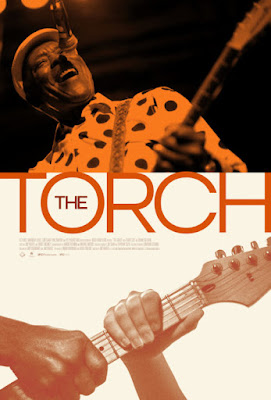
The Torch: Buddy Guy Pays it Forward

Regardless of genre, Buddy Guy is probably the most preeminent American musician who still performs regularly. (Happily, Charles Lloyd is also very active, but he is not as synonymous with jazz as Guy is with the blues.) Guy’s status as the dean of the bluesmen comes with a keen awareness of his responsibilities to the music, particularly his need to encourage younger generations to follow his example. Guy’s relationship with his presumptive heir, Quinn Sullivan is explored in Jim Farrell’s documentary, The Torch, which opens tomorrow in New York.

An artist of Buddy Guy’s stature is certainly worthy of competing documentary treatments, but as it happens,
The Torch and the recent Buddy Guy: The Blues Chase the Blues Away compliment each other nicely. Whereas the previous doc chronicled his life, period by period, Farrell largely focuses on Guy, the elder statesman and mentor of the blues. There is a little bit of biographical background, but not too much.

Guy always enjoys encouraging young blues musicians, so he was happy to let Sullivan join him on-stage one fateful night. However, the eleven-year-old guitarist surprised him, in quite a good wasy. Ten years later, Sullivan still regularly performs and records with Guy. The trick is establishing himself, in his own right. Fortunately, in addition to Guy’s mentorship, he has the support of producer-songwriter-drummer Tom Hambridge, whom he met through Guy.

Even though Guy is clearly preoccupied with the issue of the music’s future, he is clearly in good health and robust energy, despite being in his mid-eighties (at least during the pre-pandemic years Farrell was following him). As a result, the film has none of the tragic poignancy of
Keep on Keepin’ On, the Clark Terry-Justin Kauflin doc (and happily so). Guy could very well outlive all of us, but he is still mindful of the future. However, Farrell was able to concentrate on the music and the more practical lessons Guy imparts to Sullivan.

As you would expect, tunes like “Long Hard Road” and “Who’s Gonna Fill Those Shoes,” sound great. Obviously, Sullivan is no Buddy Guy yet. He is still a kid in his early 20’s, from a vastly different background. He has terrific chops, but gee whiz, being tipped as Guy’s successor in
The Torch must really ratchet up the pressure, so good luck to him.

Monday, July 26, 2021

Buddy Guy: The Blues Chase the Blues Away

Buddy Guy was almost the equivalent of Motown's Funk Brothers at Chess Records. He was a frequent sideman, who recorded a few 45s at the famous blues label, but the Chess Brothers never really considered him a star. A group of fanatical blues in the UK thought differently. They included Eric Clapton and Jeff Beck. Eventually, Guy became a headliner and now he is probably the dean of living bluesmen. The guitarist looks back on his life and career in Devin Amar, Matt Mitchener & Charles Todd’s Buddy Guy: The Blues Chase the Blues Away, which premieres tomorrow on PBS as part of the current season of American Masters.

Buddy Guy hailed from Lettsworth, Louisiana. It wasn’t conveniently located near anything except cotton share-farms, especially not schools. Guy started working and playing in Baton Rouge, but most of his opportunities turned out to be false starts. He also scuffled hard after moving to Chicago, until a musician by the name of Muddy Waters heard him play.

Yet, for years, the start-and-stop pattern continued for Guy (on his Strat, rather than a Les Paul). Indeed, Amar and company appropriately emphasize Guy’s persistence throughout their profile. Even when British invasion stars starting singing Guy’s praises, Chess still didn’t really understand how to best showcase him (while Marshall Chess appears in
In Their Own Words’ profile of Chuck Berry, he is absent here).

This also happens to be one of the more stylish and poetic films to appear under the
American Masters banner, because of the vintage documentary footage and folk art that illustrates Guy’s early years. It vividly evokes the tenor of Guy’s life and times, in all its hardscrabble ruggedness. The trio of filmmakers also convey a nice sense of blues history through archival interviews with legends like Lightnin’ Hopkins, Willie Dixon, and Muddy Waters.

Monday, March 23, 2009

Swamp Noir: In the Electric Mist

In the Electric Mist
Directed by Bertrand Tavernier
Image Entertainment


While New Orleans might be the birthplace of jazz, there has always been plenty of blues going on in the rest of Louisiana. After all, it is delta country, where bluesmen like Robert Pete Williams and Lightnin’ Slim helped develop an appropriately swampy local sound. The bayou is also the stomping ground of James Lee Burke’s Detective Dave Robicheaux, who makes his second film appearance in Bertrand Tavernier’s In the Electric Mist (trailer here), now available on DVD.

Mist is Tavernier’s first dramatic feature shot in North America, but he seems to have an affinity for the region beyond the French language. The veteran film-maker directed Dexter Gordon to an Academy Award nomination in the classic jazz drama ‘Round Midnight and with Robert Parrish co-directed the documentary Mississippi Blues. Indeed, the sounds of the region are well represented in Mist, particularly in the figure of bluesman Sam “Hogman” Patin, played by the true blues legend Buddy Guy, long a fixture of the Chicago Blues scene, but born in Lettsworth, LA.

Tommy Lee Jones specializes in playing the world-weariness Robicheaux will soon feel in Mist. A recovering alcoholic, Robicheaux has a loving wife and young daughter, but his professional life is about to get ugly, and even tragic. While frustrated by the lack of leads in the case of a savagely murdered prostitute, Robicheaux is tipped off to the location of a decades-old body of an African American man in the swamp. The disinterested cops in the neighboring parish simply dismiss it as a matter of extra paper-work, but the circumstances of the crime scene strike a chord with Robicheaux. As he pursues both cases, officially and unofficially, he begins to suspect a connection between them, focusing his attention on “Babyfeet” Balboni, a local mobster turned Hollywood moneyman.

It is surprising Mist had such scant American theatrical distribution after its premiere at the Berlinale Film Festival, considering it top-shelf cast. Jones is perfectly cast as the craggy Cajun. John Goodman chews the scenery with relish as Balboni, and Mary Steenburgen does what she can in the thankless role of Robicheaux’s understanding wife, Bootsie. Also, look out for indy filmmaker John Sayles in a small role as a director making a Civil War film in the parish, which he pretentiously intends to be an allegory for Iraq.

As Patin, Guy shows impressive screen-presence, probably beating Jones at his own game of understated intensity in their scenes together. He also has some cool musical numbers with Nathan Williams and the Zydeco Cha Chas, nicely integrating the earthy goodtime sounds of Louisiana with the dramatic story.

While the relatively routine crime story of Mist might harbor few surprises, the sheer volume of suffering inflicted on its protagonist sets it a measure apart from other mystery fare. It is a decidedly dark film noir, deeply steeped in the Bayou atmosphere. That music and ambiance, along with the perfectly pitched performances of Jones, Guy, and Goodman make Mist quite an entertaining little thriller.