Monday, May 15, 2006

Author Baits, Switches, Then Cries “Foul”

Suppose you contracted a speaker to talk about the heroes and real life stories which she finds inspiring. Then you learn she was planning to deliver a partisan harangue directed at the No Child Left Behind policy, for which you publish a line of books. You might understandably say thanks, but no thanks. Would it surprise you if you then found yourself accused of censorship in the columns of PW Daily? That’s exactly what happened to McGraw-Hill after they decided Patricia Polacco’s services were no longer needed.

It’s interesting to see how PW played the story. Under a Friday (5/12) headline “Author Shouts Foul Over Cancelled Appearance,” PW tells their concerned readers: “Patricia Polacco is scared.” The dark specter of fascism looms larger when we read:

Polacco, who told PW that McGraw-Hill lawyers had spoken "aggressively" with a lawyer friend of hers, said the publisher threatened to sue if they lost sales as a result of the potential negative publicity she had had drummed up. This, Polacco, said made her very uneasy. "The problem is, if this went to a lawsuit, they're Goliath and I'm David. Just to defend it, they could wipe me out." Polacco also insisted that, despite appearances, McGraw-Hill was not the bad guy. "It's No Child Left Behind that I'm gunning for," she said.

Scary times we live in. Bush using McGraw-Hill as his puppet, and what-not. However today, in a brief clarification under pieces about the wholesaler AMS, repackaging Agatha Christie books, and titles going on-sale next week, PW adds a note on the Polacco story (keep scrolling, it’s buried deep below the fold):

Clarifying Friday's Daily story about the sparring between children's author Patricia Polacco and SRA/McGraw-Hill (click here to read)—in which the author claimed she was censored by the publisher after she tried to craft a speech, to be given at an event sponsored by McGraw-Hill, railing against the No Child Left Behind policy. The contract Polacco signed, which she told PW she did not read, clearly stated the two topics which she was to address: the "heroes" who've impacted her life and the real life stories that inspired certain titles she wrote.

I guess it’s a mere detail to PW that Polacco seemed to be engaging in a bait and switch. Either she fraudulently accepted the engagement with the intent of delivering an entirely different speech, or at the very least, she runs a very careless organization that does not pay attention to pesky details, like contracts. It’s quite understandable that McGraw-Hill wasn’t inclined to pick up the tab for that.

Update: the original PW Daily story on-line now carries the note of clarification beneath it, effectively undercutting the preceding article. PW's odd editorial choices have clearly played up Polacco's sense of victimhood, however it is hard to share those sentiments after learning the terms of the agreement.

Harlem of the West

Harlem of the West: the San Francisco Fillmore Jazz Era
By Elizabeth Pepin and Lewis Watts
Chronicle Books
Tradepaper with extensive photos
0-8118-4548-6


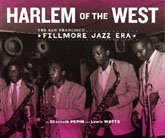
The cover alone should convince readers of Harlem of the West: the San Francisco Fillmore Jazz Era's contention that an important time and place in the history of jazz was lost and nearly forgotten when city planners gutted the neighborhood. The first three musicians seen pictured from the left are John Handy, Pony Poindexter, and John Coltrane, sufficient evidence the Fillmore jazz scene was for real. Written by Elizabeth Pepin, with assistance from Lewis Watts, Harlem of the West is a well put together illustrated book that recaptures a forgotten chapter in jazz history.

In the 1940’s, 1950’s and 1960’s the Fillmore neighborhood of San Francisco was a thriving home to scores of jazz and blues clubs. Now the Fillmore Auditorium, transformed by Bill Graham into a legendary rock venue, is one of few surviving buildings from that era. Given Graham’s reputation, it might sound like exaggeration when Pepin writes:

“Most people only know about the Fillmore because of its auditorium, made famous by Bill Graham in the late 1960’s. Few are aware of its more important musical period in the decades preceeding.” (p. 13)

Yet, Pepin began her Fillmore research as an employee of Graham. The fact that clubs and establishments which hosted some of the finest jazz and blues entertainers could be so thoroughly removed from the neighborhood, and largely from memory, is a tragedy.

The photos collected in Harlem of the West, many recently discovered, are a time capsule from a different time. It was an era when people dressed up for a night on the town, and music was a major part of their plans. A number of great musicians, like Handy, Poindexter, Teddy Edwards, and Jerome Richardson, gigged in Fillmore clubs early in their careers, and there are wonderful images of them in this book.

There is a villain in Harlem of the West: the faceless bureaucrats who destroyed the neighborhood in the name of urban renewal. This is a book Justice Souter ought to read, as it makes clear the human price for eminent domain run amok.

John Handy told Pepin: “There wasn’t a Fillmore sound per say.” (p. 152) However, a tremendous about of excellent music was performed for appreciative audiences there. Sadly, that music was silenced by urban renewal policies, but Harlem of the West preserves the memories of that vibrant music scene.

Friday, May 12, 2006

Jazz Poems

Jazz Poems
Edited by Kevin Young
Everyman/Knopf
1-4000-4251-8


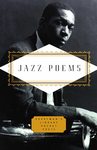
Capturing jazz performance in words is a difficult challenge. It often requires poetic expression more than simple descriptive prose. Many such attempts have been collected in Jazz Poems a collection finely edited by Kevin Young in a new Everyman gift edition.

Often jazz poems are elegiac, written on the passing of great artists like Frank O’Hara’s “The Day Lady Died,” in which he recalls:

leaning on the john door in the FIVE SPOT
while she whispered a song along the keyboard
to Mal Waldron and everyone and I stopped breathing.


Some poets are able to capture the ephemeral nature of music, like current NEA Chairman Dana Gioia in “Bix Beiderbecke (1903-1931):”

He dreamed he played the notes so slowly that
they hovered in the air above the crowd
and shimmered like a neon sign.

Certain themes reoccur, like the classless nature of jazz. Langston Hughes’ “Jazz Band in a Parisian Cabaret” exhorts:

Play it for the lords and ladies,
For the dukes and counts,
For the whores and gigolos
For the American millionaires,
And the school teachers
Out for a spree.


Jazz Poems is a consistently rewarding collection. It was a handy volume to refer to while reading Yaffe’s Fascinating Rhythm, since it anthologizes many of the poems that book analyzes. While many of the selected poems are darker than what you might expect to find in a small trim size gift book, it is appropriate. Jazz is a music that demands honesty and integrity in all things, including editorial choice.

Thursday, May 11, 2006

Fusion Warriors and the “S” Word


This month’s Downbeat (limited content on-line) features “Fusion Warriors” by Willard Jenkins, a “Behind the Music” style look at Chick Corea’s 1970’s fusion super-group Return to Forever. While Jenkins does discuss the tensions arising from members’ solo projects, as well arguments over money, one subject seems to be missing. The “S” word: Scientology.

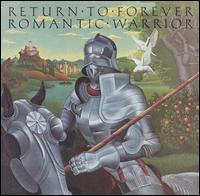
Supposedly, the name Return to Forever was inspired by L. Ron Hubbard’s writings. For his part, Corea has been an active proponent and recruiter for Hubbard’s church. According to his Wikipedia entry, one-time RTF band member Joe Farrell told Corea “not to ‘lay that Scientology shit’ on him.” Longtime RTF bassist Stanley Clarke was involved with Scientology as well, but he has reportedly broken with the Church. One can also see RTF concept albums like Romantic Warrior as being precursors to Corea’s recent CDs inspired by Hubbard novels, which feature some excellent music.

“Fusion Warriors” expresses criticism of Corea, particularly for not agreeing to a reunion tour. According to Al DiMeola: “Three years ago we were on the verge of a reunion, but Chick had a change of heart, with no explanation why. It’s so sad to deny a whole new generation—and our past fans the chance to see us one more time.” It just seems like DB is missing part of the story here, regardless of how you feel about Scientology, pro or con.

Wednesday, May 10, 2006

al-Jaz Covers Jazz Fest

English al-Jazeera isn’t exactly flooding the zone with jazz coverage. When it does cover jazz, it’s usually to promote an agenda through someone like Gilad Atzmon. On May 1st, they wrote up the first weekend of the New Orleans’ Jazz & Heritage Festival. While briefly noting the presence of great NOLA musicians like Terence Blanchard, the NewBirth Brass Band, Dr. John, and Allen Toussaint, al-Jazeera gave the most ink to a non-jazz musician from New Jersey: Bruce Springsteen. Al-Jazeera reported at one point Springsteen “launched into a song titled How Can A Poor Man Stand Such Times and Live? and dedicated the song to ‘President Bystander.”

No word if he made a dedication to “Mayor Hiding in the Bathroom.” Last week musicians like the NewBirth Brass Band, Dr. Michael White, and Henry Butler were shuttling to and from NY and NOLA to play both Jazz Fest and the Jazz Foundation’s benefit concert. While they were looking to bring people together to rebuild their city, evidently Springsteen stuck to the extremist left’s game plan of dividing people. At least he played well on al-Jazeera.

Tuesday, May 09, 2006

WATIV in STN

Interesting piece Signal to Noise Magazine (no content on-line), “A Soldier’s Story,” about William A. Thompson IV (WATIV), a New Orleans jazz pianist turned electronic music composer during his recent tour of duty in Iraq. Composed and assembled with “iPod mike, sampler, Apple G4 and 88-weighted-keyboard,” Baghdad Music Journal clearly conveys the turmoil of his wartime experiences. The samples on his myspace page are certainly dark in tone. Of course, most of the electronic music I’ve heard has been dark or moody. Article writer Howard Mandel is only too eager to read political statements into WATIV’s music. Too be fair Thompson did express frustration when his tour was extended, but he seems to take pains to avoid outright political statements, preferring to let the music speak for itself. (Mandel has also written on behalf of Tarik Shah, the jazz bassist accused of conspiring to aid al-Qaeda, calling the government's case "shameful" according to Shah supporter Margaret Davis.)

It sounds like Thompson’s feelings about his service in Iraq are actually somewhat ambiguous. Thompson reported from Iraq for allaboutjazz.com that he “had several students since I’ve been in country. Most recently I have taken on an eager jazz bass student.” While underplaying the impact of his work, it certainly sounds like Thompson was part of the good news from Iraq. In terms of the impact of Iraq on himself, Thompson told Mandel: “this experience was one that very few other artists are going to have. I feel lucky for having it. I felt opposed at having to go, but nobody else can say they’ve done what I’ve done.” Whatever his politics, one has to have gratitude for Thompson’s service, and wish him well as he finishes his studies at the University of New Orleans and helps rebuild the music scene in America’s Crescent City.

Monday, May 08, 2006

Blue Notes on the Silver Screen

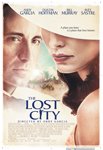
It seems like there’s a mini-boom of jazz movies on the horizon. Andy Garcia’s Lost City, featuring a great Afro-Cuban jazz soundtrack is currently playing in select cities. Rumors are swirling about Chet Baker and Miles Davis bio-pics. A film about Duke Ellington’s tour of Iraq on behalf of the U.S. State Dept. is in development at New Line.

On the documentary front, the Oscar Brown Jr. film Music is My Life, Politics is My Mistress screened at the Harlem Film Festival. 'Tis Autumn, a film on vocalist Jackie Paris debuted to great acclaim at Sundance, and This is Gary McFarland, a doc. about the musician-arranger-composer is also starting to make the festival circuit. At an IAJE panel in January, attendees saw a sneak preview of the nearly complete film Trumpetistically Clora Bryant, about the under-recognized bop trumpeter. On the further horizon, a doc on jazz violinist Billy Bang is in the works.

Perhaps the most intriguing film in the works is Crazy, the life story of Hank Garland. One of the top Nashville session men, guitarist Garland stunned the country music world by recording some excellent jazz sessions. Shortly thereafter he suffered an injury in a car crash that derailed his career for years. Presumably, green-lighted to capitalize on the success of Walk the Line, and starring Waylon Payne who played Jerry Lee Lewis in that film, Garland’s life seems like an unlikely choice to dramatize. If nothing else, it will certainly be interesting to see how Hollywood handles Garland’s jazz interlude.

Ironically, these films confirm the artistic advantage of a free market society. Labor of love documentaries would have a difficult time finding support from bureaucrats who control the state film resources under socialism. In our system, dedicated filmmakers, now frequently using digital video, can bring personal stories to audiences without the approval of any governing entity. It is often more costly in terms of time than resources. Free markets and free expression can lead to eccentric visions or crass commercialism. As consumers however, we can be the ultimate arbiters.

For now, I recommend Lost City, and Music is My Life if they happen to screen at a theater near you. From what I saw of the Clora Bryant film, I’m definitely looking forward to seeing the finished film. Maybe the near future will bring a minor golden age of jazz on the silver screen.

Sunday, May 07, 2006

Lloyd’s Eugene Bullard


Eugene Bullard: Black Expatriate in Jazz-Age Paris
By Craig Lloyd
University of Georgia Press
Tradepaper edition with new preface
0-8203-2818-9

At one point in his biography Eugene Bullard: Black Expatriate in Jazz-Age Paris, Craig Lloyd sums up his subject writing: “His had been the rough company of gypsies, sailors, boxers, soldiers, and jazzmen.” (p. 97) In short, our kind of people. Sadly Bullard, recipient of the Croix de Guerre and Legion of Honor Medal, never received proper recognition during his lifetime in the country of his birth.

Born into the tragedy of Southern segregation, Bullard never resigned himself to his circumstances. As teenager, he ran away from home, ultimately stowing away aboard a ship bound for Europe. Once there, he began to thrive in an environment of freedom, finding work as boxer. He would be a friendly colleague of champion in exile Jack Johnson, jazz’s favorite pugilist.

Eventually settling in Paris, Bullard would enlist with the French before America’s entry into WWI. Decorated for valor at Verdun, Bullard would transfer to the French aviation corps, where he would earn the distinction of being the first African-American combat pilot. It was a distinction American officers did not appreciate when the American military, newly engaged in the Great War, absorbed the Yank expatriates fighting for France. Lloyd’s new preface includes further examples of this disgraceful treatment of Bullard.

After the war, the decorated Bullard stayed in his adopted Paris to become a leading figure in the budding night club business of Montmartre, first as a musician. Lloyd describes Bullard “becoming proficient enough as a drummer (he admits several times he was never more than that)” (p. 77) Bullard’s real importance to the French jazz scene was as a club manager and eventually owner. He would befriend and assist legendary musicians like Noble Sissle, Sidney Bechet, and Louis Armstrong. He would even return to Europe with Armstrong in 1952 to translate and assist with logistics on a continental tour.

As National Socialism started to conquer Europe, Bullard once again answered the French call to service, assisting French intelligence collect information on German agents. When France was over-run by the German war machine, Bullard was forced to make a tortuous flight back to his American homeland. Although nearly anonymous as a resident of Harlem, Bullard was still held in high esteem by the French, receiving the Legion of Honor Medal in 1959.

Bullard’s story is fascinating, and at times infuriating. Although his prose is a bit rough at times, Lloyd’s research is solid and his account of Bullard’s life is authoritative. Despite a few clunky passages, it is a biography well worth reading. Like his contemporary James Reese Europe, Bullard’s cinematic life seems to cry out for dramatization on screen.

Friday, May 05, 2006

Great Night in Harlem

The Jazz Foundation of America’s benefit concert was a big success last night. Much needed funds were raised, and some great music was heard. No political statements were made, as Foundation president Jarrett Lillien made the point that when faced with a tragedy like Katrina, it is easy to point the finger of blame, but much more difficult to do something constructive in response.

There was much NOLA flavor heard, from traditional musicians like the New Birth Brass Band and Dr. Michael White Original Liberty Band. James Blood Ulmer performed a spooky solo blues for hurricane survivors, and surprise guest Elvis Costello performed “The River in Reverse,” the title song from his upcoming collaboration with Allen Toussant. Ending with some rousing up-tempo blues, at one point featuring Wendy on harmonica, it was a very successful night. However, the Foundation still has much work ahead. To support their work, go here.

Thursday, May 04, 2006

The Ellington Ideology


Duke Ellington’s birthday was this weekend, and while there wasn’t the same level of hype as there had been for his 1999 Centennial of somewhat recent memory, the occasion was marked by events here in the City.

Getting a handle on Ellington’s politics is difficult due to his deliberate ambiguity. Once when asked in the 1960’s if he supported the Black Power movement, he replied that he was the composer of “Black Beauty.” Of course, that song had been written for an African American dancer, not as a political statement. As a verbal parry, it was classic Ellington, sounding like a satisfactory answer, yet revealing little.

In the 1940’s Ellington performed at benefit concerts for groups that were identified as Communist front groups. However, it is unclear how much should be read into this. Most were groups whose ostensible purpose was to support the war effort, or sounded deceptively benign, like the Hollywood Democratic Committee. Also, many of these events offered the opportunity to perform at venues which at that time would have been off-limits for African-American performers.

In September 1950, if Duke had ever been a fellow traveler, he clearly broke from the Party. The Daily Worker had falsely claimed Ellington had signed the Stockholm Peace Petition, a Communist sponsored propaganda effort. Ellington repeatedly denied it, and threatened legal actions. Ellington stated: “The only ‘Communism’ I know of is that of Jesus Christ. I don’t know of any other.” (Reminiscing in Tempo p. 280)

Perhaps awakened by this propaganda effort, Ellington became staunchly anti-Communist. He enthusiastically toured non-aligned countries on behalf of the U.S. State Department and performed for American troops during Viet Nam, even though his health was then failing.

The other constant of Ellington’s philosophy was the depth of his Christianity. While most jazz fans would only become aware of the fact in the late sixties with the great Sacred Concerts, his first musical expression of this faith premiered in 1943, as part of the classic Black, Brown and Beige Suite—“Come Sunday.”

In apparent bipartisanship, Ellington’s company would be cultivated by two U.S. Presidents. LBJ invited him to the White House seven times, and would appoint him to the National Council on the Arts.

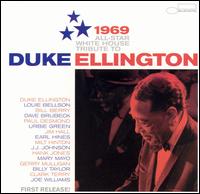
In 1969, Ellington celebrated his 70th birthday in style, returning to the White House for a gala at which he received the Medal of Freedom. Nixon was reportedly more relaxed that night than he would be any nearly any other formal White House occasion. In addressing the crowd he stated:

“When we think of freedom, we think of many things. But Duke Ellington is one who has carried the message of freedom to all the nations of the world through music, through understanding, understanding that reaches over all national boundaries and over all boundaries of prejudice and over all boundaries of language.”

That night would forge a friendship between the President and the Duke. According to Leonard Garment’s Crazy Rhythm, one of the many tragedies of Watergate was that it derailed plans to intercede on Ellington’s behalf with the IRS, which would have made his final years much more pleasant. The newly exiled President would call Ellington on his deathbed in a gesture that impressed many of Ellington’s Nixon-despising friends.

Ellington Medal of Freedom citation stated: “In the royalty of American music, no man swings more or stands higher than the Duke.” While his politics were ambiguous, his principles were clear and rock solid.

Wednesday, May 03, 2006

TR, Lincoln & W.

Those who were unable to attend the TR/Gramercy Park Republican Club Rough Rider Award Ceremony missed a nice night out. Charles and Barbara Drew were gracious recipients and former State Senator Roy Goodman gave a very well received speech which favorably compared wartime Presidents George W. Bush and Abraham Lincoln. While he’s not the first to liken Bush’s leadership during the War on Terror with Lincoln’s leadership during the Civil War, his comparison may have come as a surprise to some who like to consider Sen. Goodman a “Rockefeller Republican.” Goodman has always been a moderate on many issues, particularly social issues, but people forget he is also a “Reagan Republican,” having been appointed by the Gipper to the National Commission of Fine Arts. (Incidentally, he was also a longtime friend of Lionel Hampton, at one point making Hamp Vice-Chair of the Manhattan GOP when he was Chairman.)

Sen. Goodman also expressed his enthusiasm for Rudy Giuliani as a potential presidential nominee. He’s probably right in predicting good things for the NY GOP if the former mayor were to be the nominee in 2008. NY is one blue state where Republicans could use some extra momentum.

Tuesday, May 02, 2006

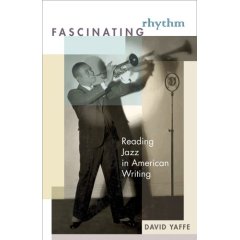
Yaffe’s Fascinating Rhythm


Fascinating Rhythm: Reading Jazz in American Writing
By David Yaffe
Princeton University Press
0-691-12357-8


David Yaffe’s Fascinating Rhythm: Reading Jazz in American Writing is written by an academic for academics, but it avoids the excesses of such writing. Despite the close readings of poems by Hart Crane Wallace Stevens, and Frank O’Hara, it is actually quite readable.

Refreshingly, Yaffe is willing to offer criticism of some well known figures of the left. He places radical poet Amiri Baraka in a fever swamp context for his hateful poem “Somebody Blew Up America” for the slanderous contention that: “Israeli forces were somehow complicit in the terrorist attacks of September 11, 2001; knowing ‘the World Trade Center was gonna get bombed’ beforehand and warning ‘4000 Israeli workers at the Twin Towers/To Stay home that day.’” (p.15). Yaffe laments “It is unfortunate that Baraka is now better known as the conspiracy theorist who wrote those lines than he is as the music critic.” (p.16)

Yaffe also shows little patience with Norman Mailer for being obsessed with the outward trappings of jazz, but completely failing to relate to the inner soul of the music. He skewers Mailer for having “rented a saxophone to play along with Monk’s music despite his complete inability to play the instrument. Indiscriminately honking along with Monk’s music was ‘hip’ to Mailer.” (p.38)

Yaffe’s strength throughout Rhythm is that he clearly writes about great literature and great jazz in a way that suggests both art forms are important to him. This is particularly clear when he argues for a critical reappraisal of Richard Powers’ The Time of Our Singing. On the strength of his advocacy, I’m convinced I should catch up with this novel sometime.

Rhythm is not perfect. Yaffe, a little too offhandedly (albeit in a footnote) tosses off the standard charges of bigotry against T.S. Eliot, in an otherwise interesting discussion of the poet’s influence on Ralph Ellison. Overall, it is a readable, if not exhaustive look at jazz in American literature. Clearly, Yaffe is able to appreciate the music and the literature it inspires much more successfully than the honking Norman Mailer.

Monday, May 01, 2006

$10K Per Screen

The Lost City took in $10,000 per screen this weekend, according to Box Office Mojo. Although its total weekend gross was dwarfed by the big studio vehicles, it had the second highest per screen take, with $18,000 coming from 18 screens. Only Fox Searchlight’s Water had a higher per screen average this weekend with $12,080, but it played on a very limited five screens. By comparison United 93 did $6,465 per screen, RV $4,506 per screen, and Stick It $5,522 per screen. Hopefully the relatively strong per screen numbers will keep City held over on its current 18 screens, as it expands to other cities.

Incidentally, The Lost City and United 93 are currently the highest graded debuts this week, scoring a solid B and B+ respectively from Mojo users. I haven’t seen United 93 yet, but I certainly recommend The Lost City.

Felt or Garment


Reviews are coming in for Mark “Deep Throat” Felt’s A G-Man’s Life, but they are not particularly enthusiastic. Not surprisingly, since Felt himself reportedly no longer remembers the events of his life for which history will associate him with. G-Man is actually Felt’s The FBI Pyramid co-written with Ralph de Toledano, recycled with supplemental material from John O’Connor. According to the WAPost’s review by Richard Gid Powers, the book reads schizophrenically, as Felt’s 1979 passages deny his role as Deep Throat, while O’Connor passages affirms his historic leaks to Woodward.

Powers in his review speculates on the Felt family’s decision to uncloak the elderly G-Man as the most famous leaker in American history. He argues for “pride” in “their father’s signal service to the nation” as motivation. He scoffs at “The uncharitable, of whom there is never any shortage, immediately assumed that financial considerations had been paramount—that the family was, to borrow a phrase from Holbrook’s Deep Throat, following the money.”

Yet there is the inconvenient fact of the first co-writer conservative columnist and jazz critic Ralph de Toledano, who was brought in to make The F.B.I. Pyramid readable in the first place. Just before unveiling Felt’s secret identity, they bought out de Toledano’s share of Pyramid for $5,000. Follow the money indeed. Evidently, de Toledano and the Felts were never close. As he told CNBC (keep scrolling down): “he was not very happy about having somebody come in and say your book stinks. This guy is going to write it for you.” Now Toledano’s words are bizarrely repackaged. Big shock, I’m sympathetic to the conservative jazz writer.

If you want to read about Watergate, I recommend instead Leonard Garment’s Crazy Rhythm. Garment, a one-time member of Woody Herman’s band, was Nixon’s closest associate at Mudge Nixon, when both men were in private practice. Despite being a Democrat, Garment was a member of Nixon’s inner circle. In the White House he organized the 70th Birthday party celebration for Duke Ellington, and served as acting White House Counsel during the darkest days of Watergate. Although Garment was not privy to Deep Throat’s identity, his insights into the Nixon administration’s meltdown are fascinating. If you’re buying books this May Day, De Toledano’s Jazz Frontiers is still available, but for Watergate reading chose Garment over Felt.

Saturday, April 29, 2006

The Week Ahead


This coming week looks to be busy. As a service to those looking for ways to spend their time and money, here on some suggestions:

For those with ready airline miles, you can show your support for NOLA musicians by checking the New Orleans Jazz & Heritage Fest this weekend and next. Looks like an interesting line-up, including the Hot 8 Brass Band, who brought down the house at the Jazz Foundation’s auction at B.B. Kings.

On Sunday, there are two notable shows. At 5:00 Deanna Witkowski will perform at St. Peters Jazz Vespers. She’s an excellent pianist, a supporter of the Jazz Foundation, and one of the best jazz artists exploring sacred music today.

Later, at 8:30 Manhattan Institute fellow John McWhorter will sing the Cole Porter songbook at Cornelia Street Café. For real. McWhorter has written several books, and is a regular contributor to NR and the Wall Street Journal.

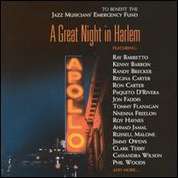
Monday is May Day. Not surprisingly, the Communist outfit A.N.S.W.E.R. has joined in the call for a national general strike on this traditional day of Marxist demonstration. I suggest putting in a good day’s work and then treating yourself with some nice purchases. If you also want to support a good cause pick up A Great Night in Harlem, the Grammy winning CD of the Jazz Foundation’s first Apollo benefit concert. It will put you in the mood for Thursday’s concert. Readers can also show support for the bloggers whose sites were temporarily shut down by DOS attacks from Saudi Arabia this week, by purchasing Glenn Renyolds’ An Army of Davids and Hugh Hewitt’s Paint the Map Red.

On Wed. night, or anytime this week, I recommend you check out The Lost City, Andy Garcia’s epic set in Havana. Castro and the NY Times might not like it, but I highly recommend it. Try to see it soon, because there’s no guarantee how long it will be playing. Strong opening week numbers would help keep it in theaters, and let it develop an audience. In NY it’s playing at the Landmark Sunshine Theater on Houston and the AMC on 42nd Street.

Thur. (5/4) is the fifth Great Night in Harlem Jazz Foundation benefit concert at the Apollo. As always, it will be an excellent show featuring artists like Dr. Michael White, Clark Terry, Ron Carter, and Jimmy McGriff. JFA has helped hundreds of musicians displaced by Katrina. I’ve been honored to help with their instrument replacement efforts. If you can’t attend the concert, you can still send a donation to:

Jazz Foundation of America
6th Floor
322 West 48th Street
New York, NY 10036

Could be a costly week. Particularly if A.N.S.W.E.R. has its way. Buying tickets for Rough Rider, The Lost City, and a Great Night in Harlem will at least lead to positive things. A.N.S.W.E.R. however, seems bent on dividing people and crippling the economy. The Lost City shows what happens when people who share A.N.S.W.E.R.'s ideology take power. It’s a beautiful movie, but the results it shows are not a pretty picture.

Friday, April 28, 2006

Did Times Critic Bother to Watch The Lost City?


Not surprisingly, The Lost City, a film critical of Communist icons Fidel Castro and Che Guevara received a negative review in the NY Times. Reading parts of Stephen Holden’s review however, makes me question if he even bothered to watch the film before writing the review. Holden writes: “Garcia’s ode to the Havana of pre-Communist Cuba, is a romantic epic manqué that swoons across the screen for nearly two and a half hours without saying much, beyond that life sure was peachy before Fidel Castro came to town and ruined everything.”

In point of fact, The Lost City scrupulously critiques both the Battista and Castro regimes. Battista goons kill one brother of Andy Garcia’s Fico Fellove, and imprison his other brother. Fellove’s professor father writes a speech for a distinguished senator calling for Battista’s resignation. The senator is then assassinated. This film hardly carries any water for Battista. In actuality, it is far more nuanced politically than Holden’s knee-jerk review.

In recapping the story, Holden writes: “Fico’s two younger brothers, Luis (Nestor Carbonell) and Ricardo (Enrique Murciano), fervently embrace the revolution, but Fico predicts the country’s destruction under Castro.” Again, did Holden actually see the film? Fico’s character is apolitical. It is brother Luis, an anti-Battista, anti-Castro revolutionary who warns him of the oppressive consequences of a victory for Castro’s Communists.

Holden is correct when he praises the film for being “splendidly panoramic and drenched in wonderful Cuban music,” but he is woefully off-point throughout the rest of the review. One wonders if he pulled a Jayson Blair, bagged the screening, and cobbled together his review from the press materials.

Rep. Dan Schaefer 1936-2006

Mom often sends me political clips from my former home state of CO, and I was saddened to hear of Rep. Dan Schaefer’s death in the most recent batch. Schaefer was the longtime Congressman for our suburban Denver district. He was a real Reagan Republican, not a NY pretender. As his former district director told the Rocky Mountain News: “He felt he’d gone to Congress to strengthen national defense and help end the Cold War, and he did.”

Schaefer’s district was staunchly Republican, but I volunteered for his campaign the year he was thought to have a competitive race. A RINO state legislator had switched to the Dems in order to challenge Rep. Schaefer. The local media was delighted to hype her candidacy, but on Election Day Dan Schaefer rolled up 60-some percent of the vote.

Rep. Schaefer deserved the smooth sailing he had from then on, until he retired from Congress in 1998. He wasn’t a flashy political figure preening on Crossfire, but a legislative workhorse. What a contrast to NY State’s publicity craving Congressionals. In retrospect, I’ve come to appreciate his quiet ethical leadership more and more.

Thursday, April 27, 2006

Movie Review: The Lost City


As promised, here is a full review of Andy Garcia’s directorial debut The Lost City, opening tomorrow (4/28) in New York, LA, and Miami. This would be a timely opening for the film, if the antique media coverage of events in Cuba were anywhere close to responsible. The BBC reports today that Cuban dissident Martha Beatriz Roque was severely beaten Castro sympathizing thugs. Recently, the Prague Post reported on a Czech diplomat expelled for his interest in Cubans’ human rights. Unfortunately too many in the media have bought into the myth that obscures Castro’s oppression. That is why I have posted several times already championing this film.

The film itself is one of the best I have seen in recent memory. Garcia turns out to be a deft director, capturing the vibrancy of Havana and the turmoil of revolution. As the protagonist, nightclub owner Fico Fellove, he gives a performance of restrained intensity. Garcia heads a first rate cast, including Bill Murray, who is actually funny for change in a dry understated manner, departing from his world-weary Oscar-seeking dramatic roles. He plays “the Writer,” a sardonic character based on the screenwriter, the late G. Cabarera Infante, a celebrated novelist and critic of the Castro regime. Dustin Hoffman chews the scenery effectively in a small but important turn as Meyer Lansky. Other notables in the cast include actress/model Ines Sastre, Enrique Murciano of Without a Trace, and Danny Pino of Cold Case. It certainly sounds like a commercial cast, but Hollywood refuses to embrace a film critical of the Castro mythos.

The Lost City starts during the waning days of the Batista regime, and shows no affection for his authoritarian rule. Garcia’s Fico Fellove, is the middle brother of three. He runs the El Tropico nightclub, and tries to ignore revolutionary politics. Cuba’s music is his mistress. The elder brother, Luis, is an establishment realist in public, but is a secret anti-communist revolutionary. The youngest brother, Ricardo, buys into Castro’s revolutionary propaganda uncritically. When Luis is killed in an attempt to assassinate Battista, and Ricardo joins Che in the countryside, Fellove takes responsibility for the family, eventually falling in love with Luis’ widow, Aurora.

The Lost City pulls no punches in portraying Castro’s revolutionary terror. We are shown Che’s savagery in several scenes: the killing of a helpless wounded government soldier; the needless execution of a decent policemen. There is rationing, and ever-present propaganda. For Fellove, a turning point comes when the musicians’ union commissar banishes saxophones from his club orchestra, because of their imperialist origin.

For Garcia, Cubans before Castro could nearly anything because of the spirit of their music. When Castro silenced the music, he extinguished the soul of the island. Havana, the capitol of Cuban music, became The Lost City.

Garcia, a musician himself, gave exquisite attention to the music, capturing the diversity of Cuba’s musical heritage. Afro-Cuban jazz, and all varieties of Latin dance music flavor the soundtrack, with contributions from great musicians like the legendary Cachao and Justo Almario. The Lost City soundtrack if released, deserves to be a bestseller on its own merits, independent of the film. Combined with strong acting, and an intelligent script, The Lost City is well worth seeking out.

Wednesday, April 26, 2006

Bend Those Notes Like Beckham


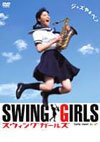
The Korea Times recently reviewed a Japanese film, Swing Girls, about a group of schoolgirls who start their own jazz band. It looks like a big band Bend it Like Beckham. OK, it might be cloying and juvenile. I don’t know, I haven’t seen it, and it doesn’t seem like American audiences are likely to anytime soon. Evidently, this 2004 film is just now finding distribution in Korea, but All Movie Guide has no entry, so I assume its never been released here.

At some level, that’s a shame. Jazz has been criticized, sometimes fairly so, for not being hospitable enough to female instrumentalists. A film that suggests playing big band jazz is a worthy aspiration for young women has a welcome message that might compensate for any saccharine cuteness.

In the 1960’s, foreign films like A Man and a Woman were actually widely distributed and discussed. That’s a far cry from today. When one of last year’s Oscar nominated foreign language films, Paradise Now, sympathetically portrays a suicide bomber, American audiences are understandably tuning out foreign film. Distributors should pass on the terror propaganda, and look for entertaining international films. Maybe Swing Girls is such a film. Who knows?

Tuesday, April 25, 2006

Czechs are Cool


There has been another diplomatic flare-up between the Czech Republic and Cuba, with Czech diplomat Stanislav Kázecký expelled for “subversive activities.” According to the Prague Post (week of Apr. 19, 2006):

Specifically, Cuban authorities say Kázecký was photographing military facilities on the Island.

“To the best of my knowledge,” Kázecký told reporters at an April 16 press conference, “I have never entered any army base or military ground in the Republic of Cuba.”

It’s not really about bogus espionage charges. The Czech Republic has probably been the leading critic of Cuba’s abysmal human rights record after America, advocating a “democratic and prosperous society in Cuba.” Neither will happen during Castro’s brutal reign, which is why the Czech Republic has been advocating U.S. style sanctions in the EU.

The Czechs have a historic love of freedom, which the Soviets tried to crush. It’s why jazz has taken root there. Many Czech Dixieland bands sprung up as early as 1947 following a tour by British Trad player Graeme Bell. Of course, under Communism, jazz was always on shaky ground, often prohibited.

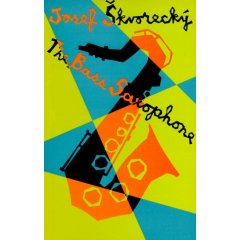
In his entertaining introduction to the jazz themed collection The Bass Saxophone, Josef Å kvorecký recounts jazz’s temporary comeback when American bass player Herbert Ward defected, “delivering another serious blow to American Imperialism.”(p. 22) Å kvorecký and his associates, including trumpeter Josef Krajnik immediately sought out Hall, offering themselves as his new band. Å kvorecký writes, “we used him ruthlessly” to play their music, provided it accompanied Hall ridiculous propaganda lyrics. Ultimately, Hall returned to the U.S. when the Czechs were unable to meet his demands for more money, but socialist regulations forbade it. You can take the socialist out of capitalism, but you can’t take the capitalism out of the socialist.

Škvorecký would relinquish music for literature. After a detour in the Czech auto industry (such as it was), Krajnik was later able to form another, more swing oriented band, the Metropolitan Jazz Band Praha. Now Czechs can freely play any music without regard to state censors. To their credit, they want to extend that freedom to Cuba.

Monday, April 24, 2006

You Can Still Have a Great Night in Harlem


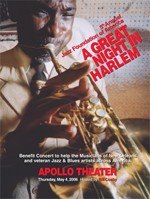
Tickets are still available for the Jazz Foundation of America's Great Night in Harlem benefit concert, Thurs. May 4th. Although it will be in Harlem's Apollo Theater, there will be a distinct New Orleans flavor. Dr. Michael White and the Original Liberty Jazz Band of New Orleans will perform, and your sure to hear about the Foundation's efforts on behalf of musicians displaced by Katrina. Come and support their worthy efforts.

Friday, April 21, 2006

Finding the Lost City


Last week’s post on Andy Garcia’s upcoming film The Lost City received some gratifying attention in the blogosphere. Most notably, Michelle Malkin linked to it, and a review from Roger Simon. It's great that they have helped generate internet buzz. It is a worthy film, one of the best I’ve seen in quite some time.

The acting is first rate. Andy Garcia is excellent as Fico Fellove, the Havana night club owner who watches Castro tear the soul out of his beloved city. Bill Murray has a sizeable supporting role as a character simply called “the writer.” In a bit of a departure for Murray, he’s actually funny in this role. Not Stripes funny, but his character expresses the wit and wordplay for which novelist and Lost City screenwriter G. Cabrera Infante was celebrated for. Dustin Hoffman has far less screen time as Meyer Lansky, but he makes each second count. With that cast, and phenomenal Cuban score, you would think The Lost City would be a have a big Hollywood studio campaign behind it.

Sadly, no. According to Box Office Mojo The Lost City will open on 18 screens on April 28th. It’s opening week competition include the moronic looking Robin Williams comedy RV expected to open on over 3,100 screens and Akeelah and the Bee on over 2,200 screens. United 93, a film which would likely share a significant crossover audience with Garcia’s film also opens the 28th on 1,700 screens.

If you live in New York, LA or Miami, I really recommend you seek out this film on the 28th. If Hollywood’s politics were more inclusive, a major studio would have picked this up to be their entry in the Oscar derby. Magnolia is known for shortening the window between theatrical and DVD release, sometimes even releasing films on both platforms nearly simultaneously. Currently, they are announcing an August 8th DVD release, but that is subject to change. I would assume a high per screen box office would have some effect on those plans. This is a beautiful film that deserves to be seen on the big screen. I you have the opportunity, take it.

Odd Spin 4/21: Darius Brubeck’s Chaplin’s Back

Chaplin’s Back
Keyboards, leader: DB
Clarinet: Perry Robinson
Bass clarinet: Robert Fritz
Tenor sax: Michael Brecker
Cello: Richard Bock
Fender bass: John Miller
Drums, percussion: Muruga
Guitars: Bob Rose, Amos Garrett
Label: Paramount

The story: Arranging a theme album around a silent movie star sounds like a counter-intuitive idea, but Darius Brubeck, son of jazz legend Dave Brubeck, shows some real interest in Chaplin’s songs, including the classic “Smile” (as in “even though your heart is aching”). The younger Brubeck would soon permanently emigrate to South Africa, where he became a leader of the underground jazz scene and a prominent anti-Apartheid activist. Jazz would again be associated with freedom and rebellion, as it was in National Socialist Germany and Communist Eastern Europe. Not surprisingly, many South African jazz artists, like Abdullah Ibrahim and Hugh Masekela were forced to live in exile.

The bottom line: This is a decent session (his adaptation of the theme from The Great Dictator is particularly appealing in a funky way), but hardly represents Brubeck’s lasting legacy in South Africa. You should be able to find it for something under $10, and it’s probably worth it.

Thursday, April 20, 2006

Celebrating Lionel Hampton’s Legacy


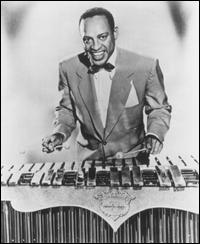
Born on April 20 (or April 12 depending on the source), 1909, Lionel Hampton has a unique position in American cultural history. He was a member of the historic Benny Goodman Quartet, the first racially integrated combo to perform in public. He was arguably the first musician to record a jazz solo on the vibraphone. Some give this distinction to Adrian Rollini, but Hampton firmly established the vibes as a jazz soloist’s instrument. He led one of the top bands in jazz, demonstrating remarkable longevity and hiring some of jazz’s greatest artists early in their careers.

As I wrote in this Tech Central Station piece, Hampton was also an activist Republican. He had a leadership role in Richard Nixon’s first Congressional campaign, and had a long personal relationship with the Bush family. In addition, Hamp was a strong supporter of Israel throughout his life. His only extended symphonic composition, The King David Suite was inspired by an early visit to this key U.S. ally. (Unfortunately, it appears to be unrecorded, or unreleased as of yet.)

Hampton did record extensively during his lifetime, and we have a rich musical legacy to enjoy. In Manhattan, we miss his Republican leadership. Recently, a Harlem Republican club has recently renamed itself The Lionel Hampton Republican Club. Operating in the district represented in the State Assembly by the Democrat State Party Chair, these Harlem Republican could use some of Hamp’s good vibes. Hamp would be happy to oblige. Spin his classic “Flying Home” and celebrate the life of an American original.

Wednesday, April 19, 2006

The Chick Corea Question


At the most recent IAJE conference, the NEA inducted this year’s Jazz Master class. Included was Chick Corea. In accepting the honor, Corea first thanked the musicians he has played with, to a warm round of applause. He then thanked his wife, Return to Forever vocalist Gayle Moran to another polite round of applause. He then thanked L. Ron Hubbard for his creative inspiration. Talk about Crystal Silence, it was deafening. The next night he played a trio set with Jack DeJohnette and Eddie Gomez before the same audience that was enthusiastically received.

Corea is the resident Scientology advocate in the jazz community, and he not shy about it. This has caused some issues for him, most notably in Germany where the government considers the Church of Hubbard a cult instead of a religion. In a well publicized incident, Corea was refused permission to play a concert given his habit of proselytizing from the bandstand. Since Hollywood considered the Clinton Administration their wholly owned subsidiary, celebrity Church members like John Travolta successfully lobbied to make this issue a top priority for the State Department, pointlessly straining U.S.-German relations over a trivial issue.

Much has been written about Corea and Scientology, but it has largely been from Scientology partisans, pro or con. Given his stature as an improviser, the jazz press seems reluctant to really delve into the issue. To be sure, Corea always mentions it in interviews, but the major jazz magazines usually try to bring the focus back to the object of the current publicity campaign. With Scientology in the entertainment press for its feud with South Park, and Air Enron host Janeane Garofalo starting to flack for a dubious Scientology-affiliated drug treatment program, it’s a fine time to really take a look at the effects of Scientology on Corea’s music.

Many Corea albums, like My Spanish Heart and Mad Hatter would not suggest a Scientology connection, if it weren’t for the acknowledgment to Hubbard in the liner notes. My vinyl copy of Again and Again on Elektra appears to be the exception, with no shout out to L. Ron. Nice session too.

Corea did lend his musical credibility to albums from L. Ron Hubbard, and his daughter Diana. Among Corea’s discography, these probably rank as his least impressive work. The senior Hubbard composed the music for Space Jazz: the Soundtrack of the Book (the book being Battlefield Earth pictured on the cover). It opens with voices chanting the names of science fiction heroes (“Buck Rogers! Flash Gordon!”), set to a lackluster march in “Golden Era of Sci Fi.” After that, what music there is, is usually overwhelmed by sci-fi effects and dramatic snippets from the novel, as on “Terl, the Security Director” and “The Drone.” To be sure, the better cuts, like “Windsplitter” are the ones featuring Corea, but they are far from satisfying. Diana Hubbard’s album LifeTimes is basically light classical. Not particularly memorable, but not unpleasant. Corea plays an undistinguished keyboard accompaniment on one track, “Bewitched.”

There are some records under Corea’s name that explicitly reference Scientology and the question is, how rewarding are they given the source of inspiration? Mixed bag. Take Delphi I. Recorded at the Scientology-affiliated Delphian School in OR, Corea improvised a solo set, starting with the Delphi suite, reflecting the harmonious life at the school. The opening “Alma Mater” is an attractive theme, but the following movements of “the good judgment of the staff” and “the beautiful rolling hills” just do not take it anywhere. Evidently, there is no action or drama at Delphi. I’m glad I never went there. Perhaps most telling, it appears the Delphi sessions appear to bo the only Corea on Polygram not released on CD in America or Japan.

More successful are Corea’s two most recent concept CDs, which dramatize Hubbard novels far more successfully than Space Jazz. To the Stars was released in conjunction with the reissue of the science fiction novel of the same name. Featuring type big enough for a middle grader with ADD, the book barely bulks up to 210 pages. While the characters are one-dimensional, the story did inspire some rich compositions. Recorded with a reunited Elektric Band, including great musicians (particularly John Patitucci), To the Stars is a very entertaining CD. It is only marred by the “Port Views,” gimmicky interludes between tunes meant to convey the spaciness of space.

The Ultimate Adventure is a Hubbard Arabian Nights style fantasy. As such this literary concept lent itself to Eastern and Latin sounds. Ultimate Adventure is also a strong CD, more consistent in tone, without desert view interludes, performed by great musicians, including Hubert Laws. For whatever reason though, the individual themes are not as strong as Stars, but it is a pleasant sound palette.

Ultimately we can’t truly determine the effect of Corea’s conversion on his creativity. Would he have he produced his classic My Spanish Heart otherwise? Possibly, who knows? Would he have produced Delphi I? Probably not, as it was the product of a very specific set of circumstances. Could the music inspired by To the Stars and Ultimate Adventure have been inspired by another source? Maybe not. Again, that’s impossible to answer. Would he have performed on Space Jazz? Almost certainly not. I suppose that’s giving the final word to Scientology’s critics.

Tuesday, April 18, 2006

Under TR’s Watchful Eyes

“We used to play at an old tennis court on Sixteenth Street. President [Teddy] Roosevelt would come by on his horse sometimes, and stop and watch us play. When he got ready to go he would wave and we would wave at him.”—Duke Ellington in Music is My Mistress

Just as a young Duke Ellington and his friends played under TR’s watchful eyes, Republicans in lower Manhattan labor to turn the tide under the shadow of the legendary Republican. In an office not far from the Teddy Roosevelt birthplace, the TR/Gramercy Park Republican Club provides vital support to downtown candidates, as well as a convenient meeting place for Republican activists. As a club officer, I hope some readers are able to join us for our Rough Rider Award Ceremony on Tuesday, May 2nd 7-9 pm. We will honor Charles and Barbara Drew for their lifelong contributions to the New York Republican Party. Our special guest will be former State Senator and NEA board member Roy Goodman.

Monday, April 17, 2006

Who is Tarik Shah?

Depending on who you ask, he is either a martial arts teacher who is also among the “top 1% of jazz bassists,” or a traitor who swore allegiance to al-Qaeda. David R. Adler’s guest column in the May Jazz Times (not yet on-line) wisely suggests caution on the part of the jazz community in responding to the Shah case. However, some like promoter Margaret Davis and Jazz Journalists President Howard Mandel have jumped in with both feet to champion Shah’s case.

Davis claims “He is suspected of having thoughts, spoken words and/ or companions the government doesn’t like, and though not actually charged with committing a crime, he has been held in solitary confinement ever since.” This is demonstrably false. Shah has been charged with two counts of conspiring to aid a foreign terrorist organization, as well as third related charge. The government’s complaint is available on-line and it makes chilling reading. Here are some of the details:

On Dec. 16, 2003 during a meeting with an FBI confidential source (now thought to be Yemeni Mohammed Alansi) Shah is alleged to have expressed interest in “obtaining a location where he could ‘train’ in hand-to-hand combat and prepare brothers [for jihad].” The source offered he might have a warehouse that would suit Shah’s purposes, to which Shah suggested “hang some tires [in the warehouse] ‘cause I teach, I teach the brothers how to use swords and machetes.”

According to the complaint, during that meeting, “Shah also discussed the possibility of opening a machine shop in order to fabricate ‘many things’ including weaponry, so that ‘you wouldn’t have to depend on people’ to make ‘your barrels [gun barrels], anything like that.”

Shah complained he had been unable to leave the country for terrorist training because as the complaint explains: “Shah is subject to a court order regarding his failure to provide child support.” Rather than raise money for Shah’s defense, perhaps Ms. Davis should consider raising money for his dependants.

On Dec. 23, 2003 Shah was arrested by Yonkers police for petit larceny as part of a dispute with a former landlord. During a routine search of his car they found phone numbers of Seifullah Chapman, who would later be convicted of providing material support to terrorists, and an individual believed to have connections to foreign terrorists.

Later in January or February 2004 Shah reportedly offered to recruit his friend and now co-defendant Rafiq Sabir, a medical doctor who allegedly wanted to offer his medical services to al-Qaeda. At one point “Shah discussed how he and his ‘friend’ attempted to go to the ‘mountains’ [which appears to be a veiled reference to training camps in Afghanistan].”

During a March 4, 2004 meeting with an undercover FBI agent (UC-1) arranged by the source, the complaint alleges “Shah physically demonstrated to UC-1 how he had fashioned his prayer beads into a weapon and how the prayer beads could be used to strangle a person.”

Then at an April 1, 2004 meeting Shah and UC-1 allegedly discussed Shah providing martial arts training to al-Qaeda jihadists. UC-1 reportedly recommended Shah produce a “demonstration videotape and to prepare a syllabus.” Allegedly Shah’s response was “we on the same thing. We on, one hundred percent same page.”

Also at that meeting allegedly “Shah informed UC-1 that he would like to learn at camps about ‘chemical stuff,’” and “also discussed training on AK-47 assault rifles and hand grenades.”

In the most publicized alleged exchange, Shah made eye contact with a woman in an Orlando area bar, then said to UC-1 “I could be joking and smiling and then cutting their throats in the next second.”

Allegedly Shah and co-defendant Sabir met with UC-1 on May 20, 2005 and discussed means of pursuing jihad in a conversation which culminated in their taking an oath, a “bayat” to al-Qaeda and to bin-Laden’s leadership.

That’s some heavy stuff. They are only allegations at this point, not proven in a court of law. There is indeed a presumption of innocence in our legal system. However, the government claims to have video and audio recordings that back up their claims.

Naturally, most in jazz the community are keeping their distance, or taking a wait and see attitude. Some like writer Forrest Dylan Bryant are suggesting a possible entrapment defense, according to Adler. It certainly sounds like the notion of martial arts training schools came from Shah or at least required little prompting, but we will know better once the trial begins.

Even if an entrapment defense works as a matter of law, it should not hold sway with us. I can be sympathetic to those entrapped by prostitution or Ab-Scam style bribery stings. Everyone needs money to survive, and nearly everyone has a sex drive. Entrapment in a moment of weakness is human. One has to ask what is in the heart of a person who could be entrapped into aiding a terrorist organization responsible for killing nearly 3,000 people on September 11. If that’s his defense, he should find himself ostracized by the jazz community and all New Yorkers.

As Adler notes, Shah can hardly be considered among the top “1% of jazz bassists” as the website set up by Davis suggests. Nor has he been a trail blazer or “pioneer” in any sense. He has been a part of the uptown scene, a regular a St. Nick’s Pub. He has recorded on albums by vocalists Abbey Lincoln and Irene Reid, as well as one of Pharoah Sanders’ funkier efforts from the 1980’s. Such hyperbole from Davis probably won’t help her cause.

While Adler’s column is by and large reasonable in its tone, he does drop one seriously misleading line: “Shah’s trial, to be sure, unfolds against a backdrop of profiling, unjustified detentions, officially sanctioned torture, warrantless wiretapping, and all the rest.” Evidently, he had to get in some obligatory hand wringing. The truth is there is no profiling in America. We might arguably be safer, if there were some at airport security, but the Federal government bends over backwards to avoid it, as does the NYPD. Detention of illegal enemy combatants is about justified as it gets, with all the current Supreme Court case law to back it up. He may not like the controversial wiretapping of international terror suspects, but it is legal. As for “all the rest” he must mean the little thing that happened in lower Manhattan in 2001.

Indeed, if the allegations in the government’s complaint are substantially true, the jazz community should feel particularly betrayed by Shah. Not only did 3,000 people die on September 11, but the economic consequences for jazz were severe. Many paying gigs disappeared in restaurants. Jazz clubs were empty. I remember seeing Jason Moran play a free show at the Blue Note, in a special designed to get patrons back into the clubs. Shah stands accused of conspiring to aid those who brought this hardship about.

Some want to rally to Shah because he is a jazz musician, but in the complaint he allegedly describes being a musician as the “greatest cover” available to him as an aspiring jihadist. Musicians who played with Shah are voicing support. It is understandably easier to believe the government made a mistake, than to believe a close colleague deceived you, and betrayed the music itself. Indeed, if the government’s allegations are true, Shah explicitly rejected the greatest values of jazz: freedom, inclusion, and artistic integrity.

Adler is right when he writes: “there is a big difference between presuming Shah’s innocence and proclaiming it.” There are plenty of other jazz artists currently in need of assistance. If you want to help someone in need, I recommend you buy a ticket to the Jazz Foundation of America’s benefit concert at the Apollo, rather than giving to Shah’s defense. It will be a great show, and you’re guaranteed not to regret it a year from now.

Friday, April 14, 2006

Coming Attraction: The Lost City


Last night I attended a screening Andy Garcia’s directorial debut The Lost City. I’ll post a fuller review when it releases April 28th, but I have to say it is one of the best films I’ve seen in a long time, and the music is fantastic. View the trailer here.

Set in Havana during the waning days of Batista, and the first year of the Castro regime, The Lost City accurately depicts the brutality of both dictators. According to internet reports, The Lost City’s principled depiction of the savagery of Che and Castro made it difficult to find a distributor.

Hollywood studios passed on a good thing, but give credit to Magnolia Pictures. This is a well acted, gorgeous looking film. And it sounds great too. Andy Garcia is also an accomplished musician and musical producer, and the soundtrack he composed and assembled is an amazing love letter to Cuban music, featuring great musicians like Justo Almario and the legendary Cachao. You can hear them play with Garcia live at B.B. King’s on 42nd Street April 25th.

The Lost City opens in New York (and White Plains), Los Angles and Miami on the 28th, rolling out to additional cities in succeeding weeks. It is well worth looking for. Since it takes on Hollywood sacred cows, like Che and Castro, this film will need word of mouth support. The film critics of the antique media won’t help. The blogosphere needs to get behind it.

In the meantime, you can check out For Love or Country: the Arturo Sandoval Story on DVD. While not as finely crafted as Lost City, it is an entertaining HBO biopic starring Garcia as Sandoval, the Cuban trumpeter who defected to American with the help of Dizzy Gillespie. Then look for The Lost City on April 28th, or hopefully sometime after. It’s a film that deserves an audience.

(Welcome Michelle Malkin readers. I hope you make J.B. Spins your first destination for jazz reporting and commentary from the right perspective. Thank you to Michelle Malkin for the link.)

Thursday, April 13, 2006

Another Great Night in Harlem


The Jazz Foundation of America will hold its fifth Great Night in Harlem fundraiser concert at the Apollo Theater on Thur. May 4th. For details see the invitation here. As usual it should be a great show, featuring fantastic musicians like Clark Terry, Ron Carter, James Blood Ulmer, Gary Bartz, and Jimmy McGriff. It should truly be a great night of music for a very worthy cause. JFA has been an incredible resource for musicians displaced by Katrina, but their relief efforts have been costly.

Anyone who orders tickets in the next week (4/13-4/19), and e-mails confirmation to jb.feedback at yahoo by 4/20 will get a grab bag of books with my compliments, while supplies last. Just allow me a couple weeks to get it organized. This is my offer, independent of JFA. Swing on.

Wednesday, April 12, 2006

Gilad Atzmon Grinds His Axe


If you search for jazz on al-jazeera’s English language site, Gilad Atzmon’s name comes up. If that makes you uneasy, your suspicions are correct. Through his essays, interviews, and most recent novel, Atzmon’s rhetoric is consistently venomous.

Atzmon is a former Israeli, the son of conservative Jewish parents, who now identifies himself as a Hebrew speaking Palestinian and avowed Marxist. He is also a multi-reed jazz instrumentalist, but his website is more preoccupied with politics than music.

Atzmon is a harsh critic of Israel, and sees Zionist conspiracies everywhere. His essay “The Protocols of the Elders of London” openly alludes to the thoroughly discredited “The Protocols of the Elders of Zion,” which has repeatedly been used to incite anti-Semitic violence. This essay is in fact a rather tedious polemic on the in-fighting within the “anti-Zionist” British far-left. Aztmon writes of “a horrifying image of modern Jewish secular intolerance” and “the abusive, assertive and violent world of Zionist lobbying,” which seems to consist of asking people to sign open letters renouncing Israel Shamir, a certain figure they consider too extreme. Shamir (whose real name is apparently Jöran Jermas) has been associated with Holocaust denial and has advanced other anti-Semitic myths, including classic blood ritual libels, but he is the salt of the Earth in Atzmon’s book.

Aztmon’s “Protocols” essay is most troubling for its title, rather than its attempt to score points within insular far left power struggles. However, “On Anti-Semitism” literally excuses all forms of anti-Semitic violence as a form of political rebellion. Right out of the box Aztmon states:

“Anti-Semitism has been replaced by political reaction. I am not suggesting that Jewish interests are not being mutilated and vandalized. I am not saying that synagogues aren’t being attacked, that Jewish graves are not brutally smashed up. I am saying that these acts, that are in no way legitimate, should be seen as political responses rather than racially motivated acts or ‘irrational’ hate crimes.”

Note the quotes on “irrational.” While not endorsing hate crimes against Jews, Atzmon has effectively excused any act of violence as a response to alleged crimes against the Palestinians. Aztmon continues with explicit references to the original insidious “Protocols” with statements like:

“American Jewry makes any debate on whether the ‘Protocols of the elder of Zion’ [sic] are an authentic document or rather a forgery irrelevant. American Jews (in fact Zionists) do control the world.”

For history of the fraudulent Protocols and their role in promoting hate violence, I recommend this background from the ADL. Aztmon even makes the bizarre claim in support of Zionist world domination that “an astounding 56 per cent of Clinton’s appointees were Jews. A coincidence? I don’t think so.”

Considering the sheer volume of presidential appointments, and the percentage of the America population identified as Jewish, I truly doubt the accuracy of this statement. If you have numbers to the contrary, e-mail them to me. In general, I fail to see the evil in disproportionately appointing Jewish Americans to executive branch positions, so long as individual appointees are qualified.

Aztmon is not a Holocaust denier, but he does wink at it, writing:

“For years I have argued that Holocaust denial is not a particularly interesting subject because as a notion it is far too wide. In practice, anyone who tries to oppose the official Zionist interpretation of World War II events instantly becomes a Holocaust denier.”

Aztmon is also a “novelist.” His latest My One and Only Love has yet to find an American publisher. One and Only is replete with the ugliest caricatures of Israeli Jews imaginable. It tells a split narrative of Danny Zilber and Avrum Shtil. Zilber is a misogynistic, impotent trumpeter who plays a romantic light-jazz (sort of half Mr. Acker Bilk, half Chet Baker). Shtil is his greedy, violent, and perverse manager—the sort of stereotype you would expect from hate literature. Shtil deftly creates manipulatively sentimental acts designed to exploit European guilt over the Holocaust. In truth though, his musical acts are simply a profitable cover to smuggle nuclear material for the State of Israel. If any of my publishing colleagues have this on submission, I recommend you pass.

I have linked to all of Atzmon’s essays quoted above. Readers are invited to verify their accuracy and context. I enjoy many artists whose opinions I passionately disagree with. Oscar Brown, Jr. was a member of the Communist Party at a time when he had no excuse for not knowing of the purges and famines Stalin directed. Yet his music has a charm and wit that excuses such judgments. He was first and foremost a man of music. For Atzmon, his identity seems to come from his extremist politics, not his music. He seems to enjoy pushing the envelope of acceptable discourse, approaching outright anti-Semitism, and then citing his heritage as an alibi. It’s a sad act.

Tuesday, April 11, 2006

Unlucky Thirteen

Channel Thirteen, the NY PBS affiliate, hasn’t been lucky for jazz fans in New York. They are planning to show the new PBS jazz show Legends of Jazz with Ramsey Lewis on Thursday nights at 12:30 a.m., virtually precluding any New Yorker under the age of 18 gaining any exposure to jazz through the program. I posted on IAJE’s letter writing campaign on behalf of a better time slot. After two weeks, I haven’t heard any response from my fax. No form letters or generic e-mails. I hope other IAJE members have received better responses.

Thirteen’s slogan is “if 13 didn’t do it, who would?” However, I wonder how true that is. The bulk of Thirteen’s primetime schedule is dominated by current events, science & nature programming, and British comedy & mysteries, the kind which you can readily find on CNN, Fox News, Discovery Channel, A&E, and Animal Planet. Not unworthy, but not unique to PBS. Yes, not everyone has cable, and that is a consideration.

However, there is a dearth of performing arts programming on both PBS and Cable. This week on Thirteen there is a program called Setting the Stage on Thur., profiling prominent figures from the theater, but it is not performance.

I enjoy Foyle’s War on Mystery, but I can’t defend it as tax-payer subsidized PBS programming. You can make that argument for excellent performing arts programming. Yet for serious jazz, symphony, ballet, and blues performances, there’s not much love on Thirteen. This is exactly the sort of programming PBS should be presenting free to audiences that could not otherwise afford to experience it, but Thirteen pushes Legends of Jazz past the midnight hour. Disappointing. It makes one question the value and expense of PBS, or at least the local affiliate, if won't live up to its own mandate.

Monday, April 10, 2006

Finding Sophie Milman

According to Jazz Week (4/10/06), BET J will air a profile on Canadian jazz vocalist Sophie Milman tonight and April 24th at 6:30 p.m. & 1:30 a.m., not that you’d know from the BET J website. Milman’s family emigrated from Russia to Israel for religious freedom, eventually settling in Canada. During their epic journeys, the Milman family held onto their precious American jazz records (once again a symbol of freedom), which would eventually inspire Sophie Milman’s musical career. Based on what I’ve read on-line, it would be interesting to hear more about Milman’s story so far, but BET J isn’t doing much to promote it, or its other Jazz Appreciation Month specials. That’s a shame.

Junk Science Jousting

Leafing through SMP’s Fall ’06 catalog I noticed a book by Dan Agin titled Junk Science: How Politicians, Corporations, and Other Hucksters Betray Us. Given the high profile of Steven Millroy’s Junk Science website, Fox News on-line column, and his book Junk Science Judo, I would have recommended a different title for Agin, to avoid confusion. Knowing the politics of my chosen industry, it’s entirely possible his editor was unaware of Millroy’s Junk Science writings. Of course, Agin is perfectly within his rights to use any title he pleases. Perhaps he’s even hoping for a Junk Science smack-down. However, I suspect Millroy might be the beneficiary of any title confusion.

Currently, if you search for “Junk Science” on Amazon, Junk Science Judo is the first title up, followed by Peter Huber’s Galileo’s Revenge: Junk Science in the Courtroom. Granted, the pub. date for Agin’s book is still quite a bit away, but Millroy does have an established “Junk Science” brand.

I’ve heard Millroy speak at NY YR meetings, and have enjoyed his writing. There might be some areas of agreement between Millroy and Agin, but they don’t seem to be coming from the same place. Agin’s pet peeves seem to be stem cells and tobacco companies. Millroy’s signature issue has been debunking the deceptions of global warming demagogues, like Al of Arabia. He provides an important reality check against the costly statism of Kyoto. I haven’t read Agin so I have to reserve judgment on his book, but I do recommend Millroy’s work to anyone who doesn’t worship in the Luddite environmental death cult of the left.

Friday, April 07, 2006

Remember When Rock was Subversive?

Not anymore. Mick Jagger is reportedly unconcerned with Chinese censorship of an upcoming Stones concert, saying: “We kind of expected that. We didn't expect to come to China and not be censored.”

American fans probably wish our government would censor performances of any Stones tunes recorded after 1981’s Tattoo You. Not for reasons of morality or ideology, but for consumer protection. After all, who wants to hear a cut from their new album at a Stones concert?

Unfortunately Chinese fans won’t be hearing “Brown Sugar,” “Honky Tonk Woman” or “Beast of Burden.” Fine, that’s the Stones’ decision. Of course, the next time they perform the anti-Bush administration song/screed “Sweet Neo-Con” we should remember their willingness to let the Chinese Communists take a red pencil to their set list, and judge their ethical authority accordingly.

I do hope the Chinese get a chance to hear Stones sideman and jazz musician Tim Ries. A talented reedman, Ries has been performing jazz versions of Stones tunes in clubs, on his off nights, before Stones concerts. I heard him at Denver’s Dazzle the night before the Stones Thanksgiving concert, and really enjoyed his show.

Odd Spin 4/7: Bob Freedman’s Journeys of Odysseus

Journeys of Odysseus
Arranger, conductor, leader: Bob Freedman
Cornet: Marvin Stamm
French horn: James Buffington
Reeds: Jerome Richardson or Hubert Laws, Robert Tricarico or Walter Kane, Romeo Penque, Philip Bodner or Walter Lavinsky
Guitar: Jay Berliner or "Bucky" Pizzarelli
Bass: Ron Carter or Richard Davis
Vibes: David Carey
Narrator: Terry Currier
Strings: Gene Orloff, George Ricci, Aaron Rosand or Paul Gershman, Alfred Brown
Label: Skye/Cobblestone Records

The epic story: Bob Freedman did some arranging for Gary McFarland’s Skye Records, and recorded this suite inspired by the story of Odysseus. Just in case you forget you’re listening to a serious work of art, some pretentious narration from Homer precedes each movement. The music its self is appealing Third Stream jazz, uneven but with some nice playing from artists like Marvin Stamm, Hubert Laws and Jerome Richardson.

The unfortunate narration is a textbook example of Third Stream music’s Achilles Heel of pretentiousness. There are plenty of Third Stream recordings without such flaws, but jazz-classical fusions sometimes fell prey to the lofty themes meant to emphasize the seriousness of the composer’s artistic ambitions.

Many sub-genres of jazz have drawn inspiration from classic literature. Arild Andersen for instance, has recently recorded ECM-style minimalist music composed for a production of Elektra. Johnny Dankworth however, could be considered the Allan Bloom of jazz, for his commitment to great books. He has recorded albums like Shakespeare and All that Jazz, What the Dickens, and Windmill Tilter obviously inspired by Shakespeare, Dickens, and Cervantes. He also recorded The $1,000,000 Collection, an album length suite inspired by great works of art. Although there were Third Stream elements in Dankworth’s literary work, he always keeps in-touch with his late-swing/early-bop roots.

The bottom line: Skye albums are somewhat collectable, and this is one of the scarcer one, not yet reissued on CD. Figure $15-20.

Brubeck: Take Five, Receive Medal

According to the recent Jazz Week (4/3/06) Dave Brubeck will be the recipient of the Notre Dame’s Laetrare Medal. According to Jazz Week:

The medal is the oldest and most prestigious honor given to American Catholics.

“The composed energy of Mr. Brubeck’s art helps us apprehend the fullness of creation," said Notre Dame’s president, Rev. John I. Jenkins.

It’s appropriate that Brubeck should be honored on an American campus. After all, he built his reputation through college tours, and with recordings like Jazz Goes to College. Perhaps Ellington’s Sacred Concerts are the best recognized, but the extent of sacred compositions in jazz is not widely acknowledged. Brubeck has contributed a number of them, including albums like The Gates of Justice and The Light in the Wilderness.

Catholicism has been fairly receptive to jazz. At least two Catholic priests have recorded jazz albums as instrumentalists, Father Tom Vaughan, and Father Jack Herrera. Now one of the highest American Catholic honor will be bestowed on Brubeck on May 21.

Monday, April 03, 2006

Herbie Hancock’s Distribution Possibilities

On March 16th, we saw a beautiful concert tribute to Toots Thielemans at Carnegie Hall. To set the tone, the concert opened with Thielemans seated on-stage as Herbie Hancock reminisced and played for him. It was an intimate performance, the sort one hopes the makers of the soon to debut documentary Herbie Hancock: Possibilities were able to capture. (As an aside, the concert was a tribute to a Belgian musician, featuring American, Cuban, and Brazilian artists, sponsored by a Japanese company. Why is globalization such an evil thing again?)

Hancock’s explosively successful Head Hunters-era fusion recordings were quite controversial in the jazz community when first released. Now Hancock finds himself involved in an industry controversy through the release of this documentary. Opening April 14th at the Quad Theater in New York, and the Grande 4 in Los Angeles, Possibilities will actually drop on DVD April 18th, 4 days later. This narrow window of theatrical exclusivity does not sit well with distributors. Magnolia Pictures used a similar strategy with Indie film Bubble, the success of which depends on who you ask, Magnolia or the Exhibitors Association.

Most people don’t really have a dog in this fight, but as consumers we get to pick the winner. Given the increasing DVD domination of American leisure time, I suspect Magnolia is onto something. In this instance, Possibilities documents the recording of the recent Hancock CD of the same title. In the tradition of Ray Charles Genius Loves Company, Hancock becomes the venerated as the bright lights of the contemporary music scene perform duets with the master. While not as sublime as Hancock’s stage time with Thielemans, seeing a jazz master on the big screen, even with light weight pop figures like Christina Aguilera, is an appealing proposition. If time permits, I’ll try to catch it at the Quad. If not, I’ll check out the DVD, the week after.

Hugh Masekela: Grappling with the Grazer

Hugh Masekela’s birthday will be April 4, so this is a good week to grapple with his mixed legacy. Masekela has produced some very entertaining music, but one gets the sense that he could have done much more.

Masekela’s first recording was on the cast album for the fantastic South African musical King Kong, the story of a township boxer, rather than a primate from Skull Island. It seemed Masekela was marked by the titans of jazz as a chosen child. Hearing of a young trumpet player in need of a horn, Louis Armstrong actually sent one to the seventeen year-old Masekela. Through the sponsorship of the great British alto player Johhny Dankworth, Masekela was able to leave South African to pursue musical studies in England. However, he soon left for America where he quickly fell into the hard partying habits that would curtail his exceptional promise.

Indeed throughout his autobiography Still Grazing, Masekela seems to give lip service to the evils of drug abuse, but describes coke and cognac fueled binges with something between braggadocio and nostalgia. He speaks of going clean, but it is not entirely clear when that happened. Such habits were not without effects. Masekela recorded some enjoyable albums, particularly for his Chisa label, including his biggest hit “Grazing in his Grass,” but later efforts, particularly those on Casablanca, are disappointing attempts at hit-making. Masekela has yet to make a truly heavy musical statement, with the depth and heft of his elders, like Armstrong and Dankworth.

Masekela aligned himself with the ANC and the Communist Party. Until the fall of Aprtheid, he found himself in exile from his homeland. Still Grazing reflects quite a bit of pro-Communist, Anti-American sentiment. There was however, one telling anecdote from a tour of late Glasnost, Communist Moscow:

“The maid in the hotel refused to clean my suite, claiming she could never work for a black man. Miriam and Paul’s CD players, Cds, and clothing were stolen from their VIP suites. On departure, some of the porters at the airport refused to carry our bags and equipment, and the airport staff treated us like shit. For the first time during my thirty years in exile, I preferred to be in apartheid South Africa than in racist Russia. It was the worst bigotry I had ever encountered.” (p. 350)

Reality can be a real buzz kill.

April Jam

April is Jazz Appreciation Month according to the Smithsonian, and Jazz @ Lincoln Center and Saint Peter’s agree. This month look for programming co-branded with the Smithsonian’s JAM emblem. It’s another way the various arms of Uncle Sam are indeed trying to promote jazz. Jazz is about freedom and tradition, so I would argue its promulgation is in the national interest. Also, it’s a good excuse for a night out in the clubs, or at a concert hall.

Note: Tue. & Wed. will basically be lost days due to sales conference. I don't anticipate being able to post again until Thur. so I'll try to front load the week today.

Sunday, April 02, 2006

Put Your Hands Together for Globalization

I’ve never understood the irrational hatred directed towards “globalization” by the extremist left. What they are really violently protesting is the exchange of ideas and commerce across nationally boundaries. What happened to this being “One World?”

A piece in the Prague Post about a recent Viktoria Tolstoy concert shows the benefits of globalization. The Swedish great-great-granddaughter of a Russian novelist was singing a combination of American jazz and Swedish pop to a packed house in Prague. I fail to see anything nefarious in any of that.

Viktoria Tolstoy is indeed the descendant of the great novelist—that’s multiply sourced. She does have an appealing voice, but I never really warmed to her debut CD White Russian, even though it was produced by Esbjorn Svensson of e.s.t. Still, I wouldn’t begrudge anyone the opportunity to hear her live. Exchange of art, culture, ideas, goods, services, capital, and currency across national borders is all for the global good. Just ask the packed houses at the Czech Congress Center.

IAJRC Journal Review Alert

The International Association of Jazz Record Collectors latest Journal, Winter 2006 (Vol. 39 No. 1) has my review of a British biography of Joe Harriott. I actually submitted it two years or so ago, but the IAJRC Journal gone through a state of turmoil, missing some issues.

Since Alan Robertson’s Joe Harriott: Fire in His Soul, has yet to be picked up by an American publisher, my review is probably as untimely now, as it was when I wrote it. I’m glad to see the IAJRC Journal back on its feet, and it is nice to see the review in print. I still think Robertson proved a deft biographer, and I certainly believe Harriott’s music deserves a wider audience. His fusions with Indian classical music are often in heavy rotation in my CD player and on my i-pod. His groundbreaking avant-garde music is also rewarding. As I wrote two-plus years ago:

“When casually listening to Harriott’s free form music, it may sound like advanced hard-bop, but it when one concentrates on the melody, it elusively slips away. Harriott was similarly elusive in life. Despite the passion of his playing, he could seem cool and aloof to many colleagues. Although he was widely recognized as one of the leading British jazz musicians, he ultimately slipped out of view. Robertson’s biography is a noble attempt to bring attention to Harriott’s remarkably diverse musical legacy. Like import editions of Harriott’s CDs, Fire in His Soul is worth searching for.”