Monday, February 20, 2023

Draw Me Saint-Exupery, on OVID.tv

Antoine Marie Jean-Baptiste Roger de Saint-Exupery crashed planes on multiple continents. He led a dashing life and saw one of his adult books adapted as a Clark Gable film, even though he did not exactly look like a matinee idol himself. Yet, he is almost entirely remembered as a children’s book author. Andres Jarach profiles the man who wrote The Little Prince in Draw Me Saint Exupery, which premieres Thursday on OVID.tv.

If you are looking for a deep dive into
The Little Prince, Jarach is likely to disappoint. He largely assumes you already know about the Price, the Aviator, and the Flower. Instead, he focuses on the rest of Saint-Exupery’s life. He was a WWI veteran, but to a large degree, his public image and world view were shaped by his time with. Aeropostale.

Through vintage interview and aerial footage, Jarach conveys the romanticism of Aeropostale pilots at their peak, as well as the vital role they played connecting France to North Africa and Latin America. You could directly compare them to the Pony Express, but with greater refinement. Having a bit of a reputation for recklessness, Saint-Exupery was eventually promoted from pilot to a kind of trouble-shooter, who often arranged the release of pilots taken hostage by North African warlords.

There really isn’t much of the Prince, but viewers still get a lot of the book’s vibe, because Jarach often overlays his archival footage with animated accents and flourishes, done in the style of Saint-Exupery’s
Little Prince illustrations. It is all quite elegant looking and somewhat whimsical, even though the tenor of the author’s lifetime was anything but.

Sunday, February 19, 2023

American Experience: Ruthless—Monopoly’s Secret History


It originated as a device to promote Henry George’s economic philosophy that was popularized by Quakers, but it is now a shining symbol of capitalism. The ironic history of the best-selling Parker Brothers board game is very incompletely told in writer-producer-director Stephen Ives’ Ruthless: Monopoly’s Secret History, which premieres tomorrow night on PBS, as part of the current season of American Experience.

Ives does not start at the beginning. Instead, he chronicles the research of Ralph Anspach, an economics professor, who fought the cease & desist litigation launched against his “Anti-Monopoly” spoof board game. Ives never mentions Anspach fought on behalf of Israel during the 1948 Arab-Israeli War and served in the U.S. Army, stationed in the Philippines, which would have made him a much more sympathetic figure for a lot of viewers.

To undercut the patent of the supposed “inventor,” Charles Darrow, who sold the game to Parker Brothers, Anspach uncovered the game’s folk origins. Probably, the first incarnation was created by Lizzie Magie, an ardent follower of Henry George.

The history of Monopoly is pretty interesting, but Ives’ scope is quite narrow. He never discusses the evolution of the so-called “Monopoly Man” into a recognizable character in his own right. Nor does he explore recent developments, like the popular McDonalds Monopoly game, which was embroiled in a scandal documented in HBO’s multi-part
McMillions. Frankly, this really isn’t the Monopoly story. It is the story of Anspach’s “Anti-Monopoly.”

That would be fine, as long as
American Experience announced it properly. The problem with Ruthless is the complete absence of diverse opinions. Every single one of Ives’ talking heads disparages the creative power of capitalism. Over and over again, we hear there is no such thing as an even starting line in America. That is their opinion—and when we hear as often as we do in Ruthless, it becomes dull and tedious.

Honestly, it is easy to defend Darrow. Nobody else was marketing Monopoly, so why shouldn’t he try? Darrow was unemployed during the Great Depression, with a special needs child. Initially, he took all the risks self-producing his own copies before selling the rights to Parker Brothers. He saved the company, its employees, and his family from ruin, so why does
Ruthless consider him a bad guy?

Saturday, February 18, 2023

Magnum P.I.: The Passenger & The Breaking Point

NBC just saved Hawaii’s state economy. Since Hawaii Five-0 ended, CBS’s surprise cancelation of the Magnum P.I. reboot came as a particularly hard blow to the local film industry. However, the ratings were good and the show definitely fits with NBC’s new strategy of mining 80’s gold, fitting in nicely with their new Night Court and Quantum Leap shows. Magnum works two new cases with some reluctant help from his friends in “The Passenger” and “The Breaking Point,” the first two episodes of NBC’s first new season of Magnum P.I., premiering tomorrow night.

As the opening narration makes clear, the “new” Rick and TC are basically the same as the old ones. The “new” Higgins is Juliet Higgins, a former MI6 agent, who was first Magnum’s Tracy-and-Hepburn-style foil on the Robin Masters estate, then his
Moonlighting-style partner in detective work, and as of the prior series finale, his Thin Man-esque romantic partner. They are trying to keep their new relationship on the downlow, but a good deal of “The Passenger” focuses on how they adjust professionally, or not, to their new personal arrangement.

The story itself, investigating a doctor’s suspicious accident is mostly routine, but instead of going in a cynical direction, the truth turns out to be rather edifying. It also teases a brief appearance from the great James Remar, as Magnum’s disgraced mentor, Captain Buck Greene, whose troubles appear likely to dominate the coming season.

One of the best aspects of the
Magnum reboot comes out clearly in “The Breaking Point.” Jay Fernandez might not have Tom Selleck’s megawatt screen presence, but the new show is still one of the more veteran-friendly series on television (along with Blue Bloods, as it happens). While Magnum and Higgins go undercover as lifeguards (which is always a solid option for a Hawaiian based TV-show), TC and his annoying small-time operator friend Jin Jeong win an auction for an abandoned storage locker holding a prolific but freshly incarcerated burglar’s stash. Among the loot is a Purple Heart that TC, the former Marine insists they return to its rightful owner.

Bobby Lee is like fingernails on a blackboard as Jeong, but this subplot pays off in a big way, connecting with some very important Hawaiian history. The camaraderie of Magnum and his friends is also rooted in their service, and it definitely elevates the show.

Friday, February 17, 2023

The Hidden Blade, Starring “Little” Tony Leung

You know this film must be propaganda, when it is the third installment of the so-called “China Victory Trilogy,” especially when the first two films magically transformed disasters into “victories.” In Chinese Doctors, the doctors of Wuhan bravely battle the spread of Covid-19, whereas in reality, the authorities did their best to cover it up. Then came The Battle of Lake Changsin, rewriting the history of the Battle of Chosin Reservoir, in which 120,000 PLA troops surrounded 30,000 UN Forces, who managed to slip through their encirclement to fight another day. At least the Japanese really did lose WWII, but it is highly debatable how much Mao’s Communists contributed to their defeat. Of course, that is not how director-screenwriter Cheng Er tells it in The Hidden Blade, which opens today in New York.

The Japanese think Mr. He is the director of their Shanghai counter-intelligence operation, but he is actually a double agent truly loyal to the Communist Party’s Special Branch. One of his duties is eliminating traitors like Liang, whom he meets with in the prologue. Eventually, the film will catch back up to this scene, as it flashes backwards and forwards. It almost seems like Cheng deliberately fractured his narrative to obscure the film’s didactic implications.

Regardless, it seems only Mr. He’s chief enforcer, Mr. Ye ever starts to wonder about him, even though his behavior is highly suspicious. Mr. He certainly has his Japanese military boss Watanabe fooled. The stakes are certainly high for him, since He’s lover, Ms. Chen is active Communist agent.

Frankly, if it were not for Cheng’s narrative gamesmanship and obfuscations, the story here would be pretty straight forward. Naturally, it still slavishly follows the Party Line. Cheng is much more successful as a visual stylist than a burnisher of national myths, because the film has a strikingly noir look. It makes you think Shanghai during the war couldn’t have been so bad, judging from all the late night cafes that were operating.

Thursday, February 16, 2023

Hello Tomorrow! in the Epoch Times


The retro-futuristic world of HELLO TOMORROW! looks cool and Billy Crudup really delivers as the traveling sales selling hope and Moon units. EPOCH TIMES exclusive review up here.

Emily: The Middle Bronte Sister

Except for a few poems also published, Emily Bronte is basically a one-hit wonder, but as part of the Bronte Sisters, she doesn’t seem like one. Of course, the Brontes wouldn’t be the same Brontes without Wuthering Heights. Her short but appropriately melodramatic life is somewhat speculatively dramatized in director-screenwriter Frances O’Connor’s Emily, which opens tomorrow in New York.

Emily is always considered the flaky Bronte sister, especially her father, Patrick. The stern minister expected all his surviving daughters to be educated and find employment as teachers, but Emily fell apart whenever she left the Bronte ancestral home. If it was any consolation, her ne-er-do-well brother Branwell is an even greater disappointment, so naturally they bond over their love of poetry and mischievous pranks.

Initially, the middle Bronte sister think very little of the new curate, William Weightman, who shares her father’s faith-above-reason approach to theology. At first, she resents his moralizing, especially when tutoring her in French. However, their bickering eventually melts into an ill-fated romance.

Bronte’s relationship with Weightman is almost entirely fictionalized, as are some of the colorful gothic episodes O’Connor cooks up, but they all fit with the Bronte legend. In fact, there are some sequences with a creepy mask that are surprisingly cool and effective.

Wednesday, February 15, 2023

Red Rose, on Netflix


Gen. X has always been paranoid about online privacy—and constantly vindicated for it. You won’t find the Underrated Generation downloading the evil app of this new British series, but Gen Z reliably falls into its trap. Malware doesn’t get much nastier than the app driving the Clarkson (Michael & Paul) Twins’ eight-part Red Rose, which premieres today on Netflix.

Rochelle “Roch” Mason is smart and tough, but she is keenly aware of family’s lowly economic status. She is also still grieving, and embarrassed by, her mother’s suicide. That makes her a prime target for the predatory Red Rose, which presumably just drove the teenaged girl in the
Scream-like prologue to commit suicide. Initially, the app gives her life-coaching prompts that seem to improve her standing. However, it also cuts her off from contact with her tight-knit circle of friends. It even sends texts and social media posts guaranteed to isolate Mason from her support system. Finally, it apparently summons the voice of her mother, from beyond the grave, to torment her.

Not to be spoilery, but Wren Davies will have reason to suspect the Red Rose app had a sinister influence on her former friend, so she will download it too, to see for herself. Unlike Mason, Davies tries her best to experience Red Rose in the presence of her friends, so they can bear witness to its evil tricks. Of course, nobody will believe them, except Jaya Mahajan, a computer geek classmate with hipster-hacker connections, who becomes a post-graduation addition to their friend group.

Mahajan is a critical addition to the series as well, preventing it from becoming an eight-part rehash of
Unfriended: Dark Web. Thanks to her, they get proactive, instead of simply sitting around waiting to die (or hastening the process). Ashna Rabheru’s portrayal is convincingly intelligent, as well as charismatic. Frankly, the series probably should have focused on her from the start. She far outshines Amelia Clarkson and Isis Hainsworth, playing Davies and Mason. Plus, if there is ever a second season, she would have to be one of the central figures.

Tuesday, February 14, 2023

Refuge, Graphic Novel

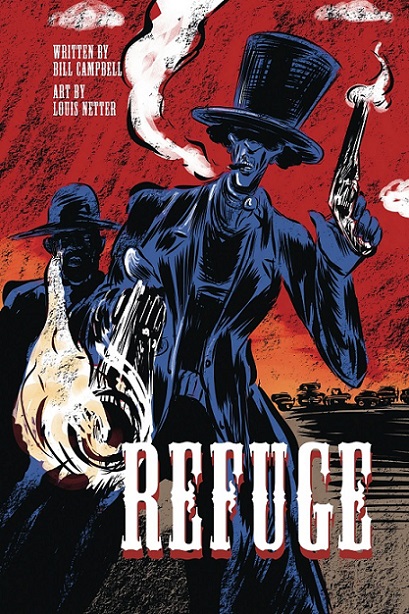
The names of some places just promise too much, like Garden City. That is even more true of the town “Refuge.” It was founded as a community of freed slaves in the “Indian Territory” of Oklahoma, but it was never a very safe place to be, even before the ominous preacher arrives in Bill Campbell’s graphic novel Refuge, illustrated by Louis Netter, which goes on-sale today.

Sheriff Desi Leans is sort of the leader of Refuge, but it is a very decentralized community. Nevertheless, he brokers a truce with the Testimony Gang, a band of former Buffalo Soldiers that had formerly waged war against the Native tribes. However, their real leader is the loftily-named Prester John, a fire-and-brimstone minister in the tradition of Charles Laughton's 
Night of the Hunter.

Like it or not, there will be a war-waged for the soul of Refuge. There are those who believe in the values the town was founded on, but the underlying tensions between the former slaves and the tribes of the territory are too easy to exploit.

Essentially,
Refuge is an ambiguously weird western and a massively revisionist one that empties both barrels into the Manifest Destiny mythology of the frontier. That is all fine, but the narrative unfolds rather slowly, in a strangely talky fashion. This is particularly frustrating given the frequent difficulty in reading the lettering (at least as reflected in the digital gallery). The characters are also too thinly drawn. Readers will have trouble recalling any personal details about Leans or his deputy, Gay Day, beyond their immediate functions.

Monday, February 13, 2023

Davy Chou’s Return to Seoul

Why is "globalization" such a dirty word, to both the far left and far right? Isn’t it nice to have a film directed by a French-Cambodian filmmaker, starring a French-Korean thesp, shot on-location in South Korea and Romania that was submitted for the International Oscar by Cambodia? Of course, it is, when it is a good film. Ironically, the French-Korean adoptee of Davy Chou’s film might be the most critical of international interconnectedness, even though she becomes quite adept at mediating between cultures and countries. Finding her roots and her identity is a fraught process in Chou’s Return to Seoul, which opens this Friday in New York.

Frederique “Freddie” Benoit was adopted by a loving French couple during the height of the Korean adoption boom. Many adoptees return in hopes of finding her birth family, but Benoit initially kids herself into thinking her trip was a spur of the moment lark. Therefore, she did no advance preparation, which could have facilitated the process.

Nevertheless, sufficient formalities are settled, allowing the adoption center to contact Benoit’s birthparents, by antiquated “telegram,” so as not to be intrusive. It will be their choice to contact her, which her guilt-wracked father does so, immediately. Having separated, he and her mother seem to be a very different minds, because Benoit waits in vain for the unknown woman to call.

Indeed, very little of this first trip could be described as “storybook.” Instead of a tearful reunion, Benoit is put off by her birth-father’s awkward attempts to reconnect and his blubbering displays of emotion. As a French hipster, she has no intention of moving in with his family or letting him find her a husband. Frankly, she becomes rather dismissive, even though her new French-speaking Korean friend Tena somewhat softens her harsh words when translating for them.

Things change somewhat when she returns two years later. Instead of a French hipster, she assumes the role of a Korean hipster. Again, we meet a very different Benoit two years after that, when Benoit returns to Seoul once again, this time partly for business, now that she has one of the coolest jobs ever: international arms dealer. Don’t freak out. Benoit and her boss Andre only broker deals with governments that should have the latest advanced armaments, exactly like the Republic of Korea (ROK).

One thing is certain: Freddie Benoit is no cliché. Chou and visual artist-first-time-thesp Park Ji-min made great efforts to avoid most of the obvious sexualized or sentimentalized stereotypes. Frankly, Benoit can be exhausting to spend time with, but Park vividly projects a sense of the resentments and conflicting emotions bottled up inside her. It is an unusually complex and challenging performance.

The Other Fellow: The Men with a Spy’s Name

In 1966, a talented jazz and blues bassist recorded an album of Bond themes. He had more right than anyone to indulge in such a gimmick, because his name was Bond, Jimmy Bond. Sadly, he is not covered in this documentary about Bond namesakes.  As usual, jazz musicians get overlooked by the media. However, there are still some interesting stories in Matthew Bauer’s The Other Fellow, which releases this Friday in theaters and on VOD.

Most of Bauer’s interview subjects say their name can be both a curse and a blessing. For many, it is more of a curse. Yet, some at least one gent actually changed his name to “James Bond.” That would be the Swedish James Bond, whose Bond obsession was partly motivated by a resentment of the father who abandoned his family.

It turns out the James Bond name can be a real drag when you get pulled over by the cops. It is a real bummer when you are a “James Bond” wanted for murder in South Bend, Indiana—especially if you happen to be another James Bond living in South Bend, even more so when you work with a non-profit that helps disabled children experience hunting, with live firearms. It is definitely a name that stands out and amplifies unfortunate situations.

Yet, the most powerful sequences in
Other Fellow involve a battered mother, whose relation to the Bond name is not immediately evident. It is a harrowing story, but her resilience and cleverness is edifying. For the most part, Bauer focuses contemporary Bond namesakes, so there is no Jimmy Bond (even though he is quite notable, having recorded with Chet Baker, Nina Simone, and Sonny Terry & Brownie McGhee).

Man from U.N.C.L.E.: See-Paris-and-Die Affair, Featuring Jimmy Bond

Believe it or not, James Bond appeared on The Man from U.N.C.L.E. twice—sort of. In the reunion TV movie, The Return of the Man from U.N.C.L.E., George Lazenby played an English super-spy simply referred to as “James,” so as not to risk violating any copyrights or trademarks. Before that, the real Bond appeared on the series at the height of their popularity. That would be Jimmy Bond, the jazz and blues bassist, who recorded a version of the shows theme with a group of session musicians billed as “The Gallants.” That made them the perfect combo to back-up an American jazz vocalist recruited to infiltrate ring of diamond thieves in the “See-Paris-and-Die Affair” episode of The Man from U.N.C.L.E., which was not cover in the upcoming James Bond namesake documentary, The Other Fellow.

The Van Schreeten cousins didn’t just steal diamonds from the syndicate. They stole so many, the cartel is forking out monthly payments to stop them from dumping them on the open market to crash prices. Understandably, this has attracted the attention of both U.N.C.L.E. and Thrush. The Van Schreetens think Corio is their henchmen, but he is actually an undercover Thrush agent. Solo and Kuryakin need their own insider, so they recruit Mary Pilgrim, an American jazz vocalist.

It turns out Pilgrim is now studying opera, but Max Van Shreeten does not know that. He has carried a torch for her since they dated in college. Now that he is flush with cash, he bought a Parisian club to win her back. That is a lot for Pilgrim to take in, but Solo will charm her into cooperating.

That is indeed the Gallants accompanying at Van Shreeten’s her on “It’s a Most Unusual Day.” It isn’t a great feature spot for Kathryn Hays portraying Pilgrim, but the Gallants (also including the great jazz pianist Gerald Wiggins) also contribute some jazzy instrumental themes. Hays hogged most of their screentime, but at least they are credited by name at the end. After all, they were appearing to promote their official
Man From U.N.C.L.E. theme recording.

Sunday, February 12, 2023

Vampus Horror Tales

In anthology movies, the host is the most important part. In this case, Vampus is less macabre-looking than Tales from the Crypt’s Crypt Keeper (just barely), but the grave digger does similar work. Unlike most anthology framers, Vampus also ranks up a significant body-count of his own in Vampus Horror Tales, which releases Tuesday on VOD.

Vampus hates it when people call him Mr. Fettes, maybe because it is weird to be named after James Bond’s boarding school. Regardless, those like the obnoxious YouTuber touring his cemetery usually wind up dead. Vampus’s segments are the best parts of his film—by far—whereas the constituent tales are a rather mixed bag
 (but they all share consistently stylish black-and-white cinematography).

It starts with a pretty good one, “La Boda,” directed by Manuel Martinez Velasco, in which a bride and one of the groomsmen find themselves stuck in a nightmarish time-loop. It is still a horror story, rather than science fiction, as you can tell from the blood on their clothes.


Perhaps the best self-contained tale is Erika Elizalde’s “Cumpleanos,” essentially a mini slasher film evocatively set in a carnival funhouse, whose various attractions pay homage to classic horror films. Montse Pla and Dunia Rodriguez are surprisingly fierce as the two women on the not-so romantic ride.

“Segunda Cita” starts as a promising riff on
Wait Until Dark, wherein the blind Margot realizes her new boyfriend is a psycho, who isn’t wearing pants. Unwisely, she agreed to join him for a weekend at his remote summer house, where he intends to kill her. Director Isaac Berrocal sets it up nicely, but turns out disappointingly conventional.

Saturday, February 11, 2023

The Reading, on BET+

Most movie psychics are either scamming frauds or the tormented real deal. Sky Brown is the worst of both. She can genuinely connect with the dead, who then become very angry when they see Brown and their friends conning their loved ones out of money. It is getting harder to keep them at bay, so Brown wants out, but she agrees to one last high-paying job in Courtney Glaude’s The Reading, produced and “presented” by Lee Daniels, which is now streaming on BET+.

Emma Leeden just barely survived the violent home invasion that left her husband, teen daughter, and young son brutally murdered. She is truly a survivor, who is currently promoting her empowering memoir. To spur sales, Leeden’s publicist hires Brown’s crew to stage a reading with her. Gregory, the ringleader of their scam knows Brown is having a spiritual crisis of sorts, but he high-pressures her to agree anyway.

Of course, Leeden and her publicist assume Brown is a fraud, so they are pretty surprised when she starts telling Leeden things they did not previously leak to her. Then all heck breaks lose and Brown finds herself trapped with friends in Leeden’s smartly-secured, bullet-proofed McMansion.

The Reading
has a big twist that is surprisingly effective if you do not see it coming—so this should be the only review you read. It turns into a very different kind of horror movie, but the ending implies a promise of a sequel that might be more in line with what Glaude initially presents The Reading to be. Regardless, he nimbly helms the film, pulling off the big shockeroni and then directing all the traffic of the resulting chaos.

Friday, February 10, 2023

Consecration, Starring Danny Huston

This troubled convent sits amid the only independent land in Scotland—because it is owned by the Vatican. However, being reasonable people, the Church still allows the local police to investigate a brutal murder-suicide committed there. They even open their doors to Grace O’Rourke, whose brother allegedly killed a priest, before taking his own life. Skeptical of their story, she is determined to uncover the truth in Christopher Smith’s Consecration, which opens today in New York.

O’Rourke and her brother Michael endured a harrowing childhood, but they went their separate ways in adulthood. She is an outspoken atheist optometrist, while he was involved with rigorously devout Catholic sect. She therefore refuses to believe Michael killed himself. Sure enough, she uncovers inconsistencies in the handing of his body that lead directly back to the severe Mother Superior.

That does not sit well with Father Romero, who is visiting from the Vatican to re-consecrate the chapel. He is not amused with the Mother Superior’s questionable initiative, but he also seems to have his own agenda. Nevertheless, he encourages O’Rourke to keep digging, including research into the convent’s colorful crusader-era history.

Smith clearly took a great deal of inspiration from films like
Mother Joan of the Angels, because he revels in similar imagery of prostrate nuns. As Kawalerowicz, Smith and co-screenwriter Laurie Cook convincingly suggest the distinction between devotion and madness is sometimes difficulty to draw. However, like any halfway effective demonic thriller, Consecration leaves us with the unsettling understanding that evil, as understood in Biblical terms, is something that is tangibly real.

Nevertheless, Smith is no William Peter Blatty, either in his capacity to get under viewers’ skin or his faith in the Church to combat the forces of darkness. Frankly,
Consecration is about as anti-Church as a religious horror film can get and still function to any degree.

Daughter, Starring Casper Van Dien

Four years ago, the menacing unnamed “Father,” who refuses to allow his family outside their modest country home, would have been considered abusive and borderline psychotic. Then, for two and a half years, the media would have considered him a model parent. Now, hopefully he is back to being a sinister creep. Regardless, kidnaping his improvised family would have always been illegal, but it is questionable whether he would be prosecuted in the current Bragg-Gascon-Boudin era. Indeed, his latest abductee is pretty much on her own in Corey Deshon’s Daughter, which releases today in theaters and on VOD.

We see what happened to “Sister’s” predecessor when she tried to run away. It isn’t pretty. Of course, Father guilt trips “Mother” for not preventing it, because he is a stone-cold manipulator. To replace her, he abducts the a new “Daughter,” to act as the “Sister” to “Brother,” whose well-being seems to be Father’s motivation for everything.

Apparently, the sickly Brother has been brainwashed into believing some kind of disaster has rendered the outside atmosphere unbreathable. For some reason, Father is raising Brother to believe he is the only hope for saving the world. However, he is sickly and therefore requires the sheltering attention new Sister will help provide. Brother is a little off too, but not in a menacing way. He is not likely to deliberately betray her, but Daughter just cannot trust Mother, a long-term captive resigned to her circumstances, despite their shared heritage and Vietnamese fluency.

Thursday, February 09, 2023

Sharper

Nobody ever made much money from a bookstore, especially one with a literary bent. It is therefore a little confusing when a film about con artists and grifters initially spends so much time with Tom, a mild-mannered bookstore owner. However, we eventually learn he has a complicated backstory. So does everyone else in Benjamin Caron’s Sharper, which opens in theaters tomorrow, before hitting Apple TV+ a week later.

Tom was leading a quiet life until Sandra came into his store, looking for a suitable copy of Zora Neale Hurston. As their relationship progresses, they seem perfect together—maybe a little too perfect. Eventually, we will flashback to Max, a grifter (or sharper) preparing for a big score. He often works with his somewhat older lover Madeline, but in the scam we see unfolding, he pretends to be her son. That definitely gives the film a similar vibe to Stephen Frears’
The Grifters, but that certainly isn’t a bad thing.

It is hard to reveal much more than that without getting spoilery. As fans of films in the tradition of
The Sting would hope and expect, there are a lot of cons within cons going on. Frankly, it is pretty easy to guess the final third act twist, but it provides the payback viewers will be hoping for, so it is still fun to see how it is accomplished.

Julianne Moore is terrific as Madeline. She is some kind of femme fatale. According to press reports,
Sharper also represents the first time in fifteen years she has held a firearm on-screen, so lets all welcome her back to the entertainment industry. Opposite her, Sebastian Stan does some of his best work yet as the spectacularly snake-like Max. Justice Smith provides a grounded counterpoint as the naive and impractical Tom, while the great John Lithgow is as compulsively watchable as ever, playing billionaire Richard Hobbes (obviously, he must be one of the marks, since he is a billionaire).

Disquiet

Sometimes, you get worse in hospitals, because that is where all the sick people are. That is especially true of hospital movies that have ominous titles, like Inoperable or Fractured. Hold onto your proof of insurance, because a fresh accident victim is about to check into director-screenwriter Michael Winnick’s Disquiet, which opens releases tomorrow on VOD.

Sam was broadsided by a drunk driver, but he wakes up in intensive care feeling relatively okay, except for the coma patient who keeps trying to strangle him. The crazy old man just keeps coming, but this doesn’t feel like a zombie apocalypse. Yet, that is the best guess Monica can come up with. She is the first normal acting fellow patient Sam comes across. She went in for elective cosmetic surgery and woke up with three weird harpy-like psychopaths trying to kill her.

For some reason, the hospital is completely shut off from the world. There are several crazies roaming the halls, but they get sane-sounding, but contradictory advice from the eerily calm, but wheelchair-bound Virgil and the intense Dr. Lily. He recommends going up to the roof to try to find a cell signal, whereas she argues they should try to exit through the lower parking levels.

The big fantastical thing going is indeed not unlike that of the aforementioned
Inoperable and Fractured. In this case, Disquiet is better than the latter, but not as good as the former. The time-looping of Inoperable were surprisingly intense, but the bickering contrast between Virgil and Dr. Lily definitely elevates Disquiet above Brad Anderson’s disappointing Netflix film.

Wednesday, February 08, 2023

She Came from the Woods, Starring William Sadler

"Good" people are usually bad in horror, like “Goodey” Brown in “Young Goodman Brown.” Nurse Agatha Good is even worse. She is dead, but not dead enough, especially after the foolish teen counselors at Camp Briarbrook raise her malevolent spirit during their season-ending party. That kind of “Bloody Mary” business never ends well. It ends really badly in Erik Bloomquist’s She Came from the Woods, which opens this Friday.

Years ago, Heather McAlister was a camper at her father Gilbert’s camp, when the camp nurse, Agatha Good, did some rather terrible things to the kids, including Heather. Old Man McAlister thought he had fixed Nurse Good permanently, but the legend of Agatha and her possession of the kids persisted, handed down from camper to camper. Every year, Heather’s slacker son Peter tries to invoke Good during their annual closing night blowout. This time around, Peter has them sweeten the deal with a little needle stick—wounds for Nurse Good to tend to—which she does in her horrifying way.

The basic idea of
Came from the Woods is not entirely unprecedented, but the execution is definitely energetic. The press copy might also be over-selling it as a “horror comedy,” but a lot of the dialogue, especially that of the rowdy counselors, has a snappy Kevin Williamson-esque edge. In fact, Dylan, the borderline delinquent counselor is spectacularly awful and loathsome, like the horror film equivalent of a Seinfeld character.

Bloomquist and his co-screenwriter brother Carson Bloomquist start by somewhat zigging instead of zagging by making their camp-bound horror yarn supernatural in nature, rather than focused on a slasher. They continue adding small but clever wrinkles to the tale of undead witchery and zombie-like possession, which keeps the film fresh.

Whisper of the Heart (2023) Live-Action

They are making lame live-action remakes of beloved Disney animated films, so why shouldn’t Ghibli classics get the same treatment? In this case, they go back to the original source manga for an ostensive sequel that is about as faithful as the acclaimed 1995 film written by the great Hayao Miyazaki. In this case, the new film might even be sweeter and more sentimental than the Ghibli animation. However, young love still never runs smooth in screenwriter-director Yuiichiro Hirakawa’s Whisper of the Heart, which is now playing in New York.

Supposedly set ten years after the events of the Ghibli film, Hirakawa once again separates Shizuku Tsukishima and Seiji Amasawa, but this time it is for ten long years. Amasawa is perfecting his musical chops in Italy, while Tsukishima works as a junior editor, while collecting rejection slips for her own writing. From her perspective, Amasawa is living his dream, but she hardly knows, since she has not seen him in ten years and they rarely talk. Nevertheless, he still considers her his girlfriend—even though she does not know that for certain.

As the two young lovers struggle with their relationship and their own day-to-day frustrations, Hirakawa flashes back to the events from high school that fans will know. The Baron, the cat statuette in the curio shop owned by Amasawa’s grandfather, definitely gets his screentime, but he never walks around talking, like he does in Ghibli’s meta-sequel,
The Cat Returns.

This
Whisper of the Heart is lovely to look at and sweet as Shoo-fly pie. It is also overly melodramatic and inescapably inconsequential. Yet, perhaps most importantly, it never disrespects the spirit of the original film, so fans who want to revisit the two lead characters in a different context can do so without fear their childhood memories will be violated.

The Flash (CW) Season 9 Premiere: Wednesday Ever After

As a society, we are more diligent about vetting prospective Jeopardy hosts and superhero actors than presidential candidates. Maybe if the media that has spent so much time digging into Jeopardy’s Mike Richards and Ezra Miller had devoted a little more attention to Biden’s Afghanistan plans (or lack thereof), we could have avoided a humiliating debacle. So, what if the next movie Flash will be played by a weirdo with legal problems? Still, moralizing fans have a point: there already is a perfectly competent TV Flash. Season Nine might be the end of the line for his series, but the season premiere happens to stand alone relatively sturdily. It is time to do the time loop again in “Wednesday Ever After,” which premieres tonight on the CW.

Evidently, The Flash and his wife, Iris West-Allen, survived a lot of crazy time-related chaos in the previous season, so they have just finished a week of recuperation. Of course, the series’ new super-villain, Captain Boomerang, choses this inopportune time to strike. However, his nuclear shenanigans inadvertently trap The Flash and West-Allen together in a time loop.

There have already been a whole heck of a lot of time loops in film and television, including recently the “Leap, Die, Repeat” episode of
Quantum Leap. However, “Wednesday” still manages to come up with some fresh wrinkles. In fact, it rather effectively uses the loop to contrast the married couple’s very different approaches to the future. Allen has meticulously assembled all his notes from the future into a blueprint for their lives together, whereas West-Allen steadfastly insists on the right to make her own choices—sort of the super-heroic time-travelling version of the free will versus predestination debate.

Tuesday, February 07, 2023

A Woman Kills, Music by Bernard Vitet

This film could have been an inspiration to the New French Extremity and other fringe Francophone filmmakers, but it was discarded prior to its completion due to filmmaker Jean-Denis Bonan’s prior difficulties with French film censors. How cult could it have been? Consider this: erotic vampire auteur Jean Rollin has a small role as a cop. For real film lovers, it is fascinating to finally watch it, but it arrives at a precarious time, given its provocative subject matter. Ready or not, Bonan’s A Woman Kills releases today, in all its raw glory, as a limited edition BluRay.

Helene Picard has been executed for the murder of a young street woman, but rather embarrassingly a fresh body has turned up, killed in an identical fashion. Picard seemed like a logical suspect, because she had a long history of anti-social behavior—awkwardly including lesbianism. Yet, it certainly seems it wasn’t her.

The cops are baffled, but the minister of justice still assigns his assistant, Solange Lebas, to investigate Louis Guilbeau, a ministerial bureaucrat exhibiting alarming signs of paranoia. At first, she suspects he is mad as a hatter, but somehow Guilbeau still manages to seduce her. Perhaps, they share an affinity as children of Algerian Colonialists (which was highly significant for a film made in 1968).

A Woman Kills
is vintage anarchist cinema through and through, especially the instrumental soundtrack composed by French Free Jazz pioneer Bernard Vitet. If nothing else, the way Vitet’s roiling discordant score mirrors the characters’ disturbed state of mind perfectly illustrates how horror movie makers have been missing the boat on Free Jazz.

Arguably, Bonan’s film is even more subversive now than when it was shot. It should be quite a site to see critics twist themselves into pretzels addressing aspects of
A Woman Kills, for many of the same reasons they are so uncomfortable discussing De Palma’s Dressed to Kill, particularly because of the way both films present transvestism.

The Flash (1990): Beat the Clock

Before Wakanda, Angela Bassett had an early career appearance in one of the various DC universes, playing true royalty: a jazz vocalist partly inspired by Billie Holiday (judging by the flower she conspicuously wears in her hair). Linda Lake is also presumed to be dead, murdered by her tenor player husband, Wayne Cotrell. However, she is alive, secretly held captive by her brother-in-law producer. Barry Allen, avid jazz listener, CSI tech, and secretly the Flash, has less than an hour to find her before Cotrell’s execution, but fortunately he is as speedy as ever in the “Beat the Clock” episode the original series The Flash, worth revisiting in light of Bassett’s Oscar nomination and tomorrow night’s season premiere of CW’s The Flash.

Allen is the jazz fan, whereas his colleague Julio Mendez is not, but he knew Cotrell from the old neighborhood, so he never accepted the guilty verdict. An hour before his date with the electric chair, Allen takes a message from another jazz musician, Dave Buell, asking him to tell Mendez he has a tape that will prove Cotrell’s innocence. Unfortunately, the bad guys get to him while he is still on the line. By the time the Flash gets there, Buell is gone, but he finds the smashed tape, which their CSI colleague Christina McGee tries to reconstruct.

As The Flash snoops around Elliott Cotrell’s jazz club, he discovers the producer has secretly held Lake doped-up, somewhat bringing her out of it from time to time, so she can record “newly discovered” sessions. Unfortunately, Cotrell’s muscle, a former vocalist known as “Whispers” might have the drop on the Flash’s CSI team.

For jazz fans, it has been amazing to see how many vintage recordings have been posthumously discovered (like the Mingus Cornell 1964 concert, just as an example). “Beat the Clock” offers a rather nefarious explanation for the proliferation of “new” recordings from deceased artists. This episode never drops any real jazz names, but it suggests a reasonable level of familiarity with the music. It also has a very cool neon noir look going on, reminiscent of Warren Beatty’s
Dick Tracy movie, which released about six months before this episode first aired.

Monday, February 06, 2023

Accident Man: Hitman’s Holiday, on DVD

Mike Fallon is a talented fighter, but his preferred method for assassinations is arranging “convenient accidents” that the police never investigate with much thoroughness. It therefore makes sense that he would live to see another day of misadventures after the carnage of his first movie. It turns out Malta is a great place for a hitman to work, given its handy proximity to Europe, the Middle East, and Northern Africa. However, trouble still finds him there in the Kirby Brothers’ Accident Man: Hitman’s Holiday, which releases tomorrow on DVD.

Fallon still feels bad about killing all his colleagues in Big Ray’s hitman guild during the first film, but what can you do? What’s done is done. He wanted to lay low in Malta, but he soon found himself busier than ever. That is hardly surprising, considering former Maltese Labour Party Prime Minister Joseph Muscat (or his associates) hired a hitman to assassinate investigative journalist Daphne Caruana Galizia. Talk about a friendly business environment—for hired killers.

Still, Fallon carries a heavy load of guilt over what happened. Technically, he was the good guy, saving his ex, but there is no getting around the fact he killed a lot of his friends. That is why he is uncharacteristically welcoming when his old mate, tinkering hitman Finicky Fred shows up in Valetta, looking for the internet girlfriend (whom Fallon assumes scammed him). Soon, they are teaming up on jobs, until Mrs. Zuzzer, a legendarily ruthless crime family matriarch kidnaps Fred. If Fallon wants him back, he will have to eliminate all the international assassins who have accepted the non-exclusive contract on her idiot son Dante, awkwardly including Big Ray. Ordinarily, Fallon would tell her to go pound sand, but that guilt still has a hold on him.

Like the first film,
Hitman’s Holiday is a terrific showcase for Scott Adkins’ martial arts skills. He also shows off solid comedic chops, but never at the expense of the action. To Adkins’ credit, generously shares the screen with Sarah Chang, who definitely deserves breakout action stardom for her work as Wong Siu-ling. Essentially, Fallon has hired her to be like Burt Kwouk in the Pink Panther movies, attacking him once a week to keep him sharp. Of course, they team-up against some imposing martial artists and a psychotic killer-clown, who can’t feel pain.

Quantum Leap: Let Them Play


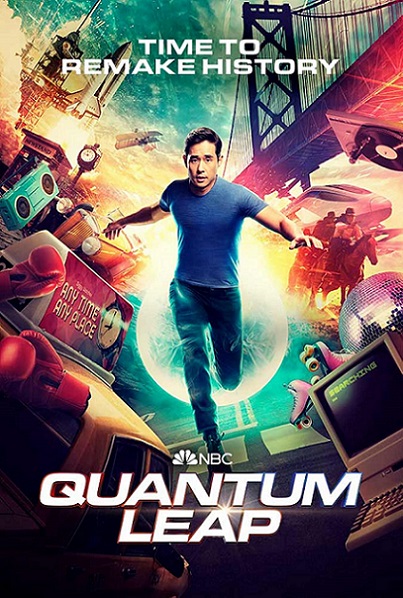
Star Trek was remarkably clever in the ways it addressed current social issues of its time in a science fiction context, without seeming to. That was almost sixty years ago, but a lot of TV writers working today can clearly still learn lessons from that show. In contrast, almost every line of dialogue blatantly tries to teach viewers a lesson in “Let Them Play,” this week’s episode of Quantum Leap, which airs tonight on NBC.

Sunday, February 05, 2023

Silverpoint, on BYUtv


Kids vanish from camps all the time in TV series and movies (looking at you Camp Crystal Lake). The weirdly similar sounding Camp Silverpoint is a little different. Four kids reportedly disappeared in the nearby woods twenty-five years ago, before Bea’s parents, Daniel and Steph, established their summer camp. Every year, they sternly insist the campers never venture outside the perimeter fence. Of course, that is where the group of camp misfits finds the “artefact” that causes all the chaos in creator Lee Walters’ 13-episode Silverpoint, which premieres on BYUtv today.

Kaz is a rebellious foster kid, who tries to run away from Silverpoint. Not wanting to get in trouble, the rest of her “Dragonfly Tribe” follow after her. Louis is the sci-fi geek. Kaz is the pudgy South Asian kid and Meg is scared of everything. When they catch up with Kaz, they stumble over the thing. First, they pick up on the energy that seems to surround it. Then they discover it has the power to transmit matter.

Despite their issues and mistrust, they are all sufficiently intrigued to agree they will revisit and study the artefact. They are all acting so weird, Bea starts to suspect they are up to something. It is not easy being the daughter of the camp counselors. Nevertheless, she has gotten close to several returning campers. Unfortunately, she just discovered her friend Alice has been secretly hooking up with Finn, her not so-secret crush. As a result, she might be in the mood for a new circle of friends, like the clearly smitten Louis. However, the Dragonflies are determined to keep the artefact a secret between themselves, especially when they start experimenting with its matter transference. Unfortunately, they are not the only ones keeping an eye on the thing.

If a lot of sf fans had seen
Silverpoint when they were twelve, it probably would have been their favorite show. It is still possible to watch Silverpoint a vicariously appreciate its youthful sense of camaraderie and mystery. Waters and a battery of co-writers smoothly incorporate a whole lot of genre motifs, including Men in Black, “big dumb objects,” time travel, “the Matrix,” and matter transference in a brisk, engaging narrative.

Each half-hour (if that) episode advances the story considerably and ends in a cliffhanger, while still nicely developing nearly dozen characters. It is definitely economical story-telling. A few of the visual effects are also economical, in the wrong kind of way, but for older viewers, that gives it further nostalgic appeal (remember, the BBC original conceived
Doctor Who as a children’s show).

Saturday, February 04, 2023

Murf the Surf, on MGM+

The great controversy of Jack Roland Murphy’s life remains whether his prison conversion to Christianity was legitimate or opportunistic. Documentary filmmaker R.J. Cutler fully explores that question, but ignores the second lingering debate surrounding Murphy: should his nickname be spelled “Murf the Surf” or “Murph the Surf.” Either way, he led a colorful life and largely succeeded reinventing himself on multiple occasions. Cutler documents his life and crimes in the four-part Murf the Surf: Jewels, Jesus and Mayhem in the USA (with an “f,” but troublingly, no Oxford comma), which premieres tomorrow on MGM+.

Murphy was the ultimate Florida criminal of his time, who probably helped pave the way for
Miami Vice and Carl Hiaasen novels. He was a champion surfer (eventually inducted into the Hall of Fame), who developed a lucrative side-gig as a jewel thief (which quickly became his main line of work). He and his buddy pulled off the infamous theft of the Star of India from the American Museum of Natural History, more or less as an improvised lark. When they were arrested for the crime, their good looks and cool demeanor made them media sensations.

The Star of India heist was later dramatized in the 1975 movie
Murph the Surf (with a “p” and “h”), which Cutler and company scrupulously ignore. (It obviously could not encompass Murphy’s second act conversion, but Phillip Lambro’s jazzy soundtrack, featuring Bud Shank and Buddy Collette, grooves nicely.) It is rather convenient to end Murphy’s story when it did, but the truth is, he found himself serving a life-sentence for murder. According to the jury, Murphy and his accomplice Jack Griffith viciously killed Annelie Mohn and Terry Rae Frank in what became known as the infamous “Whiskey Creek Murders,” because they threatened to expose a stolen securities racket they were all involved in.

That temporarily put a damper on Murf/ph’s legend, but he managed to reinvent himself as a prison convert and outreach minister. It will surely be “triggering” for a lot of insecure people to see Rev. Pat Robertson show up in the docu-series, but like him or hate him, he really did do a lot of prison ministering. Maybe he was taken in by Murphy, or maybe not, but Robertson was one of many faith leaders whose testimonials helped Murf secure an early parole.

Friday, February 03, 2023

M. Night Shyamalan’s Knock at the Cabin

Supposedly, groups of four have power, like the Beatles, Seinfeld cast-members, Horsemen of the Apocalypse, and the home invaders of M. Night Shyamalan’s latest film. For the latter, that might not be a coincidence. The creepy foursome is obsessed with Armageddon, but they claim they want to avert doomsday rather than herald it. Their proselytizing techniques could use some work, but their conviction is intense, as a vacationing family learns in Shyamalan’s heavy-handed Knock at the Cabin, which opens today nationwide.

Little Wen was enjoying her cabin holiday with her two dads, Eric and Andrew, until the hulking Leonard showed up. His demeanor is gentle, but in an ominous way. However, his three friends with their Medieval-looking makeshift weapons are obviously bad news, especially the mean-spirited Redmond. They explain they have come to offer the tight-knit family a Sophie’s Choice from Hell, with the fate of humanity depending on their answer.

Supposedly, the four intruders were rather surprised to discover the two men were a gay couple (who pretended to be brothers-in-law while adopting Wen in homophobic China). That must be especially true of Leonard, since he is played by Dave Bautista (who removed a tattoo of Manny Pacquiao tattoo, because of the boxer-turned-politician’s unfortunate comments on same sex couples). However, Andrew, the lawyer and a former victim of an intolerant attack, is not so sure. Regardless, he is extremely skeptical of the trespassers’ crazy apocalyptic talk.

With
Cabin, Shyamalan’s forgoes his signature big twists, adopting a “binary” approach. Either it is or it isn’t. Andrew is sure that it isn’t, whereas Eric is maybe starting to entertain their outlandish claims, perhaps partly due to his concussion. There will be no third alternative, arriving out of left field, which makes the ending so disappointing. It just proceeds in an orderly straight line from the original premise, with no deviations.

Thursday, February 02, 2023

The Amazing Maurice, Terry Pratchett Animated

In some ways, Terry Pratchett was a more up-scale Piers Anthony, who created a funny fantasy world that satirized genre tropes (he had a solid fandom here, but nothing like his popularity in the UK). Technically, this big orange cat is part of his Diskworld universe, but you do not have to be familiar with any of those books to appreciate his fairy tale misadventures. The Pied Piper legend gets mashed-up and riffed on, but the rats themselves are his friends, at least the talking ones are, in Toby Genkel’s animated The Amazing Maurice (with Florian Westermann also credited as “co-director”), which opens tomorrow in New York.

Maurice acts as the advance-pitch-man for the Pied Piper scam he worked up with Keith, the naïve human piccolo player, and their talking rat friends. Needless to say, his piping always manages to lead the rats out of town—for a fee. The rodents became conscious and gained the ability to talk after munching the trash thrown out by the Unseen University, a school of wizardry that will mean something to Pratchett fans. How Maurice gained that ability too is an awkward subject he tries to avoid.

After their latest Piper-scam, Maurice and Keith enter a town that mysteriously has no rats. It is also depressingly low on food. Somehow, the shadowy Rat Catchers League seems to be involved. The mayor’s daughter is Malicia is determined to get to the bottom of things. She is an avid reader with a thirst for adventurer, so she takes her discovery of Keith’s talking animal friends in stride. However, her fairy tale binging may have built-up unreasonable expectations for heroics that Keith will have difficulty fulfilling.

The Amazing Maurice
is definitely Shrek-like. It was even adapted by Shrek franchise screenwriter Terry Rossio. Indeed, Genkel’s animation is colorful and unflaggingly energetic, while the humor is mischievously droll. Yet, it is hard to overstate how much Hugh Laurie’s roguish voice performance enriches the film. Thanks to him, there’s no mistaking Maurice for Garfield.

Baby Ruby: Another Infant Monster (sort of)

For Josephine, the lifestyle influencer, pregnancy is just another way to show off her elegance. However, when her new-born daughter arrives, she will learn the hard way who is the real center of attention. It turns out babies are demanding little crying machines. Schizophrenic post-partum depression gets dressed up as a horror movie in director-screenwriter Bess Wohl’s Baby Ruby, which opens tomorrow in New York.

For “Jo,” pregnancy has been all about smug Instagram posts. However, during childbirth, she feels like her “fetus” is actively trying to hurt her body. The delivery is exhausting, but her first days at home are even more draining. She experiences flashes of paranoia (did her husband Spencer really put Ruby in a boiling pot? Answer: no). Ruby’s constant crying means Jo gets even less sleep than her infant. Spencer and his pushy mother Doris try to be patient, but they just don’t get it. She turns to a local mommy circle for support, but they are weirdly Stepford-ish, including the creepy-friendly Shelly.

In many ways,
Baby Ruby is a perfect example of what is wrong with the horror genre, as it is now being defined. In this case, Wohl is too busy exploring the uncomfortable dark side of motherhood to take care of genre business. Frankly, Baby Ruby is often rather dull, because we are constantly cued to doubt Jo’s perspective.

Post-partum mental issues are a serious topic, but they are not done justice here. The subversive examination of the new motherhood experience, which is clearly the film’s reason for being, is hardly original. Ray Bradbury staked out this territory in his 1946 short story “The Small Assassin,” (nicely adapted in a short film and Bradbury’s own anthology series). Plus, there are numerous films like, you know,
Rosemary’s Baby.

Wednesday, February 01, 2023

Shtetlers, Documenting Jewish Communities

They were surrounded by a healthy spirit of community and crushed by sinister ideologies. The Jewish villages known as Shtetls that were once spread throughout Russia and former Captive Nations like Ukraine and Moldova hardly exist anymore, but they are still remembered. Documentarian Katia Ustinova records the memories of former shtetl residents and their Orthodox neighbors in Shtetlers, which releases this Friday on VOD.

In many cases, the modest homes are still there, or at least their remnants. Ustinova talks to several remaining neighbors, like the haberdasher, who apprenticed under a Jewish craftsman, whom he still reveres. Watching
Shtetlers somewhat contradicts the notion that Shtetl residents faced constant, unremitting antagonism from their gentile neighbors.

This is particularly true of Vladimir Gorbulsky, whose Orthodox mother saved dozens of Jewish neighbors during WWII. Now a convert to Judaism, his visit to Yad Vashem, where his mother is memorialized, is one of the film’s emotional highpoints.