Monday, November 06, 2006

Vote Tomorrow

Morning after update (11/8): It was a bummer, but we lost. Maryland was a particular heartbreaker. The good news is some weak candidates squeaked through in circumstances unrelated to their qualifications. Now is the time to start recruiting and campaigning for 2008. In the meantime, sit back, chill to some jazz and blues (look for some recommendations here, starting with Billie Holiday above) and enjoy the next two years of impeachment hearings.

Nothing new will be going up tomorrow, and frankly you should not be in front of a computer screen tomorrow anyway. There are plenty of worthy campaigns that will need help, once you’ve voted. Here’s a quick recap of the coveted J.B. Spins endorsements:

Here in New York, we have been disgraced by our corrupt comptroller, Alan Hevesi. His opponent, Chris Callaghan is, despite what Hevesi and his loyal allies in the media tell us in unison, eminently qualified for the job. He was elected president of New York’s Association of County Treasurers and Finance officers. For twenty three years he has presided over the lowest taxed county in the state. He is endorsed by the New York Times, NY Post, and NY Sun. Unlike the incumbent, he is not being investigated by the AG’s office and the Albany DA.

Robert Heim is what Spitzer purports to be. Formerly a high ranking prosecutor with the SEC, Heim has policed Wall Street, rather than shake down high-profile, deep-pocketed marks. Having campaigned with him, I can attest Heim is smart, reasonable, and personable. He is running against an incumbent who is nearly invisible in the district, but is unfailingly obedient to the Speaker Shelly Silver in Albany.

In Maryland, Lt. Governor Michael Steele has run a pitch perfect campaign despite some of the ugliest, and arguably racist, name-calling from those allied with his opposition. If ever there was a candidate who deserved to win it is Steele, who has also brought a welcome jazz esthetic to his campaign.

In California, I have to pull for Claire Yan, a former publishing professional who now works for a think tank. As a ten year veteran of the publishing industry and having interned at a think tank, I definitely think we need more people in Congress with her intellectual background.

Rebuilding New Orleans should be a priority for all Americans, and William Jefferson is going to help anyone get anything done. Regardless of who controls Congress, Joe Lavigne will be better positioned to work with Congress, the administration, and most likely given demographic trends, a new Republican governor in 2007.

Go vote, then Get-Out-the-Vote. I’ll be back late Wed. How late depends on how bad the election hangover is.

Co-Founder’s Night

When songwriter Ann Ruckert’s friends decided to organize a tribute for her, they naturally wanted it to benefit the organization she helped found, the Jazz Foundation of America. While the ceremony was free and open to all, contributions to the Foundation were encouraged.

There was some excellent music, particularly from her co-founder Dr. Billy Taylor, who knocked everyone out with a magnificent rendition of “Lover Man.” He also took a short but eloquent solo when accompanying Genie “Pepper” Swinson on “God Bless the Child.” Criminally under-appreciated trumpeter Jimmy Owens has also been a longtime supporter of the foundation. He and Mike Longo performed a great mini-set of bop standards, like Dizzy’s “Tour de Force” and Parker’s “Billie’s Bounce,” dedicated to the good doctor. Eugene McDaniels boldly sang lyrics he had written to Coltrane’s “Giant Steps,” a tune that would seem to defy lyrical interpretation. Nnenna Freelon was the show-stopper, showing her power fearlessly on songs like “A Balm in Gilead.”

As a tribute to Ruckert organized by her friends, it is totally fair for some of her friends to talk touch on her progressive politics. Frankly, I was surprised that when Assemblyman Richard Gottfried made a remark about Democrats taking back the Congress, it only got polite applause from, I would judge, a little over half the standing-room-only audience. He seemed to be expecting a heartier reaction (as was I). Could it be the Democrat base is losing enthusiasm?

I actually like Gottfried. He is decent man who genuinely cares about his constituents, and actually participated in a debate sponsored by the TR/Gramercy Park Republican Club. He could only be elected on the Westside of Manhatttan or in Massachusetts, though. In addition to his official Assembly letterhead congratulations letter in the program, he attached a picture from 1973 of himself, Ruckert, and Ramsey Clark. I do not know if he heard, but Clark just lost a pretty big case this weekend. Granted, Gottfried could not have known when the Saddam verdict would come down when he submitted his tribute, but one would think he would have followed the case enough to lose some keenness for Clark, but whatever.

While we might disagree about politics, Ruckert seems very nice, and she helped establish a great organization that does tremendous work. Wisely, they hired Wendy as executive director, a wonderful person, who has helped thousands of musicians in need. If you did not give at St. Peter’s last night, you can do so here.

Friday, November 03, 2006

On Sunday

The Jazz Foundation of America is planning a tribute to one of its founders on Sunday. It will be a free show, but I expect there will be ample opportunities to donate (which I encourage). The details are:

THE JAZZ FOUNDATION OF AMERICA PRESENTS: A SONG FOR ANN

A Concert Produced by Ed Keane of Boston and The Jazz Foundation of America at Saint Peter's Church 719 Lexington Avenue at 54th Street (entrance on 54th Street)

Sunday, November 5th, 2006 at 7:00 PM sharp Admission is FREE

Scheduled Performers: Grammy Nominee Nnenna Freelon, Grammy Nominee Gene McDaniels, the Great George Coleman, Mike Longo, and Pepper Genie Swinson.

The evening will be hosted by Dr. Billy Taylor, Cofounder, with Herb Storfer, and Ann Ruckert, of the Jazz Foundation.

It should be a good show from a worthy organization. If you go, you might even be helped to your seat by a shadowy blogger volunteering for the Foundation.

Thursday, November 02, 2006

Congratulations NJ

Congratulations to my friends and former neighbors in New Jersey. According to Congress.org you have the 91st and 89th most effective senators. Unfortunately, that's out of 100, of course. When averaging senate delegations, Jersey’s power ranking is the second lowest in the country, edging out Arkansas by a nose. When House clout or lack there of is factored in, Jersey’s combined state ranking rises to a lofty 47.

Number 89, Bob Menendez, is up for election to his first full post-appointment term. NJ voters can vote for him, hope he’s not indicted and eventually claws his way into the mid 80’s, or cast their vote for Tom Kean, and try integrity for a change.

The Musical Odyssey of Joe Jordan


From Barrelhouse to Broadway: The Musical Odyssey of Joe Jordan
By the Paragon Ragtime Orchestra
New World Records


The list of Joe Jordan’s musical associates is long and distinctive: Will Marion Cook, James Reese Europe, Josephine Baker, and Clarence Williams. His song “Lovie Joe” made Fanny Brice a star. As an entrepreneur, he developed one of the first African-American office buildings in Chicago. Yet Jordan has largely been forgotten, likely due to the paucity of recordings under his own name. From Barrelhouse to Broadway is an excellent retrospective project recorded by the Paragon Ragtime Orchestra to give Jordan his due as an important American composer.

Jordan cut his teeth in the ragtime piano scene of St. Louis, mentored by no less a figure than Tom Turpin. Jordan’s early works, rags and syncopated waltzes, were very much a product of this environment, as witnessed by early compositions like “Double Fudge” and “Nappy Lee.” After relocating to Chicago, Jordan became a prolific composer for musical stage shows, often working with the great Will Marion Cook. One such collaboration “Sweetie Dear: An Afro-American” is a beautiful love song, performed in a light operatic style accurate to the period.

Although Jordan claimed to have never written the blues, his “The Whippoorwill Dance” and “The Morocco Blues,” performed as piano etudes by Rick Benjamin are beautiful highlights of the disc that carry at least an azure tint. “Whippoorwill” was composed for Jordan’s wife Irene, but never previously published or recorded, so its inclusion here is a real event. “Morocco” demonstrates Jordan’s adaptability as popular music was becoming more syncopated and jazz-like and also reflects the emerging “Spanish Tinge” in American syncopated music, as Jelly Roll Morton called it.

There are some historically significant songs collected here, including Brice’s “Lovie Joe” and “He’s Coming Back! Teddy Roosevelt’s Bull Moose Song,” a campaign song for the former president that exhorts: “Back to the White House from Oyster Bay … prosperity once more we will see because he’s coming back.” Evidently, Jordan was a lifelong Republican who was particularly fond of TR. According to the excellent liner notes, after retirement “Jordan spent the rest of his life in Tacoma, happily embroiled in Republican politics.” Jordan was also a patriot who enlisted in the Army at the outset of WWII, first leading military bands, then touring with the USO when forced to retire due to new age restrictions.

Clearly, the PRO and Benjamin are deeply steeped in the music of the Ragtime era, and perform as a well disciplined ensemble, one which Jordan would appreciate. Their instrumental interpretations of Jordan’s work and a rousing tribute to the composer and effectively recreate the milieu in which it was originally produced. Like his contemporary James Reese Europe, Jordan is a fascinating figure who lived an epic, even cinematic life. As Europe’s work has received fresh attention in recent years, hopefully this disc will encourage others to rediscover the music of Joe Jordan and other figures from the transitional period that bridged ragtime and early jazz.

Wednesday, November 01, 2006

Haunted Heart


Haunted Heart: a Biography of Susannah McCorkle
By Linda Dahl
University of Michigan Press
0-472-11564-2

Like British jazzman Ian Carr, Susannah McCorkle was a jazz (or jazz-influenced) artist who struggled with depression. While Carr has emerged from “out of the long dark,” McCorkle would ultimately succumb to her “black, black blues.” (p. 256) In Haunted Heart, Linda Dahl describes the tragic arc of McCorkle’s life and the music she was inspired to create.

Nobody can truly know the inner turmoil that led McCorkle to plunge to her death in 2001 but biographer Dahl documents a painful family history that clearly caused a lifetime of anguish for the vocalist. Her father and older sister, as portrayed by Dahl, arguably should have been institutionalized. Her mother Mimi was distant, overly critical, and competitive with the young Susie McCorkle. Dahl relates a childhood incident of Mimi’s mothering:

“She [Susannah] wished she could be far, far away. She was already in the habit of taking money from her mother’s purse to buy clothes; next, she began to stare at her jewelry, calculating its worth for her getaway. She was chilled, she added, when one afternoon her mother turned around, witch-like, and told her, ‘They wouldn’t get you far.’” (p. 23)

Sadly, McCorkle was poorly served by the psychiatric community late in her life, when she most needed help. However, she received a brutally accurate diagnosis from a Berkley counselor while in college: “Your family is a burning building. Get out.” (p. 36)

She did get out, living abroad for years, thanks to the financial support of her guilty parents. McCorkle had planned to pursue a career as writer, but she made a life changing discovery in Italy: recordings by Billie Holiday. As Dahl writes:

“By temperament, Susanna [as she then spelled it] was an introvert. As a writer, she was drawn to the compressed form of the short story, densely atmospheric, moody pieces. In Billie Holiday’s singing—and in the material she sang—Susanna sensed a powerful new kind of storytelling, what writer Will Friedwald describes as the ‘art of the miniscule.” (p. 67)

Although her inspiration was Holiday, stylistically she straddled jazz and cabaret, and the venue she would be most associated with would be the Algonquin Hotel’s Oak Room, the crown jewel of the cabaret world. Although McCorkle would have admirers from both camps, her in-between position may have contributed to her sense of isolation.

Reading Haunted Heart is like watching a runaway train speeding towards a certain derailment. Despite her successes, her family and what Dahl describes as McCorkle’s bipolar disorder, would pull her down time and again. The reoccurring references to self-defenestration can make one wince, as when McCorkle appeared on the great Marian McPartland’s Piano Jazz. Dahl writes:

“Susannah complimented McPartland on her playing. ‘You really brought out the sadness in the song,’ she told her. McPartland returned the compliment, then laughingly added, eerily in retrospect, ‘As long as nobody throws herself out of a window!’” (p. 246)

McCorkle would do exactly that the following year. Haunted Heart is an insightful book, but it can be a tough read (though compulsively readable). McCorkle was talented and tormented, as Dahl describes in at times painful detail. McCorkle comes across as someone understandably flawed. Given the history of abuse and depression Dahl compiles, one can never judge her too harshly.

When someone like McCorkle commits suicide there are always questions, and a need for closure. Haunted Heart is a compelling portrait of an artist who was defeated by inner demons that may supply some of those answers, delving deeper into the psyche of its subject than Shipton’s biography of Ian Carr. One suspects however, that McCorkle would have wished to retain more mystery. Though McCorkle wore many masks in her life, she revealed much of her pain through her singing. Whether she was jazz or cabaret, her loss was a music tragedy.

Tuesday, October 31, 2006

Coming Attraction: East of Havana


It’s Halloween. Who’s the biggest monster? Jason? Freddy? Leatherface? How about Fidel Castro? You can see his handiwork in East of Havana, a new documentary co-produced by Charlize Theron, believe it or not. It is scheduled to open in January (a full review will be posted then), but I was able to attend a screening last night. As currently edited, it is a film worth seeing, not likely to endear Theron to Castro’s Amen corner in Hollywood.

East of Havana follows three young Cuban Hip-Hop artists who have formed their own musicians union, El Cartel, outside of the state music system. They are looking forward to Cuba’s international Hip-Hop festival, a rare opportunity for their music to come out from underground. It seems Hip-Hop in Cuba is in an analogous position to that of jazz in Eastern Europe during the Cold War. While usually suffering from malignant neglect to outright hostility, the music’s “proletarian” roots allows for occasional sanction for state sponsored international events (which of course, serve a propaganda purpose).

While the press materials carefully try to position the film between “the twin carcasses of Castroite Communism and the Bush-backed exiles,” in the words of in the words of The Independent (UK), it is hard to argue with the most ardent critic of Castro after seeing the living conditions documented in the film. Nobody has anything to say about all that great free healthcare Castro provides, but one of the young rapper’s mother tellingly jokes about cooking entire meals from three garlic cloves. Ah yes, the fruits of revolution.

Watching East clearly illustrates the legacy of Castro. He has turned the island into a slum. In his urban blight, Hip-Hop, the contemporary music of urban angst naturally thrives. Cuban youths are seen wearing Tupac t-shirts in much the same way their western counterparts wear the image of Che. However, the Tupac enthusiasm is more understandable and appropriate to the circumstances faced by El Cartel.

Several times in the film, the artists specifically compare Hip-Hop to freedom. One, Soandry, bemoans the fact that one has to leave the country to think freely, as his older brother did. Give the young artists their due. Although produced under difficult conditions, their music is actually quite good. It certainly has a vitality many find lacking in the current American Hip-Hop scene. There are in fact, several tracks from the soundtrack that would make great club mixes.

East of Havana is not a perfect film. Even at 82 minutes, there are pacing problems. Seeing Janet Reno acknowledged for “special thanks” in the credits is bound to raise some eye-brows for some audiences, as well. However, the images of Cuban reality captured by the filmmakers are indisputable. Castro’s victory was humanity’s loss. Soandry and his Hip-Hop compatriots offer hope for a young generation of free-thinking Cubans questioning Castro’s police state.

(Trailer here, thanks Marc. Hip Hop Republican has the history of Cuban Hip-Hop here.)
(And Happy Halloween to Babalu Blog, Gateway Pundit, and Alarming News readers.)

Monday, October 30, 2006

Off Message

Nobody wants to be seen with Alan Hevesi these days. According to the Daily News, the scandal-tarred Comptroller is no longer welcome at the party’s election night party. Hevesi’s political implosion has national implications. New York was expected to be in the vanguard of a national Democrat wave. Now NY Democrats are completely off message. There at least are four congressional seats in NY targeted by the Pelosi party. In at least one case, Kristin Gillibrand running against GOP Rep. John Sweeney, the Democrat candidate has called on Hevesi to resign. Spitzer and his running mate have publicly praised Gov. Pataki for his handling of the impeachment issue—probably not the sound bites they were planning for the election home stretch.

Spitzer’s handling of the Hevesi scandal is considered a sneak preview of what his general administration will be like. His campaign juggernaut has been long on promises for reform and short on substantive details. After, initially pooh-poohing the scandal, Spitzer arguably flipped-flopped, withdrawing his endorsement. However, by not endorsing the Republican candidate, Spitzer in effect sent the message: vote for Hevesi anyway and when he resigns or is impeached, I’ll appoint an obedient Democrat. In the words of Pete Townsend’s “Won’t Get Fooled Again:” “Meet the new boss, same as the old boss.”

Sunday, October 29, 2006

Legends of Jazz


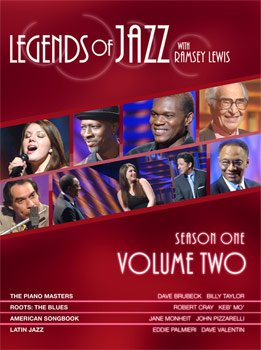
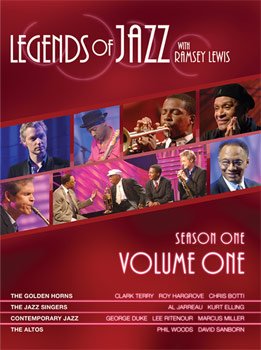
Legends of Jazz: Season One, Volume One & Two
Hosted by Ramsey Lewis
LRS Media


Ramsey Lewis will be honored as one of the 2007 NEA Jazz Masters—well deserved recognition to be sure. In addition to being a great musician, famed for his rendition of “The In-Crowd,” Lewis has been a leading jazz evangelist as a broadcaster. He is the host and prime mover behind jazz’s regular return to broadcast television: Legends of Jazz on PBS. Unfortunately, if you are a New Yorker and do not suffer from insomnia, you probably have not seen Legends, since the local affiliate chose to run the program at 12:30 Thursday nights. We now have a chance to see what we’ve been missing with the release of Legends of Jazz: Season One Volume One and Volume Two on DVD and Blu-Ray with companion CD.

Legends follows a strict format: Ramsey Lewis introduces the show’s subject (the trumpet, Latin Jazz) with a minute’s worth of archival footage, each guest plays a tune, the guests play together, and then they jam on the shows theme with Lewis.

Vol. Two is probably the stronger installment, with the Blues segment being a particular surprise. Keb’ Mo’ unleashes his inner Robert Johnson in a knock-out performance of “Love in Vain.” This led to an interesting discussion of blues improvisation in the bonus conversation section. Keb’ Mo’ made the point: “If it’s seven and half, if it’s eight [bars], wherever it is, wherever it happens to be, when you’re phrasing, when you’re improvising in a solo in jazz or blues you have the right to enter a realm of infinite possibilities within a structure.”

For the American Songbook episode, John Pizzarelli and Jane Monheit were another good pairing, who genuinely seemed to enjoy each others work and company. Pizzarelli made a good choice in forgoing a traditional crooner number for an upbeat “I Got Rhythm,” showing off his fleet guitar work with brother Martin on bass.

The opening piano episode truly features legends: Dave Brubeck and Dr. Billy Taylor. Both are still playing at an appropriately lofty level. One does wish the show could have broken format a little, and given more time to the final jam. With Lewis on one piano, and Taylor and Brubeck four-handed on another, it was a piece of jazz history: two Jazz Masters and one to be, jamming together.

The first volume features more artists with a calculated “crossover” appeal, like Chris Botti and David Sanborn. If you can give them a pass, there is Clark Terry’s patented “Mumbles” and Roy Hargrove quite impressive on “Invitation.” In addition to Sanborn, Phil Woods keeps the fire of Charlie Parker burning brightly during the alto episode.

The red flag for jazz purists will be the “contemporary jazz” episode, with judiciously selected musicians who should have some cred outside of “smooth jazz:” George Duke, Lee Ritenour, and Marcus Miller. Duke had some telling comments on the current state of “contemporary” jazz radio, again in the bonus conversation section: “a big problem is that a lot of people that are young are beginning to think that what they hear a lot on the radio is really jazz, and that’s a problem.” Of the performances, Ritenour’s tribute to Wes Montgomery, “Wes Bound” is arguably the most straight ahead, and may surprise purists.

Throughout the show Lewis is good host, exuding an easy likeability most talk show hosts would envy. Also, check out an informative spot on the Jazz Foundation of America, featuring the great Wendy, in the trailer section. Legends gets props for spreading the word about a truly worthy organization.

Legends of Jazz is well produced showcase for America’s greatest original art-form. It looks good and sounds good. One hopes there will be many seasons to come, and WNET 13 will realize what it is missing. Until they do, we can enjoy Legends v. 1 and 2 on DVD and Blu-Ray.

Saturday, October 28, 2006

The Return


The Return
Music by Andrey Dergatchev
ECM (1923)


ECM founder Manfred Eicher has co-directed the film Holozän, and produced the music for several others, including the Academy Award winning Journey of Hope, so it is logical his label would become a leader in the soundtrack genre, in addition to jazz and classical. Andrey Dergatchev’s soundtrack for Andrey Zvyagintsev’s The Return, certainly fits the aesthetic standard Eicher set for ECM.

Dergatchev’s music defies easy classification, crossing genres to meet the demands of the on-screen action. Moody and austere, Dergatchev’s music reinforces the emotional isolation of The Return’s characters, particularly on a track like “Piano,” where the title instrument stands out in lonely contrast to the synthesized background. The mood of alienation is also captured on tracks like “The Road” and “Port” which blend location sounds with electronic music, in effect, making the everyday sound otherworldly.

The Title music might be the most accessible. “Titles—Run” synthesizing techno beats with plaintive Eastern sounding melodies, both tracks inspire a trance-like effect, that some DJ is bound to flip over. “Final Titles” echoes “Run,” with the synthesizers up more in the mix, reflecting the film’s theme of return, with the closing music referring back to the opening title theme.

At times, The Return brings to mind the more minimalist “Filmworks” music of John Zorn. It is a spare, but compelling aural landscape. At times it is fragmentary, incorporating the sounds of nature or the human voice, as in the chanting on “Old Man.”

The Return has been compared to the films of Andrei Tarkovsky. The contemplative and mysterious qualities of Dergatchev’s soundtrack lend credence to such analogies. Hearing it without having seen the film leaves one intrigued rather confused, as it expresses the film’s emotional undercurrents clear as a day. It is a fascinating listen.

Friday, October 27, 2006

Hevesi Scandal Developments

Tick, tick, tick . . . Time appears to be running out for “Comptroller” Hevesi. The NYT has endorsed Chris Callaghan, albeit without much gusto. Spitzer has indeed withdrawn his endorsement. Gov. Pataki has appointed a former U.S. Attorney to evaluate the case for impeachment. Flip Pidot calls on New Yorkers to poll their State Senators to find out if they will vote for impeachment. No response yet from my Senator, Liz Krueger, who coincidently Pidot is challenging. For those eager to express their disgust with Hevesi, you can vote to put him into the lexicon permanently here. Tick, tock.

Tomasz Stanko Plays the Music of Freedom—Live


Hearing Tomasz Stanko and quartet live at Birdland was worth staying out late on a school night. Stanko is one of Poland's best known jazz musicians, having captured a large American audience through his albums on ECM. For Eastern European jazz artists, the music had deep significance, as is clear in Nate Chinen’s New York Times feature:

“The message was freedom,” he said one afternoon last week in a Midtown Manhattan hotel room. “For me, as a Polish who was living in Communist country,” he continued in his slightly broken English, “jazz was synonym of Western culture, of freedom, of this different style of life.”

Stanko has mastered the sound of freedom, displaying a stylistic flexibility, having played fiery free jazz and cerebral suites that are as cool as the wind blowing through a Nordic fjord. As Chinen points out, Stanko’s Birdland sets are much more up-tempo and boppish than the moody lyricism of his recent CDs. The melodies from his most recent, Lontano, are beautiful, adapting into excellent vehicles for Stanko’s trumpet chops. His regular rhythm section is a tight working unit, producing exciting solos of their own, particularly Marcin Wasilewski in the piano chair.

Like so many musicians behind the Iron Curtain, Stanko’s initial exposure to jazz was on the Voice of America. During its Cold War heyday, the VOA was arguably one of the most effective government programs ever. Its programming continues to pay dividends, as evident from Stanko’s two sets I heard Wednesday night. He’s there through Saturday.

Thursday, October 26, 2006

AP Misses the Big Story

Devlin Barrett of the AP filed another pre-post-mortem of New York Republicans last night at 9:04 pm. A mere two hours before Barrett’s filing, a leading statewide Democrat facing potential impeachment pleaded for voters’ forgiveness, but there is no mention of this scandal that has rocked Albany in the AP story. Yes, most expect the Clinton and Spitzer to rack up impressive victories at the top of the ticket. However, as Barrett declines to report, over the last two weeks it has been state Democrats who have found themselves divided and angst-ridden over how to deal with the scandal of one of their own: State Comptroller Alan Hevesi.

On Monday, the State Ethics Commission dropped a bombshell, releasing their report confirming Hevesi broke the law by assigning state workers to chauffeur his wife. The report concluded that Hevesi had no valid security concerns to justify such an assignment, despite trying to inappropriately influence a state risk assessment. Given the absence of time sheets and other documentation, the report concludes Hevesi had no intention of making restitution before he was caught.

Gubernatorial candidate Eliot Spitzer, running on a vague, feel-good platform of reform, has been knocked completely off message. Initially Spitzer defended Hevesi, calling him “an honest, stupendous public servant.” Now the Times reports:

"An aide to Mr. Spitzer said that it looked increasingly likely that he would withdraw the endorsement. 'Barring a compelling rationale from Hevesi, it’s likely he’ll be withdrawing his support,' said a high-ranking official with the Spitzer campaign who was granted anonymity so he could discuss the sensitive issue."

Spitzer is not the only uncomfortable Democrat. Attorney General candidate Andrew Cuomo committed to prosecute Hevesi if the Ethics Commission were to forward his case to his office. Now he expects to assume control of an office with an active investigation pending against Hevesi. Spitzer’s running-mate, David Patterson faces the possibility of casting an up or down vote on Hevesi’s impeachment in the State Senate. All Democratic candidates are fielding unwelcome questions on Hevesi.

In the last two weeks, Republican morale in New York has surged. Barrett might have noticed that if he had done a little reporting, but that might have contradicted his preconceived notion.

Wednesday, October 25, 2006

Nat Hentoff is Not Happy

Norman Lear, noted underwriter of People for the American Way and other extreme liberal groups, is the owner of Concord Records. According to his column in the Nov. Jazz Times, upon Concord’s purchase of Fantasy Records Nat Hentoff called Lear to make two points: “to urge Lear to keep the Fantasy catalog intact” and “to make sure that Terri Hinte—not only the publicist but also the very soul of Fantasy—be retained.”

I have never dealt with Hinte, but she is clearly well respected through out the industry, recognized by the Jazz Journalists Association with their “A Team Award.” Hentoff reports: “Terri had told executives at Concord of her selection for the A Team and on the eve of the awards ceremony, Terri Hinte was fired by Concord Records.” I have enormous respect for both music and book publicists. (Several have been very helpful to this site.) They truly have a difficult, often thankless job. It is a shame that such a passionate advocate for jazz was let go.

I also respect many of Concord’s releases, like the newly discovered Willie Bobo music they released as Lost and Found, which I reviewed thanks to their current publicity department. However, it does seem like the Fantasy reissue program has dramatically slowed since Concord’s acquisition, which is a shame. There is still much classic music in the Fantasy vaults, yet to have a digital life. So far, Lear’s reign over Fantasy has yielded decidedly mixed results.

Tuesday, October 24, 2006

Classic Albums: Who’s Next & The Joshua Tree


Classic Albums: Who’s Next & The Joshua Tree
By The Who & U2 (no kidding)
Eagle Media


Remember albums? They used to be more than a collection of tracks to download. Classic albums have become cultural artifacts in and of themselves. The music is instantly recognizable and the cover art has entered the public consciousness as iconic images from music history. The Classic Album series celebrates the making of some of the most recognizable and iconic, recently including Who’s Next and The Joshua Tree.

Obviously, Who’s Next is a great rock album—it supplied theme music for two CSI series. “Babu O’Riley” (CSI NY) is perhaps most representative of the innovative use of synthesizers on the album. It is also one of the more misunderstood Who songs, as Pete Townsend explains:

“For me you know, that notion of teenage wasteland is about waste. It’s not about getting wasted. It is about waste. It’s about wasted life, wasted opportunity, wasted years. I take full responsibility for the fact that my generation complained about the state of the planet and did nothing to change it.”

Who’s Next was a sort of concept album, consisting of tunes composed for Townsend’s aborted film scenario The Lighthouse, and is also distinguished by the experimental elements. It is interesting to hear Townsend’s solo take on “Won’t Get Fooled Again” (you know, CSI Miami), which shows how well the song works stripped down to its barest elements.

On both Who’s Next and Joshua Tree it is fascinating to see the band sharing the credit and the spotlight with their producers and engineers. Obviously, an atmosphere of respect leads to better results in the studio. In discussing his influence on “I still haven’t Found What I’m Looking For,” co-producer Daniel Lanois says:

“I’ve always liked gospel music and I encouraged Bono to take it to that place, which he did. It was a very non-U2 thing to do at the time, you know, to go up the street of gospel.”

It is clear that the band and co-producers Brian Eno and Lanois still have a strong working relationship. Also noteworthy, there are no sermons from Bono on African debt, although Adam Clayton does get political when discussing “Mothers of the Disappeared.”

One wonders if this series will only be able to mine the past for future installments, or if rock and pop can still produce great albums. Certainly jazz still can, and does regularly, producing disks like Pat Metheny’s The Way Up and Andrew Hill’s Time Lines that one can expect to stand the test of time. From my perspective it does seem like rock and pop are in a bit of a slump, but comparing current albums against Who’s Next and Joshua Tree, is not a fair standard by any measure. Opening a window into their production actually may make viewers appreciate them more.

Monday, October 23, 2006

Rachel Boring

If you want to hear someone walking on eggshells, listen to Roma Torre’s review of My Name is Rachel Corrie when NY1 replays On Stage tonight. While Torre tries not to address the political issues of the play in a way that would alienate her presumably left-leaning audience, it is clear in her review she found the production lacking:

“it is a very small work, depicting the limited perspective of a young woman.”

“incomplete.”

“her diary entries emerge rather helter-skelter.”

“there is too much reliance on Corrie’s own words which don’t always tie together cohesively, and not enough context.”

“so many blanks in the script.”

“it feels so incomplete. We know there’s so much that’s missing in her world view. And focusing the work on her unleavened political beliefs yields a disservice to Ms. Corrie.”

“needs far more fleshing out”

“politics were the least interesting part of her story”

And in her post-review chit-chat with the host: “I don’t know if people are going to get their money’s worth in this one.”

Not exactly a rave. In the accompanying footage we hear Megan Dodds, as Corrie, turning the earnest nobility up to eleven, soliloquizing: “I can’t cool boiling waters in Russia. I can’t be Picasso. I can’t be Jesus. I can’t save the planet single-handedly.” Imagine sitting through two hours or so of that.

Torre does however, uncritical buy into some of the Corrie propaganda when she says: “She [Corrie] was especially disturbed by the brutal Israeli practice of bulldozing Palestinian homes to the ground.” No mention of why Israel would do such a thing. Of course, those homes were concealing tunnels used to smuggle arms for terrorist attacks on innocent Israeli citizens. Corrie’s organization ISM had a long history of coordinating with Palestinian terrorist organizations. As Torre said in her review, a little context here would be helpful.

Out of the Long Dark


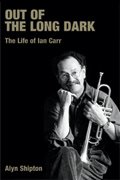
Out of the Long Dark: the Life of Ian Carr
By Alyn Shipton
Equinox
1-84553-222-8


Ian Carr is a jazz artist probably better known in America as a man of letters, particularly for his biography of Miles Davis. In Out of the Long Dark, biographer Shipton explains how Davis exerted a powerful influence over Carr, as the careers of both jazzmen often moved in parallel directions.

Carr settled on music after a premature attempt at a literary career. Initially attracting attention in the Emcee Five, a group the included Carr’s brother Mike in the piano chair, Ian Carr rose to prominence in the UK jazz scene as the co-leader of the Rendell-Carr Quintet.

Carr’s compositions have often taken inspiration from literature, and frequently feature sly word play. Shipton explains the pun in the title of the third Rendell-Carr LP, largely lost on American listeners:

“‘Phase III’ was also a tariff of the London Electricity Board, and to those who heard the name in those days, it immediately implied late night heat, as well as the accumulation and release of energy.” (p. 76)

As Miles Davis plugged-in and turned to rock forms for inspiration, so too did Carr, with the formation of his cooperative band Nucleus. While Davis found his largest audiences through albums like Bitches Brew, Carr’s work with Nucleus was much more popular on the Continent, particularly Germany, than in his native Britain. Carr did have a seemingly unlikely champion, John Dixon of Capitol Records, a major American label. As Carr relates:

“But unbeknownst to me, in America, John Dixon at Capitol Records had every record I ever made. When he read in the trade press that I’d left Phonogram (who owned Vertigo), he sent a message to EMI in London saying ‘Ian Carr is free—sign him up!'” (p. 116)

The meeting between Carr and EMI was actually a disaster, with both parties deciding to take a pass. Dixon however, was not to be deterred by the British division’s lack of enthusiasm, saying according to Carr: “Never mind, we’ll sign him direct.” (p. 117)

As a result, Carr “had an American contract and with it, American levels of money.” (p. 117) Dixon would be an important friend in Carr’s life—one Shipton credits for his support during Carr’s bout with depression. Out of the Long Dark takes its name from the title of Carr’s first post-depression LP and the second and final under his Capitol contract.

Nucleus continued to be vital force, even after Carr was hospitalized for colon cancer treatment. Shortly after finishing treatment, Carr embarked on a grueling tour of Latin America for the British Council, documented in the trumpeter’s diary. While sniffing about the suspected but unseen poverty caused by “Milton Friedman’s monetarist policies” Carr relates the nuanced crash course in Chilean history he received from Peter Schwartz of the British Council:

“Allende’s two parties, socialists and communists, couldn’t agree and soon there were 18 parties in parliament. Allende made a law keeping prices low, and so big business refused to produce goods. For almost two years there was nothing in shops. Peter was offered a batch of 500 toilet rolls, when he only wanted a few, but he had to take them all or go without. So he used to trade them with his friends . . . He and his associates at the British Council took it in turns to queue all day for rice or work all day in the office. Peter got fed up with Allende. Eventually everyone in Santiago, except Allende, knew about the impending coup.” (p. 140)

Not surprisingly, Allende’s price controls were no more effective over-ruling the forces of supply and demand than they have been anywhere else. While Carr may not be a keen commentator on economics he is certainly an insightful writer on jazz, and a tireless advocate for British artists. His book on Davis is considered one of, if not the, standard biographies on the trumpet legend. Shipton is not so enthusiast in his reading of Carr’s biography of Keith Jarrett arguing:

“Ian’s fervent enthusiasm for Jarrett . . . in some ways makes this a less satisfactory biography than the earlier book on Miles. Whereas Miles was examined warts and all, I get the sense that Ian deliberately glossed over aspects of Jarrett’s life, not least in deference to Jarrett’s wish to retain his personal privacy.” (p.159)

Long Dark is certainly makes a passionate case for Carr’s place in music history and will intrigue American listeners who might be unfamiliar with his recorded output. At times though, Shipton’s criticisms of Carr’s Jarrett book might be applied to his writing as well. It does seem Shipton was also reluctant to plumb too deeply, lest it discomfort his subject. He does convey Carr’s music nicely, and leaves one wanting to hear more from one of Britain’s leading jazz artists.

Friday, October 20, 2006

Couturier’s Nostalghia


Nostalghia—Song for Tarkovsky
By Francois Couturier
ECM (#1979)


Jazz has always had an uneasy relationship with film. Sometimes jazz artists have found employment scoring films, or have taken inspiration from cinema for thematic albums. The results, of course, vary widely. Nostalghia—Song For Tarkovsky, Francois Couturier’s tribute to the highly regarded Soviet filmmaker who eventually defected in the 1980’s, is particularly effective because of the diverse nature of the influences synthesized into an original whole.

Nostalghia is most likely to be found on jazz shelves, but Couturier’s compositions owe as much to classical music as they do to jazz. The unusual instrumentation including accordion, is also sometimes reminiscent of more traditional folk music. In short, it is a perfect blend for ECM.

As Tarkovsky’s film’s largely eschewed music, Couturier’s tribute consists of entirely original compositions, and three free improvisations. However, his music does capture the spirit of the director’s work. The opening track, “Le Sacrifice,” captures the meditative spirit of the film of the same name, a philosophical reflection on the impending end of the world. It shows Couturier’s patience to let the music un-spool gradually, as his contemplative piano eventually gives way to Jean-Louis Matinier’s accordion. Approximately halfway through, Couturier’s turbulent run on the piano signals a darker mood shift, echoed by Matinier. “Le Sacrifice” is perfectly representative of the session as whole—sometimes introspective, sometimes unsettling, but challenging music performed at a high level.

“Nostalghia,” the title track, also inspired by a film of the same name, is a fine feature for Jean-Marc Larché’s mournful soprano floating over Couturier’s repeated piano figure. The film expresses the alienation of a Russian traveling abroad, and Larché and cellist Anja Lechner express that sense of loneliness, interrupted midway by a pointillistic solo from Couturier.

“Solaris I” and “II” are free improvisations taking their name from Tarkovsky’s science fiction classic. Solaris plays games with the nature of reality and memory, making it a difficult film to summarize. The first improvisation expresses initial foreboding, resolving into melancholy. The second succeeds as a science fiction tone poem conveying the sounds of the space station before returning to the disquieting mood of the first improv.

“Andrei” takes its inspiration from Andrei Rublev, a film based on the life of the Russian artist that was shelved by Soviet authorities for five years after its completion. It features beautiful interplay between Couturier, at times ranging fairly high up the key board, and Matinnier.

“Stalker (for Edouard Artemiev)” takes inspiration from Stalker, another science fiction film which problematizes the notion of reality. Appropriately “Stalker” opens with Couturier’s darkly rhapsodic piano echoed by Lechner’s cello. As piano and cello combine to form a turbulent sea, Larché’s soprano seems to float above it undisturbed.

The deeply personal, pensive nature of Tarkovsky’s films were stylistically at odds with the state preferred Soviet Realism, so his troubles with state film authorities are hardly surprising. Couturier has composed a beautiful tribute to Tarkovsky’s work that rewards repeated listening. He assembled a group of sympathetic musicians who play well with each other and give each other space when appropriate. By turn ominous and elegiac, Nostalghia captures the essence of the filmmaker who inspired it.

Thursday, October 19, 2006

Off-Key Humor and Music from Gilad Atzmon

Vehemently “anti-Zionist” Gilad Atzmon enjoys skirting the boundary of anti-Semetic remarks. The self-described Israeli-born Palestinian has a history a troubling rhetoric (background here and here), and his new pseudonymous band is an over-the top Jewish caricature, reminiscent of the hateful stereotyped character Avrum Shtil from his novel My One and Only Love.

Recently, SF Indy Media got in on the Jewish jokes too, playing straight man in this theatrical interview with Aztmon’s alter ego. In an exaggerated expression of Jewish pride, Atzmon’s alter ego claims Jewish ownership of jazz in this pleasant sound bite:

“Are you a Jazz denier? Don’t you know that where jazz is coming from? Jazz is Jewish, Zwing is Jewish. Just get use to it. Do you want another Shoa, and then the another Schindler Liszt? Let’s stop right there.”

Evidently, Holocaust jokes go over well at Indy Media. Atzmon has musical talent, when he actually shuts up and plays, but you wouldn’t know it from the Fishel samples posted on-line. Artie Fishel is not a musical statement. It is a political screed—caustic bordering on hateful. Not surprisingly, it is a perfect editorial fit for Indy Media.

Wednesday, October 18, 2006

On Stage Off-Base

On the last broadcast of NY1’s On Stage (transcription not online), Patrick Pacheco pitched softballs to the star and co-creator of the show My Name is Rachel Corrie, the Off-Broadway show which celebrates Corrie, the American college student who went to Rafah with the International Solidarity Movement, a Palestinian advocacy group that considers Hamas and Islamic Jihad “resistance groups.” Corrie was killed when her group disrupted IDF attempts to clear houses with weapon smuggling tunnels, becoming a propaganda tool for Israel haters. Pacheco’s interview did nothing to provide any needed balance or perspective.

Perhaps the truest words spoken came from Viner when asked about the drawbacks of relying on a single viewpoint, admitting: “we didn’t approach it as a piece of journalism. This is a piece of theater. Theater doesn’t have to be balanced—on the one side this, on the other side that.” So New York theatergoers should take their propaganda and like it.

Actress Megan Dodds admitted to general ignorance of the Middle East before she took the role, saying “I had to do as much research as I possibly could in order to understand her experience. Having done that, and trying to, you know, keep up to date on the Middle East, I fell like I still don’t know enough.” Viewers were probably inclined to agree with that statement too. If she missed the resources of MEMRI and CAMERA during her initial research period, they would definitely help her keep up to date. Perhaps her best line was: “I find myself feeling very frustrated as artist because I don’t feel that you should use your means of expression to shout about your political beliefs.” Yeah, right.

Another laughable exchange occurred when Pacheco asked if theater can “widen the perspective” of the debate on Mid East policy, as if there is wide spectrum of opinions expressed on the NY stage. Viner answered with a straight face: “I hope it will make people engage with different sorts of voices” and “do more reading and find out more about the situation.” Again, MEMRI and CAMERA are good places to start for more reading. As for “engaging with different sorts of voices,” good luck waiting for an Off-Broadway production sympathetic to Israel.

Easily Pacheco made the most offensive statement of the night when he stated “It is tragically ironic that the play most reminds me of the Diary of Anne Frank.” Let’s make this clear. Frank was killed by the National Socialists because she was Jewish. Corrie, misguided as she may have been, volunteered for ISM, an organization that supported the PLO and Hamas, terrorist organizations that specifically targeted Jews in Israel. Not a moral equivalent—not even close.

Tom Gross made a salient point early on during the Corrie canonization effort, when he wrote of “The Other Rachel” (Via LGF):

My Name is Rachel Thaler is not the title of a play likely to be produced anytime soon in London. Thaler, aged 16, was blown up at a pizzeria in an Israeli shopping mall. She died after an 11-day struggle for life following the February 16, 2002 attack when a suicide bomber approached a crowd of teenagers and blew himself up.

She was a British citizen, born in London, where her grandparents still live. Yet I doubt that anyone at London’s Royal Court Theatre, or most people in the British media, have heard of her.

Of course, the ISM Corrie was involved with would call the suicide bomber who killed Thaler a resistance fighter. Indeed, suicide bomber Asif Muhammad Hanif was a documented guest at an ISM crash pad five days before he murdered three and wounded fifty in an attack his ISM hosts disavow prior knowledge of.

Next week, On Stage reviews Rachel Corrie. If Roma Torre gets the assignment, there’s a hope for an even-handed review, however she has already had to sit through such dreary agit-prop fare as School of the Americas and The Treatment. If contributing critic David Codey gets the honors, an ideologically motivated rave is in the bag for Corrie.