Few writers have been ripped-off as much as Agatha Christie. Seriously, how
many And then There Were None clones have you seen? With that in mind, who
could blame the Christie estate for cutting some licensing deals that are rather
distantly related to her printed words? Swedish television developed a series
based on Sven Hjerson, the meta creation of Hercule Poirot’s occasional companion,
mystery writer Ariadne Oliver. Similarly, French TV has very loosely adapted
some of Christie’s mysteries, with completely original characters in the ongoing
series Agatha Christie’s Criminal Games. After seasons set in the 1930s
and 1960s, the mysteries shift to the “Me Decade” when the ten-episode Agatha
Christie’s Criminal Games: The 1970’s premieres today on MHz Choice.
In
some ways, Captain Annie Greco is a feminist trailblazer, but she is also a
tough cop, freshly assigned to city of Lille. Most of her insubordinate subordinate
detectives are both sexist and incompetent, but Max Baretta has promise. His
deductive instincts are not bad, but he has been banished to file room, because
of his anger management issues.
Greco
assigns Baretta as her partner, but his career resuscitation will come at a
price. He must attend sessions with Rose Bellecour, the extremely fashionable
psychologist they meet on their first case. Thanks to her parents’ cosmetic
company, Bellecour has become the confidant of actress Anna Miller, whose
co-star (and abusive ex) has just been murdered.
As
the only episode of the season largely “inspired” by a particular Christie
novel, Endless Night, it is not surprising the like-titled episode is
one of the most successful of the 1970’s. It also has one of the best
guest-starring turns from Romane Portail as Miller. Those who prefer to watch
rather than read Dame Agatha might know the 1972 film with Britt Eklund and
George Sanders. If so, they can surely guess the killer, but that means Flore
Kosinetz and Helene Lombard rather faithfully adapted it for Criminal Games.
The
other episodes, which are almost wholly original, are more hit or miss. However,
it is worth noting “The Mice will Play” incorporates elements of The
Mousetrap, with a mystery that
hinges on an unwanted baby given up years prior. Poor Baretta also has a rare
chance for healthy romance with Flore, an up-scale” “hospitality worker,”
nicely played by Aude Legastelois.
Unfortunately, the bickering cats-and-dogs
chemistry between Arthur Dupont and Chloe Chaudoye as Baretta and Bellecour gets
very tiresome. Emillie Gavois-Kahn wears much better on viewers’ nerves over
time as the no-nonsense Greco. However, her supposed obliviousness to the
romantic interests of Jacques Blum, the coroner, also starts to wear thin. Furthermore,
the hippy-dippiness of her new residence, the Nirvana Hotel, really gets
shticky.
This film crew has made a horrible mistake with their props. They thought
they were filming a vampire movie, so they are well-equipped with wooden
stakes, but they will be stalked by a werewolf instead. As horror specialists,
they should be able to pivot quickly, but their bickering and disorganization makes
them easy prey in Dominic Brunt’s amusing werewolf comedy Scream of the Wolf,
which releases tomorrow on VOD and DVD.
The
shoot is almost over, but the alcoholic star, Oliver Lawrence, would hardly
know it. He looks a lot like fellow vampire thesp Jonathan Frid, but his
drunken eruptions into Shakespeare soliloquys also suggest a good bit of John
Carradine too. Fiona the 1st A.D. somewhat indulges him, because she
is a fan—at least she was—but she and Derek, the director, constantly scramble
to keep him away from the bottle. Two “journalists” from a horror magazine are
expected for a set-visit, but they will not arrive in one piece. Instead, the
crew stumbles over their severed limbs and a dying corpse.
Frankly,
none of them should have been there. The production was supposed to vacate the
rented manor before the full moon. Of course, the slimy producer wanted had to
stretch out the shoot, to accommodate the publicity event. That kind of shameless,
self-centered Hollywood-wannabe behavior constantly makes the situation worse
for everyone.
You
can tell from the opening credits Brunt and screenwriters Joel Ferrari and Pete
Wild love a lot of the Hammer and Universal monster movies that you and I do.
Admittedly, it starts a little slow, but the werewolf design is pretty cool.
There is also a terrific extended stinger that explains the origin of the wolf.
James
Fleet (from Bridgerton and Four Weddings and a Funeral) is very
amusing as the hammy, drunken Lawrence. Fans will see a lot of their favorites
in him, especially the aforementioned Carradine. Frankly, Fleet outshines just
about everyone, but Stephen Mapes is also spectacularly sleazy as Peter, the
dirtbag producer.
The picturesque Austrian village of Altaussee probably boasts the only
working mine that also features an art exhibit. There is a good reason for
that. During WWII, the salt mine served as the secret hiding place for art
looted by the National Socialist regime. You might remember scenes of its liberation
in George Clooney’s The Monuments Men. Screenwriter-director tells the
story from the perspective of the miners in Secret of the Mountain,
which premieres Tuesday on MHz Choice.
Sepp
Rottenbacher keeps himself to himself, but not his childhood friend, Franz
Mittenjager, who is widely known to supply food to the band of deserters encamped
in the mountains. That secret is a little too open for his own safety, but his
equally rebellious wife Leni would not have it any other way. Slowly but
surely, the villagers are also becoming more defiant, as they receive news of
the Axis’s military defeats.
The
mines might not seem like a good place to store art, but the temperature and
humidity in the deeper shafts were almost perfect. Their depth also provided
protection from Allied bombing runs. Unfortunately, Hitler decided to destroy
the Altaussee mine and all the art stored within, as part of his scorched earth
strategy. Blowing up the art would also obliterate the village’s primary source
of employment. Of course, the fanatical National Socialists do not care, but the
catastrophic prospect finally shakes Rottenbacher out of his apathy.
Even
though Secret in the Mountain was produced for Austrian television, but
it is a high-quality period production, with some surprisingly sophisticated
characterization. Unlike many “reluctant heroes,” who cannot hardly wait for
their awakening of conscience, Rottenbacher’s change of heart is a bitter,
hard-fought process. Likewise, the miners’ “courtship” of SS Officer Ernst
Kaltenbrunner to countermand the Altaussee’s standing orders for destruction gives
the film an ironic twist. However, it is worth noting Zerhau’s screenplay
largely lets the mining village off the hook for collaboration, while
short-changing the efforts of the American Monuments Men to secure the
imperiled art beneath Altaussee.
Considering the Soviets repurposed concentration camps into gulags after WWII, it is
hardly surprising East Germany found new uses for an uncompleted Nazi resort on
the Baltic Sea. The nearly three-mile eight-building complex never had an
explicitly military purpose while Hitler was in power, but the ideology guiding
its construction and its subsequent use during the socialist regime make its
current mixed-use (hotels, luxury condos, and a youth hostel) quite
controversial. Mat Rappaport explores the structures’ history and significance
in the documentary, Touristic Intents, which opens Monday in LA.
The
“Colossus of Prora” was supposed to host up to 20,000 loyal vacationing Germans
in equal egalitarian comfort. It was conceived by the National Socialist labor
organization Strength Through Joy as a place where working-class German union
members could vacation like the privileged bourgeoisie. It was never completely
finished, but it served as temporary barracks for concentration camp support staff
during the war. Although it would not have had high strategic value, it
arguably still would have been a legitimate military target, had the Allies
known of it.
Throughout
the post-war years, the GDR regime put Prora to a variety of uses. Most
notoriously, it became a camp for the conscientious objectors the Protestant Church
had pressured the Communist state into excluding from armed service. One of the
survivors, Stephan Schack, explains how the state systematically attempted to
break him and his fellow dissenting conscripts while they were essentially
imprisoned in Prora.
The
best segments of Touristic Intents are those featuring Schack—by a
country mile. The rest of the on-camera commentators lack his emotional
resonance, but they are also quite reserved and mostly rather dull. Many of
them are also largely in denial. Frankly, Strength Through Joy perfectly
illustrates the socialism in National Socialism. It was literally a massive
social welfare public works project spearheaded by a quasi-governmental union. Nevertheless,
many talking heads argue it Strength Through Joy wasn’t really a union, because
its dues were so high. And yet, so many people felt compelled to join.
When Daniel Keyes first wrote Flowers for Algernon, it was considered
science fiction. Now, it is more like straight fiction, or maybe part of a very
small subcategory, along with Oliver Sacks’ novelistic nonfiction. Simply
knowing this series is “inspired by” one of Keyes’ “nonfiction novels” should alert
viewers to the nature of its strictly embargoed secret (which is pretty easy to
stumble across). Even if you do not know who Danny Sullivan is based on, it is
clear he needs a lot of psychological help in creator-writer Akiva Goldsman’s
10-part The Crowded Room, which premieres today on Apple TV+.
If
you really think about it, even the show’s title is a spoiler, but fine, we’ll
keep humoring everyone. The extremely twitchy Sullivan has been arrested for
his role in a shooting in Rockefeller Center, an unfortunately high-profile
location, but his reputed accomplice and ambiguous girlfriend Ariana remains
at-large. Based on evidence found at Sullivan’s Queens home, Matty Dunne
invites Dr. Rya Goodman (whom he dated once and wouldn’t mind dating again) to
examine him. He thought the squirrelly kid could be the career-making case
study Goodman has been looking for and he might be right—or Sullivan might
become the rabbit-hole that professionally derails her.
If
you enjoy flashbacks, you will love the next nine episodes. Sullivan’s weird
behavior and crimes are clearly a product of his traumatic past. However,
proving that to a jury will be difficult, especially since Sullivan is unable
or unwilling to admit what happened. Goodman even struggles to convince
Sullivan’s public defender, Stan Camisa, a Vietnam veteran, who is
self-medicating his own trauma.
Set
in 1979, Crowded Room recreates period New York in all its grungy glory.
The directors, especially executive producer Kornel Mundruczo (who helmed White God), nicely build and maintain the tension of Goodman’s sessions with
Sullivan. The legal drama aspects of the series featuring Camisa and Goodman
are also quite compelling. However, Goldman’s decision to shape the material
into a psychological mystery-thriller was a mistake, because 95% of viewers
will guess what is going on. Seriously, you already get it, right? If not, you
will when you see how awkwardly certain characters interact.
If
Goldman really wanted to present Crowded Room as a big twist thriller,
he should have focused and concentrated the narrative into considerably fewer
episodes. He just could not preserve a sense of mystery over ten installments.
Be
that as it may, there are still some excellent performances in Crowded Room.
Tom Holland shows tremendous and convincing range as Sullivan. Frankly,
Christopher Abbott does some of his career-best work as Camisa. (It is also
worth noting, with the cancelation of The Winchesters, Crowded Room is
currently the only series dropping new episodes that features a Vietnam veteran
as a major character.)
Monsters are like bad movies. Nobody intentionally sets out to make either one, but they happen anyway. In
this case, Vicaria’s intentions are good. She wants to resurrect her older
brother Chris, who was killed far too young. Of course, playing God always
turns out to be an act of dangerous hubris in films, as is indeed the case in
Bomani J. Story’s The Angry Black Girl and Her Monster, which opens
today in theaters.
According
to Vicaria, she isn’t just trying to bring Chris back to life. Her true
spiration is to cure death. If she could cure taxes too, that would be great. Obviously,
she is aware of Mary Shelly’s Frankenstein, because she labeled her lab journal
“The Modern Prometheus.” Story also has seen a few Frankenstein films in his
time, judging from the crackling electricity that powers her experiments and a pivotal
line of third act dialogue that transparently echoes Bride of Frankenstein.
Heck, maybe Vicaria’s surname is even Frankenstein. It is coyly never revealed,
but we know it is unusual and sounds “German.”
Like
every Frankenstein Monster, the re-animated Chris turns out to be far more
violent and far less rational than Vicaria hoped. At least he has plenty of
potential victims in their economically depressed neighborhood. There are the
cops everybody hates and Kango’s drug gang, who prey on their human frailties.
Sadly, Vicaria’s father has been one of their regular customers, since her
mother was killed by a stray bullet.
In
terms of style and tone, Angry is somewhat akin Michael O’Shea’s The Transfiguration. Without question, Story emphasizes the socio-economic
circumstances of the characters, but it is not as didactic as you might fear.
True, Vicaria’s best friend Aisha is all-in for woke Columbus rants, but they
sound as counter-productive as Vicaria’s experiments turn out to be.
If ever there was an animal in need of a hero, it would be the pangolin.
Thanks to the black market in Mainland China (where their meat is considered a
delicacy and their scales are a staple of “Chinese medicine”), the scaly mammal
remains one of the world’s most endangered animals. These pangolins residing in
a subterranean Fraggle Rock-like fantasy world face an even graver
peril. However, young Peter Drawmer just might be the hero their prophecies
foretold in screenwriter-director Matt Drummond’s The Secret Kingdom,
which opens tomorrow in New York.
According
to the prologue fairy tale, the two worlds were once connected, but when the
young, brilliant king died, they were split apart. Drawmer always lived in our
world above, but when his family moved to his father’s drafty old ancestral
home in the countryside, the fantasy world below starts calling him. Then, that
night, a hole opens in his room, swallowing his bratty little sister Verity, so
he reluctantly dives in after her.
Down
below, the Pangolin oracle immediately hails Drawmer as the foretold king, but
the Pangolin general is skeptical. Regardless, if Drawmer is their savior, he
hasn’t come a minute too soon. The Pangolin soon find themselves under attack
from the forces of darkness. Peter and Verity get cut off from the rest of the
Pangolins, but they still have Pling, who is well-versed in the prophesies, as
well as epic songs that serve as the pangolins’ maps for navigating their
fantasy world.
The
pangolins and many of the other fantastical creatures are surprisingly
well-crafted. Secret Kingdom might be ripping off the Henson workshop’s
greatest hits, but it does so surprisingly well. The fantasy quest, involving
pieces of a puzzle Drawmer must assemble to restore the fantasy world’s
internal clock, is serviceable enough. The problem is both Drawmer siblings are
way too young (and way too passive) for a fantasy so transparently inspired by The
Dark Crystal and Labyrinth. They just aren’t right for the film.
Salvador Dali was a self-described “anarchist, monarchist Catholic.” That is
three strikes against him in today’s groupthinking world, but Mary Harron made
a film about him anyway. He was, after all, the most recognizable artist of his
time, or any other. Dali knew it too. His fame combined with his eccentricity
and constant financial shortfalls makes him decidedly difficult to work with in
Harron’s Daliland, which opens Friday in New York.
At
this late stage of Dali’s career, he can practically sell anything with his
signature on it, which is fortunate, because he and his wife Gala spend money
like water. Frankly, he and his manager, Captain Moore, might even be complicit
in flooding the market with dubious prints and lithographs. However,
fresh-faced (and fictional) James Linton has yet to be so disillusioned by the
art world (but it will come). Initially, he is thrilled when his gallerist boss
“lends” him to Dali to assist the preparations for his upcoming show, which
still includes painting eighty percent of it, or so.
Initially,
Gala Dali was also hoping Linton would “assist” her too, but he wriggles out of
those duties when she starts obsessively focusing on her latest “project,” Jeff
Fenholt, the Broadway star of Jesus Christ Superstar, who would
eventually become a musical televangelist. Ironically, Dali’s bemused pal Alice
Cooper, who eventually starred in the live TV production of Superstar, also
appears as a minor supporting character, reacting with a healthy degree of
skepticism to the artist’s more over-the-top provocations. Of course, Linton
thinks it is all quite charming, especially Ginesta, Dali’s waifish
model-entourage member, until things really get to be too much.
In
addition to the three strikes from Dali’s politics, Daliland carries a fourth
strike thanks to Ezra Miller, who appears in flashbacks as the young Dali. Yet,
ironically, the “troubled” thesp is arguably more convincing and compelling as
the younger Dali, especially when recreating the artist’s fits of spasms and
bouts of neuroses.
Admittedly,
Sir Ben Kingsley is highly entertaining to watch chewing the scenery as the
older incarnation of the artist-provocateur, but his performance is more about
embracing and accentuating Dali’s eccentricities than exploring his inner
psyche. Arguably, Miller is more successful at the latter, with far less
screen-time.
These superheroes are inspired by the Bronze Masks of Sanxingdui unearthed by archaeologists
in Sichuan back in the late 80’s, but they have been upgraded to gold. Apparently,
gold is more blingy and it presumably costs the same to animate. Charlie would
also prefer gold, because of its higher re-sale value. Few people consider him
a hero, least of all Charlie, but a hero-less mask chooses him anyway in Sean
Patrick O’Reilly’s Heroes of the Golden Mask, which releases this Friday
in VOD.
Li’s
father was the leader of the Golden Mask quintet of heroes, until he died in
battle against the evil super-villain Kunyi, who is determined to steal
Sanxingdui’s mystical Jade Blade. The archer and her team-mates, including a Chinese Zodiac-shape-shifter, a hammer-wielding fish-person from Atlantis, and a telekinetic
juggler, know Kunyi will be back, so Li must let her dad’s mask divine its next
host. Bizarrely, it picks crime-infested contemporary Chicago as the place to find
a new hero.
Charlie
is an orphaned pick-pocket, who lives by his fingers and wits. He is a thief,
but he is hardly the nastiest criminal in Chicago. Unfortunately, he owes money
to the far worse Rizzo, whose voice was supplied by the late Christopher Plummer.
When things get too hot for Charlie, Li provides a convenient escape, but he is
reluctant to embrace his new heroic role.
Golden
Mask holds
the distinction of being Plummer’s final screen credit. Frankly, his familiar
Transatlantic accent would seem like an odd choice for the Capone-like Rizzo, but
his growling whisper does not sound completely out of place. Without a doubt,
Ron Perlman’s voice is best cast as the sinister Kunyi, whereas Patton Oswalt
is the most annoying as Aesop, the whining Atlantean.
Asian detectives like Charlie Chan. Mr. Moto, and James Lee Wong were popular
in the 1930s, but they have become controversial in retrospect, because they
were portrayed by European actors (except Mr. Wong, played by Boris Karloff,
who was of Indian heritage). Edison Hark is a Honolulu cop like Chan, but he is
definitely cut from a different cloth, reflecting more contemporary
sensibilities. His latest investigation takes him to San Francisco, but it hits
really close to home for Hark in Pornsak Pichetshote’s graphic novel the
Good Asian, with art by Alexandre Tefenkgi and Lee Loughridge, which
releases today in a deluxe hardcover bind-up.
Hark
did not really want to come to San Francisco, but his wealthy white adopted father Mason
Carroway has fallen ill and may never recover. As a desperate final gesture,
Hark’s adoptive brother Frankie requested his help finding their father’s possible
lost love, Ivy Chen. She had a rather complicated history with the Carroway
family. In addition to her ambiguous relationship with their father, Frankie
might have also carried a torch for her too, but not Hark. He had a thing for
Frankie’s sister, Victoria. She was usually away at boarding schools and rarely
at home during their youth, so it wasn’t so weird—at least that is what they
told themselves.
Hark
deliberately references Chang Apana, the Honolulu cop who was the real-life
inspiration for Charlie Chan. However, the hardboiled family dynamics have more
of a Big Sleep vibe, with the search for Ivy Chen replacing that for
Sean Regan. Yet, the attitude towards just about all forms of American
authority in 1936 is more in keeping with Polanski’s Chinatown, but with
a far greater understanding of the real Chinatown.
Yes, Danny's father made a lot of mistakes, but at least he introduced his
son to a lot of great classic films and music. Nothing too explicit, of course.
To say Steve was an over-protective parent would be an understatement. Sadly, the
reasons for his behavior are understandable, but that does not make them any
less detrimental to Danny’s psychological development in writer-creator Pete
(not Peter the Hobbit guy) Jackson’s eight-part Somewhere Boy, which
premieres Wednesday on Hulu.
When
he was still infant, Danny’s mother was killed in a hit-and-run accident. The negligent
driver also killed a good part of Steve at the same time. Breaking ties with
his sister Sue, Steve raised Danny in an isolated country cottage, brainwashing
him to believe only dangerous monsters lived outside their house, since they
were mostly likely the last people on Earth left alive.
Steve
was definitely moody, but he tried be a loving father. Danny idolized him,
believing he kept them alive through his hunting and foraging. He also
enthusiastically adopted Steve’s tastes in films and music (including Hoagy
Carmichael). Naturally, his father’s suicide hit Danny hard. Fortunately, Steve
left word with Sue to come looking for Danny before he died.
Danny
breaks Sue’s heart, for multiple reasons, but it is hard to communicate with
the stunted and withdrawn teen. Her own teenaged son Aaron can hardly relate to
Danny and he resents having to share his room with his weird new cousin. The
more Danny hears about his dad, the more awkward Sue and Aaron feel around him,
but at least he develops a goal. He is determined to find the “monster” who
killed his mother and make him pay.
Although
there is some menace surrounding Danny’s hunt for the hit-and-run driver, Somewhere
Boy is even less of a thriller than Sean Penn’s vengeance-seeking character-study
The Crossing Guard. Jackson is much more concerned with Danny and his
prospects for meaningful healing. There is a lot of forgiveness in the series,
both for Steve and Sue’s family, who struggle with Danny. It is easy to see
why. Unfortunately, the scenes involving the guilty driver are a bit
anti-climactic and frankly disappointing. Yet, the honesty of the extremely
dysfunctional family drama largely outweighs such missteps.
Lewis
Gribben is terrific as the twitchy, anti-social Danny, precisely because his
performance is so tightly restrained and inwardly focused. Samuel Bottomley is
also quite remarkable portraying the sullen Aaron, who starts to come out of
his own emotional shell as he comes to understand how much damage life has done
to Danny.
You can say GDR socialism was unifying, because it brought together the
Catholic Church and punk rockers—against the oppressive Communist regime. In
1989, Margarethe’s lover, Heinrich, regularly played with his band in a
dissident Church. Tragically, she could rarely attend, because she was confined
to an East German mental hospital, for punitive rather than medical reasons. German-born
French animator Lucas Malbrun revisits the final dark days of the GDR regime in
the short film Magarethe 89, which premiered at Cannes’ Quizane des
Cineastes 2023 (a.k.a. Directors Fortnight) and currently screens for free on
Festivalscope’s consumer-facing site.
Even
in the prison-like psychiatric hospital, there are inmate-patients willing to
inform on their fellow prisoners. However, Margarethe is determined to be free,
at least in her mind, but hopefully also in physical bodily terms too. At least
Heinrich is at liberty to play with his band, but he too must attend weekly “check-ups,”
if that is what they really are. Regardless, since it is 1989, viewers will
know the regime’s days are numbered, but for some, the act of informing is a
hard habit to break.
It is sort of like Groundhog Day all over again, but George Addo’s
new colleagues are doing it deliberately, at least until they get things right.
That is their job at the super-secret agency known as Lazarus. Whenever the
civilized world faces an extinction level event, they rewind time back to the
last July 1st, so they can fix things. That causes a lot of
confusion for Addo when he starts to remember what was rewound in creator-writer
Joe Barton’s The Lazarus Project, which premieres tomorrow night on TNT.
At
first, Addo was just a modestly hip British app developer on the brink of big-time
financial success. He married his girlfriend Sarah Leigh, but as they settled
down to live happily ever after, a virulent plague started killing everyone on
the planet. Then Addo woke up and it was July 1st, as if the last
six months never happened.
Of
course, Addo tries to warn the world of what is coming, but everyone assumes he
is crazy—except the mysterious Archie. She tells him where to meet her if he
remembers the next time it happens, which indeed it does. It turns out most
Lazarus agents need to be dosed with their memory drug before they can recall
past time resets. However, Addo is one of the few “mutants” that have developed
the talent on their own. His new moody colleague Shiv Reddy is another.
Fortunately,
Lazarus developed a sufficient vaccine for Covid-20, or whatever it was.
(Anyone who was suspicious about how quickly the last Covid vaccine was
developed—here’s your answer.) The bad news is a particularly massive nuclear
bomb nicknamed “Big Boy” has been stolen. The worse news is the apparent
involvement of Dennis Rebrov, a former Lazarus agent who turned against the
agency. He is now determined to see the world burn, which sounds inexplicably
nihilistic, but he has his reasons.
In
fact, many of the character-establishing flashbacks are among the best scenes
in Lazarus Project. Barton (whose screenwriting credits include Ritual
and Encounter) has a knack for character-driven sf. He largely punts
when it comes to credible scientific explanations, but so be it. He more than
compensates for a lack of Doctor Who-worthy doublespeak with his one-darned-thing-after-another
plot twists. Plus, he and the producers deserve credit for an additional,
complicating villain they reveal in episode seven. Here’s a hint: they are
committing genocide in Xinjiang.
Barton
and series directors Marco Kreuzpaintner (episodes one to four), Laura Scrivano
(five and six), and Akaash Meeda (seven and eight) keep viewers hooked, while
radically shifting our responses to Addo. He is clearly the protagonist, but
the demarcation between heroes and villains in Lazarus Project is a
subtle and shifting line.
Forget Fast & Furious and Mission Impossible. The most reliable
international action franchise is Don Lee’s “Beast Cop,” Ma Seok-do. He is more
rock than The Rock, more diesel than Vin Diesel, and at least ten times the
size of Tom Cruise. When his fists connect, people go flying. That happens a
lot in Lee Sang-yong’s The Roundup: No Way Out, which opens today in New
York.
The
criminals of Seoul have nightmares of Ma, but his fellow cops often tease the
good-natured giant. Joo Sung-cheol does not get to do that. Ma can tell his
colleague is dirty, but he cannot prove it yet. Ma’s team started investigated
the negligent murder of a woman who overdosed on “Hiper,” a new designer drug,
which led to a Japanese Yakuza-controlled drug ring. The operation is secretly
under Joo’s control and it has been skimming pills for extracurricular sales.
Having
figured out their books do not balance, the Yakuza has sent Ricky the enforcer
to teach Joo and his gang a lesson. It is a really bad time for Ma to start
sniffing around, especially when his supply of pills goes missing. However, he profoundly
underestimates the humble Ma. Their resulting cat-and-mouse game is a bit Columbo-like,
but physically, it is much rougher.
The
great joy of these films is watching Don Lee (a.k.a. Ma Dong-seok) punch,
pile-drive, and power-slap his way to the truth. Lee has a big, “happy warrior”
screen persona that is even more entertaining than Schwarzenegger in his 1980’s
prime. The Ma-Beast Cop films are perfect vehicles for his size and chops.
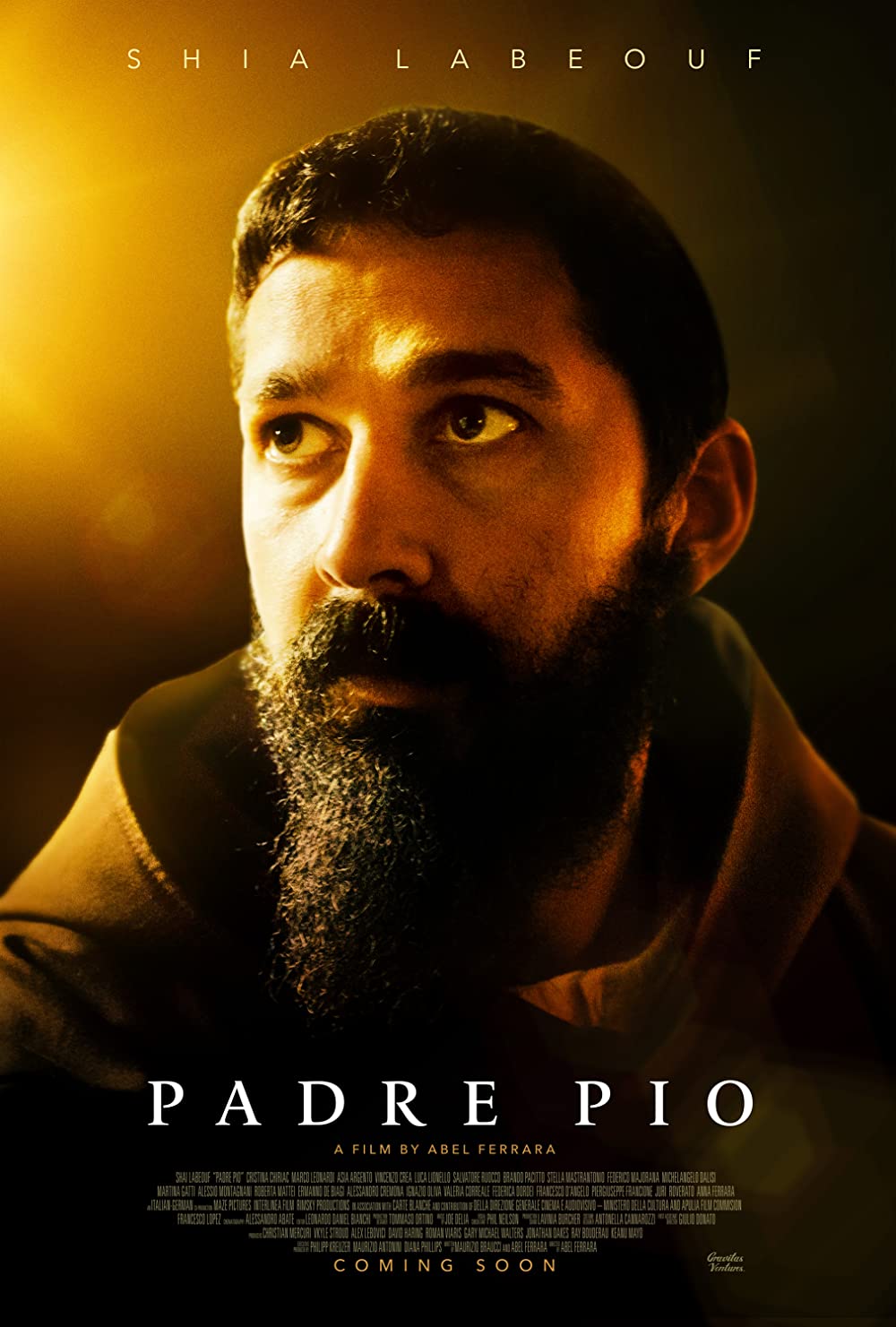
According to reports, Padre Pio (a.k.a. St. Pio of Pietrelcina) exhibited the
stigmata, healed the sick, bi-located, and faced multiple investigations from the
Vatican that were intended to discredit him. However, none of those things are
in this film, because why would they interest Abel Ferrara? Instead, viewers
will witness many of the future saint’s long dark nights of the soul. If you
thought he was tortured and tormented before, wait till you see him get the
Abel Ferrara-treatment in Padre Pio, which opens tomorrow in New York.
WWI
has ended and the men of San Giovanni Rotondo are making their triumphant
homecoming—but not all of them. This is the first example of how capricious and
unfair fate can be to the villagers. After the armistice, the land-owners
expect life to return to normal, but socialist rabble-rousers are organizing to
defeat the elite’s hand-picked candidate for mayor. Where is Padre Pio in all
this? Back at the monastery, wrestling with the Devil and his personal demons.
Is
that disconnection Ferrara’s whole point? Is this a statement on the Church’s divorce
from average people’s struggle to survive. That is certainly a valid
interpretation, but it feels somewhat at odds with the genuine (if somewhat eccentric)
Catholic spirituality of his best religiously themed film, Mary.
Even
by Ferrara’s raggedy standards, Padre Pio is a rather disjointed film.
There are moments of brilliant cinema, such as opening scene of the soldiers’ homecoming.
You can see Ferrara’s operatic fervor in all the secular passion play
sequences. However, whenever Padre Pio rages against the darkness, you half
expect Shia Labeouf to start baring his bottom, like Harvey Keitel in Bad
Lieutenant. Evidently, Ferrara was struck by the coincidence Padre Pio
started experiencing the stigmata around the time of the San Giovanni Rotondo
massacre, but the connection he makes in his mind is not reflected on screen.
Ferrara
also picked a heck of a time to stop working with Willem Dafoe. Labeouf makes a
poor substitute, even though it was Dafoe who recommended him to Ferrara. There
are some nice performances in Padre Pio, especially Cristina Chiriac, as
a recent war widow who refuses to grieve, and Salvatore Ruocco as the veteran,
whose advances she spurns, because he works as a foreman for the town’s noble
family. However, Labeouf just cannot find the right key or pitch for Padre Pio,
which is a big problem, since the film is ostensibly about him.
In recognition of the anniversary of the Tiananmen Square Massacre, I review Topic's CHIMERICA at THE EPOCH TIMES. Review up here.
There was a time when Broadway was the place for horror. It was a very
different Broadway, when the masses could find an afternoon’s entertainment for
the change in their pocket. It was also a very different horror, with plays
like John Willard’s The Cat and the Canary and Adam Hull Shirk’s The
Ape supplying a Scooby-Doo-style “rational” explanation (and a lot of
killers in animal costumes). Horror has returned to Broadway, but the sensibilities
are more contemporary and the terrors are much more explicit than those of the
1920s. Unfortunately, ticket prices also conform to 2020’s expectations. Frankly,
getting snowed-in with a creepy family in the isolated cabin is bad in any
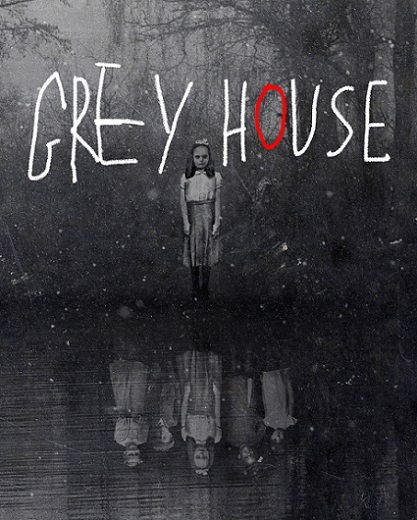
genre, but the implications are especially fearful in Levi Holloway’s Grey
House, directed by Joe Mantello, which officially opened last night on Broadway.
Technically,
their car hit a deer, but it seems like an unseen force is mysteriously guiding
Max and Henry to cabin in the woods. It is bitter cold out and Henry’s
banged-up leg needs tending, but the modest home still feels sinister. Soon,
the couple learns it is the abode of four pre-teen-to-teenaged girls and a silent
young boy, who all have a rather strange relationship with Raleigh, their
presumptive mother.
It
is the 1970s, but all the girls behave like they stepped out of an earlier era.
However, Henry quickly takes to the family’s medicine of choice: mysteriously
glowing moonshine, each batch of which carries a man’s name. The couple is in
big trouble, which they sort of recognize, but they do not realize how bad things
are until the girls invite Max to play their sinister (and possibly lethal) games.
The
producers of Grey House can hyphenate its categories all the like, but
there is definitely horror in there. There is even a spot of gore, which would
be modest by Evil Dead standards, but is quite impressive for a live
stage drama. In fact, there are a lot of clever visual effects that might not
be prohibitively expensive or complex, but look really impressive from the
audience’s perspective. There are things that suddenly shine or appear and
disappear that create a potent atmosphere of mystery and dread. Frankly, some
of revelations is Grey House are more shocking than they would be in a
movie, because as a play, you are seeing it “live.”
The line "I’ve a feeling we’re not in Kansas anymore” has become an easy
shorthand quote to suggest a character’s old assumptions about how the world
works have just been turned on their head. It is the sort of thing David Lynch’s
protagonists might say. Maybe they did. I honestly don’t remember if that
precise line was included in the super-cuts of Wizard of Oz allusions seen
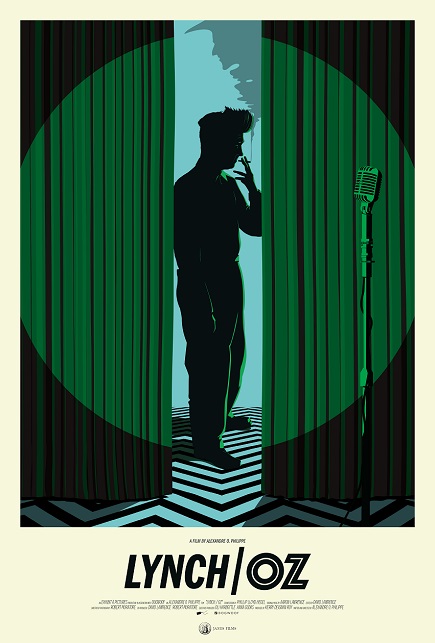
throughout Alexandre O. Philippe’s latest cinematically-themed documentary.
However, it should be reasonably safe to conclude Lynch has seen the 1939
classic fantasy and it made some kind of impression on the auteur after watching
Lynch/Oz, which opens this Friday in New York.
Evidently,
film critic Amy Nicolson and genre filmmakers Rodney Ascher, John Waters, Karyn
Kusama, Justin Benson & Aaron Moorhead, and David Lowery having been thinking
about Oz as an important source of Lynch’s inspiration for some time, because
they each get one section of the film to draw their connections.
Frankly,
they all make a very compelling case—so much so that Lynch/Oz will have
most viewers completely convinced after the first part. However, there are five
more sections, which largely repeat the same points. After a while, all the Oz-like
motifs in Lynch’s oeuvre, such as the red shoes, mysterious curtains,
doppelgangers, and the porous boundaries between dreams and reality, become repetitive.
We get it. Lynch definitely alludes to Oz in many of his films. Case closed.
Indeed,
Lynch/Oz shares the prime fault of Philippe’s previous documentary, The Taking, in that all his participating commentators share the same opinions
and make the same arguments. There are no crazy outliers (as there were in
Ascher’s Room 237) or dissenting opinions (as in Mark Hartley’s Not Quite Hollywood). It is just the same talking points, repeated five times
over. Waters gives it more of a personal spin and Ascher takes a more macro
perspective on Oz’s overall influence on American cinema in general, but
there are no conflicts in the six analyses Philippe presents.
When it comes to amateur sleuths, Neve Kelly is unusually highly motivated,
especially for a Gen Z’er. The murder she is trying to solve is her own. Obviously,
she is at a bit of a disadvantage as a ghost, but there are a few people who
can see her. Regardless, there is a murderer out there, who does not want to be
caught in The Rising, Peter McTighe’s eight-episode British remake of the
Belgian series Hotel Beau Sejour, which premieres tonight on the CW.
It
is not initially shocking the Kelly did not make home the morning after her
final motor-cross race of season. When she wakes up in the lake, she is still
not aware of her death. Unfortunately, due to the booze at the party and the
trauma of the murder, she has no memory of what was done to her, or by whom. At
first, nobody seems to be able to see her, but soon she realizes her hard
boozing father can. Of course, he cannot believe his eyes, but with a little
effort, she convinces him of her presence. Then she also realizes Alex Wyatt,
her boyfriend’s cousin can see her too. Eventually, it will get to the point
where it would be easier to just list who can’t see Kelly, but frustratingly
for her, her grieving mother Maria Kelly never can.
Weirdly,
the issue of who can see Kelly and why gets worked out to an acceptable extent.
However, there are a lot of other questions about the mechanics of “death” that
are never satisfactorily explained. Kelly still needs to take her motorbike to
get across town, but nobody can see her driving it, except her well-lubricated
dad. When she smashes up a vase, but it appears just as it was, once the living
turn their gaze towards it. Frankly, the way dead Kelly interacts with the physical
world makes almost no sense. Instead, it seems deliberately fluid, simply to
help advance the storyline. Yet, the persistence of those nagging issues of
logic constantly distracts from the drama.
There
is a lot in The Rising that comes perilously close to genuine silliness.
Still, the series has its creepy moments, especially when Kelly links her
murder to the previous disappearance of woman, whose body was never recovered. Matthew
McNulty and Emily Taaffe are also both excellent as Kelly’s divorced parents,
who deal with their grief in very different ways. Alex Lanipekun is also a
standout (in a good way) as Kelly’s distraught stepfather, Daniel Sands, whose own
grief is unfairly ignored and belittled by his overwrought wife.
Franklin Delano Roosevelt should be studied for one thing above all: how to serve
as commander-in-chief during wartimes. Throughout WWII, Roosevelt maintained a
long-term strategic perspective. Today, if over 7,000 American service
personnel were killed in a single battle, the press would probably call for the
President to be impeached, but that is exactly what happened at Guadalcanal,
relatively early in the war. Director Malcolm Venville and producer-chief
talking head Doris Kearns Goodwin again use her book Leadership in Turbulent
Times as a road-map for the three-part FDR, which starts tomorrow
night on History Channel.
As
in the previous Abraham Lincoln and Teddy Roosevelt, Venville incorporates
dramatic interludes to illustrate episodes from Roosevelt life under discussion.
In this case, the casting of Christian McKay (who was terrific playing Orson
Welles in Richard Linklater’s Me and Orson Welles) is the best of the
History Channel hybrid docs, since Graham Sibley played Lincoln. With the help
of some makeup, McKay convincingly portrays the young and dashing Roosevelt up
through his tragic Yalta decline.
Kearns
and her colleagues’ commentary on FDR’s early years is somewhat revealing. It
probably is not well known how deliberately FDR patterned his political career
on that of his fifth-cousin, Teddy Roosevelt (jumping from the state
legislature, to assistant secretary of the Navy, and then to the governorship).
In fact, Eleanor Roosevelt was more closely related to TR, since she was his
niece. Kearns and company largely admire FDR’s politically astute tight-rope
walking, when he served as a prominent surrogate for Woodrow Wilson’s presidential
campaign, against TR. However, they never hold him to account for supporting Wilson,
who did more than any other president to institutionalize racial segregation.
Unlike,
Teddy Roosevelt, which includes ample criticism of TR, FDR features
nothing but praise for its subject (except for maybe a few minutes on the
Japanese-American internment). The lack of diverse perspectives is glaringly
obvious during talk of the New Deal. Frankly, many of FDR’s policies prolonged
rather than fixed the Great Depression. The timeliness of FDR’s court-packing
debacle is also lost on the collected historians.
Yet,
in terms of political biases, the worst over all three episodes is the
selective editing that makes Wendell Wilkie, the 1940 GOP presidential
candidate, look like an isolationist, when he was probably even more of an
internationalist than FDR, at that time. Seriously, Goodwin should be embarrassed.