Friday, May 20, 2022

Now & Then, on Apple TV+

If you're a character who gets a lot of flashbacks, chances are you did some bad stuff in the past. Miami is flashback city for these five former high school friends. The word “friend” is overstating matters, but they definitely have some scandalous shared history that gets them blackmailed at the start of Ramon Campos, Teresa Fernandez-Valdes, and Gema R. Neira’s Now & Then, which premieres today on Apple TV+.

Twenty years ago, entitled Alejandro died under complicated circumstances that will take eight episodes of flashbacks to fully illuminate. An unrelated motorist also met her demise that night. Whatever happened, five former friends got away with it—then. Now, on the eve of their twenty-year reunion, an unknown blackmailer is demanding $1,000,000 each. Again, they think they get away with it when the blackmailer is murdered, even though the money is still missing, but the subsequent investigation turns into agonizing water torture.

As fate would have it, Sgt. Flora Neruda, the rookie detective on the case twenty years ago is now a veteran handling the contemporary investigation. Of course, she immediately links the two inquiries. She generates a lot of uncomfortable heat, especially for Pedro Cruz, who is the Democrat candidate for Miami Dade mayor, running on a platform of immigration liberalization (even though it is a federal issue). Inconveniently, he borrowed his share of the ransom from his campaign funds, which is highly illegal.

Sofia Mendieta also had trouble raising the funds, so she stole it from her criminal associate Bernie. To evade his thugs, she foists herself on her old flame, Marcos Herrero, whose wealthy but controlling father “fixed” everything twenty years ago. However, her presence is a little off-putting to his fiancĂ©e Isabel, but she tries to be cool, until their carrying-on just gets too blatant.

N&T
is all kinds of lurid and super-slick. In some ways, it is a throwback to the trashy miniseries of the 1980s. Apple is billing it as a “bilingual” series, but it is largely divorced from the culture and certainly the politics of Miami’s Cuban, Venezuelan, and Brazilian communities. However, there is sex and betrayal by the cigar-boat-load, so nobody is going to be bored by it.

Thursday, May 19, 2022

Night Sky, in the Epoch Times


It is character-driven science fiction that jealously guards its secrets. The character-driven part is nicely done. Epoch Times exclusive review of NIGHT SKY up here.

The Ipcress File, on AMC+

Harry Palmer did not jump out of airplanes with a Union Jack parachute and a bottle of champagne. He was a grittier, grubbier kind of spy. Not much for grandstanding and skeptical of authority, Palmer was a workaday, working-class agent. The new dramatization of Len Deighton’s first novel initially remembers who Palmer was, but than it forgets it. Unfortunately, most of the updating and liberties taken are mistakes in John Hodges adaptation of The Ipcress File, which premieres today on AMC+.

Initially, Harry Palmer is more like Harry Lime, managing an ambitious black-market operation throughout divided Berlin as a mere Corporal. Next comes the brig, but Major Dalby from an off-the-books intelligence agency offers him a furlough in exchange for contacting a target code-named “Housemartin.” Palmer once did business with the mercenary-smuggler. However, Housemartin has advanced to some pretty serious business, including allegedly kidnapping Prof. Radcliffe, a missing atomic scientist. So far, so Deighton.

Unfortunately, things change when Palmer and fellow agent Jean Courtney are to dispatched to the South Pacific, to observe a nuclear test that might be related to Dawson’s research. Here the plot radically diverges from the novel and the classic Michael Caine film. For one thing, the ultimate villain is no longer the original villain. Instead, he is just be played by Col. Stok, who was something like Le Carre’s “Karla” in later Harry Palmer novels. The Soviets are not really the baddies anymore, just impish rivals. Who are the bad guys now? Us, of course—the Americans trying to win the Cold War. How dare us.

This isn’t a complaint based on wounded national pride. Hodge loses thread of what
Ipcress is, turning it into a half-baked JFK assassination conspiracy thriller, with Palmer being set up as an Oswald-style patsy. We have seen far too many of these exploitative yarns. It also diverges from the elegant simplicity and mordant humor of the classic ending. Palmer belongs in a dark and dingy warehouse, not a big macro-geopolitical thriller that could pass for a cross between Oliver Stone’s JFK and Day of the Jackal.

Wednesday, May 18, 2022

Cordelia

If there is one thing we get from movies, if we use them as our counselors and therapists, it is getting out of the apartment is always a healthy part of the recovery process. Unfortunately, Cordelia Russell apparently hasn’t watched a lot of films, even though she is an actress. (She certainly hasn’t seen Repulsion.) Nevertheless, an upstairs neighbor tries to reach out for her, but his motives are a big question mark in Adrian Shergold’s Cordelia, which releases Friday in theaters and on-demand.

The withdrawn Russell is still suffering from acute post-traumatic stress, but somehow, she can still perform in a stage production of
King Lear (as her namesake, ironically). Fortunately, she lives with her identical twin Caroline, who handles most of the practical business of life. Then one afternoon, Frank Ryan, the professional cellist renting the flat above her, approaches Russell at a coffee shop.

It turns out he is attracted to Russell, but it is really probably Caroline who he probably saw on the streets. Regardless, he does his best to charm her, even convincing Russell to accompany him on the Metro, which brings back painful memories for her. However, as he continues to court the twin, things start to get weird.

Eventually, Shergold and co-screenwriter Antonia Campbell-Hughes (who also stars as both Russell sisters) try to raise all sorts of is-she-or-isn’t-she and is-he-or-isn’t-he doubts about the main characters. It is a mixed bag in terms of its effectiveness playing minds games, but it is a bit troubling to learn Russell is a survivor of the 7/7 terrorist attack. Using a very real tragedy like 9/11 or 7/7 is a risky proposition that can easily descend into exploitation.
Cordelia is not sleazy in the way it addresses the attack, but it is a bit jarring nonetheless.

Tuesday, May 17, 2022

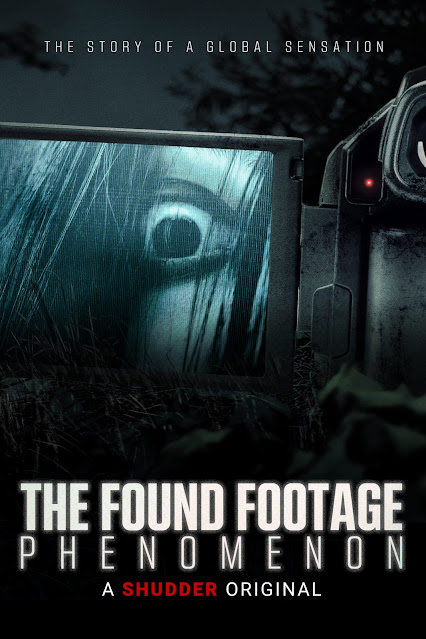
The Found Footage Phenomenon, on Shudder

History students should appreciate found footage horror, because it is told entirely through supposed primary sources—as primary (and often primal) as it gets. It feels real, because it looks like it was recorded as it happened. Of course, the better ones require extensive planning and preparation, while the worst give the subgenre a bad name. Some of the leading filmmakers associated with the grungy style reflect on its meaning and development in Sarah Appleton & Phillip Escott’s The Found Footage Phenomenon, which premieres Thursday on Shudder.

To their credit, nobody interviewed in
Phenomenon suggests found footage horror started with Blair Witch. Instead, they point to the epistolary style of Bram Stoker’s novel Dracula and Orson Welles in/famous War of the Worlds radio broadcast. It is so Wellesian that he innovated a super-cheap and convincing method of story-telling, but left it to others to exploit it commercially. Some also point to Michael Powell’s Peeping Tom, but the Blair Witch Project and Ruggero Deodato’s notorious Cannibal Holocaust were really the first films that had marketing campaigns designed to convince people what transpires on-screen happened for real.

Of course, everyone more or less concedes all the found footage films that followed
Blair Witch represent a wildly mixed bag. To often, they feature disturbing levels of violence. Filmmakers can justify it any way they like, but it doesn’t make the ultra-realistic-appearing brutality any easier to watch. That is why clever and inventive found footage, like the Paz Brothers’ JeruZalem and What We Do in the Shadows (both of which get their due) are so fun and different.

Appleton & Escott talk to just about everyone they should, including Deodato, Eduardo Sanchez (co-director of
Blair Witch), Doron and Yoav Paz, Patrick Brice (director of Creep), Rob Savage (Host), Steven DeGennaro (Found Footage 3D), and Oren Peli (of the Paranormal Activity franchise, probably still the reigning champion of the found footage box-office).

Monday, May 16, 2022

Vendetta, on Redbox

It is not that this is a great movie, but its time is now. Violent crime is way up and progressive DA’s increasingly refuse to prosecute criminals. Inevitably, we are going to see a bounty of vigilante films to supply the need cathartic justice. William Duncan represents a lot of frustrated fathers and family members, when the cops and the system fail him in screenwriter-director Jared Cohn’s Vendetta, which releases tomorrow through Redbox.

Danny Fetter is about to be initiated into his father’s crime syndicate, based in small town Eatonton, Georgia, by gunning down the daughter of William Duncan. She was actually a bad random selection, because her father picked up a lot of skills in Iraq and Afghanistan. The DA is willing to let Fetter plead to a weapons charge and a parole violation, since Duncan did not actually see him pull the trigger. He just tackled Fetter trying to escape.

Instead, Duncan bludgeons the killer to death with a baseball bat. Old man Donnie Fetter and his junkie son Rory think they should be the only ones getting away with murder, so they come after Duncan and his wife. Meanwhile, the super-helpful Detective Chen keeps lecturing Duncan on the need to keep the peace.

There is a reason why the original
Dirty Harry became a sensation when it first released and the sociopolitical circumstances are similar today. However, Dirty Harry was also an excellent film, which Vendetta is not. Yet, it is zeitgeisty, probably more than Cohn intended or realized, because it taps into deep, widely-held anxieties and frustrations.

In light of recent news, it is sad to see Bruce Willis portraying Donnie Fetter. Honestly, this isn’t the role his fans would probably choose for him go out on. (Again,
American Siege was not a great film either, but there is a poignancy to Willis’s performance that arguably redeems it.)

Sunday, May 15, 2022

Visions of Okinawa: Terror of Yakuza

Being in a Yakuza clan is sort of like the licensing business. Your territories are everything. Seigou Kunigami thought his gang had their Okinawa territories sown up when they made a pact with their main rival. However, after the handover of Okinawa back to Japan, the so-called “Yamato” gangs assume they can expand their business there. Inevitably, gang war breaks out in Sadao Nakajima’s Terror of Yakuza (a.k.a. Okinawa Yakuza War) which screens during the Japan Society’s Visions of Okinawa film series.

Hideo Nakazato went to prison for killing to secure the gang’s prominence. Now that he is out, he just wants to make some money. However, he finds his old comrade Kunigami, the clan leader in his absence, is spoiling for a fight, especially with the Japanese, but also with their more accommodating rivals. His temper is so violently unstable, the various clan leaders might be wiling to make Nakazato a deal. He also might have two new recruits, islanders like Nakazato, who would be perfect for the dirty work.

Nakajima shot
Terror on the streets of Okinawa City, at a time when much of the local industry either supported the U.S. military base or catered to their vices. It is easy to imagine Manila looked a lot like this during the early wild and wooly Marcos years. This distinctive backdrop adds something extra to the Yakuza beatdowns, but it still has the classic genre elements fans enjoy, like a massively funky soundtrack and Sonny Chiba at his most ferocious, as Kunigami.

Technically, the ultra-steely Hiroki Matsukata is the star, hard-staring his way through the picture as grizzled Nakazato. Yet, Chiba is so crazy jumping on tables and literally tearing up the town, he still imprints his brand all over
Terror—even though Matsuka is still really terrific, in the lead. This is definitely a testosterone-driven film, with men often behaving quite horribly, but Emi Shindo adds a note of tragic grace as Nakazato’s long-suffering wife, Terumi.

Saturday, May 14, 2022

The Sound of Freedom, Adapted from Skvorecky


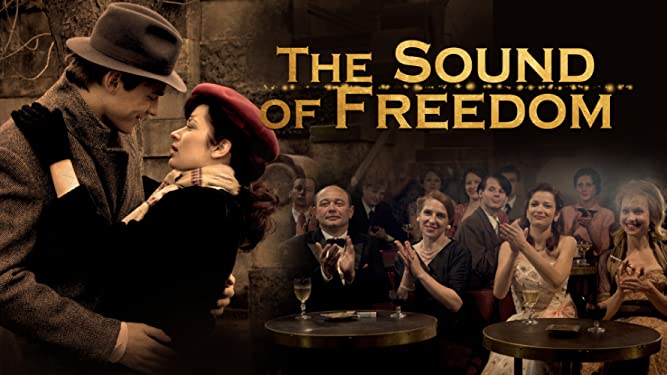
In his youth, Czech novelist Josef Skvorecky was an ardent jazz musician, but playing music from America was a dangerous proposition. However, when bassist Herbert Ward temporarily defected, Skvorecky and his bandmates capitalized (so to speak) on Ward’s “anti-imperialist” credentials to openly play their music. James Bulwer is transparently based on Ward, but Danny Smiricky’s friends will not enjoy much protection from their association with him in Andrea Sedlackova’s The Sound of Freedom, based on Skvorecky’s “Little Mata Hari of Prague,” which airs on the Euro Channel.

Of his band, Smiricky was always the least interested in politics. Nevertheless, he always carried guilt over the misfortunes suffered by his bandmates and their social circle. Frankly, he never really understood why he was spared the worst of it, because guilt and innocence were meaningless under Communism. He might have an opportunity to discover why, when Kunovsky, a former secret policeman, offers to sell him his long-lost file.

Back then (predating the Prague Spring), Smiricky just wanted to play and maybe pursue a relationship with Geraldine Brandejsova. She would be bad news anyway, since her mother is British. To make matters worse, Brandejsova has a friend in the American embassy, for whom she acts as a go-between with an activist priest. Kunovsky and his slimy boss have been assigned to build a case against Smiricky’s band. Unfortunately, their vocalist Marcela Razumowska is the obvious weak point for them to pressure. She tries to protect her friends, even breaking up with Richard Kambala, the trombonist-leader, but the life of her imprisoned brother depends on her providing incriminating evidence.

Although
Sound of Freedom was produced for Czech television, it is remarkably mature and achingly tragic. It also has a nice swing-era-appropriate soundtrack that includes a number of arrangements by the great Emil Viklicky. There is also a laughably strident propaganda blues for Bulwer, very much like those Ward warbled, while backed by Skvorecky.

Friday, May 13, 2022

Jazz Fest: A New Orleans Story

It is almost unfair. A lot of musicians who never play jazz (maybe because it is a demanding art form that never pays as well as pop), are keen to perform at the New Orleans Jazz & Heritage Festival, because it is a great time, with delicious food. Of course, NOLA is always welcoming, so consequently many of the biggest names in a wide array of musical styles have performed at the festival. Many of those appreciative artists pay tribute to the annual institution in Frank Marshall & Ryan Suffern’s documentary Jazz Fest: A New Orleans Story, which opens today in New York and Los Angeles.

Marshall & Suffern do not exactly present a history of the festival, because they only cover a handful of significant events from Jazz Fest’s past, logically starting with its creation. George Wein, the founder of the Newport Jazz Festival, was approached to start something similar in New Orleans, but he begged off until segregation officially ended in southern states. Logically, Louis Armstrong played the inaugural fest, but we see little footage of him at the Fest. Frustratingly, there is even less of the rest of NOLA’s Holy Trinity of musicians: Fats Domino and Al Hirt.

At least one undisputed New Orleans legend gets her just due from Marshall & Suffern. That would be Irma Thomas, who we hear rocking “Jock-o-mo.” (The credits misidentify it as “Iko Iko,” which is a sore point for the composer’s son, Davell Crawford, whom the audience also gets to hear from musically and more extensively in interview segments regarding Katrina.)

It is quite impressive that Katrina did not derail Jazz Fest. In fact, it provides some of the documentary’s most uplifting moments. Yet, perhaps tellingly, Covid did—for two years. Throughout it all, Festival Director Quint Davis was there, so he provides plenty of commentary and reminiscences.

Marshall & Suffern keep the film moving along and well-stocked with famous names. Most viewers probably aren’t looking to a Jazz Fest doc to hear Pitbull or Jimmy Buffet, even though the latter’s long association with the festival and the city of New Orleans justifies his inclusion. Frankly, Marshall & Suffern’s a-little-of-this-a-little-of-that cafeteria approach works best when presenting fresh artists exploring under-represented genres, like the Rising Star Fife and Drum Band and Dwayne Dopsie & the Zydeco Hellraisers, who do just that, in an infectiously musical way.

The Essex Serpent, on Apple TV+

Cora Seabourne is finally acting on her ambition to become a renowned paleontologist, or maybe rather a cryptozoologist. Up until recently, she has only been a case study in the folly of the Victorian era’s restrictive gender roles and arranged marriages. However, she is about to celebrate her new-found freedom by investigating reports of a sea creature in Apple TV+’s six-episode The Essex Serpent, adapted by Anna Symon from Sarah Perry’s novel.

In addition to being an early feminist, Seabourne is also ahead of her time refusing extraordinary measures to save her dying husband. Frankly, in his case, she arguably rebuffed some rather ordinary measures as well. Regardless, she is now rich and single, which certainly interests her abusive late husband’s physician, Dr. Luke Garrett. In fact, he even follows her to Essex where Seabourne is holidaying, to investigate the local sea monster, blamed for a series of woes that have befallen the community.

Naturally, Seabourne hopes to discover some sort of cryptid. However, the local vicar, Will Ransome, assumes it is some form of mass hysteria, like the Salem witchcraft paranoia. It would indeed appear the vicar is the only voice of reason in town, but the other pastor, not so much. Inevitably, Seabourne’s insensitivity rubs the locals the wrong way. She also conveniently refuses to notice the torch-carrying of both Dr. Garrett and her Marxist maid, Martha. However, she is keenly aware of the scandalous romantic tension building between her and the married Ransome.

Symon’s adaptation is frustrating for many reasons. First and foremost, it isn’t even sufficiently interested in the titular Essex Serpent to treat it with any sort of suspenseful ambiguity. Instead, it is simply used as a crude, didactic metaphor. Even still, there is no real resolution regarding the villagers’ curse-like misfortunes they attribute to it.

Indeed, after spinning its wheels over several episodes worth of over-heated melodrama, the series just ends with a hum-drum thud. It doesn’t pay off and the trip getting there is not particularly interesting.

Yet, Tim Hiddleston is still quite compelling as the conflicted and guilt-wracked Ransome. Ironically, his performance probably still counts as one of the more sympathetic clergy characters recently seen in streaming series, sort of like a chaste version of Richard Chamberlain in
The Thorn Birds.

Firestarter, Remade by Blumhouse

Arguably, it is more of a thriller with sf elements than a horror story, but the premise is pretty horrifying for parents. Charlie McGee did not just inherit a resemblance to her parents. She also has their “shine.” That was the whole idea for the shadowy government contractor DSI (aren’t they always shadowy), when they experimented on Andy McGee and his wife Vicky Tomlinson-McGee. Little Charlie’s resulting powers are getting harder for her to keep in check at the start of Keith Thomas’s Blumhouse-produced remake of Firestarter, which opens today (and starts streaming on Peacock).

The McGees know their daughter could be so dangerously powerful, she could never have a normal life if DSI and the “deep state” ever got their hands on her. They live under assumed names and completely off the net, but bullied Charlie is starting to attract unwanted attention, especially when her temper ignites real fires.

Captain Hollister knows she is still out there and suspects the potential of her developing X-Men-like abilities. Hollister also has just the man to track down the McGees. John Rainbird understands them all too well. He too has the power to get inside people’s heads, perhaps even better than Tomlinson-McGee and can withstand McGee’s power to “push” mental images and suggestions, at least to an extent. Unfortunately, that “pushing” is starting to take a toll on McGee’s health.

Scott Teems’ screenplay adaptation of Stephen King’s novel very much follows the structure of the 1984 film, which was pretty faithful to the book. It definitely leans into the father-daughter relationship, because that is the whole point of the story (in all its incarnations). However, the family-versus-agents conflict is familiar, to the point of staleness. Horror fans might know John Carpenter was originally in-line to direct the ’84 film, but he lost the gig when
The Thing bombed (hard to believe, since it’s now regarded as a classic). Sadly, Blumhouse did not hire him to direct this time around, but he did contribute to the score. You can probably best hear his influence during the tense, confrontational third act.

Thursday, May 12, 2022

Foxhole, 5 Soldiers, 3 Wars

The hardware and uniforms change, but the fog of war remains. This film also suggests the young people asks to fight wars are in many ways quite similar—identical in fact. The same cast plays out life-and-death encounters from the Civil War, WWI and Iraq Wars during Jack Fessenden’s Foxhole, which opens tomorrow in New York.

Jackson is a Buffalo Soldier who basically crashed a small Union company’s foxhole, after a Confederate officer wounded him, perhaps mortally. Conrad and old grizzled Wilson believe some of the men should carry him to the distant field hospital, but Clark (presumably hailing from border state hill country) argues Jackson would probably die on the journey and the medics maybe wouldn’t take him anyway.

There is a similar ethical dilemma for the company when then film advances to WWI. They have captured a German soldier in their trench at an inconvenient time, so their sergeant wants to kill him and be done with it. Again, Wilson objects and so does Jackson, a soldier from a black regiment, who is somewhat more readily accepted by the white doughboys.

Easily, the best of the three stories is the conclusion in Iraq—but at least a country mile. By now, Jackson is the leader of the squad. There is no internal dissension within the group and they will face no ethical dilemmas. Instead, they will merely try to survive, without leaving any men behind (including Gale, a new addition to the platoon), when they are separated from their convoy and ambushed by insurgents with an RPG launcher.

Of the three installments, the dialogue of the Iraq section sounds the most like the military talk I’ve heard (from family). It also forgoes the anti-war moralizing, instead portraying the courage and camaraderie of the U.S. military. It actually makes
Foxhole more effective as anti-war critique, because it shows two sides to the combat experience (and the dangers and difficulties they entail), while inviting sympathy for the men and women in uniform.

It is also the tensest and most skillfully executed. In this case, the definition of foxhole is expanded to include the Humvee the soldiers are dug into. Fessenden (son of Larry, on-board as a producer) uses the blinding sand to narrow the audience’s field of vision, creating an uneasy feeling that a fatal shot could come from anywhere, at any time.

Wednesday, May 11, 2022

Monstrous, Starring Christina Ricci

Horror movies hate the 1950s. It was a time of stability and economic growth. What a nightmare. Thank goodness the last few years have been nothing like that. Unfortunately, that is the decade Laura Butler is living in, or at least a stylized version of it. The going was already tough for her, after she left her abusive husband, with their withdrawn son, Cody. Then she starts to suspect a mysterious supernatural something is out to get her son in Chris Sivertson’s Monstrous, which releases this Friday in theaters and on-demand.

It is supposed to be the 1950s, but there is something too conspicuously off for viewers to accept the world as it is presented. Butler’s sun dresses are a little too perfect and her forced cheer is a little too desperate. In the aftermath of her husband’s latest violent episode, Butler fled with Cody, starting over in a vaguely Southern small town. Somehow, she lined up a new job, new house, and a new school with remarkable efficiency. Their rental is even furnished, but one of the books on the shelf looks like
Inflation: A Worldwide Disaster, by Irving Friedman, published in the early 1970s. Don’t blame the art department for that. Blame Sivertson, who let my attention wander.

Initially, Cody was terrified of lady-creature in the nearby lake, but soon he is talking to her like an old imaginary friend.
 Logically, that starts to terrify Butler. As Cody becomes even more anti-social, she become increasingly distraught.

Honestly, it gets tiresome to always be so far ahead of a film.
Monstrous largely feels like parts of Miss Meadows re-edited into Jacob’s Ladder (and Miss Meadows wasn’t so great to begin with). These days it is streaming series like Severance and Shining Girls that deliver genuine surprises, while far too many films merely recycle elements.

Operation Mincemeat, on Netflix

Actor M.E. Clifton James helped pull off one of the most famous deceptions of WWII, by serving as Gen. Montgomery’s double. Glyndwr Michael was at the center of an even more audacious counter-intelligence operation, but he was already dead at the time. For the sake of all the young servicemen slated for the invasion of Sicily, the officers and staff at the British Admiralty’s intelligence division launch a desperate mission to convince German the landing will come in Greece. Their efforts are chronicled in John Madden’s Operation Mincemeat, which premieres today on Netflix.

The film starts at zero-hour, when the Mincemeat staff can do nothing more but prey, which they solemnly do. It is actually one of the most effective and powerful in media res film openings in recent years. A few short months earlier, Lt. Commander Ewen Montagu and Squadron Leader Charles Cholmondely were assigned to Operation Mincemeat, designed to plant false intelligence to draw Hitler’s forces away from Sicily. Although their commanding officer, Rear Admiral John Godfrey was skeptical, they were convinced they needed to tie their fabricated intel to an actual body, for the Germans to ever believe it. Godfrey’s aide, Ian Fleming happened to agree with them and ultimately so did Churchill.

Although the historically-based characters are rarely directly in harm’s way from the Axis, there is the tension of a ticking clock driving the narrative. It is also surprisingly compelling to watch the two officers and their civilian assistants become emotionally involved in the fictitious lives they create for the invented “Maj. William Martin” and his faithful girlfriend, like authors developing feelings for their fictional characters.

Despite the cerebral nature of the story, Madden builds a good deal of suspense. Ironically, a lot of it
comes from the number of Spanish officials who tried to act in good conscience, in accordance with their ostensive neutrality. It took a lot of sly machinations on the part of the local British consul (nicely played by Alex Jennings) to appeal to their fascist inclinations.

On the other hand, there is a distracting minor subplot ginning up paranoia over suspicion Montagu’s brother Ivor was a Soviet spy, which he was indeed, but apparently only briefly and with little tangible results. The portrayal of Churchill is a bit of a caricature, but it also shows that he was nobody’s fool. However, the film does a great job conveying tactics, strategy, and the general wartime environment.

Tuesday, May 10, 2022

A Taste of Blood, Based on Tolstoy’s Vourdalak

A.K. Tolstoy (second cousin of Leo) could have been one of the great horror writers of his era, but when The Vampire bombed, he held off publishing the next three supernatural stories he had lined up. Eventually, Family of the Vourdalak became a minor classic that horror fans well-remember as one of the tales adapted in Mario Bava’s anthology film, Black Sabbath. Now, the Eastern European vampire is transplanted to Argentina in Santiago Fernangez Calvete’s A Taste of Blood, which releases today on VOD.

Natalia always chafed under the controlling thumb of her father Aguirre, but she is about to discover why he is so strict. One night, she sneaks out to meet her boyfriend Alexis (who really isn’t such a bad chap), but instead, she encounters a stranger who claims to be a distant relative. Then he tries to kill her. Fortunately, Alexis safely sees her home, where her father finally levels with the entire family.

Aguirre was adopted into a wealthy Slovenian émigré family, who had long been plagued by Vourdalaks. Essentially, the Eastern European vampires are like undead family annihilators, who particularly crave the blood of relatives and loved ones. Aguirre decides to hunt down the latest Vourdalak, giving strict instructions not be let back into the house before sunrise, because Vourdalaks cannot endure sunrise. Yet, he turns up like clockwork, right before dawn, demanding they open the doors, so he can crash.

Taste
is a great looking horror film, thanks to cinematographer Manuel Rebella’s striking use of light and darkness, but it sounds awful, because of the almost random mixture of English dubbing with subtitled Spanish. Entire conversations alternate between the two languages, for no reason, as far as viewers can tell.

Monday, May 09, 2022

Dark Night of the Scarecrow 2, on DVD

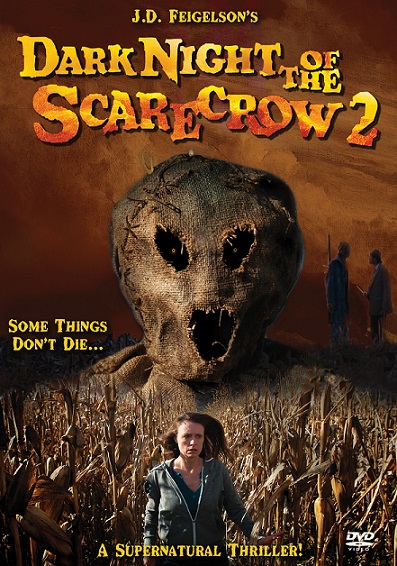
Corn-horror really is a thing and it predated the first Children of the Corn movie on-screen by at least three years. Frank De Felitta’s Dark Night of the Scarecrow (1981) regularly makes lists of the best made-for-TV horror movies, but a sequel never re-awakened the Scarecrow—until now. The story picks up more than forty years later in Dark Night of the Scarecrow 2, written and directed by the original screenwriter, J.D. Feigelson, which releases tomorrow on DVD.

Chris Rhymer had no connection to the fateful Southern town from the first film, but she suddenly had to relocate there with her moody son Jeremy, because she testified against her mobbed-up boss in court. Only the sheriff knows she is in Witness Protection. Unexpectedly, Jeremy quickly takes to his after-school minder, Hilda Corvis, whom he calls “Aunt Hilda.” That is a little too familiar for Rhymer, but she is more worried about “Bubba,” the imaginary friend she constantly catches him talking to.

Obviously, we know that is the Scarecrow, whom Corvis seems to have a longstanding connection to. However, Bubba seems to take a more protective interest in Rhymer than Corvis realizes, especially when the bad guys start coming for her.

Although Feigelson’s new story is essentially self-contained, it refers back to the first film in ways that ought to satisfy its fans (who should definitely be out there). We briefly see a picture of Larry Drake’s poor, hapless Bubba Ritter and implying the Scarecrow adopted his name is definitely a nice touch. Yet, perhaps not-so-weirdly, the sequel would probably work better as a TV-movie, because it will be too tame for contemporary horror fans. You can almost see where the commercials would go.

Sunday, May 08, 2022

Crazy, the Hank Garland Movie

Hank Garland had some success in the music business, in both the country and jazz genres. Unfortunately, his lived some of the worst aspects of the country and jazz lives. He could play like Chet Atkins, until he tragically couldn’t. Garland’s life gets the bio-picture-treatment in Rick Bieber’s Crazy, which airs on This TV.

Wisely, Bieber skips over Garland’s short pants years, starting with his talent show debut, witnessed by Hank Williams himself (played by producer-musician Steve Vai), who provides his blessing. Before long, Garland is recording around the clock in Nashville studios. He is also building a bit of a reputation of his own, recording a few instrumental hits. Of course, the women are attracted to him, especially Evelyn, who will soon be Evelyn Garland.

Unfortunately, both Garlands have some rather pronounced jealousy issues and perversely, inclinations towards infidelity. However, despite them both being Southerners, they have very different attitudes about racial relations. His are not explicitly thought-out, but after getting an earful of Wes Montgomery in a Chicago club, Garland catches the jazz bug. Of course, that means playing with black musicians, which he has no problem with. His wife, on the other hand, worries about what people will think.

Crazy
originally released a just a few years after Walk the Line, so it was positioned as a country music film, but it has a whole lot of jazz. It is totally cool to see legends like Montgomery (played by Tony MacAlpine), Paul Desmond (played by Johnny “Vegas” Burton, whose name probably would have amused the droll alto player) and Joe Benjamin, who played on Garland’s Jazz Winds from a New Direction album and has a small but important dramatic role in the film (nicely handled by Ryan Cross).

Larry Klein’s soundtrack also leans more towards jazz than twang, featuring guitar work from Larry Koonse and Dean Parks. Even when the film does its country thing, it keeps a jazz element, like Madeleine Peyroux’s renditions of Patsy Cline’s “Crazy” (Garland backed her on her iconic recording) and “Lonesome Road.”

In the lead, Waylon Payne is just okay as Garland. He is sufficiently moody, but that is about as far as his performance goes. However, Ali Larter is terrific as the messily complicated Evelyn. She is definitely credible precipitating all kinds of trouble, while humanizer her, during her lowest moments.

Saturday, May 07, 2022

Human Factors, from Germany

The home invasion ended quickly, but the family dysfunction lingers on and on. Viewers get to see it all from multiple perspectives in Ronny Trocker’s Human Factors, which is now playing in Brooklyn.

Mark and Nina are an unhappy-on-the-inside German couple who run a boutique advertising agency together. They also have a teen daughter, Emma and Max, an introverted moppet with a pet rat named Zorro (who is easily the most likable character in the film). For a brief getaway, they popped over to their Belgian summer house, but while dad was off at the grocery, mom has a brief run-in with masked intruders, who were hidden upstairs—or did she? Or was he?

No real harm was done, except Zorro managed to make a break for the woods during the confusion. Nevertheless, Nina is shaken. The next day, everyone tries to act like everything is all better, but Max is worried about Zorro and Mark is even more annoyed by Nina’s brother Florian, when he decides to make a reassuring visit.

In the next few days, a lot of family angst and resentment will come out. It also spills over into the office when Mark admits he accepted a Euroskeptic political party as a client without consulting Nina. Just what happened in Belgium? Several flashbacks from other perspectives will help illuminate the truth.

The trouble is the crime itself is basically trespassing. The stakes are entirely familial and emotional, rather than criminal. Yet, it is structured like a
Rashomon-like thriller, sort of like a family drama directed by Henri-Georges Clouzot, but it is nowhere near that interesting. Trocker tries so hard to keep the audience at arm’s length, it ends up straining the entire film.

Friday, May 06, 2022

Snoopy Presents: To Mom (and Dad) with Love, on Apple TV+

Parents like to say every day is children’s day—unless you are Charlie Brown, who never gets to have his day. On the other hand, every day is usually great for Peppermint Patty, except Mother’s Day, because she doesn’t have one. However, she has Marcie to help her cope in Snoopy Presents: To Mom (and Dad) with Love, directed by Clay Kaytis, which premieres today on Apple TV+.

This new Mother’s Day special is a bit of a departure from the previous
Peanuts holiday commemorations, because it very much focuses on Peppermint Patty, with both Snoopy and Charlie Brown only playing supporting roles. Of course, Snoopy still gets an adventure in, when he sets off with Woodstock to find his avian friend’s sainted mother.

Although we never learn the circumstances, it is clear Peppermint Patty has grown up without her mother, just her cool, sporting dad, which probably explains why she always kicks poor Charlie Brown’s butt in sports. She always hated Mother’s Day, but this year it is really getting her down. Fortunately, Marcie will step up, the way Linus sometimes does for Charlie Brown.

To Mom
is consistently sweet and endearing. It helps define the idea of family inclusively, but without charging into the raging culture wars. Presumably, Charles Shulz would have been comfortable with it. After all, he always expressed humanistic compassion for kids who felt a little different or a little lonely. In this case, screenwriter Alex Galatis manages to build an entire story out of Peppermint Patty’s off-hand mention in one comic strip (from 1973) that she has no mother, without creating any new backstory of his own. That’s some agile writing and good management of a beloved licensed property.

Bosch: Legacy. On Freevee (a.k.a. IMDb)

Harry Bosch is one cool cop, because he has great taste in jazz. He is also a veteran and owns a dog (named Coltrane). Altogether, that must make him the most sympathetic and easiest-to-identify-with cop ever—except he is no longer a cop. Frustrated with LAPD bureaucracy, Bosch is now a private investigator, but catching bad guys is still his thing. His latest cases are positioned as a fresh start (now on Prime’s sister streamer), but it is really just Bosch “season 8,” but that should suit fans just fine when Bosch: Legacy premieres today on Freevee (formerly branded as IMDb).

Bosch and hard-charging criminal defense attorney Honey Chandler used to be mortal enemies, but they formed an alliance when crooked tycoon Carl Rogers tried to have them killed, along with Bosch’s daughter Maddie. That formed a bond between all three, but Bosch and Chandler still have very different ideas regarding criminal justice. Nevertheless, he and the counselor agree to work together when Rogers flips a witness to beat the rap. Unfortunately for the newly freed sleaze, his partners in the Russian mob now want all the revenue they lost while he was in prison, plus interest.

In the private sector, Bosch is free to work whatever case appeals to his sense of justice. In addition, to Rogers, he also works with (not for) Chandler to clear a homeless man charged with murder. Meanwhile, a dying billionaire Whitney Vance (a lot like Gen. Sternwood in
The Big Sleep) retains Bosch to find the illegitimate son he abandoned decades ago. A whole lot of money is at stake, so the board of his aerospace company would prefer Bosch did not find any heirs.

Of course, Bosch also worries about his daughter, especially since her experience with Rogers motivated her to join the police force. Finally patrolling the streets with tough but reasonably fair training officer, she struggles to maintain her objective detachment, especially when they respond to calls involving a serial rapist stalking their beat.

Legacy
cannot quite wrap-up all four strands in ten episodes. In fact, writer-creators Eric Ellis Overmyer, Tom Bernardo, and original novelist Michael Connelly do not even try, ending “season one” on a cliffhanger. At least they do a nice job bringing new viewers up to speed with their initial recap.

Regardless, Bosch is maybe the best American TV/streaming detective going these days. It is not just his taste in music, but the way he plugs artists like Art Pepper, Ron Carter, and Frank Morgan is definitely cool. (He even has a poster on his wall for the Morgan documentary,
Sound of Redemption, on which Connelly served as an executive producer). Titus Welliver is just terrific in the role. He is all kinds of steely and grizzled, but he also plays the worried dad quite compellingly.

Thursday, May 05, 2022

The Cultural (and Horror) Significance of Roger Corman, on Nightfire


As legends go, Roger Corman is especially legendary. I celebrate his cultural significance, from a horror perspective, at Nightfire here.

HIFF '22: Resurrection! Airto Moreira & The Preservation Hall Jazz Band

Brazilian percussionist Airto Moreira came to America for love, following his wife, Flora Purim, but he stayed for the music. Anyone whoever collected CTI Records in the 1970s inevitably bought many Moreira played on, perhaps including the sessions he led for Creed Taylor’s label. He was also a one-time member of Weather Report and Return to Forever. Those are some heavy fusion credits, but Moreira leaped at the chance to play with the band arguably most-steeped in jazz tradition, the Preservation Hall Jazz Band. Their meeting is documented in producer-director Dale Djerassi’s twenty-one-minute short film, Resurrection! Airto Moreira & The Preservation Hall Jazz Band, now screening at film festivals.

Djerassi gives viewers a brief thumbnail sketch of Moreira’s life and career, incorporating some colorful graphics (including an eye, an ear, and a toe, serving as a pictographic pronunciation guide for “Airto”). Moreira himself refers to the stormy drama that complicated his marriage during the 1970s, but he never talks specifically about Purim’s incarceration on a cocaine charge. This is a happy film, so do not expect anyone to dive too deeply into old pains.

Although Purim never appears in
Resurrection, the short documentary is still a family affair. His daughter, vocalist Diana Moreira also performed with him at Preservation Hall and his son-in-law Krishna Booker, the son of Moreira’s old musical comrade Walter Booker, also adds some additional percussion. The Moreiras only had about an hour of rehearsal with the Preservation Hall Jazz Band, some of which Djerassi filmed, but the percussionist was clearly comfortable being amongst family and the New Orleans musicians.

In fact, one of the most interesting aspects of
Resurrection is the parallel Moreira draws between the influence Brazilian Carnival exerted on his musical life and New Orleans jazz musicians’ formative experiences with Mardi Gras and second-lining. It turns out Djerassi’s short documentary nicely compliments Jason Berry’s film, City of a Million Dreams, an exploration of the New Orleans jazz funeral tradition, which is also currently playing on the film festival circuit.

Of course, the best part of
Resurrection is hearing the Moreira play with the real deal NOLA jazz musicians. Frankly, when the Moreiras jam with Charlie Gabriel on Ary Barroso’s “Aquarela do Brasil,” fittingly in Congo Square, a lot of viewers will wish Djerassi had included the entire tune.

Shepherd

Technically, Eric Black was hired to tend the sheep on a remote island, not the abandoned lighthouse. Still, at the first sight of its tower, we know he is in trouble, because lighthouses never portend good things in the movies. Black still bitterly grieves for his unfaithful wife, so he will be especially susceptible to all the bad business in store for him in Russell Owen’s Shepherd, which opens tomorrow in New York.

Black is so devastated, he can no longer hold down a conventional job, so he answers a classified for a shepherd position. “Fisher,” who ferries him to the island (sort of like Charon) is not exactly welcoming—and she will only get weirder. Black tells himself he does not mind the solitude, but any time he encounters heights of any extent, like the stairway to his bedroom, his vertigo kicks in. At least he has his dog for company, but loyal Baxter can tell something is very wrong.

Shepherd
mixes elements of the salty supernatural, especially films like Eggers’ The Lighthouse and Xavier Gens’ Cold Skin, with long-night of the soul movies in the Jacob’s Ladder tradition. Oftentimes, it doesn’t make perfect sense, but it is always pretty eerily effective. The incredibly lonely-looking locations (Wales and Scotland, including the Isle of Mull) are also a big asset.

Owen masterfully controls the foreboding mood and Kate Dickie is wildly disconcerting as Fisher. As Black, Tom Hughes could not possibly brood any harder, in what could be one of his best performances. Of course, Shuggie is money in the bank as trusty Baxter (but non-horror fans should be cautioned not to develop too strong an attachment, because we know he will mysteriously disappear at some point). Plus, the great Greta Scacchi creeps viewers out in a non-horror way, as Black extremely judgmental mother.

Wednesday, May 04, 2022

Blue Island (ND/NF), in the Epoch Times


Hong Kong was once a metaphorical and literal island[s] of freedom, but now its not. Two generations of HK activists reflect on the CCP crackdown in the hybrid documentary BLUE ISLAND. Exclusive EPOCH TIMES ND/NF review up here.

The Twin, on Shudder

Where better to recover from a profound family tragedy than a remote Finnish country village? If they are fortunate, they will be there in time for this year’s Midsommar ceremony. True to genre expectations, the Doyles somehow managed to move into an area that is a focal point for pagan weirdness in Taneli Mustonen’s The Twin, which premieres Friday on Shudder.

Sadly, Rachel and Anthony Doyle lost their son Nathan in a car wreck, but at least they still have his spare twin, Elliot. For a fresh start, they move to his ancestral Finnish home, but the standoffish locals welcome her like a case of Mad Cow Disease. Only Helen, a mildly eccentric English expat gives her the time of day. Unfortunately, Helen’s crazy talk about sinister pagan powers starts to sound believable when Doyle starts to suspect something is out to get Elliot.

Honestly, Elliot is such a sullen and off-putting kid, spending any length of time with him is hard enough. Enduring two of them is almost unimaginable. That is a major reason why the first half-hour or so hard to slog through. The film starts to click when Helen introduces a lot of creepy pagan lore. There is also a reasonably effective twist laying in wait for the audience, but Mustonen and co-screenwriter Aleksi Hyvarinen can’t quite stick the dismount.

One of the problems with the bulk of
The Twin is the cold, detached behavior of Anthony, which makes it feels like yet another horror film trying to earn scares by undermining the institutions of marriage and family. Yet, the Conjuring franchise (for instance) has been so successful precisely because they are all about families coming together to overcome profoundly evil horrors (with the help of the Warrens, of course).

Tuesday, May 03, 2022

Noe’s Lux Æterna

Benjamin Christensen's Häxan is probably the first horror documentary. Its images are so eerie, it has been excerpted and edited into dozens of subsequent films. (Being in the public domain also makes it attractive.) Once again, it sets the mood for a film about witches, but the lunacy that follows the opening snippets is all Gaspar Noe. First, they talk, then they go crazy in Noe’s Lux Æterna, which opens Friday at the Metrograph.

Throughout the film, Noe uses a split-screen, very much like the so-called “Duo-Vision” of Richard L. Bare’s notorious
Wicked, Wicked. Of course, Noe’s film is also all very meta, with the cast playing loosely fictionalized (and improvised) versions of themselves. It opens with director Beatrice [Dalle] talking to her star, Charlotte [Gainsbourg], while the rest of the crew prepare (haphazardly and chaotically) for a big stake-burning scene.

Clearly, Beatrice and Charlotte respect each other, because of their common experiences in the industry. However, the crusty old cinematographer and sleazy producers are openly contemptuous of the inexperienced director (most of whose work has been in front of the camera). It all comes to a head when the shoot nose-dives into Hell, but when that happens on a Noe production, it is simply called a Tuesday.

The film opens with an epileptic strobe warning, with good reason. It is short, but strange—and relentlessly flashing.
Lux Æterna is not even an hour long, but it would be hard to watch much more without your eyeballs exploding. A lot of the split-screen use is just as gimmicky as Bare’s 1973 cult favorite, but the visual explosion of the climax is vintage Noe.

Arguably, this is very much a horror film—a pretty shocking one in fact. It just really takes its time on the build-up. After all, there is a long tradition of artsier horror films, gravitating towards witches and witchcraft, including the Visconti/Pasolini/De Sica anthology
The Witches and good old Häxan. Like many of those films, there is also a pronounced feminist angle here, particularly when it comes to the film production process. Ironically, Noe might up indicting himself, in retrospect—given what he puts his cast through.

Cursed Films II: Cannibal Holocaust


Technically, no cast-members were killed during the making of this film, despite the director trying to create the illusion to the contrary, for the sake of publicity. The animals killed on-camera are a different story. Perhaps the most controversial and vilified film of all time, Ruggero Deodato’s Cannibal Holocaust, is featured during the final episode of Cursed Films, season II, which premieres this Thursday on Shudder.

Cannibal Holocaust
was the last gasp of Italian cannibal exploitation movies and Italian genre filmmaking in general. In retrospect, many consider it an early forerunner to the documentary-like horror that fully exploded with The Blair Witch Project. It also happened to be especially brutal—so much so, the cast were already regretting their participation, before even filming their scenes.

By all accounts, it was a horrible shoot, for reasons that are fully explained. In terms of the “curse,” it mostly just applies to the careers of those involved, except Deodato, who seems to have done just fine subsequently. (Remember, he helmed
The Barbarians, a jokey Conan knock-off for Cannon). Yet, it definitely fits the theme of the series, because good lord, what a sleazy horror show it was.

Monday, May 02, 2022

Black Site, on Redbox

Peace must be breaking out if Jordan is okay with the presence of a Mossad agent assigned to a Five Eyes black site hidden in the kingdom’s desert. Of course, it is not like Jordan has a lot of civil liberties to hinder its operations (Freedom House gives it a 34 out of 100, ranking it “Not Free”), but of course, we’re the bad guys in Sophia Banks’ Black Site, which releases tomorrow via Redbox.

When terrorists blew up a hospital in Ankara, they also killed the husband and daughter of Abby Trent, a CIA analyst. Why would a high-level analyst be doing in-country station work you might wonder? Well, don’t, because one year later she will be attached to the black site responsible for interrogating persons-of-interest, with respects to the bombing. Okay, some think it is a bad idea to have her on the case, but there she is.

Unfortunately, Trent is due to be shipped out soon, but right before she leaves, “The Hatchet” arrives. Supposedly, he was the terrorist mastermind behind the bombing that Trent now suspects was a drone strike. He also inconveniently let himself get captured, so he could wipe out Trent’s team and their incarcerated assets. The Hatchet seems to have inside help, but at least Trent can rely on Uli Wasserman from the Mossad (whereas not so much cocky American contractor Raymond Miller).

Jinder Ho and John Collee’s screenplay explicitly argues the CIA is more dangerous than international terrorists. Yet, it is produced to serve as an old school, bullets-flying VOD action movie, that even emblazons Old Glory across its on-sheet. The question remains, who is the intended audience expected to be entertained this film?

By far, the most interesting thing about the film is the character of Wasserman and Phoenix Raei’s portrayal of him. In this murky world, the Mossad guy is the moderate pragmatist (which could very well be true in the real world as well). On the flip side, Jason Clarke looks visibly bored going through the motions as The Hatchet, who must be the world’s most sullen and depressed terrorist ever.

Similarly, Jai Courtenay spewing anti-authority attitude as Miller makes no sense in this context. Anyone in a sensitive post like this would get bounced real fast for challenging the chain of command.

Sunday, May 01, 2022

Bad Roads, from Film Movement’s Ukrainian Collection

Why do American action film distributors keep releasing Russian WWII films? Several hit DVD shelves during the weeks following Putin’s invasion of Ukraine and another (about a sniper from Siberia, no less) was just announced. These movies feed Putin’s propaganda narrative of a Russia waging war against [neo]-Nazis, when the truth is the Communist partisans who really battled the Germans were purged after the War and even a hero of Ahmet-khan Sultan’s stature barely survived the ethnic cleansing of his Crimean Tatar people. We fought the Germans. Stalin fought domestic dissent. Film Movement has taken a different approach, releasing a number of films from Ukraine explicitly addressing Putin’s ongoing invasion and scorched earth occupation of the Donbass region. In addition to Loznitsa’s Donbass and Vasyanovych’s Reflection, Film Movement also recently released Natalya Vorozhbit’s Bad Roads in real and virtual theaters.

Submitted as Ukraine’s international contender for the slap-happy Oscars that just passed,
Bad Roads is a bit like a Ukrainian version of Manchevski’s Before the Rain, but its four constituent stories are not as explicitly interlinked and the does not turn in on itself in such a conspicuous way. In fact, the pieces vary quite a bit in their power and potency. The first and third really stand out, for very different reasons.

Bad Roads
starts with a somewhat inebriated school principal who is inconveniently unable to find his passport when stopped at a military checkpoint. Vorozhbit strangely but adroitly alternates between tension and absurdist Beckett-like humor, keeping viewers guessing who might be a threat to whom. It is also a distant-far cry from anything you might consider Ukrainian “propaganda”—quite the contrary, actually.

The high point of the film, which could and maybe should stand on its own, is the third story. We watch in absolute horror as a Russian-backed paramilitary separatist kidnaps a young Ukrainian journalist for the sole purpose of brutalizing and humiliating her. What transpires is often hard to watch, because it outdoes torturer-victim dynamic of
Death and the Maiden by multiple magnitudes. Yet, the survival strategies employed by the woman are so rivetingly intense and provocative, they will make your jaw drop.

Marina Klimova is absolutely extraordinary as the journalist. It is a truly harrowing and profoundly haunting performance that ought to earn her a best supporting Oscar in a more just war (memo to the Academy, here’s a way to show you “Stand with Ukraine”). Likewise, even though Vorozhbit often keeps him shrouded in shadows, Yuri Kulinich is absolutely chilling as her tormentor, Stas.

The second interlude, involving a rebellious teen’s contentious relationships with her school “friends” and her earnest grandmother feels almost inconsequential compared to rest of the film. However, the simple faith of the Granny (nicely played by Yuliya Matrosova) is a timely reminder of how misguided it is for some of our fringe super-Christians to side with Putin, when Ukraine is a much more devout God-fearing and -worshipping nation.