Showing posts with label Communism. Show all posts

Thursday, October 01, 2026

One Day in People’s Poland, on OVID.tv

September 27, 1962 was a day like any other in Communist Poland. It was typically oppressive and typically well documented. Listening to excerpts of secret police reports selected by Polish documentarian Maciej Drygas might make viewers wonder if everyone in Poland was under constant surveillance during the Communist era. For all practical purposes, everyone had to assume they were. While it does not seem like a hugely significant day from our historical vantage point, it was pretty awful for many average Polish citizens, as primary sources attest in Drygas’s short documentary, One Day in People’s Poland, which premieres today on OVID.tv.


Every word in this film was in some way recorded in 1962. It starts with an early morning police report regarding anti-Communist graffiti defacing the wall of the Chinese embassy. It was a rather punky but amusing act of defiance. The mystery offenders also did a thorough job of it, because the authorities literally had to chisel sections out of the stone wall.

More ominously, there are multiple reports from the Security Service, regarding their surveillance targets. One poor woman went to three different stores in hopes of finding salt for sale. She never got her salt before the Party arrested her.

Considering this day was chosen for its averageness, Drygas’s film should dispel several misconceptions. First, it demonstrates widespread discontent with Communism, well before the Solidarity movement rose to prominence. There are several cases of anti-Communist graffiti, also including a few choice words left on the wall of a train station bathroom.

It also proves just how desperately poor the country was under Marxist economics. The lack of basic necessities was even a national security concern for one military inspector, who reported “25% of soldiers have no shoes whatsoever.” We can only imagine what happened to a truth-teller like him.

Violated Letters, on OVID.tv

Handwritten letters still feel like a much more personal statement than e-mails or texts. Therefore, the interception and censorship of a private letter feels like a much more personal intrusion than snooping on e-mails. The Polish Communist regime did so, by the tens of millions. In fact, internal Communist Party reports boasted of the volume of their internal surveillance and argued for increasingly draconian punitive applications. Viewers can hear (and read subtitles of) those reports along with dramatic examples of the censored correspondence in Marciej Drygas’s short-ish documentary, Violated Letters, which premieres today on OVID.tv.

Every word in
Violated Letters could be considered a historical document. Essentially, it shares stylistic and compositional similarities with Dear America: Letters Home from Vietnam, The Ordinary Thing, and other previous documentaries, in which off-screen voices read letters accompanied by archival video from the period under consideration. There is not a strict narrative as such, but the selected texts illustrate the sweep of Twentieth Century Polish history.

Drygas starts with poor Polish peasants complaining about the brutality of the occupying Soviet Red Army, and ends with the censorship office’s 1989 instructions regarding how to hide or dispose of evidence of their crimes. Sometimes, Drygas incorporates eye-witness accounts of traumatic historical events, like a Polish soldier mobilized for the 1968 invasion of Czechoslovakia. Yet, there are small-scale disasters, like the woman unable to obtain a passport to visit her sick mother abroad, who asks a friend to send her a bereavement notice as a ruse.

By far, the most heartbreaking correspondence must be the letter sent by a young boy to the figurehead president, begging for clemency for his father, Karol Chmielowski, who had been sentenced to death. More than any other letter, young Chmilowski’s illuminates the regime’s petty cruelty.

Thursday, March 19, 2026

Loznitsa’s Two Prosecutors

Ironically, guileless Kornyev is especially vulnerable to Stalin’s purges, precisely because he ardently believes in Communism and the virtue of the tyrannical General Secretary. That leaves him defenseless to those who better understand the Party’s true nature and what is necessary to survive it. Ill-advisedly, Kornyev goes straight to the top, reporting his suspicions of corruption to Procurator General Andrey Vyshinsky, the legal architect of Stalin’s Purges in director-screenwriter Sergei Lotznitsa’s Two Prosecutors, which opens tomorrow in New York.

Tired old Pegleg gets a relatively easy prison job—burning all the letters sent to Stalin, asking him to intervene in a loved one’s case, in the interests of “justice.” It turns out his blood-scrawled note is in there too. It presumably never reached Stalin, but somehow it found its way to Kornyev, a recently appointed provincial prosecutor (functioning somewhat like an investigating magistrate).

Kornyev insists on interviewing Stepniak, as the prisoner was still known, even though the prison officials think he is crazy for wasting his time. They put him through a Kafkaesque bureaucratic ringer, but eventually they relent. Convinced Stepniak has been unjustly prosecuted, Kornyev fears the local authorities are acting in concert to undermine confidence in the Soviet justice system, so he leaves for Moscow, intending to report his findings directly to Vyshinsky.

Frankly, Kornyev’s naivete is painful to behold. Watching him dig his own grave, deeper and deeper, is absolutely agonizing. Indeed, the greatest tragedy is his own faith in the Party. In most films, finding yourself several step ahead of the protagonist induces boredom, but in this case, it is utterly nerve-wracking waiting for the ironclad shoe to drop.

Two Prosecutors
is an austerely Spartan film, partly because that is how life is under socialism, and partly because Loznitsa allows nothing to distract from Kornyev’s self-inflicted doom. The film only consists of a half-dozen scenes, but each one almost suffocates viewers with tension and absurdity.

Thursday, February 05, 2026

SBIFF ’26: Perla

One of the worst things about oppressive regimes is the way they corrupt and break people. When Perla Adamova fled Czechoslovakia after the 1968 Soviet Invasion, she never looked back (for reasons that will be painfully understandable). Yet, she remained deeply damaged. Her former lover Andrej didn’t get away. He represents a hefty share of the crushing guilt she carries. Consequently, it is hard for her to refuse when Andrej demands she bring their daughter Julia for a visit, even though she knows she shouldn’t. Indeed, going home will be emotionally and physically perilous in director-screenwriter Alexandra Makarova’s Perla, which screens at the 2026 Santa Barbara International Film Festival.

Adamova is a bit of a neurotic wreck, but that is perfectly acceptable to the Vienna art scene. Marrying Josef Hoffmann also brings some stability, even though she met him when he was dating her close friend. Then Andrej calls. She tries to deflect her guilt, credibly arguing everything she did, she did for their daughter. Then he plays his fatal tumor card.

Except—not really a
spoiler alert—Andrej admits he lied as soon as she arrives with Hoffmann and Julia. Thanks to her husband’s resources, she entered the country with forged Austrian papers. Obviously, they need to keep a low profile. It is also increasingly evident that the trip is not healthy for Julia. Yet, Adamova displays a dangerous rush of excitement for the old sights and sounds of her Slovak homeland, including Andrej. If you suspect it will end badly, you have at least a basic grasp of the nature of early 1980s Warsaw Pact Captive Nations.

Makarova dedicated the film to her grandmother, but Adamova is unambiguously modeled on her mother, an expat artist who lived in Vienna. Both she and Andrej often act in selfish and even rather awful ways. Yet, Makarova always finds ways to remind viewers that their actions are the direct result of abuse they suffered. Indeed, there is an important scene that provides the key to unlock the entire film, but it is uncomfortable to watch because of its brutality, despite Adamova’s murky lighting and framing.

Tuesday, September 16, 2025

Eugene Yelchin’s I Wish I Didn’t Have to Tell You This

Eugene (formerly Yevgeny) Yelchin won a Newbery Honor for his children’s novel, Breaking Stalin’s Nose and helped storyboard everybody’s favorite commercial: Coca-Cola’s Christmas polar bears. Frankly, it makes sense he would have an affinity for the big white bears from his time in Siberia. He first went there voluntarily to work for a theater company (and avoid service in Afghanistan), but stayed against his will in a state “mental hospital.” Getting from there to America was quite a story, which he tells and illustrates in I Wish I Didn’t Have to Tell You This: A Graphic Memoir, which goes on-sale today.

While still a theatrical design student, Yelchin loved his city of Leningrad, but he was drawn to the underground art scene. He was also vaguely conscious his Jewish heritage could be considered a liability, but he and his stern mother and cranky grandmother were absolutely not Refuseniks. Indeed, their attitude towards such dissidents were quite Soviet, until Yelchin meets Libby, a visiting American student through his friend Mark. Much to his surprise and confusion, she is on a mission to help the Refusenik community.

It is awkward between them, because of the language barrier and their conflicting loyalties and values, but the chemistry just keeps pulling them closer. Yelchin also starts to question the Soviet system when he notices all the KGB surveillance focused on them. However, he truly loses faith when the KGB (or perhaps just the regular militia) kill Mark after he too declares his Refusenik intention to immigrate.

At this point, Yelchin can sufficiently read between the lines of Party propaganda to know he wants no part of the war in Afghanistan, so he accepts a job with a Siberian theater company, whose director has KGB connections. Yet, life on the outskirts of a plutonium enrichment facility entails its own dangers. The state also completely censored mail between him and Libby, so Yelchin grows increasingly isolated.

Yes, the tragically late actor Anton was Yelchin’s nephew, but the events of this graphic novel memoir predate him. Instead, they capture the turmoil and austerity of the late Brezhnev and early Andropov years (of course, he hardly had time to enjoy any “late years” as General Secretary). Consequently, Yelchin provides a revealing Soviet-era perspective on the Afghanistan War and its “Cargo 200” stigma, the Refusenik experience, anti-Semitic prejudice in general, and the horrors of Soviet sanatoriums.

Yet, his graphic memoir is also a highly appealing love story, especially since it is entirely free of cheap sentimentality. Despite the initial language differences, Yelchin and Libby are always brutality honest with each other. Indeed, that seems to be part of their unique chemistry.

Thursday, March 20, 2025

1989: A Statesman Opens Up, on OVID.tv

When former Hungarian Prime Minister Miklos Nemeth supported reclaiming the remains of his predecessor, Imre Nagy, from an unmarked grave, so it could have a proper burial, he genuinely risked ending up in one himself. Nagy had supported democratic reforms during the 1956 Hungarian Revolution, which resulted in his trial and execution by the Soviets. Memories of ’56 brutality weighed heavily on Gorbachev when Nemeth decided to loosen restrictions in Hungary, particularly with respect to the borders. When he opened Hungary’s border with East Germany and allowed any crosser with a valid passport to proceed to any nation that would accept them, he largely rendered the Berlin Wall obsolete. At least that is how he remembers it—and he has a valid point. Nemeth looks back on his history-making years as Hungary’s final “Communist” PM in Anders Ostergaard & Erzssebet Racz’s 1989: A Statesman Opens Up, which premieres today on OVID.tv.

Nemeth always had dramatically mixed feeling about the Party. His father did not talk to him for six months after he joined. He was only selected as PM to serve as a technocratic caretaker, who would hopefully arrange more Western loans and credits. Hungary was teetering on the brink of default, so he was shocked to learn the regime spent a large fortune annually on border security—including considerable amounts for border armaments from our ally, France.

Despite clear opposition from Hungarian Party Secretary Karoly Grosz, Nemeth started scaling back border enforcement, starting with the Austrian frontier. Naturally, that alarmed the East German Party boss, Erich Honecker. Grosz was not pleased either, but he really had a fit when Nemeth supported the posthumous rehabilitation of Nagy. Grosz was not an apparatchik to trifle with. He first made a name for himself as part of the Hungarian Workers Militia, working beside the Soviet Army to hunt and kill his fellow countrymen.

Ostergaard, Racz, and Nemeth himself make a strong case the former PM has yet to get the credit he deserves for the fall of Communism. Ironically, he steadfastly advocated for free elections, even though he fully understood he would lose his position as a result. He also played Gorbachev beautifully.

Wednesday, March 19, 2025

Reconstruction of Occupation, on OVID.tv


Obviously, footage of the Soviet 1968 invasion of Czechoslovakia was dangerous. That is why average Czechs and Slovaks kept it hidden. It was also a valuable historical record, which is why they never destroyed it. Fifty years after the brutal repression of the Prague Spring, filmmaker Jan Sikl shaped extensive excerpts of previously unseen professional and amateur film into the documentary, Reconstruction of Occupation, which premieres tomorrow on OVID.tv.

As a collector of vintage family home movies, Sikl happened to be the guy who often got called when someone uncovered an old reel of film. However, the cache of professionally-produced newsreel footage of the invasion and subsequent protests was something else entirely. Sikl started showing clips on news shows, hoping the demonstrators captured in the act of resistance throughout his footage might come forward. Many did. So did others who were secretly holding film of their own.

Suddenly, Sikl’s small project grew considerably in scope. Like many Czechs, the events of 1968 greatly shaped Sikl’s perspective. Yet, he made a conscious effort to interview those who chose to go along, as well as those who resisted. While Sikl strived to be non-judgmental, the most memorable stories involve those who lost loved ones to the Soviet imperialist invaders. For instance, one woman remembers how her mother responded to her brother’s shooting death, by hoisting his bloody shirt outside their window like a flag—until the Party ordered it down.

It is also fascinating to hear many of the protesters differing responses to Jan Palach’s self-immolation. Some were deeply moved, while others found his suicide deeply disturbing. Yet, in all cases, they still find it acutely painful to discuss.

Monday, January 06, 2025

Viktor Taus’s Girl America

In the Communist-era Czechoslovakia, there was not much difference between the orphanages and the prisons. Emma Cerna would know, because she “served time” in both. Unfortunately, the lingering effects of her various institutionalizations cause her to continue cycles of dysfunctional behavior in Viktor Taus’s Girl America, which screens this week at Bohemian National Hall in New York.

Cerna’s mother was a party-person who could never really face reality, once she became a parent. Frankly, trouble dealing with reality runs in her family. She comes to share her older delinquent brother Mirek’s delusion their long-absent father waits for them in America (building the United States into an unrealiistic paradise in Cerna's mind). Since her mother frequently disappears on long benders, Cerna must act as a mother to her toddler brother. Eventually, the neighbors finally call social services, who separate the two siblings. Sadly, her little brother vanishes into the socialist system, never to be seen again, at least by her.

However, Cerna briefly reunites with her older brother when the authorities transfer him to her orphanage. Unfortunately, his rebelliousness and the schoolmarm-ism head mistress’s prejudices soon result in his expulsion. Nevertheless, Cerna develops sisterly feelings towards many of her fellow orphans. Somehow, the orphanage successfully places her with decent foster parents (although her step-sister is admittedly a pill), but she prefers the fantasy of her American father over a flesh-and-blood home. Inevitably, her self-destructive behavior lands her back in another state facility, of the correctional variety, where again she finds comradery with young women very much like her.

That all sounds pretty grim, which it often is. Yet, Taus’s visual approach is so wildly surreal, it sometimes makes the film rather confusing to follow. Frankly, between the bleak tone and the stylistic excesses,
Girl America might be the most exhausting film of the decade.

Regardless, it is clear everyone invested their hearts and souls in this film. Klara Kitto, Julie Soucova, and Pavla Beretova are all equally and relentlessly devastating as Cerna, from childhood through adulthood. However, Tomas Sean Psenicka really stands out as a potential breakout international star for his intense, but also edgily charismatic performance as big brother Mirek.

Saturday, December 21, 2024

AFI EU Showcase ’24: I’m Not Everything I Want to Be

Ironically, no regime was more oppressive and prejudiced when it came to LGBTQ rights than the old USSR and its Warsaw Pact puppet governments. They were also often quite racist. Yet, so-called “progressive” activists still frequently demonstrate under the ominous hammer-and-sickle. They should listen to Libuse Jarcovjakova, because she was there to witness Communist oppression—and she has the pictures to prove it. She also thoroughly documented the underground Czechoslovakian gay scene and her own sexual awakening—sometimes in those same aforementioned photos. Jarcovjakova tells her stories through her photos and journal entries in Klara Tasovska’s documentary, I’m Not Everything I Want to Be, which screens today and tomorrow at this year’s AFI EU Film Showcase.

This film truly would not exist without Jarcovjakova. The images consist entirely of her photos, assembled collage-like to accompany her story, as recounted from her diaries, which she herself reads. However, the film still reflects Tasovska’s filmmaker sensibilities, especially in the selection of photos, which sometimes looks eerily allegorical rather than on-the-nose illustrative. Of course, there are also plenty of candid and even journalistic photos, especially those capturing the Soviet invasion of 1968, crushing the brief liberalization of the Prague Spring.

Although she never says so straight out, it is clear coming to terms with her perhaps evolving sexuality was a decades-long process for Jarcovjakova. Regardless, she immediately felt at home at the T-Club, which she extensively captured in photos until the police confiscated her latest batch, ostensibly as part of the investigation into the murder of a club regular. Obviously, she quickly realized how those photos might endanger her many friends.

Jarcovjakova discovered T-Club through a colleague who also taught Czech to Vietnamese immigrants. Lured by false propaganda, the immigrants believed their Communist “allies” would welcome them warmly with waiting factory job, but they were instead greeted with nativist hostility. Such work was one of the few jobs open to Jarcovjakova, given her background as the daughter of non-conformist artists.

Tuesday, September 10, 2024

Doppelganger: The Double, on Max


It was identity theft with a Communist twist. Helga Steiner lived miserably in Poland during World War II, because as an Alsatian, she was technically considered German, but identified as French, and consequently suffered as a victim of both sides. When she returned home after the war, she hoped to eventually reunite with the orphaned baby she left behind. In 1977, she believes that baby grew up to be Hans Steiner, who is actually Polish Security Service Agent Jozef Wieczorek, whereas her true son is Gdansk shipyard worker Hans Bitner. The deception takes on almost Biblically archetypal dimensions in the four-episode TV-cut of director Jan Holoubek’s Doppelganger: The Double, which premieres today on Max.

At his Polish university, everyone knows “Hans Steiner” to be a conscientious Solidarity supporter, but it is all a façade. In reality, Wieczorek was groomed by his spymaster father, to assume Steiner’s identity, in order to worm his way into her family. His prime target is her brother, Helmut Steiner, an Alsatian politician and member of the European Parliament. He successfully charms MEP Steiner, but he maybe succeeds a little too much with respects to his “Uncle’s” pretty coed daughter, Nina. Unfortunately, Steiner/ Wieczorek knows their romance could endanger his not-really cousin, because his handler will do anything necessary to keep him on-mission.

Meanwhile, the real “Hans Steiner,” Hans Bitner has discovered his long-hidden adoption papers. As he pursues inquiries into the fate of his birth-mother, he inadvertently draws unwanted attention to himself. Unfortunately, as an employee of the French immigration service, Wieczorek is perfectly placed to stymie inquiries from the International Red Cross. However, the more state bureaucrats stonewall Bitner, the more his obsession deepens.

Doppelganger: The Double
, the series so nice they named it twice, offers several intriguing twists on the espionage thriller. While there is plenty of cloak and dagger stuff, it is more concerned with the psychology of deception and betrayal. It also tells its story from the viewpoints of two non-traditional protagonists, a villainous undercover Communist agent and a schlubby, not particularly political family man trying to stay on the wagon.

Indeed, there is something perversely compelling about Jakob Gierszal’s performance as Steiner/Wieczorek. He constantly appears tantalizingly poised on the brink of redemption, only to zag rather than zig. Yet, it is fascinating to watch his slowly dawning realization of the failure of the Party’s harsh tactics and the hypocrisy of its ideology.

Saturday, June 15, 2024

Holland’s Charlatan

Jan Mikolasek was not a urologist, or even a doctor, but he claimed to diagnose all his patients’ ailments from a yellow liquid sample. Maybe he could, or maybe he was phenomenally lucky. However, his luck ran out when Czechoslovak Communist President Antonin Zapotocky died. Without the protection of his most famous patient, Mikolasek faces the wrath of the Communist state in Agnieszka Holland’s Charlatan, which screens during MoMI’s Holland retrospective.

The film is titled
Charlatan, but that is the regime’s perspective. Holland and screenwriters Marek Epstein, Martin Sulc, and Jaroslav Sedlacek largely accept the efficacy of his herbal treatments (he was a licensed herbalist). In flashbacks, we see Mikolasek train with a traditional country healer, after his horrific stint in the army. Even if he benefits from a massive and persistent placebo effect, there is little criticism of his practice from from his patients.

On the other hand, there obvious reasons why the Party is out to get him. Yes, he treated the occupying National Socialists (while covertly funding the resistance), but the Party appreciated those who sucked up to power. On the other hand, he fought the nationalization of his practice. He is also gay, secretly engaging in a sexual relationship with his married assistant Frantisek Palko, but maybe not without completely arousing suspicions.

With
Charlatan, Holland (the Polish auteur) returns to the Czechoslovakian Communist nightmare experience and reunites with Ivan Trojan, who co-starred in her monumental Burning Bush. Charlatan certainly reflects the paranoia and capriciousness of life under the Communist regime, but it is much more a psychological study, of a somewhat strange and deeply flawed individual. Of course, those shortcomings do not justify the Party’s orchestrated campaign to trump up charges against him.

Tuesday, December 26, 2023

In a Land that No Longer Exists: Striking a Pose in the GDR

Suzie Schultz was one of the few East German women to wear her country’s Haute Couture. That was because the GDR fashion industry produced its pret-a-porter collections solely for export to the West, in exchange for hard currency. They still had to drape the clothes over pretty models, so that was where she came in. However, she ran afoul of the Stasi because of her friendships with gay and otherwise undesirable colleagues in screenwriter-director Aelrun Goette’s In a Land that No Longer Exists, which is currently available on outbound international American flights.

It is early 1989. Viewers should know what that means. The Stasi is strenuously trying to prevent it, but obviously they will fail. Regardless, when the college-bound Schultz is caught with a copy of Orwell’s
1984, she is banned from university and assigned a menial factory job as punishment. From what her mechanic father hears from clients, she got off easy. That does not make her proletariat co-workers’ hostility any easier to take. Then one fateful night, “Coyote” a freelance fashion photographer takes a candid Bill Cunningham-style picture of her that Sibylle, the leading GDR fashion magazine, publishes.

The publisher is hesitant to sign Schultz to a full-time contract, but her gay assistant Rudi coaches her to walk and carry herself like a proper model. Coyote’s “celebration of labor” spread shot at Schultz’s workplace seals the deal. Not surprisingly, Schultz grows increasingly close to Rudi as a friend and Coyote as a lover. However, their “anti-social” tendencies could make further trouble for her with the Stasi. In fact, it will not be the dissident Coyote whom they demand she inform upon. Instead, they want her to dish dirt on Rudi, solely due to his sexuality.

Schultz is a fictional character, but her story is directly inspired by Goette’s own experiences as a fashion model in East Germany. It is a tragic and provocative narrative and a timely reminder of the pervasive homophobia of the Soviet-dominated Socialist regimes. Goette also captures the arbitrariness and the pettiness of the Stasi’s punitive measures. There is little nostalgia in
Land that No Longer Exists, except for the giddily rebellious art shows staged by Rudi’s circle of friends.

Saturday, December 09, 2023

EU Showcase ’23: My Freedom

Ita Kozakevica did something revolutionary in Latvia. She ran for office. It was not just her. Kozakevica was part of the first class of Popular Front candidates, whom challenged Communist incumbents, without having the election rigged against them. She emerged as a popular leader of the democracy movement, but her personal relationships were complicated. The intersection of her public and private lives is the focus of Ilza Kunga-Melgaile’s My Freedom, which screens during AFI’s 2023 European Union Film Showcase.

Latvia is not independent yet, but Latvians are starting to believe it might be possible. Glasnost and Perestroika have spiraled out of Gorbachev’s control. In hopes of appeasing the Baltic nations, genuine democratic legislative elections have been allowed and Alicija (as the Kozakevica character is called throughout the film) has been chosen as one of the Popular Front’s best hopes for the Supreme Council.

Here is where things get a little awkward. Her de facto campaign manager will be Normunds, a failed poet, who has long carried a torch for her. They will be on the road together for extended periods of time, right when she receives anonymous notes regarding her husband, Ilgvars. He was always more accepting of the status quo than she was, but it turns out he was also an informer, having betrayed their friend Kurts, a highly respected dissident writer.

That is a lot for Alicija to process, but she still has a campaign to run. Of course, the incumbent Communists still try to build in institutional advantages in their favor, but Alicija and Normunds develop a knack for reaching people despite their obstacles.

My Freedom
captures a rarely dramatized period of history—the end game of the revolution against Soviet occupation. It also captures the beginning of the flood of post-Soviet revelations regarding who informed on whom. This will not be easy for Alicija, but her grace will make her a beloved national figure.

Tragically, the real-life Lozakevica died far too young, in an unfortunate drowning accident. It is tough assignment for Erika Eglija, but she truly humanizes the revered independence leader. She deals with a lot of stuff throughout her life, as a social worker a dissident, and wife. In many respects, this is a deeply feminist story. Believe it or not, the Soviet Union was extremely patriarchal. Just ask the Latvian ballerina sexually assaulted by a powerful government official, one of Alicija’s final clients before launching her campaign.

Sunday, November 26, 2023

EU Film Fest (Vancouver) ’23: Leave No Traces

In the West, we prosecute police brutality. In Communist nations, it was protected. Usually, it was part of a concerted campaign to harass and torture dissidents. In the case of Grzegorz Przemyk, it was force of habit, but the Communist Party reflexively shielded the perpetrators just the same. Years later, the trauma of the case still haunts Poland. Jan P. Matuszynski breaks down the Jaruzelski regime’s operation to discredit witnesses and compromise the investigation of Przemyk’s murder, step-by-agonizing-step, in Leave No Traces, which screens tomorrow as part of the European Union Film Festivalin Vancouver.

Przemyk and his friend Jurek Popiel (a composite) were celebrating their college entrance exams, when the local police arrested them, suspecting they were the scruffy Solidarity supporters they looked like (as indeed they were). Since Przemyk was the daughter of Barbara Sadowska, a poet and member of the Solidarity defense committee, he had a good idea of what his rights were, as a suspect under arrest. Tragically, asserting his rights prompts Przemyk’s fatal beating. Popiel witnessed it all, including the senior officer, who instructed the militia men to kick Przemyk in the stomach, so it would “leave no traces.”

Initially, cooler-headed apparatchiks like Kowalczyk, mindful of the Pope’s imminent visit, want to treat the matter like an isolated criminal matter. However, Kiszczak, the interior minister, insists on launching a full cover-up. As the disgusted chief prosecutor Fraciszek Rusak eventually notes, Kiszczak’s heavy-headed response, elevates the murder of Przemyk into an international incident. Although he dutifully prosecuted dissent during martial law, Rusak appoints a prosecutor consider sympathetic to the opposition, so Kiszczak will devise ways to undermine and replace her, while directly attacking Sadowska, Popiel, and his family.

Matuszynski has a background in documentary filmmaking that serves him well in
Leave No Traces, but it never feels academic or scholarly. Instead, his meticulous recreation of the Party’s machinations builds into an extraordinary level of tension. Frankly, it is hard to even breathe during the two-and-a-half-hours-plus of Leave No Traces, because you can see how they deliberately and ruthlessly went about breaking people. It is chilling to watch.

This is a stunning indictment of a corrupt and oppressive regime, deeply rooted in a toxic ideology that had no value for the individual. The chief witness is probably Sandra Korzeniak, who is absolutely devastating as Sadowska, the heartbroken mother. This is not an obnoxiously flashy look-at-me-I’m-Meryl-Streep kind of performance. Instead, Korzeniak shows us how the Communist regime slowly hollowed out Sadowska inside and eventually killed her. It is a pity that
Leave No Traces was not nominated for an international Oscar last year, but it is a sin that her performance has not had the recognition it deserves.

Saturday, November 18, 2023

NY Baltic ’23: Soviet Milk

Astra has not had many positive male models in her life. She never knew her dad, who disappeared while in the hands of the Soviet occupiers and the father of her own daughter is no longer in the picture. Arguably, Daniel Patrick Moynihan’s study of the underclass resulting from the breakdown of the family unit could have applied just as well to Latvia. Even though she is a gifted doctor, Astra is so embittered by the Communist system, she believes her own milk is toxic, so she withholds it from her baby Nora in Inara Kolmane’s Soviet Milk, which screens virtually as part of the 2023 New York Baltic Film Festival.

She was a shy but bright student, so it only follows Astra became a gifted doctor. However, her mothering skills and instincts are lacking. Since she cannot be bothered, Nora will largely be raised by her grandparents (Astra’s mother and her step-father, who is a decent man, but he too has been badly damaged by the Communist system).

When Astra secures a prestigious residency in Leningrad, she leaves Nora behind without a second thought. Ironically, her specialty becomes fertility, helping desperate women get pregnant. Unfortunately, she ruins her career when she violently confronts a serial domestic-abuser, because the authorities automatically side with him, against her. As a result, the only posting open to her is a remote rural clinic. Rather perversely, Astra now insists on bringing Nora, who loyally agrees.

Soviet Milk
should be required viewing for all young socialists, because it shows how much the Soviet system was at odds with the values they profess to hold. Of course, there is no due process, as the prologue arrest of Astra’s father vividly illustrates. Wife-beaters are protected, but Astra is forbidden from treating, or even discussing the condition of her inter-sex friend, Jesse. As a bonus, Nora is instructed how to properly field strip infantry rifles as a member of the young pioneers.

Yet, more fundamentally,
Soviet Milk bears witness to the regime’s concerted efforts to undermine the Church and the family as the building blocks of society. Astra is a good and “faithful” atheist, as per the state’s requirements, but the worldview she is forced to adopt makes her miserable.

Wednesday, November 15, 2023

Red Harvest, Graphic Novel

The desire to erase Ukraine as a nation and the Ukrainians as a people did not start with Putin. He just revived a longstanding Soviet tradition. In the early 1930s, Stalin deliberately killed at least four million Ukrainians through starvation and other contributing methods in what is now known as the Holodomor. In this case, the “bug” of socialism’s poor performance became a “feature” when applied to the brutal collectivization of Ukrainian agriculture. As both writer and artist, Ukrainian Michael Cherkas depicts the true story of the Holodomor through the fictional eyes of Mykola Kovalenko, the sole survivor of his composite family, in the graphic novel, Red Harvest, which is now on-sale where books and comics are sold.

Initially, Kovalenko was born into a big, loving rural Ukrainian family. Their recent harvests were bountiful, which should have been good news. However, Stalin’s true-believing enforcers tar successful family farmers such as themselves “kulaks,” or wealthy peasant. That might sound like a contradiction in terms, but it really meant a class enemy, likely to be dispossessed and deported to work camps.

In some ways,
Red Harvest is the dark inverse of Fiddler on the Roof, in which Kovalenko’s big sister Nadya marries Borys Shchurenko, an ardent Communist activist, who whisks her away to the big city. However, unlike the faithful Perchik, Shchurenko returns to sleepy Zelenyi Hai in triumph. Those who are not blacklisted and deported are forced to relinquish their farms and slowly starve, as all the collective crops are shipped to Moscow, to be exported for hard currency. Instead of protecting the Kovalenkos, Shchurenko betrays them, while brutally abusing Nadya.

Somehow, Kovalenko, now a “Tato” (grandfather) himself, survived and escaped to Canada. He is now the happy patriarch of another large family, who are safe from the horrors of famine and collectivization. It is easy to understand why he rarely talked about the Holodomor before the events of the current day prologue and epilogue. Every time readers see the young Kovalenko loses another family member, it is absolutely heartbreaking. Yet, this is still a survivor’s story.

Cherkas opens a window into the devastating horror of the Holodomor by showing it from young Kovalenko’s perspective. It is hard to fully grasp the enormity of it all, but we can start by multiplying what happens in Zelenyi Hai, by hundreds of thousands.

Sunday, December 11, 2022

EU Showcase ’22: In the Heart of the Machine

Bohemy, an inmate serving time in 1978 Communist Bulgaria, considers his best days those he spends toiling as an unpaid laborer, in a state factory, because that is his only connection to everyday human behavior. Usually, the brutality is mostly confined to the prison. However, all bets are off when the sadistic Captain Vekilsky and the notorious axe murderer “Hatchet” are there on the same fateful day in Martin Makariev’s In the Heart of the Machine, Bulgaria’s official International Oscar submission, which screens during the AFI’s European Union Film Showcase.

The complicated thing about Communist prisons is figuring out how truly guilty your fellow prisoners might be. Hatchet definitely killed his brother—and he has yet to forgive himself. However, the Lennie Small-like death-row inmate has experience with heavy equipment, so Bohemy convinces the warden, Colonel Radoev, to allow him to borrow Hatchet, to help fulfill their doubled quotas. If Bohemy (meaning “Bohemian,” his ironic prison nickname) can pull it off, he might just get a parole. Radoev is a bit corrupt, but in a pragmatic, world-weary kind of way.

Unfortunately, Vekilsky is just a brutal martinet. Yet, even he is not inclined to provoke Hatchet. Instead, he mostly focuses his wrath on Needle, another hardened criminal. However, the guard is not inclined to indulge Hatchet, when he refuses to work on his machine, until a pigeon trapped within its gears can be safely rescued. Therefore, Hatchet launches an insurrection of one, taking Vekilsky and the rookie guard Priv. Kovachky (a.k.a. “Junior”) hostage. That puts Bohemy in a real rock-and-a-hard-place situation, trapped inside the shop with Hatchet, while the military police outside, led by Captain Kozarev (the man who framed him for the murder), prepare their assault.

Machine
is an unlikely mixture of gritty prison drama and symbolic fable, yet the basic premise is based on fact. There was a bird trapped in heavy machinery that inspired a defiant work-stoppage, but it was resolved with considerably less violent conflict. Of course, the corruption and abuse of the Communist era “justice” system are also very definitely based on historical realities. Bohemy was no anomaly. In many ways, he is a Bulgarian everyman representing thousands, but Alexander Sano’s grounded and conflicted portrayal makes him feels like a very real person, rather than a symbolic composite.

Saturday, December 10, 2022

EU Showcase ’22: Kalev

Everyone loved the Lithuanian Men’s Basketball Team, the so-called “Other Dream Team,” who made an Olympic run shortly after the Baltic nation declared its independence from the Soviet Union. However, there were mixed feelings about the Estonian Kalev team’s pursuit of the final championship of Soviet Republics, especially in Estonia. Initially, there were calls to boycott, but those gave way to cheers of “beat Russia.” Of course, the Soviet sports system still tries its best to rig the tournament against Estonia in Ove Musting’s Kalev, Estonia's official International Oscar Submission, which screens during the AFI’s European Union Film Showcase.

Initially, Aivar Kuusmaa has decidedly mixed feelings on the independence movement, because the Soviets rewarded athletes like him for their international victories. Nevertheless, everyone suspects this year could very well be the final Soviet championship. Frankly, public opinion is already against Estonian participation, even before Gorbachev ordered Soviet tanks to invade neighboring Lithuania.

Despite public sentiment, their coach, Jaak Salumets, remained committed to the Soviet Championship. He even recruited a prominent Russian player and George Jackson, the first (and only) American to play in the Soviet League. During his tenure with Kalev, Jackson faced racism from fans and opposing teams, which Musting and co-screenwriters Martin Algus and Mehis Pihla gloss over. However, they fully expose the corruption and favoritism within the Soviet sports authorities. Honestly, the referees and sideline judges might has well have suited up in Russian jerseys.

Musting focuses much of his attention on Kuusmaa, but the most fully fleshed out characters in
Kalev are Salumets and Riho Soonik, the team’s general manager (who are portrayed with appropriately complexity, by Mait Malmsten and Priit Voigemast, respectively). Through them, the film really explores the ethical questions the tournament posed, as well as the challenges of maintaining an underfunded Baltic professional team, in a time of great instability. As for the players, they mostly deal with routine sports dramas, like playing through injuries and riding the bench.

Saturday, May 14, 2022

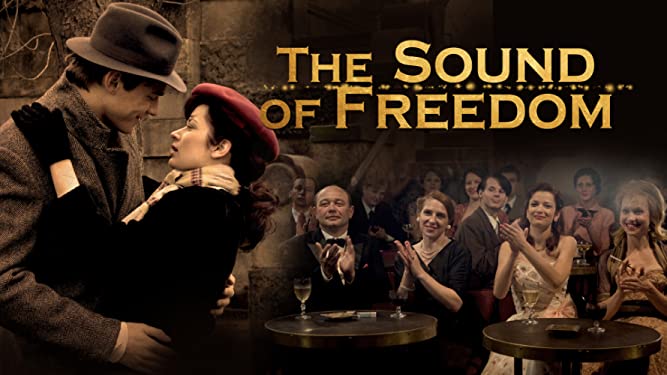
The Sound of Freedom, Adapted from Skvorecky


In his youth, Czech novelist Josef Skvorecky was an ardent jazz musician, but playing music from America was a dangerous proposition. However, when bassist Herbert Ward temporarily defected, Skvorecky and his bandmates capitalized (so to speak) on Ward’s “anti-imperialist” credentials to openly play their music. James Bulwer is transparently based on Ward, but Danny Smiricky’s friends will not enjoy much protection from their association with him in Andrea Sedlackova’s The Sound of Freedom, based on Skvorecky’s “Little Mata Hari of Prague,” which airs on the Euro Channel.

Of his band, Smiricky was always the least interested in politics. Nevertheless, he always carried guilt over the misfortunes suffered by his bandmates and their social circle. Frankly, he never really understood why he was spared the worst of it, because guilt and innocence were meaningless under Communism. He might have an opportunity to discover why, when Kunovsky, a former secret policeman, offers to sell him his long-lost file.

Back then (predating the Prague Spring), Smiricky just wanted to play and maybe pursue a relationship with Geraldine Brandejsova. She would be bad news anyway, since her mother is British. To make matters worse, Brandejsova has a friend in the American embassy, for whom she acts as a go-between with an activist priest. Kunovsky and his slimy boss have been assigned to build a case against Smiricky’s band. Unfortunately, their vocalist Marcela Razumowska is the obvious weak point for them to pressure. She tries to protect her friends, even breaking up with Richard Kambala, the trombonist-leader, but the life of her imprisoned brother depends on her providing incriminating evidence.

Although
Sound of Freedom was produced for Czech television, it is remarkably mature and achingly tragic. It also has a nice swing-era-appropriate soundtrack that includes a number of arrangements by the great Emil Viklicky. There is also a laughably strident propaganda blues for Bulwer, very much like those Ward warbled, while backed by Skvorecky.

Thursday, March 17, 2022

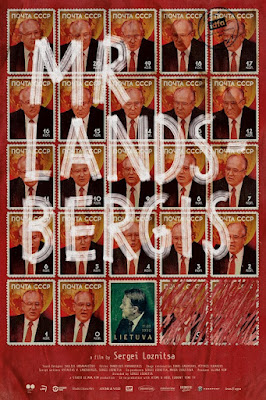
First Look ’22: Mr. Landsbergis

He ought to be considered on par with towering freedom fighters of the 20th Century, like Lech Walesa and Vaclav Havel. Yet, Vytautas Landsbergis is somewhat overlooked by contemporary historians, even though his leadership helped guide Lithuania through its tumultuous drive for independence. Archival filmmaker Sergei Loznitsa puts Landsbergis front-and-center, revisiting the history of Lithuania from 1988 to 1991 through primary archival sources in Mr. Landsbergis, which screens at MOMI during this year’s First Look.

As in previous films, Loznitsa scoured state and media archives, cobbling together footage that captured history unfolding in real-time. However, he also incorporates extensive interview footage with Landsbergis, who provides context and commentary throughout. This greatly helps the film’s watchable, fully establishing the stakes at play and deepening the emotional connection to the viewers. In some cases, Loznitsa’s culled together films are important, but exhausting to sit through (
The Trial for instance), but that is not an issue for Mr. Landsbergis.

In fact, it is quite a gripping film—all four-plus hours of it. Western media reports were a bit confused at the time, so many viewers might be surprised by the extent and violent severity of Gorbachev’s response to Lithuania’s declaration of independence. Columns of tanks rolled through Lithuanian streets. Shots were fired and people died. Indeed, in many ways, Loznitsa’s film serves as a sharp rebuke to Gorbachev and those who try to cast him as transformative figure. Instead, Landsbergis bluntly suggests he was the same as his predecessors, only more media savvy.

Landsbergis often identifies points when history could have gone in the other direction. However, the Lithuanian people held firm in the face of Soviet intimidation, consciously risking death to hold the line. Indeed, viewers can see parallels between the “Bloody Sunday” events of January 13 in Lithuania and the war crimes Russia is now committing in Ukraine, especially the defense that they are all the victims’ fault, because they didn’t surrender.